
Quick scan — the 7 signs at a glance
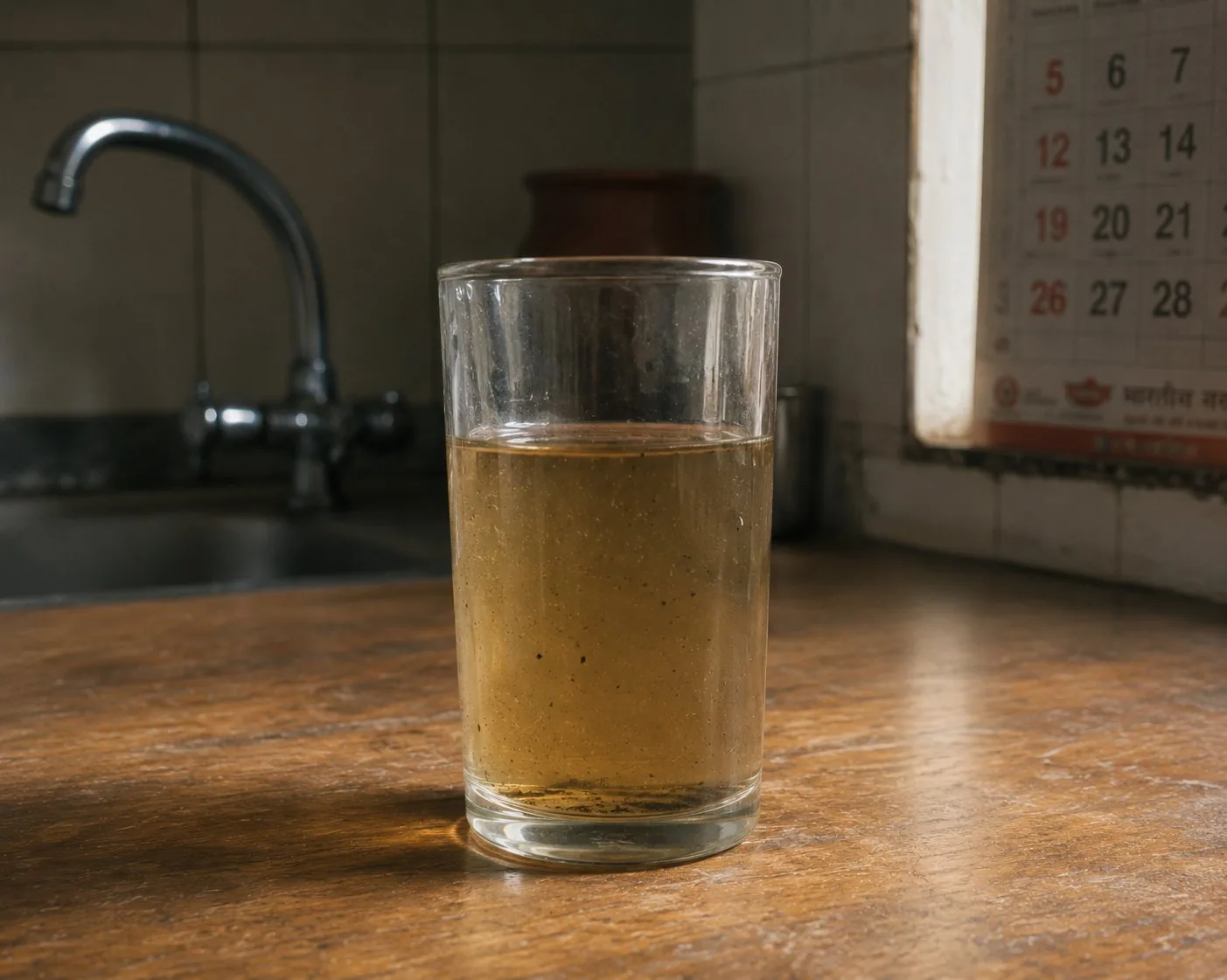
- Yellow, brown or murky water from your tap — most urgent
- Strange smell from the water — musty, earthy, or sulphury
- Sediment settling at the bottom of a glass after 5-10 minutes
- Skin irritation, dry skin, hair issues after bathing
- Recurring stomach upsets in the family, especially kids
- White scaling on bathroom tiles, taps, kettles, geysers
- It’s been more than 12 months since your last cleaning (or you don’t remember)
If any of #1, #2, or #5 are happening — book a cleaning this week. If #7 alone — book this month.
1. The water from your tap is yellow, brown, or murky
Hold a clean glass of tap water up to natural daylight near a window. Clean water is visually clear — you can see right through it. Anything from a faint yellow tint to a visible brown haze means contamination is reaching your taps right now.
What it likely means: sediment from the tank bottom is being kicked up into the water flow — usually fine sand, rust particles from older DJB feed pipes, or dislodged bio-film. Could also be iron oxide leaching from corroded inlet pipes inside the tank.
How urgent: most urgent of all signs. Stop drinking the water immediately, switch to bottled water for cooking and drinking, and book a tank cleaning the same day if possible. Bathing is okay short-term but rinse with clean water afterwards if you have it.
This is not a sign that goes away on its own. Once you can see contamination, the underlying problem has been building for months.
2. The water smells musty, earthy, or strongly chlorinated
Turn on the tap, let it run for 30 seconds (to clear the pipe water), then cup some in your hand and smell it. Three problem smells:
- Musty or earthy — like wet basement, damp cardboard, or pond water. Almost always indicates algae growth inside the tank, often because the lid is cracked or doesn’t seal properly and sunlight is getting in.
- Sulphury / rotten egg — bacteria inside the tank are producing hydrogen sulphide gas. This is a sign of serious bacterial buildup and possibly stagnant water at the bottom.
- Strong chlorine that doesn’t fade — DJB has likely just done a heavy chlorination after fixing a contamination event in your area, OR your tank’s previous cleaning used too much chemical.
How urgent: the first two require action within 2-3 days. The third resolves on its own within 24-48 hours; if it persists past that, call us.
3. Sediment settles at the bottom of stored water
Pour tap water into a clear glass tumbler and let it sit undisturbed on a flat surface for 10 minutes. Look at the bottom. Are there visible particles — sand grains, fine grit, dark specks, anything floating? That’s sediment that’s now travelling from your tank into your kitchen.
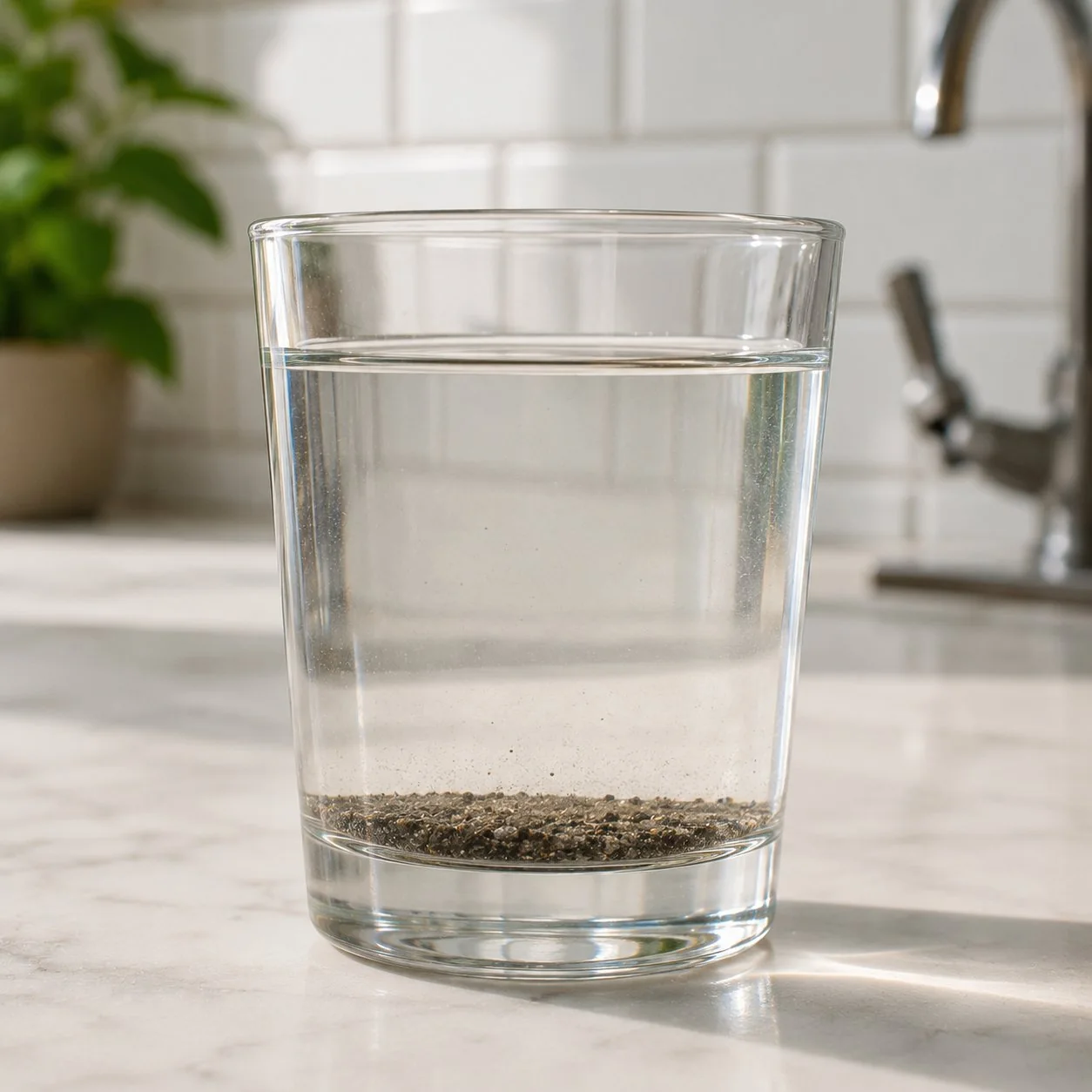
What it likely means: the bottom layer of accumulated sediment in your tank has built up to the point where normal water flow is stirring it up. The sediment then travels through your pipes into your taps. Eventually it settles in your geyser, your washing machine inlet, your RO filter pre-filter (which then needs replacement faster than usual).
How urgent: book a cleaning within the next week. Not a same-day emergency, but waiting makes it worse — and the appliance damage from sediment is usually more expensive than the cleaning would have been.
4. Skin irritation, dry skin, or unusual hair issues after bathing
Especially noticeable in winter when bathing time is shorter. If multiple family members start getting persistently itchy skin, dry patches, sudden mild rashes, or unusual hair fall — and you’ve ruled out the obvious causes (changing season, new soap, new shampoo) — the tank water becomes a likely culprit.
What it likely means: the water has either bacterial contamination or mineral imbalance. Both can cause low-grade skin reactions over time. Children and people with sensitive skin will react first; adults may take longer to notice but are still affected.
How urgent: within the next 1-2 weeks. Skin issues alone aren’t an emergency, but combined with any other sign (especially smell or sediment), they confirm something is wrong with your water source.
Tip: if symptoms improve dramatically when family members shower at someone else’s home, your tank is almost certainly the cause.
5. Recurring stomach upset in the family — especially kids and elderly
This is the most under-recognised sign in Delhi homes. The pattern: kids keep getting tummy issues, parents keep blaming outside food — but the kids haven’t actually eaten anything outside the home. Elderly family members get repeat gastric problems with no clear cause. Adults notice less because their immunity handles the bacterial load better.
What it likely means: bacterial contamination in the drinking water source. Common culprits include E. coli, salmonella, and various other pathogens that thrive in stagnant tank water with bio-film. Even a water purifier doesn’t protect everyone — the unfiltered tank water you bathe in, brush teeth with, and wash vegetables in is the entry point.
How urgent: if the pattern is real (multiple family members affected over weeks, no other obvious cause), book a cleaning within the week. After cleaning, the symptoms should noticeably reduce within 1-2 weeks. If they don’t, the issue may be a building plumbing problem rather than the tank — we can advise.
6. White or chalky deposits on bathroom tiles, taps, kettles, geysers
Look at the bathroom mirror near the tap, the area around the geyser, the inside of an electric kettle, the showerhead. White or chalky deposits forming = scaling. The same deposits are forming inside your water tank too — you just can’t see them.
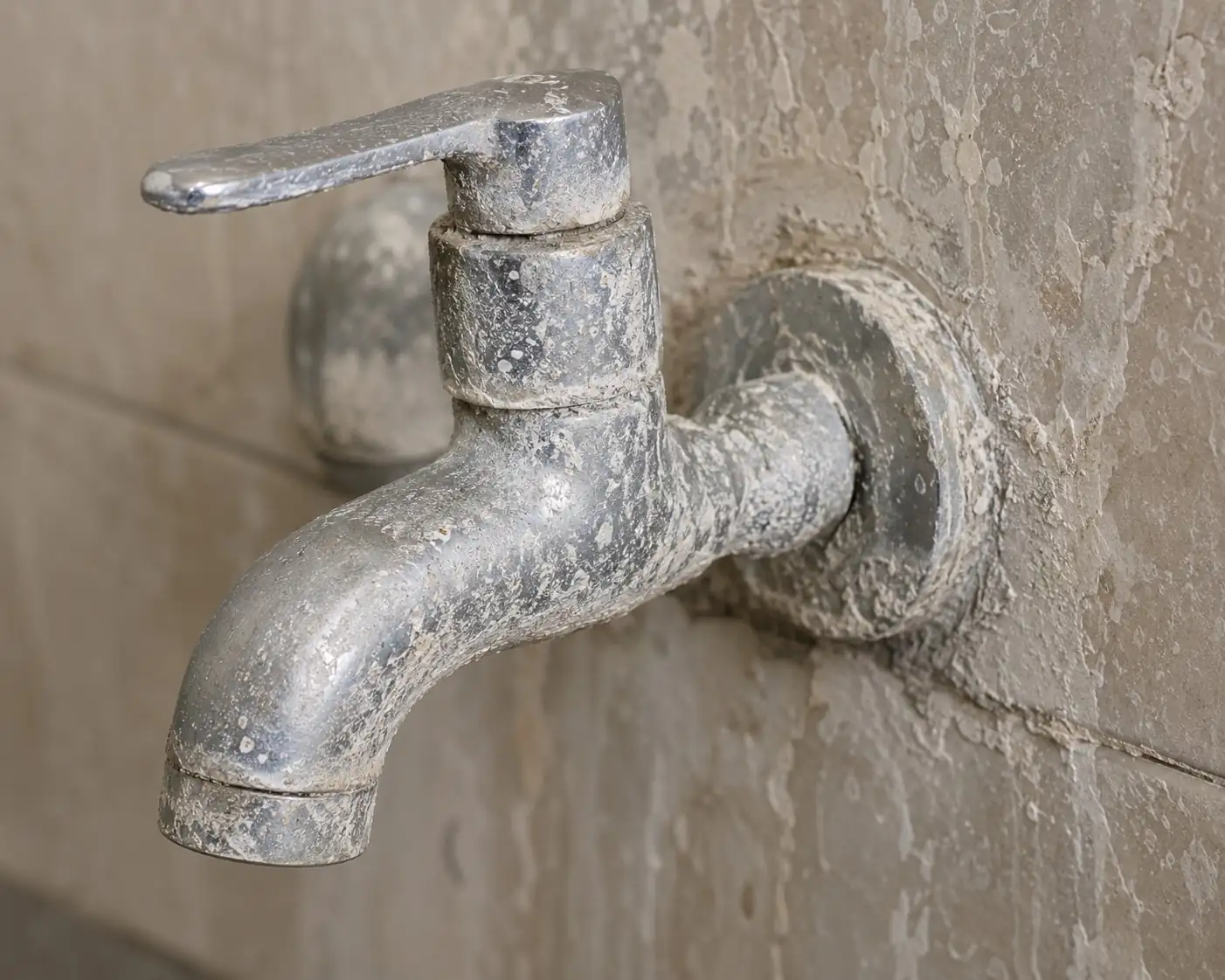
What it likely means: hard water with high TDS (total dissolved solids), almost always borewell water or borewell-mixed DJB. The minerals (calcium and magnesium carbonate) precipitate out and form a chalky coating on every surface they touch. Inside your tank, the same coating builds on the walls, holding bacteria and reducing tank capacity over time.
How urgent: less urgent than the contamination signs, but cleaning + descaling will visibly improve your water in a few days, and dramatically extend the life of your geyser and washing machine. If you also have any of signs #1-#5, this confirms borewell-water-driven contamination — book within the week.
For homes on heavy borewell, we recommend a 4-month cleaning cycle instead of 6 months because of the faster scaling buildup. Full source-by-source breakdown in Borewell vs DJB Water in Delhi.
7. It’s been more than 12 months since your last tank cleaning — or you don’t remember
This is the default urgency sign. If you can’t remember the last time your tank was properly cleaned (not just “rinsed” by some informal worker), the answer is: it’s overdue.
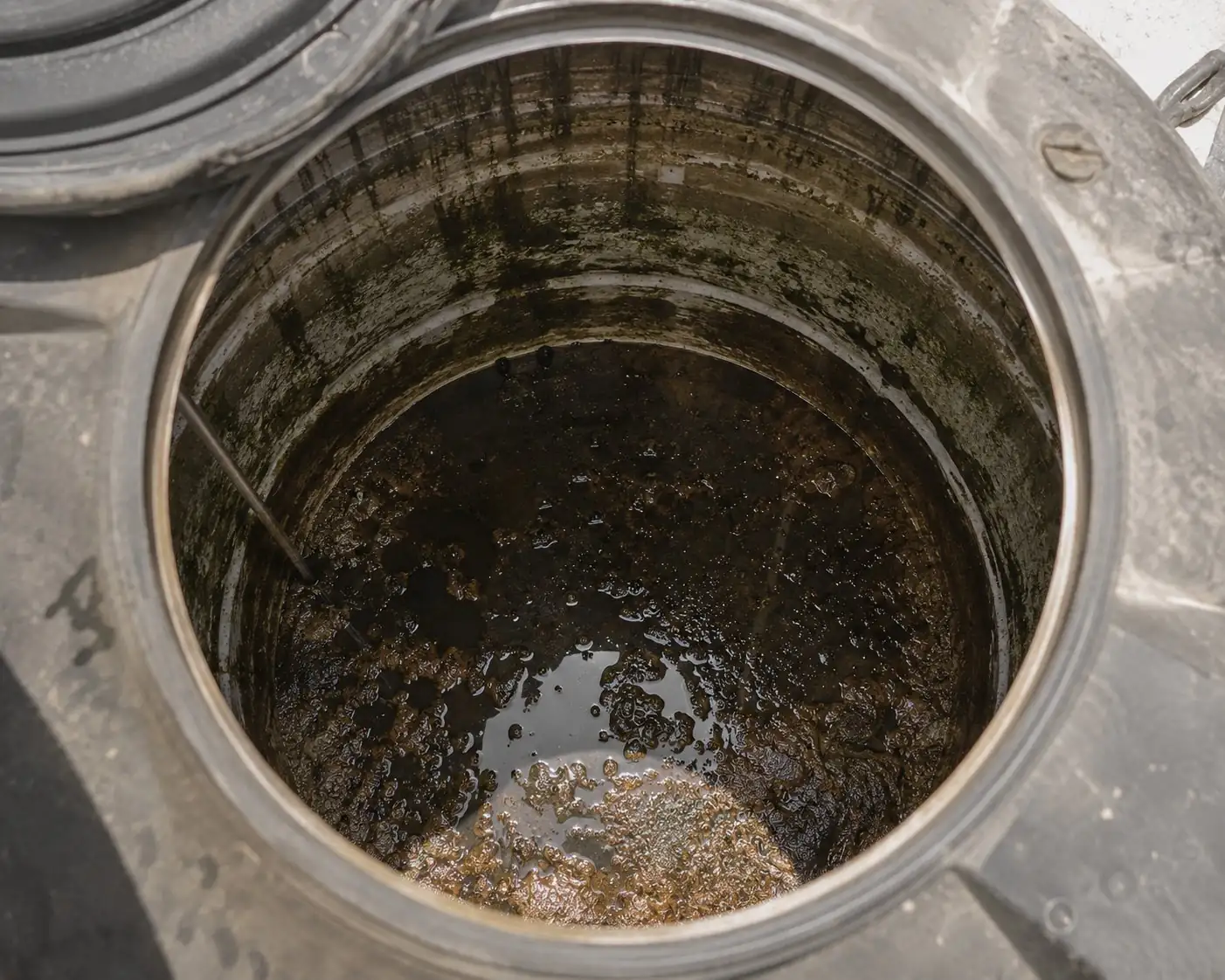
What it likely means: by 12 months, every tank in Delhi has accumulated noticeable sediment, mineral scaling, and some bio-film growth on the walls — even with the best-possible water source. By 24 months, the bottom layer of sludge is usually 1-3 inches thick. By 36+ months, it’s a different conversation: the first deep clean often surprises people.
How urgent: book this month. No other signs needed. Just the time gap is enough.
For more on what frequency actually works for different tank types and water sources, read our guide on how often to clean your water tank.
Severity scorecard — how urgent is each sign?
Not every sign needs a same-day booking. Here’s the practical severity scoring we use when triaging incoming calls:
| # | Warning sign | Severity | Book within |
|---|---|---|---|
| 1 | Yellow, brown, or murky water | High | 24-48 hours |
| 2 | Musty, earthy, or chlorine-heavy smell | High | 24-48 hours |
| 3 | Sediment in stored water | Medium | 2-3 weeks |
| 4 | Skin irritation, dry skin, hair issues | High | 4-7 days |
| 5 | Recurring stomach upset (esp. kids/elderly) | High | 4-7 days |
| 6 | White/chalky deposits on tiles, kettles | Medium | 2-3 weeks |
| 7 | 12+ months since last cleaning | Medium | 2-3 weeks |
Rule of thumb: any TWO signs together = upgrade severity. If you see 2+ signs, book within 24-48 hours regardless of which signs they are.
Spotted one of the high-severity signs?
Same-day booking available across Delhi NCR. Standard residential cleaning ₹699 onwards.
How tank contamination builds over time (and why timing matters)
Months since last cleaning vs contamination risk
Delhi tanks on a mix of DJB + borewell supply (typical household)
The 6-month mark is where most Delhi families start to see signs 1, 2, or 5. The 12-month mark is where multiple signs cluster. Cleaning is much faster (and cheaper) when caught between months 6-9.
What to do if you spot any of these signs
First, don’t panic. All seven of these are reversible — a proper cleaning will resolve the immediate problem, and switching to a regular cleaning schedule prevents it coming back.
Practical next steps:
- Same-day or this-week severity (signs #1, #2, #5): book a cleaning immediately. Switch to bottled water for drinking and cooking until the cleaning is done.
- This-month severity (signs #3, #4, #6, #7): book a cleaning within the next 2-3 weeks. Continue using the water cautiously — boil before drinking if you’re unsure.
- After the cleaning: the water should run faintly chlorinated for the first 6-12 hours after refill (residual disinfectant), then return to normal. Symptoms (skin issues, recurring stomach upsets) usually improve within a week.
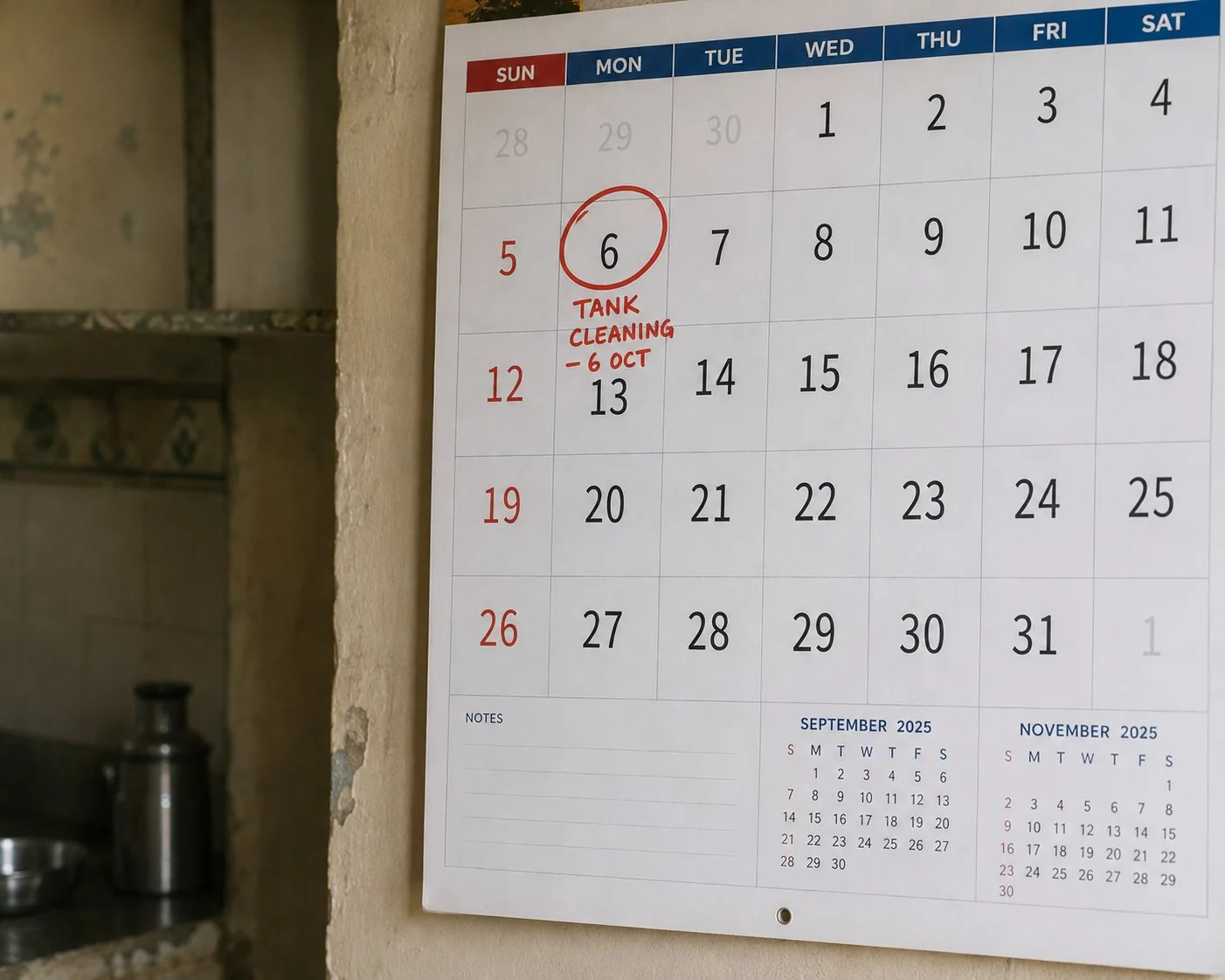
- Set a calendar reminder for the next cleaning — 6 months for DJB-fed tanks, 4 months for borewell-fed.
Why these signs build up faster in Delhi than in cooler cities
A few Delhi-specific factors make tank contamination accumulate faster than in cities like Bangalore or Pune:
- Summer heat — rooftop tanks routinely hit 35-40°C inside during May-July. Bacteria multiply 4-8x faster at these temperatures than at 25°C.
- Borewell-DJB mix — most Delhi homes get water from both sources, often switching daily depending on supply. The borewell minerals + DJB chlorine residue interaction speeds up scale formation.
- Dust load — Delhi’s air carries far more dust than coastal cities. Even tiny gaps in tank lids let in measurable dust accumulation over months.
- Older plumbing — many South Delhi homes still have 30-50 year old DJB feed pipes that release iron particles into the tank water.
None of this is your fault. It’s just the operating environment. The fix is simply more regular cleaning — once or twice a year for most homes, more often for borewell-heavy areas or large families.
Don’t wait for more signs to appear
If you’re seeing one sign, more are coming. Book now — same crew, fixed price, before/after photos.
Book a cleaning if you’ve spotted any sign above
We do residential and commercial water tank cleaning across Delhi with same-day availability. Call +91 95603 66362 or use the booking form on this site — we'll confirm shortly. Standard pricing on our water tank cleaning service page.
Related reading: What actually happens during a water tank cleaning — the 8-step process · What does water tank cleaning actually cost in Delhi? · How often should you clean your water tank?
Frequently asked questions
What if only one of these signs is showing — should I still book?
Depends which one. Signs #1 (yellow water), #2 (smell), and #5 (recurring stomach issues) on their own are enough to book within the week. Signs #3, #4, #6, #7 alone are less urgent but warrant a cleaning within the month. Two or more signs together = book within 2-3 days.
Will boiling the tap water solve the problem?
Boiling kills bacteria but does nothing for the sediment, mineral scaling, or chemical contamination in the water. It’s a temporary safety measure for drinking water, not a fix for the tank. If you’re boiling because of any of the 7 signs, you also need to clean the tank.
How quickly will the symptoms (skin issues, stomach upsets) go away after cleaning?
Most reduce noticeably within 1-2 weeks. Skin irritation usually clears first. Recurring stomach issues take 2-3 weeks to fully resolve as the family’s gut microbiome rebalances. If symptoms persist past 3 weeks after cleaning, the issue may be a building plumbing problem rather than the tank.
Should I get my water professionally tested?
Optional but useful for commercial premises (restaurants, offices). For residential, the visible and sensory signs in this article are usually enough to know the tank needs cleaning. We can arrange a third-party lab water test post-cleaning for ₹800-1,500 if you want a paper record (especially for FSSAI renewals).
What if I get the tank cleaned and the signs come back within 2-3 months?
Three possible causes: (a) the previous cleaning was incomplete or done poorly — get a second opinion; (b) you’re on heavy borewell water and need 4-month cleaning instead of 6; or (c) there’s a plumbing issue downstream of the tank (corroded pipes, leaks). Call us — we’ll inspect and recommend.
Can I keep using the tank water while waiting for cleaning?
For bathing and washing — yes, the visible signs aren’t immediately harmful for external contact. For drinking — switch to bottled or filtered water until the cleaning is done. RO/UV purifier output is fine. The rest of the household water (kitchen sink for utensil washing, food prep) is best treated as suspect until cleaning is complete.
Is yellow water from the tap always a tank problem?
Usually yes — most often iron oxide from the inlet pipe or stored sediment, both fixed by cleaning. But three other causes worth ruling out: corroded household pipes, DJB supply changes after a pipeline break, or a new borewell connection with high iron content. If the cleaning doesn’t fix it within a week, it’s a downstream plumbing issue.
Should I be worried if multiple neighbours are also reporting these signs?
Yes — that points to a shared water-supply problem rather than just your tank. Could be a DJB pipeline issue (call 1916), a contaminated common line in your colony, or a shared borewell with quality drift. Your tank may still need cleaning, but a single tank clean won’t fix a shared-supply issue. Coordinate with neighbours to escalate.
How urgent is each sign — what should I do today vs this week?
Today: signs #1 (yellow water) and #2 (musty smell) — visible contamination, book within 24-48 hours. This week: signs #4 (skin issues) and #5 (stomach upsets) — book within 4-7 days. This month: signs #3 (sediment), #6 (scale), #7 (over 12 months without cleaning). Multiple signs together = book today regardless.
Will a water purifier fix the problem instead of cleaning the tank?
No. A RO/UV purifier treats water at the kitchen tap — fine for drinking. But the tank water is also used for bathing, washing utensils, food prep at sinks, and washing clothes. If the tank is contaminated, every other tap delivers contaminated water. The purifier and tank cleaning do different jobs; you need both.
What if I’m renting and the landlord won’t clean the tank?
Send a written request (WhatsApp counts) referencing the specific signs you’re seeing — creates documentation. If the landlord still refuses, you can pay for the cleaning yourself (₹699-1,499 for residential) and deduct from the next rent with the invoice. Most reasonable landlords agree once it’s in writing. For societies, the RWA can compel the landlord.
Do these signs apply to apartment building shared tanks too?
Yes, with one addition: if multiple flats are reporting the same sign at the same time, that’s the strongest signal the shared tank needs cleaning urgently. Escalate to RWA or building secretary. If they don’t act within a week, you can independently arrange the cleaning and split the cost — typically ₹100-200 per flat for a single shared tank.
Sources & references
- WHO Fact Sheet on Drinking Water — global authority on drinking water risks, contamination, and the link between unsafe water and disease.
- WHO Typhoid Fact Sheet — details the waterborne transmission route for typhoid, one of the recurring infections referenced in this guide.
- US CDC — Healthy Drinking Water — comprehensive resource on waterborne pathogens (E. coli, norovirus, Giardia) and the symptoms of contaminated water exposure.
- Bureau of Indian Standards (BIS) — IS 10500:2012 defines acceptable sensory parameters (colour, odour, turbidity) that flag the warning signs in this article.
- Indian Council of Medical Research (ICMR) — publishes research on water quality and waterborne disease burden in Indian cities including Delhi.
- Delhi Jal Board (DJB) — Delhi’s municipal water supply authority; their water quality reports help explain why these signs show up faster in some Delhi areas than others.
Last verified: 9 May 2026. If you find any of these links broken, please let us know.