
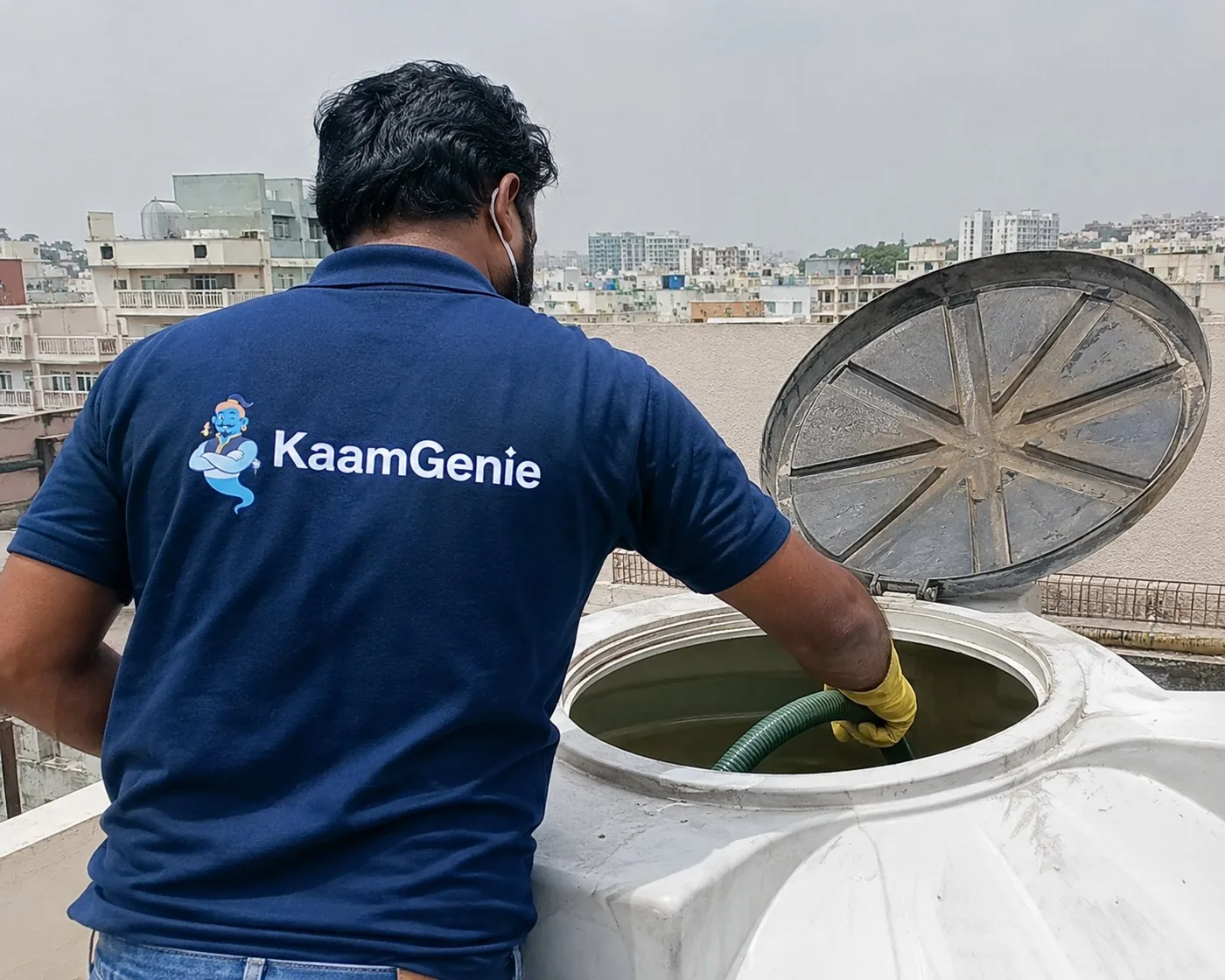
The short answer
- Overhead tanks (DJB supply only): every 6 months
- Overhead tanks (borewell water): every 3-4 months
- Underground sumps (kothi): every 6-9 months
- Society shared rooftop tanks: every 6 months minimum, every 4 in summer
- Restaurants and food businesses: every 3 months (FSSAI inspection norm)
If you can’t remember the last time it was cleaned, the answer is: this month.
Why frequency matters more than people think
I’ve been cleaning water tanks in Delhi for over a decade. The single most common thing I see when we open a tank for the first time isn’t a slightly dirty tank — it’s a tank that hasn’t been touched in 3-5 years. Bottom layer of black sediment, walls coated in slimy bio-film, sometimes algae growing where sunlight has been getting in through a cracked lid.
The customer’s reaction is almost always the same: “But the water looked fine.” The thing is, by the time water from a contaminated tank looks or tastes wrong, the contamination has been going on for months. You’ve been drinking, cooking with, and bathing in that water the whole time.
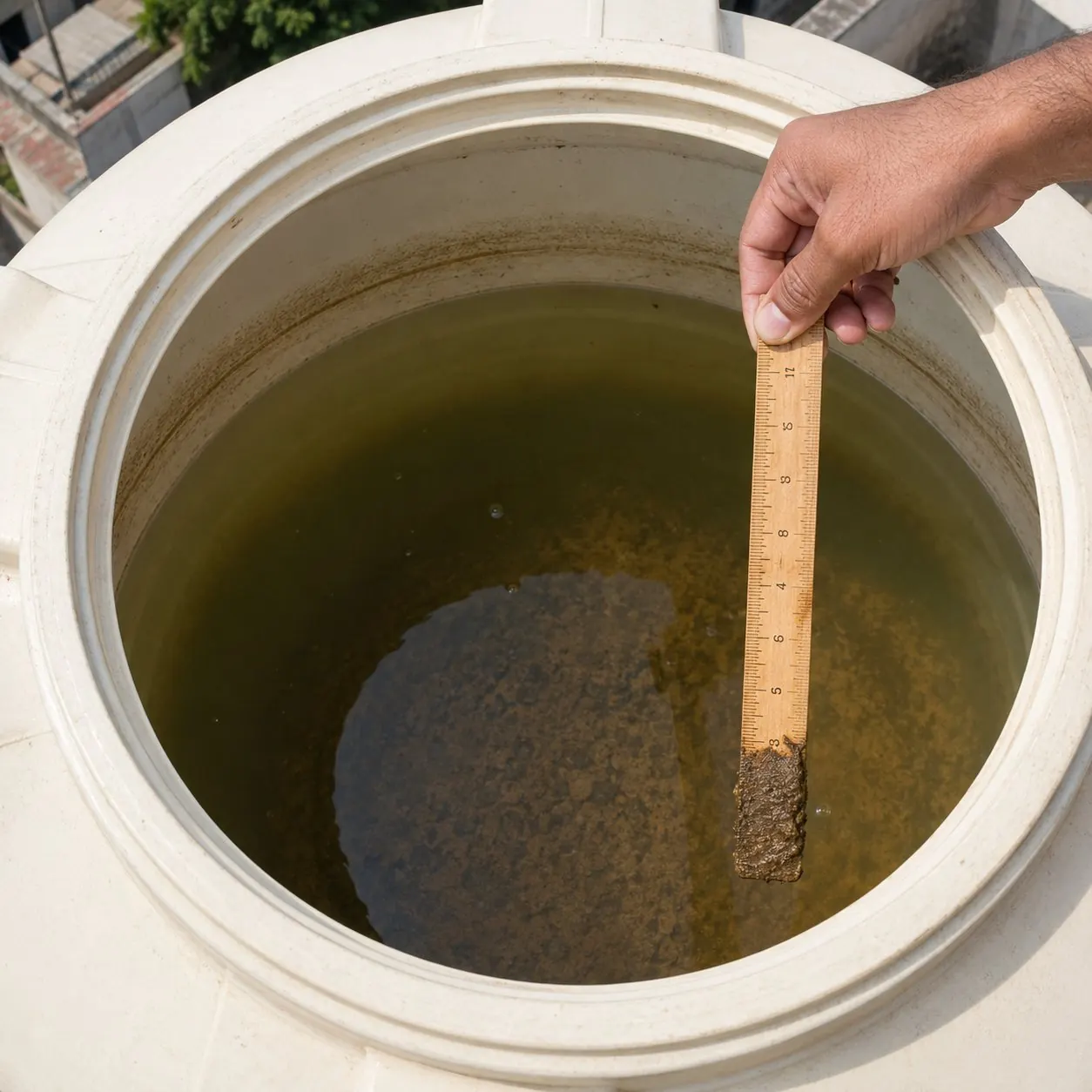
Here’s what builds up in a tank that doesn’t get cleaned:
- Sediment — sand, silt, mineral particles that settle at the bottom (especially with borewell water)
- Bio-film — a slimy bacterial layer on the walls (the most dangerous part — this is where E. coli and other pathogens live)
- Algae — if any sunlight gets in through a cracked or missing lid, you get green growth within weeks
- Scale — white mineral deposits from hard water, especially borewell-fed tanks in South Delhi and Gurgaon
- Insect bodies and droppings — tank lids that don’t seal properly let in everything from dust to dead lizards
Frequency by tank type
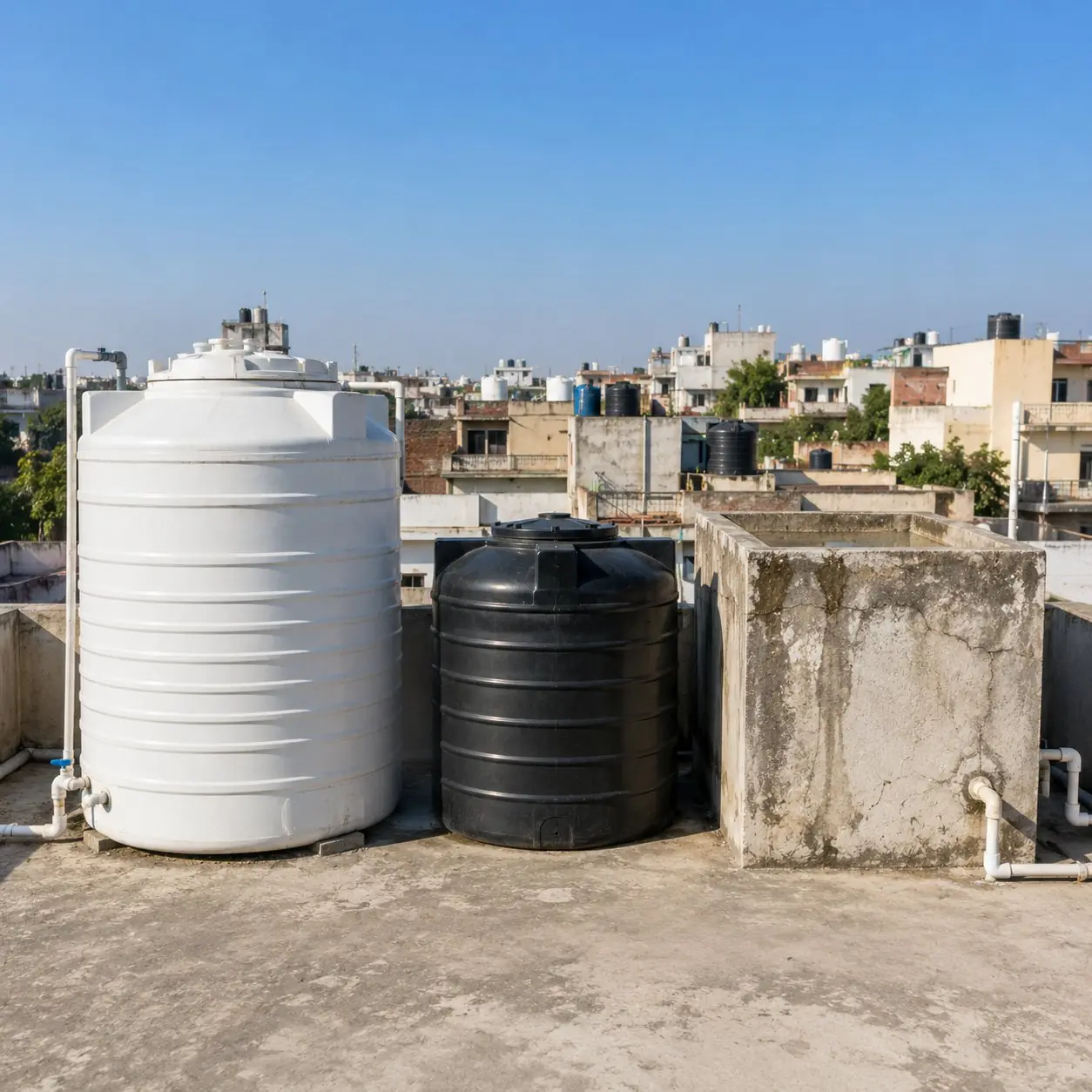
Plastic overhead tanks (most Delhi homes)
These are the black or off-white plastic tanks you see on rooftops across Delhi — brands like Sintex, Plasto, Vectus and Storefit. They’re inexpensive, easy to clean, and most homes have one or two.
Recommended frequency: every 6 months for DJB supply, every 3-4 months for borewell water.
The tank wall material doesn’t affect bacterial growth much — what matters more is whether sunlight is getting in (cracked lids cause algae) and the water source. Plastic tanks tend to crack at the top in Delhi’s summer heat over 5-7 years, so a quick lid inspection during cleaning is worth doing.
Underground sumps (kothis)
Most kothis and bungalows in South Delhi have a concrete underground sump in the front lawn or compound, plus an overhead tank fed from the sump.
Recommended frequency: every 6-9 months for the sump, every 4-6 months for the overhead.
Underground sumps accumulate heavy sediment because gravity pulls everything down to the bottom. They’re also harder to clean because they require confined-space entry, so most homes neglect them. The water in the sump feeds the overhead tank, so a dirty sump means contaminated water reaching the tap regardless of how clean the overhead is.
Society shared rooftop tanks
Large overhead tanks serving 4-20 flats. These are technically the RWA’s responsibility but in practice no one takes ownership.
Recommended frequency: every 6 months minimum, every 4 months in summer.
Society tanks have higher water turnover (more flats drawing from them) but also more risk — one contaminated tank affects many families. If you’re on an RWA, push for an annual maintenance contract (AMC). It’s cheaper per tank than ad-hoc cleaning and it actually gets done on schedule.
Restaurants and commercial food businesses
Recommended frequency: every 3 months. This is also the FSSAI inspection norm.
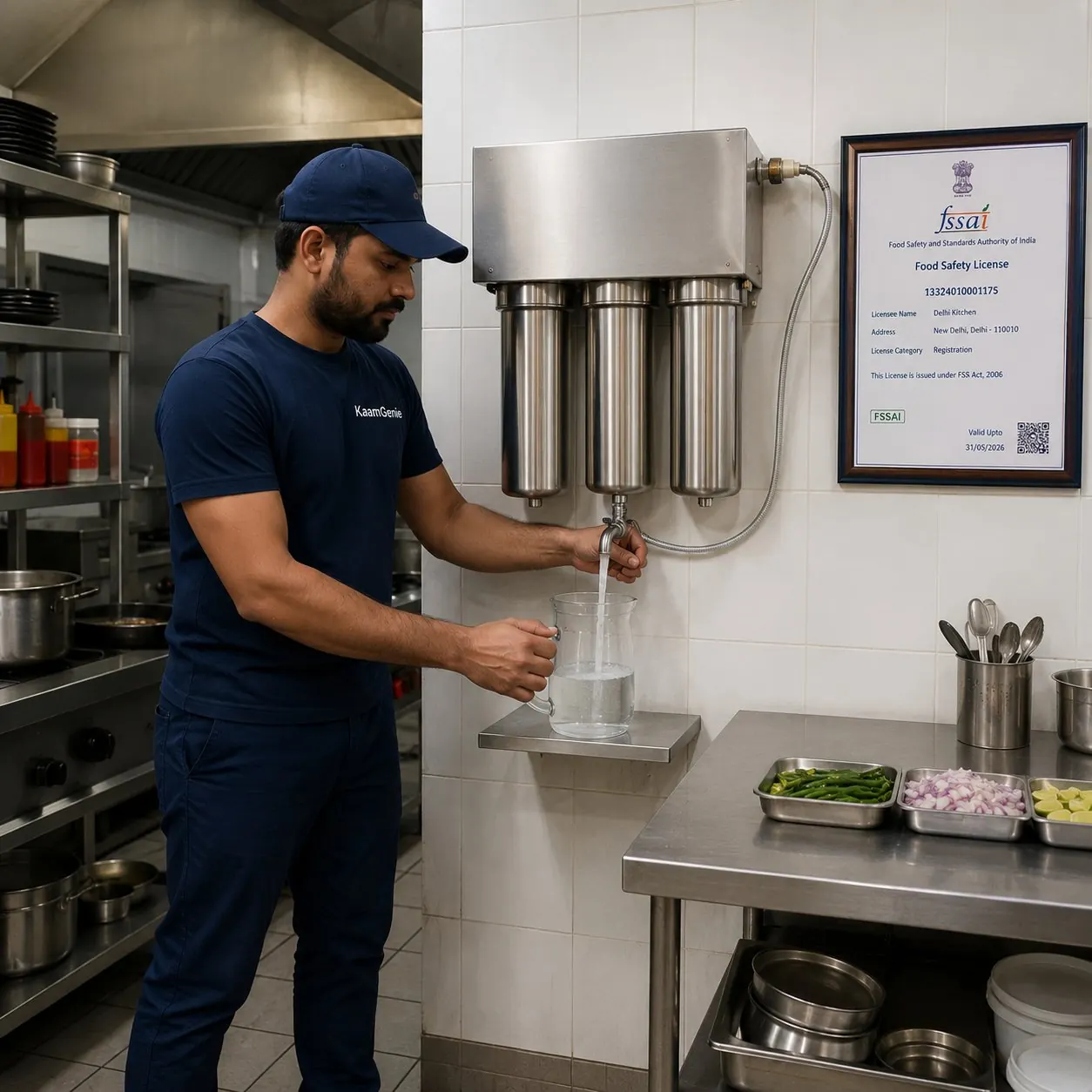
For any business that serves food or drink, a professional water tank cleaning service needs to visit quarterly with a dated cleaning record. FSSAI inspectors do check this in Delhi and the penalty for non-compliance can affect your license. Don’t skip it.
| Setting | Recommended frequency | Why |
|---|---|---|
| Single-family home (DJB water) | Every 6 months | Standard baseline for most Delhi homes |
| Single-family home (borewell water) | Every 3-4 months | Higher mineral load, faster scale buildup |
| Family with infant or elderly | Every 3-4 months | Higher water-sensitivity risk profile |
| Society shared tank | Every 3 months (quarterly) | Slower water turnover, more flats sharing |
| Restaurant / FSSAI premises | Every 3 months mandatory | FSSAI compliance + food-safety risk |
| Cloud kitchen / dark kitchen | Every 1-2 months | High volume, multiple brands, frequent equipment cycles |
| Vacant / second home | Every 3 months while vacant | Stagnant water grows bacteria faster |
| Tanker-fed home | Every 3 months | Tanker water quality varies; heavier sediment |
Get on a regular schedule
Annual contract = scheduled visits + 20% off per cleaning + same crew every time. No more “when did we last clean it?” conversations.
Frequency by water source
Where your water comes from matters as much as the tank type.
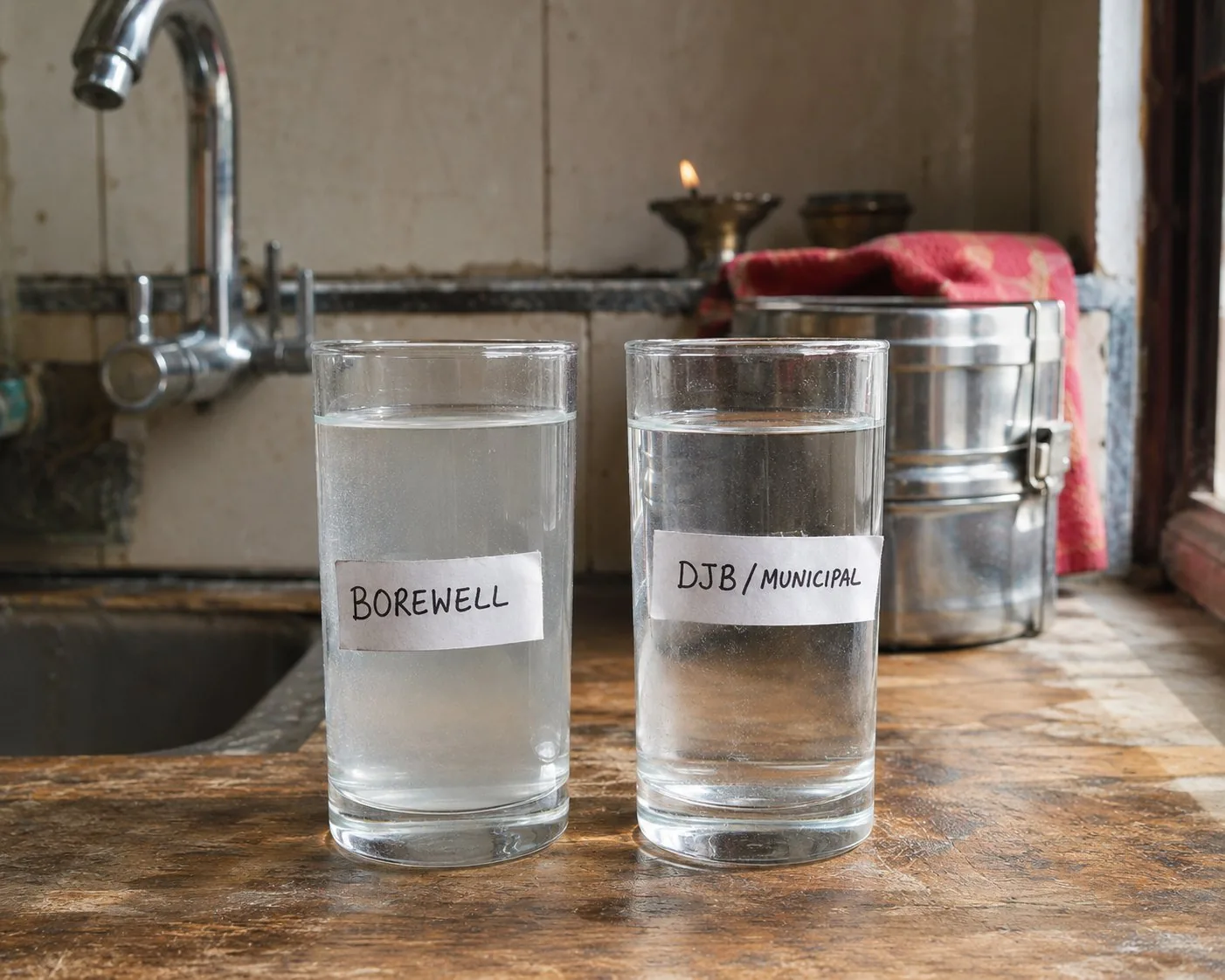
DJB (Delhi Jal Board) supply
Treated municipal water. The cleanest source you’re likely to get in Delhi. Tanks fed only from DJB can go 6 months between cleanings. The downside: DJB supply can carry chlorine residue that affects taste, and during summer when supply is irregular, sediment from low-flow lines can accumulate faster.
Borewell water
Most South Delhi homes (Saket, Vasant Kunj, Defence Colony, GK) have borewell water either as primary or backup source. Borewell water in Delhi has high TDS (mineral content) which builds up scale on tank walls within months. Cut your cleaning interval to 3-4 months if you’re mostly on borewell. We have a deeper breakdown in Borewell vs DJB Water in Delhi, including how to figure out which source you actually have.
Tanker delivery
If you regularly buy water from private tankers, the water quality is a wild card — some tankers are clean, some are scary. Sediment from tanker water can be very heavy. Recommended: 3 months, especially if you’ve had multiple tanker fills since the last cleaning.
Seasonal factors in Delhi
Delhi’s climate adds wrinkles you don’t see in cooler cities.
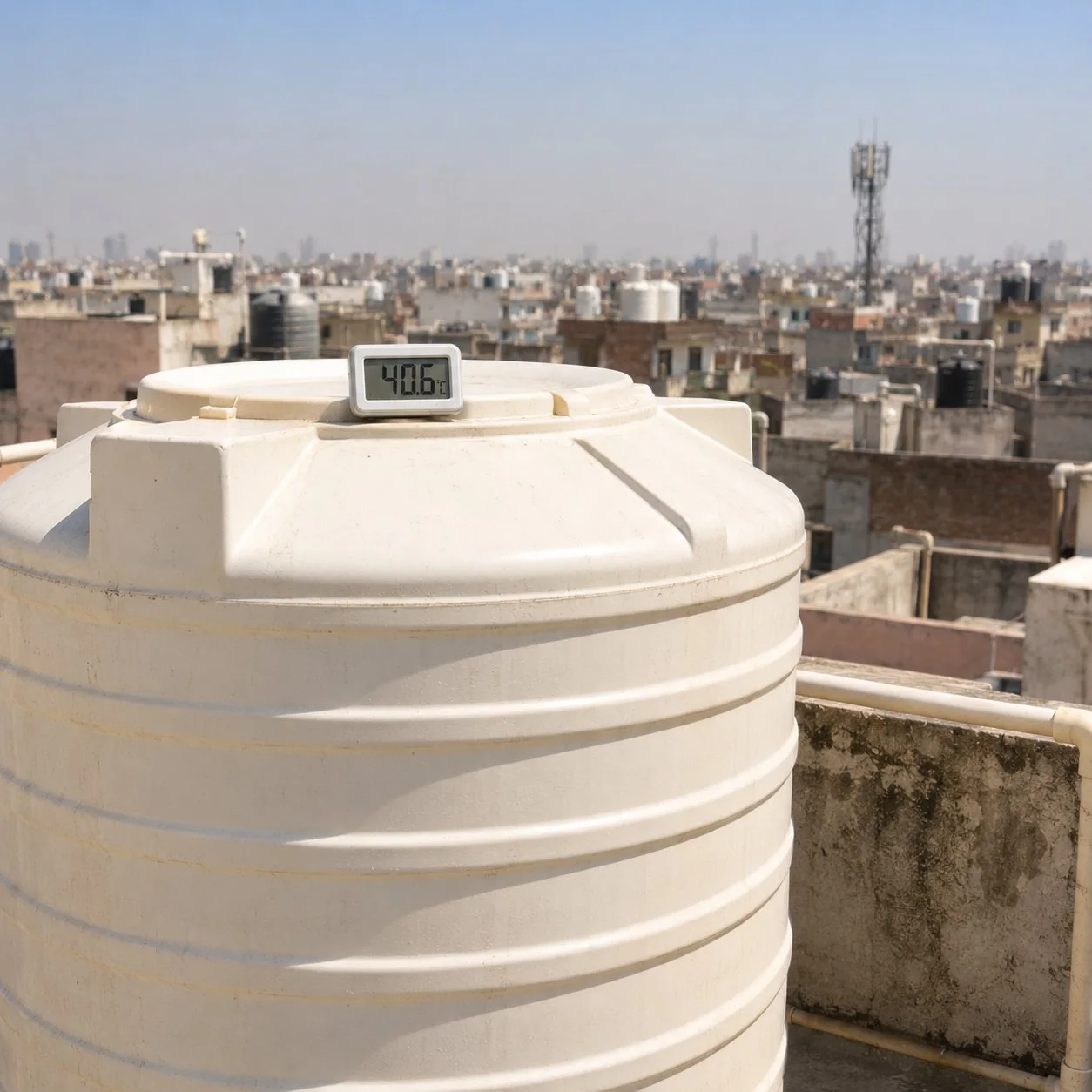
Summer (April-July): Tank water heats up significantly — rooftop tanks can hit 35-40°C inside. Bacteria multiply much faster at these temperatures. If you only clean once a year, do it in late April so the tank is clean going into the worst months.
Monsoon (July-September): Tank lids that don’t seal properly let in rainwater + dust + insects. Schedule a cleaning in early September after the monsoon ends to clear out anything that got in.
Winter (December-February): Algae growth slows down. This is the easiest season to skip if you’re trying to stretch one cleaning. But if you’re on borewell, the scale build-up doesn’t care about season.
Bacterial growth in stored water by temperature
Why Delhi summer makes the cleaning schedule tighter
Most bacteria found in tank water (E. coli, Pseudomonas, Legionella) double roughly every 20 minutes at 37°C vs every 60-90 minutes at 25°C. That’s why pre-summer cleaning matters more than any other annual cleaning.
Signs your tank needs cleaning RIGHT NOW (regardless of schedule)
For the deep version of this list with what each sign means and how urgent it is, read our 7 signs guide. Quick version below:
- Brown or yellow tinge when you fill a clear glass with tap water
- Metallic, earthy, or musty taste — bacteria producing geosmin or 2-MIB compounds
- Visible particles settling at the bottom of a stored water bottle within 30 minutes
- Soap not lathering well — mineral build-up affecting water hardness
- Family members getting frequent stomach issues with no other obvious cause
- White scale on bathroom tiles, taps, or shower heads — mineral residue from your tank water
- You can’t remember the last cleaning — it’s overdue
What happens if you don’t clean it
Best case: scale build-up reduces tank capacity over time and damages your overhead pump. Worst case: chronic exposure to E. coli, Giardia, Salmonella, and other pathogens that bio-film harbours. Long-term contaminated water is linked to gastrointestinal disorders, skin issues, and weakened immunity in children and elderly family members.
For restaurants and food businesses, the additional risk is FSSAI license issues and customer-facing food poisoning incidents that can end the business.
What it costs in Delhi
Realistic prices in Delhi NCR (2026):
- Standard overhead tank (up to 1,000 L) — ₹699-899
- Underground sump (kothi) — ₹1,500-2,500
- Society shared rooftop tank — ₹1,500-3,000
- Restaurant/commercial tank with FSSAI certificate — ₹1,500-2,500
- Annual maintenance contract (4 visits) — typically 15-20% discount on per-visit rates
Cheaper than these prices usually means corners cut: skipped disinfection, no UV step, no cleaning record. More expensive than these usually means you’re paying for a brand premium without proportional service quality difference.
Pre-summer cleaning — the most useful annual booking
Book by mid-April so your tank starts summer clean. Bacterial growth at 35-40°C is many times faster than at room temperature — one cleaning at the right time prevents most of the year’s contamination.
How to book a cleaning
If you’re in Saket, Vasant Kunj, Greater Kailash, Defence Colony, Hauz Khas, or any of our other 20+ areas in South Delhi and Okhla, you can book a KaamGenie cleaning the same day. Call +91 95603 66362, WhatsApp the same number, or use the booking form on this site. We'll confirm shortly.
If you’re outside our service area, the same frequency guidelines apply — just find a local cleaner who uses food-grade disinfectants and provides a dated cleaning record.
Frequently asked questions
How do I know if my tank is on borewell or DJB water?
Look at your water tank inlet pipe. DJB connections come from a single municipal line at ground level. Borewell setups have an electric pump (often visible in your basement, garage, or backyard). Most South Delhi homes have both — DJB primary, borewell as summer backup.
Does monsoon affect how often I should clean?
Yes. After monsoon (early September is ideal), schedule a cleaning to clear out anything that got in through poorly-sealed lids — rainwater carries dust, leaves, and sometimes insects. If you only clean once a year, do it post-monsoon rather than pre-monsoon.
My water looks fine — can I skip a cleaning this cycle?
The water you can see usually IS fine. The problem is the bio-film and sediment you can’t see, which builds steadily regardless of what the surface water looks like. Most customers who say “it looks fine” are surprised when we open the tank. Don’t skip.
Should societies clean each tank separately or all together?
All together. Per-tank cost drops sharply when 5 or more tanks are done in one visit (we save on transport, setup, and crew time). Most societies coordinate through the RWA secretary and get one consolidated invoice for all flats.
Is twice a year enough for a Delhi family of 4-5 people?
For most homes on DJB water, yes. For homes on borewell water (heavier mineral load) or families using more water (kids, lots of cooking, extended family), bump to 3 times a year — every 4 months. Restaurants and food businesses should always do quarterly.
What if I just moved into a flat — do I need to clean before using?
Yes, always. Even a brand-new flat’s tank may have construction dust, debris from installation, or stagnant water from the builder’s water-test fill. For resale flats or rentals, you have no idea when the previous tenant last cleaned. A move-in cleaning is a one-time ₹699-899 spend that gives you a known clean baseline.
How long can a brand-new tank go before its first cleaning?
Once installed and in active use, no longer than 6 months on DJB water or 4 months on borewell water — same schedule as any other tank. The “it’s brand new, it must be clean” assumption is wrong because contamination comes from the inlet supply, not the tank itself.
What’s the right frequency for a vacant home / second home tank?
If the tank is sitting full and unused, you actually need MORE frequent cleaning — water sitting stagnant grows bacteria faster than water being used and refilled. Recommended: drain the tank if you’re going away for 4+ weeks. If keeping it full, clean every 3 months while vacant. Once you return, do a fresh cleaning before regular use resumes.
I have a baby at home — should I clean more often?
Yes. For households with infants under 12 months or anyone immunocompromised, clean every 3-4 months instead of every 6. Infant water sensitivity is much higher, and the cost difference (3 visits/year vs 2) is small compared to the peace-of-mind benefit. Also a good reason to add a third visit during peak summer (April-May).
Does the size of the tank affect the cleaning frequency?
Counter-intuitively, larger tanks need to be cleaned MORE often, not less. Bigger tanks have slower water turnover (water sits longer before being used), more surface area for bio-film, and more sediment by absolute volume. A 5,000L society tank serving 12 flats needs quarterly cleaning even though individual flats use less water than a single-family home.
My tank cleaner says I need to clean every month — is that excessive?
Probably yes, unless you have a very specific situation (food business, hospital, very heavy borewell with severe scaling). Monthly cleaning is mostly upsell. For 95% of Delhi households, every 4-6 months is right. If a cleaner pushes monthly, ask why specifically — if the answer is vague, ignore it.
Can I stretch the schedule if my water tastes and smells fine?
Risky. The contamination you can taste and smell is well past the threshold — most bio-film and bacterial buildup is invisible and tasteless until it’s severe. The 6-month schedule isn’t about reacting to bad water, it’s about preventing bad water. If you’re consistently stretching to 9-12 months and water still seems fine, you’re getting lucky.
Sources & references
- CPHEEO — Manual on Water Supply and Treatment (Govt of India) — the canonical engineering reference covering recommended frequencies for cleaning storage tanks in Indian urban contexts.
- WHO Guidelines for Drinking-water Quality, 4th edition — global standards on storage tank maintenance and recommended periodic disinfection.
- Delhi Jal Board (DJB) — Delhi’s municipal water supply data, useful for understanding seasonal supply variability that affects cleaning frequency.
- Bureau of Indian Standards (BIS) — IS 10500:2012 specifies drinking water parameters; tanks that go too long without cleaning routinely breach these limits.
- Indian Council of Medical Research (ICMR) — conducts and publishes water quality and waterborne disease research relevant to Indian urban populations.
Last verified: 9 May 2026. If you find any of these links broken, please let us know.