
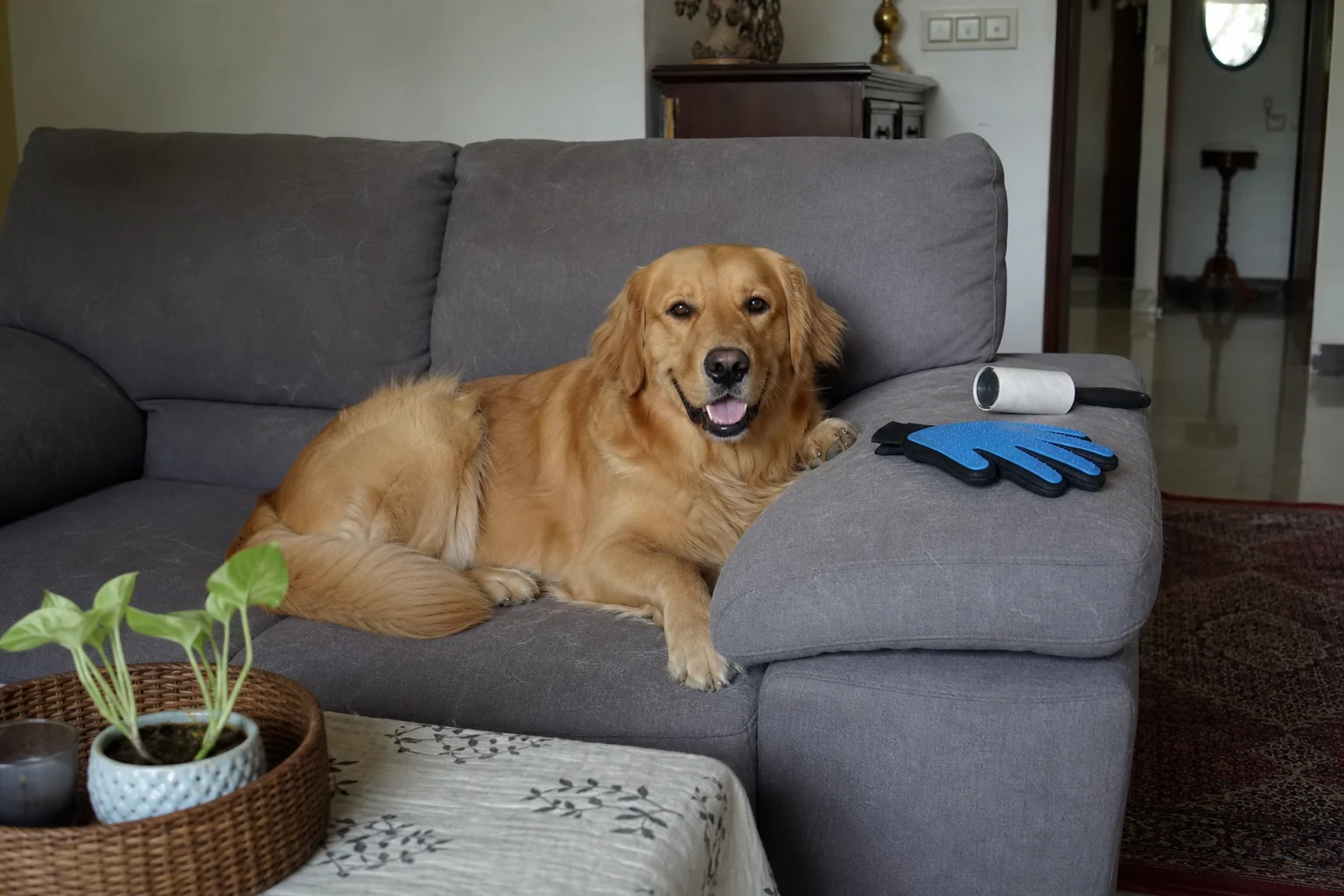
Quick answer
- Loosen pet hair with a damp rubber glove or squeegee first, then vacuum seams and gaps with cushions off.
- For urine: blot hard, never rub, then use an enzyme cleaner and dry with a fan, not heat.
- Avoid ammonia cleaners: they smell like urine to pets and encourage re-marking the same spot.
- Old or repeated urine in the foam may need a repeat treatment; a deep clean with odour treatment is Rs 499 per seat.
- Protect the sofa with washable throws, a waterproof layer for puppies, and fabric protection from Rs 99 per seat.
Why pets are hard on a sofa
A dog or cat treats the sofa as its own bed, and in many Delhi NCR flats it is the softest, coolest spot in the house. That means three separate problems build up together: hair woven into the fabric, dander (tiny skin flakes) settling deep in the cushions, and, sooner or later, a urine accident from a puppy, an older dog or a stressed cat. Each one needs a different fix. General food and drink stains are covered in our sofa stain removal guide; this post is only about what pets leave behind.
Indian breeds and the popular breeds in NCR homes shed differently. Labradors, golden retrievers, German shepherds and huskies shed heavily, often twice a year in big waves, and Delhi's hot months make that worse. Indie dogs and short-haired cats shed less visibly, but their short, stiff hairs work their way into woven fabric like tiny needles and are harder to pull out than long, soft fur.
Getting pet hair off the sofa
A vacuum alone often leaves half the hair behind, because the hairs are caught in the weave. The trick is to loosen the hair first, then remove it.
Tools that work
- A damp rubber glove: put on an ordinary household rubber glove, dampen it slightly, and wipe your hand across the fabric in one direction. The hair rolls up into clumps you can pick off. This is the cheapest and one of the most effective methods, and it works well on tightly woven fabrics.
- A rubber squeegee or pet-hair brush: the same principle as the glove but faster for a full sofa. Short, firm strokes in one direction.
- A lint roller: good for a quick touch-up before guests arrive, and for small areas like armrests, but slow and expensive for a whole sofa.
- Vacuum attachments: use the upholstery tool with a brush strip, and the crevice tool for seams and the gap between seat and backrest, where hair collects in mats. A motorised pet-hair head, if your vacuum has one, makes a big difference on fabric sofas.
The right order
- Loosen with the rubber glove or brush, working in one direction.
- Pick off the clumps by hand.
- Vacuum the whole surface, then the seams and gaps, with every cushion removed.
- Finish the armrests and front edges with a lint roller.
On velvet and chenille, go gently with rubber tools and always brush with the pile, not against it, so you do not leave marks. Leather and rexine are the easy ones: hair does not cling, and a slightly damp microfibre cloth picks it up.
Rather leave it to a pro? Book a home sofa clean across Delhi NCR.
Fabric shampoo, leather conditioning, or a full deep clean with stain and odour treatment. Per-seat pricing from ₹349.
Pet urine on a sofa: what to do and why it is so stubborn
Urine is the problem most pet owners call us about, and it deserves an honest explanation. Unlike a cup of tea that sits on the fabric surface, urine is thin, warm and quickly absorbed. It passes through the cover in seconds and spreads into the foam below, often in a wider patch than you see on the fabric. As it dries, it leaves behind salts and compounds that keep releasing a strong ammonia smell, especially on humid days. That is why a spot can seem fine for a week and then smell again in the monsoon.
For a fresh accident
- Blot immediately, do not rub. Press thick paper towels or an old towel firmly into the spot and stand or press on it to draw the urine up. Change the towel and repeat until it comes up nearly dry. Rubbing spreads the urine sideways into more foam.
- Use an enzyme cleaner. An enzyme-based pet stain and odour cleaner contains enzymes that break down the compounds in urine that cause the smell, rather than masking them. Follow the label: apply enough to reach as deep as the urine went, and give it the full contact time. Patch-test on a hidden spot first.
- Let it dry with air, not heat. Use a fan. Do not use a hair dryer or iron; heat can set the stain and the smell.
Why ammonia-based cleaners make things worse
Many glass cleaners and some household sprays contain ammonia. Urine also smells of ammonia as it breaks down. To a dog or cat, a spot cleaned with ammonia can smell like another animal's mark, and the natural reaction is to mark it again, right on top. This is one of the most common reasons we hear that "he keeps going on the same cushion". Avoid ammonia cleaners, strong perfumed sprays and bleach on any pet accident.
Old and repeated urine spots: the honest limits
If the same spot has been used several times, or an accident was not found for days, the urine is in the foam, and sometimes in the wooden frame or base fabric underneath. Surface cleaning will not reach it. Professional hot-water extraction with an enzyme and anti-microbial treatment can remove most of it, but we will be straight with you:
- Heavy or repeated urine in the foam may need a second treatment after a few days before the smell is fully gone, because the foam keeps releasing residue as it dries.
- A yellow ring on light-coloured fabric may lighten but not disappear, because urine can permanently change some dyes.
- If urine has soaked through a cushion from many accidents over months, replacing that foam insert is sometimes the more reliable fix, and we will tell you that on inspection rather than charge for a clean that cannot work.
For urine problems, our deep clean with stain and odour treatment (₹499 per seat, before GST) is the right service, because it includes hot-water extraction, targeted breakdown of the source, deodorising and an anti-microbial rinse. For hair and general grime with no urine, a standard fabric shampoo from ₹349 per seat is usually enough.
Dander, allergies and keeping the home comfortable
Dander is the real cause of most pet allergies, not the hair itself. These tiny, light skin flakes stay airborne for a long time and settle deep into upholstered furniture, where they build up month after month. A family member who sneezes, gets itchy eyes or wheezes on the sofa, but not elsewhere, is often reacting to dander in the cushions.
- Vacuum the sofa at least twice a week if anyone in the home has allergies, ideally with a vacuum that has a HEPA filter so the dander is not blown back into the room.
- Wash removable covers and pet throws weekly in hot water if the fabric allows it.
- Groom and brush the pet outdoors or on the balcony, not on the sofa.
- A professional extraction clean pulls out dander from deep in the fabric that home vacuuming does not reach. Our guide on how often to clean a sofa explains why pet homes need a shorter gap.
Cleaning reduces dander significantly, but it does not make a sofa allergen-free while the pet keeps using it. If someone has a serious allergy or asthma, follow the advice of their doctor on keeping pets off upholstered furniture.
Pet-safe products: what to use and what to avoid
Dogs and cats lick their paws and lie with their faces on the cushions, so whatever you put on the sofa ends up in their mouths. Keep it simple:
- Generally fine: plain water, a mild unscented dish soap heavily diluted, baking soda (vacuumed out completely), and enzyme cleaners labelled as pet-safe, used as directed.
- Avoid: phenyl, bleach, ammonia cleaners, strong disinfectants meant for floors, and fragrance oils. Essential oils such as tea tree, eucalyptus and citrus oils can be toxic to cats in particular, so do not use them as a homemade sofa spray in a cat home.
- Keep pets away until it is dry. Even safe products should not be licked while wet.
When KaamGenie cleans a sofa in a pet home, the products we use are safe for kids and pets once the fabric is dry. Fabric touch-dries in about 4 to 6 hours and is fully dry by the next morning, so plan to keep the dog or cat in another room until then. Our sofa cleaning service page explains the full process.
Protecting the sofa going forward
You will not stop a pet from loving the sofa, so the goal is to make the damage easy to manage.
- Washable throws on the pet's favourite spot: one cotton throw or a fitted cover on the corner the dog always claims takes most of the hair and dander, and goes in the washing machine every week.
- A waterproof layer for puppies and senior pets: a waterproof-backed throw under the cotton one saves the foam from accidents while house training or as an older pet loses bladder control.
- Fabric protection after cleaning: a stain-repellent coat (an add-on from ₹99 per seat) applied after a professional clean makes fresh spills and accidents bead up for a few moments, giving you time to blot before they soak in. It does not make the sofa waterproof, and it will not stop a large accident from reaching the foam if left unnoticed.
- Trim nails and give them their own bed: a comfortable pet bed next to the sofa, rewarded with treats, reduces how often the pet uses the sofa at all. Trimmed nails cause fewer snags and pulled threads.
- Choose fabric wisely when you replace a sofa: tightly woven, textured fabrics and leather hide hair and resist claws better than loose weaves and velvet. Our comparison of fabric and leather sofa care goes into this.
Pet smell is not the only odour a sofa picks up; if your sofa smells of sweat, food or smoke, see our guide to removing a bad smell from a sofa. If the smell is musty and appears in the monsoon, it is more likely damp than your pet.
Frequently asked questions
What is the fastest way to remove dog hair from a fabric sofa?
Put on a slightly damp rubber glove and wipe across the fabric in one direction so the hair rolls into clumps, then pick them off and vacuum with the upholstery tool. A rubber squeegee works the same way and is faster for a full sofa. Finish armrests with a lint roller.
How do I get cat urine smell out of a sofa cushion?
Blot up as much as possible, apply an enzyme-based pet odour cleaner deep enough to reach where the urine went, leave it for the full contact time on the label, and dry with a fan. If the urine has soaked deep into the foam or the spot was used repeatedly, professional extraction is usually needed.
Why does my dog keep peeing on the same spot on the sofa?
If any urine residue remains, the pet can still smell it and treats the spot as a toilet area. Cleaners containing ammonia make this worse because they smell similar to urine. Use an enzyme cleaner that breaks down the residue, and consider a vet check if accidents are new or frequent.
Can pet urine be completely removed from sofa foam?
Often, but not always in one go. Urine spreads wider in the foam than it appears on the cover, and heavy or repeated accidents may need a second treatment after a few days. If a cushion has absorbed many accidents over months, replacing that foam insert can be more reliable than cleaning.
Is baking soda safe to use on a sofa with pets at home?
Baking soda is generally safe when used in a thin layer and vacuumed out completely, and it helps absorb mild odour. Keep pets off the sofa while it is on so they do not lick or inhale large amounts. It does not replace an enzyme cleaner for urine accidents.
Are professional sofa cleaning chemicals safe for dogs and cats?
The products KaamGenie uses are safe for kids and pets once the fabric is dry. Fabric is touch-dry in about 4 to 6 hours and fully dry by next morning, so keep pets in another room until then. Tell the crew about your pets so they can plan the drying time.
How often should I clean my sofa if I have a dog?
Vacuum at least once or twice a week and wash throws weekly. A professional extraction clean every 3 to 6 months suits most homes with a dog that uses the sofa, and more often if anyone in the family has allergies or the pet has accidents. Heavy shedders may need it more frequently.
Does sofa cleaning help with pet allergies?
Yes, extraction cleaning removes a large amount of dander from deep in the fabric that vacuuming leaves behind, so many families notice fewer symptoms afterwards. It does not make the sofa allergen-free while the pet keeps using it, so combine it with regular vacuuming and washable throws, and follow medical advice.
Which essential oils should I avoid on a sofa in a cat home?
Avoid using tea tree, eucalyptus, citrus, peppermint and similar concentrated oils as sofa sprays where cats live, because cats are especially sensitive to them. Stick to plain water, heavily diluted mild soap and pet-safe enzyme cleaners, and keep pets away until the fabric is dry.
What does professional pet urine treatment on a sofa cost in Delhi?
KaamGenie's deep clean with stain and odour treatment, which includes hot-water extraction, deodorising and an anti-microbial rinse, is Rs 499 per seat before 18% GST. Standard fabric shampoo for hair and general grime starts at Rs 349 per seat. The quote is confirmed on the phone and not changed on arrival.
Sources & references
- ASPCA Animal Poison Control: Household products and essential oils that can be harmful to dogs and cats.
- Asthma and Allergy Foundation of America: Pet Allergy: How pet dander causes allergies and how to reduce exposure at home.
- RSPCA: General pet welfare and house-training guidance.
Last verified: 4 November 2026.