
Quick answer
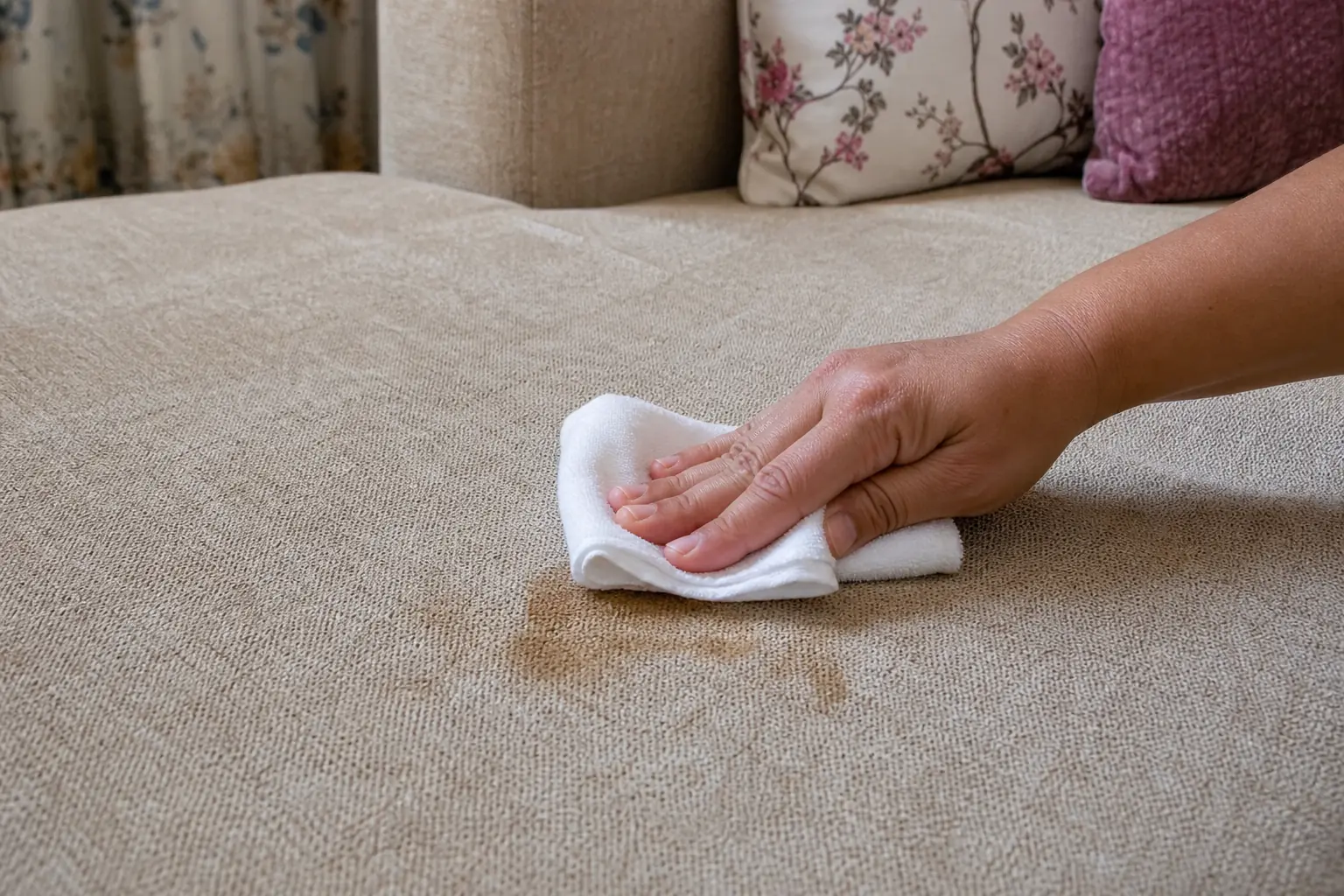
- Blot, never rub: rubbing spreads the stain and damages fibres.
- Act fast on fresh spills; set-in stains are much harder.
- Test any cleaner on a hidden patch first.
- Old, oily, ink or pet stains often need professional extraction.
The golden rules before you start
Whatever the stain, three rules protect your sofa. First, blot, do not rub: press a clean dry cloth onto the spill to lift it, because rubbing pushes it deeper and frays the fibres. Second, work from the outside in so you do not spread the stain wider. Third, always test any cleaner, even water, on a hidden patch first to be sure the fabric is colour-fast. And check the care label: an S or X code means no water-based cleaning.
Tea, coffee and soft drinks
Blot up as much as you can immediately. Mix a little mild dish soap into cool water, dip a cloth, wring it almost dry, and dab the stain gently from the edges inward. Blot with a dry cloth to lift the moisture, and repeat rather than soaking it in one go. Avoid hot water on tea and coffee, which can set the tannins.
Oil and grease
Oily food and hair-oil marks on the headrest are stubborn because water alone will not shift grease. Sprinkle a little baking soda or cornflour on a fresh oil stain and leave it 15 minutes to absorb, then vacuum it up. Follow with a barely damp cloth and a drop of dish soap. Old, set-in oil usually needs a solvent and professional extraction to come out properly.
Rather leave it to a pro? Book a home sofa clean across Delhi NCR.
Fabric shampoo, leather conditioning, or a full deep clean with stain and odour treatment. Per-seat pricing from ₹349.
Ink
Ink is one of the hardest stains and one to be careful with. Dab, do not wet, with a little isopropyl alcohol on a cotton bud, working from the edges in, and blot with a dry cloth as the ink transfers. Do not soak the area. If the ink is large or already dry, stop and call a professional, because the wrong solvent can spread it or bleach the fabric.
Pet stains and smells
For a fresh pet accident, blot up as much as possible, then treat with an enzyme-based pet cleaner that breaks down the odour at the source rather than masking it. Regular cleaners often leave a smell that draws the pet back to the same spot. Old or repeated pet stains have usually soaked into the foam, and that is a job for professional deep cleaning with hot-water extraction and an anti-microbial treatment.
When to stop and call a professional
Leave it to a pro when the stain is old and set, oily or ink-based, covers a large area, or when the care label says S or X. A professional has the right solvents, hot-water extraction and the experience to lift stains without damaging the fabric. Trying too hard at home often sets the stain or leaves a watermark that is worse than the original. Book a sofa deep clean with stain treatment and we will tell you honestly what can and cannot come out.
Frequently asked questions
How do I get a tea or coffee stain out of a sofa?
Blot up the spill immediately, then dab gently with a cloth dipped in cool water and a little mild dish soap, working from the edges inward. Blot dry and repeat. Avoid hot water, which can set the stain, and always test on a hidden patch first.
Can I remove an old set-in stain myself?
Old, set-in stains are much harder and often will not come out fully with home methods, especially oil, ink and pet stains that have soaked into the foam. These usually need professional hot-water extraction and the right solvents.
Why should I blot instead of rub?
Rubbing pushes the stain deeper into the fabric and foam, spreads it wider, and frays the fibres, which can leave a permanent rough or discoloured patch. Blotting lifts the spill out without any of that damage.
How do I remove pet stains and smell from a sofa?
Blot a fresh accident, then use an enzyme-based pet cleaner that breaks down the odour at the source. Old or repeated pet stains that have soaked into the foam need professional deep cleaning with an anti-microbial treatment.
How do I get an oil or grease stain out of a sofa?
Sprinkle baking soda or cornflour on a fresh oil stain, leave it 15 minutes to absorb, then vacuum. Follow with a barely damp cloth and a drop of dish soap. Old, set-in oil usually needs professional solvent extraction.
Can I use vinegar or baking soda on my sofa?
A little diluted vinegar or baking soda can help on some fabrics, but always patch-test first, because they can affect colour or leave residue on delicate materials. When unsure, stick to plain blotting and call a professional.
Will water alone leave a ring or watermark?
It can, especially on delicate fabrics, if the area is over-wetted and dries unevenly. Blot with minimal moisture, work from the edges inward, and dry the area, or leave delicate fabrics to a professional.
How do I stop a sofa stain from setting?
Act immediately: blot up the spill, avoid heat and rubbing, and treat gently. The faster you deal with a fresh spill, the more likely it lifts fully. Fabric protection also buys time before a spill soaks in.
Are home stain removers safe for all sofas?
No. Many household stain removers are too harsh for delicate fabrics or leather and can bleach or damage them. Always check the care label, patch-test, and use a product suited to the material, or ask a professional.
Can a professional remove a stain I could not?
Often yes. Professionals have hot-water extraction and a range of stain-specific solvents that reach deeper and work on set-in marks, though they will be honest when a stain is permanent.
Sources & references
- The Spruce: upholstery stain removal basics.
- RSPCA: cleaning up pet accidents.
Last verified: 24 September 2026.