
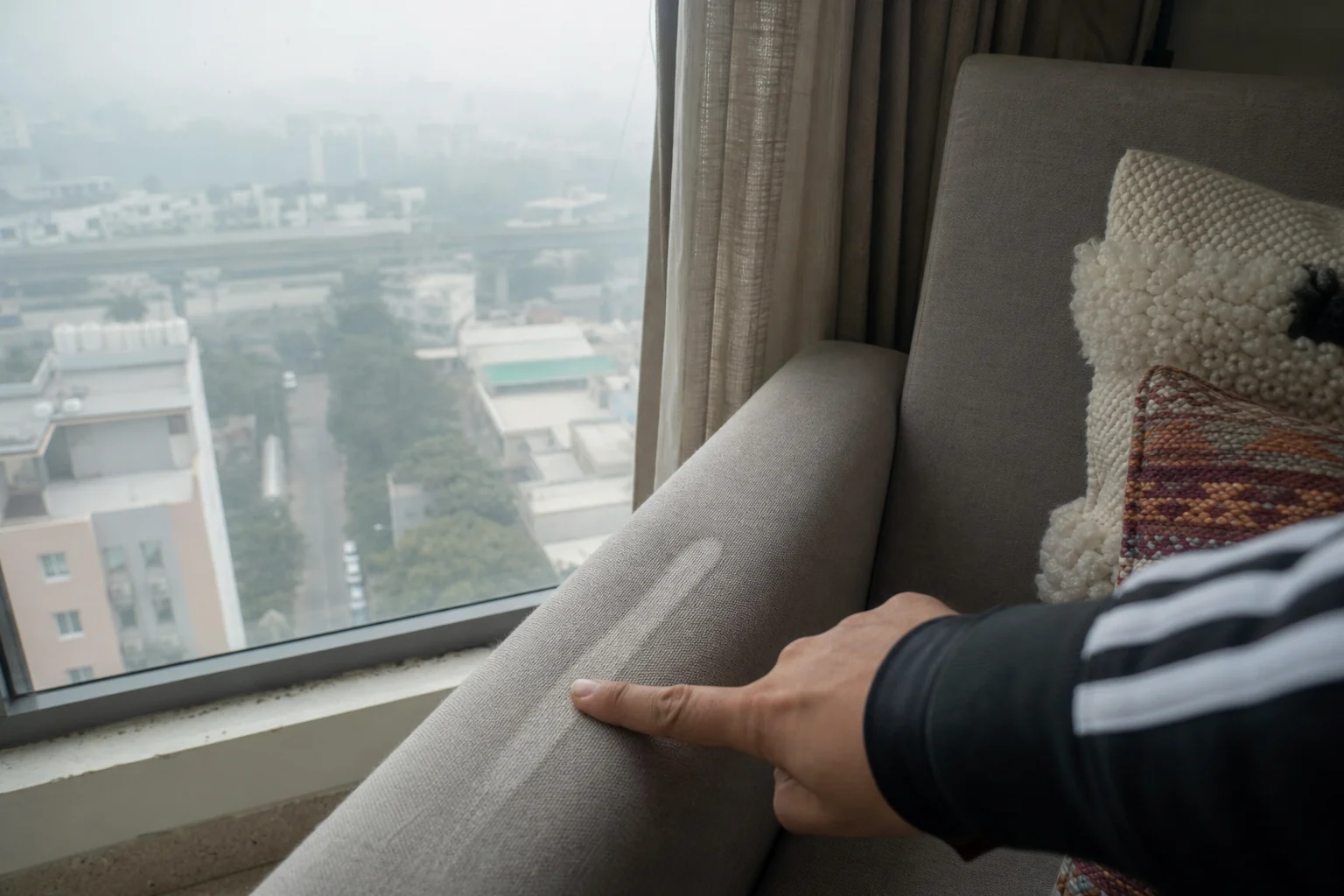
Quick answer
- Fine smog dust settles deep into sofa fabric and padding, and closed windows do not keep it out.
- Sitting on the sofa pushes that dust back into the air you breathe, which matters for asthma and allergy.
- Vacuum weekly with an upholstery tool, use a washable throw and never beat cushions indoors.
- Book a shampoo and extraction clean at the end of the smog season, around late January to February.
- Fabric cleaning starts at Rs 349 per seat and a deep clean at Rs 499 per seat, GST extra.
What the smog season actually does to your sofa
Every year from about October to January, Delhi NCR lives under a grey lid. Stubble burning in Punjab and Haryana, Diwali crackers, vehicle exhaust, construction dust and cold, still air that traps everything close to the ground all add up, and the AQI sits in the "poor" to "severe" bands for weeks. Most families respond sensibly: windows shut, purifiers running, outdoor walks cancelled. What almost nobody thinks about is where all that fine dust goes once it is inside the flat. A good share of it ends up in the softest, biggest dust trap in the house, which is the sofa.
PM10 is the coarser dust you can sometimes see as a film on the TV cabinet. PM2.5 is far finer, small enough to float for hours, and it settles slowly onto every surface. Hard surfaces get wiped. Fabric does not. A woven or textured sofa fabric has thousands of tiny gaps between its fibres, and fine particles lodge in those gaps, then work their way down into the foam and the padding over weeks of sitting.
Why closed windows do not keep it out
Even with windows shut, Delhi homes are not sealed boxes. Air comes in through door gaps, the main door opening a dozen times a day, exhaust fans, AC vents and window frames that were never airtight to begin with. A room purifier helps a great deal with what is floating in the air, but it does very little for what has already landed on the upholstery. In fact, a room that is kept closed for three months tends to collect a steady, fine layer of settled particulate because there is no cross-ventilation moving it out.
Signs your sofa has soaked up a season of pollution
You will not see PM2.5 on a cushion, but the effects of a whole smog season show up in fairly predictable ways when we inspect sofas in December and January.
- Greying of light fabrics: beige, cream, light grey and off-white sofas take on a dull, slightly dirty tone, especially on the armrests, the top of the backrest and the front edge of the seat. Customers often think the colour has faded, but after extraction the original shade usually comes back to a large extent.
- A puff of dust when you sit or thump a cushion: if you sit down hard in a sunny room and see a little cloud in the light, that is settled dust being pushed back into the air you breathe.
- Darker seams and piping: fine dust collects where fabric folds and stitches, so the piping and seams look like they have been drawn in with a pencil.
- Sneezing, itchy eyes or a cough that is worse on the sofa: family members with dust allergy or asthma often notice they feel worse after an evening on the couch than in bed with freshly washed sheets.
- A stale, closed-room smell: pollution particles, cooking fumes and body oils mix in fabric that has not had fresh air for weeks.
The re-release problem
This is the part that matters most for health. A sofa is not just a place where dust sits quietly. Every time someone sits, shifts, plumps a cushion or lets the kids jump on it, some of the fine dust in the fabric is pumped back into the room at exactly the height where you are breathing. So the purifier cleans the air, the sofa slowly reloads it, and the cycle continues. For homes with small children, elderly parents or anyone with asthma, that is a good reason not to ignore upholstery during the worst months.
Rather leave it to a pro? Book a home sofa clean across Delhi NCR.
Fabric shampoo, leather conditioning, or a full deep clean with stain and odour treatment. Per-seat pricing from ₹349.
What to do during the smog months
You cannot stop pollution entering a Delhi home completely, but you can reduce how much the sofa holds on to. None of these steps replace a proper clean, but they slow the build-up.
- Vacuum the sofa once a week with an upholstery tool. Go along every seam, the piping, the gap between seat and backrest and the underside of loose cushions. A vacuum with a HEPA filter is better, because a weak filter can blow fine dust straight back out of the exhaust.
- Use a washable throw on the most-used seats. A cotton throw or cover catches a good part of the settled dust and can be washed every week or two, which is far easier than washing the sofa.
- Place the purifier where it can actually help. In the living room, a purifier running near the seating area, sized for the room, will catch more of what gets kicked up when people sit down.
- Do not beat cushions indoors. The old habit of thumping cushions to get the dust out just moves the dust into your lungs. If you want to air cushions, do it on a balcony on a day when the AQI improves.
- Wipe hard surfaces with a damp cloth rather than a dry duster. Dry dusting throws particles into the air, and many of them land on the sofa.
- Keep shoes and outdoor jackets away from the sofa. Woollen jackets worn outside on a smoggy day carry a surprising amount of dust, and dropping them on the couch transfers it straight into the fabric.
Avoid the temptation to shampoo the sofa yourself in the middle of a severe pollution week with the windows shut. Wet fabric in a closed, cold room dries slowly, and a damp sofa grabs airborne dust even faster. If you want a sense of how long drying takes in different seasons, our guide on how long a sofa takes to dry after cleaning covers it in detail.
When to schedule a professional clean
The honest answer is: at the end of the smog season, not in the middle of it. Cleaning a sofa in early November and then living through another eight weeks of heavy pollution means a good part of the result gets undone. The better window for most Delhi NCR homes is late January to February, when the worst AQI days have usually passed, you can open windows again for a few hours, and the dry winter air helps the fabric dry quickly.
There is one important exception. If you are hosting guests, a wedding function at home or a family gathering in December, it makes sense to get the sofa cleaned a few days before, accept that it will need another clean in spring, and enjoy a fresh-looking living room when it matters. We have written separately about cleaning your sofa before guests and the wedding season, including how far ahead to book.
For general timing through the rest of the year, see how often you should clean your sofa. This post is only about the pollution months and what they add to the usual routine.
Which cleaning method suits a pollution-loaded sofa
For most fabric sofas, shampoo with wet-vacuum extraction is the right choice after a smog season, because extraction physically pulls the loosened fine dust and dirty water out of the fabric and upper layer of foam, rather than just moving it around. If there are also old stains or a musty smell, a deep clean with hot-water extraction, stain treatment, deodorising and an anti-microbial rinse goes further. Delicate fabrics such as some velvets and silk blends are better handled with a low-moisture dry clean. Leather and rexine do not hold particulate the same way; they need a wipe-down, cleaning and conditioning rather than any soaking.
What a post-smog clean involves and what it costs
When our crew arrives for a professional sofa cleaning visit, the first step is an inspection and a patch test on a hidden spot to check colour-fastness. Then comes a thorough dry vacuum of seams, gaps and the underside of cushions, which on a post-Diwali sofa often removes a startling amount of fine grey dust before any water touches the fabric. After that, stains are pre-treated, foam shampoo is worked in and agitated, and the wet vacuum extracts the dirty solution. You can usually see the colour of the water in the tank, and in January it is rarely pretty.
| Service | Starting price (GST extra) | Good for |
|---|---|---|
| Fabric shampoo + extraction | ₹349 per seat; 3-seater from ₹999; 3+2 from ₹1,499 | Greyed, dusty fabric after the smog season |
| Deep clean with stain + odour treatment | ₹499 per seat | Dust plus stains, stale smell, allergy-prone homes |
| Leather / rexine clean + conditioning | ₹599 per seat | Leather that feels gritty or dull |
| Fabric protection coat | from ₹99 per seat (add-on) | Light fabrics you want to keep lighter for longer |
All prices are starting prices before 18% GST, the minimum booking is about ₹999, and the quote is confirmed on the phone before the visit and not changed on arrival.
What cleaning can and cannot fix
Extraction removes a large share of the settled particulate, body oils and grime, and most greyed light fabrics brighten noticeably. It will not reverse genuine sun fading or fabric that has worn thin on the armrests, and an old stain that has sat for years may only lighten rather than disappear. We would rather tell you that during the inspection than surprise you later.
A clean sofa also does not make a home pollution-proof. If the purifier, weekly vacuuming and a washable throw are not part of the routine, the fabric will start collecting dust again from the very next smoggy week. Think of the end-of-season clean as a reset, and the habits above as what keeps it working until the next winter.
Frequently asked questions
Does air pollution really get into a sofa?
Yes. Fine particles such as PM2.5 float indoors for hours and slowly settle on every surface. Hard surfaces get wiped, but fabric traps particles between its fibres and they work down into the padding. Over a full Delhi smog season a sofa can hold a noticeable load of fine dust, which shows up as greying and dust puffs.
Why does my beige sofa look grey after winter?
Light fabrics show settled pollution dust, body oils and grime first, especially on armrests, the top of the backrest and seat edges. It often looks like fading, but much of it is surface soiling. Shampoo with wet-vacuum extraction usually brings a lot of the original shade back, though genuine sun fade cannot be reversed.
Can a dusty sofa make asthma or allergies worse in Delhi winters?
It can contribute. Every time someone sits down, settled dust in the fabric is pushed back into the air at breathing height. People with dust allergy or asthma often feel worse after time on an uncleaned sofa. Weekly vacuuming, a washable throw and an end-of-season clean reduce how much dust the sofa holds.
Should I get my sofa cleaned before or after Diwali?
If you are not hosting guests, it is usually better to wait until the worst pollution weeks pass, around late January to February, so the result lasts. If you have a function or relatives visiting in November or December, clean a few days before the event and plan another clean in spring.
Does an air purifier keep my sofa clean?
A purifier removes a lot of what is floating in the room, which helps, but it cannot pull out dust that has already settled into fabric. Placing it near the seating area catches some of the dust kicked up when people sit. You still need regular vacuuming and an occasional professional extraction clean.
Is it safe to shampoo a sofa at home during the smog season?
It is not ideal. With windows shut in cold weather, wet fabric dries slowly and a damp sofa attracts airborne dust even faster. If you do clean it yourself, use very little water, run a fan and choose a better AQI day so you can open windows for a few hours.
How often should I vacuum my sofa when the AQI is very poor?
Once a week is a sensible target during the October to January months. Use an upholstery nozzle along seams, piping, the gap between seat and backrest and under loose cushions. A vacuum with a good HEPA filter is better because a weak filter can blow fine dust back into the room.
Which sofa cleaning method is best after the pollution season?
For most fabric sofas, foam shampoo followed by wet-vacuum extraction works best because it pulls the loosened dust out instead of spreading it. Add a deep clean if there are stains or a stale smell. Delicate velvets and silk blends are better with a low-moisture dry clean, and leather is cleaned and conditioned, never soaked.
How much does sofa cleaning cost after the smog season in Delhi NCR?
KaamGenie fabric shampoo and extraction starts at Rs 349 per seat, with a 3-seater from Rs 999 and a 3+2 set from Rs 1,499. A deep clean with stain and odour treatment is Rs 499 per seat. Prices are starting prices before 18% GST, and the minimum booking is about Rs 999.
Will a fabric protector stop pollution dust from sticking to my sofa?
A stain-repellent coat applied after cleaning helps spills bead up and makes surface soiling easier to vacuum off, so light fabrics stay presentable longer. It does not create a dust-proof barrier, and fine particles will still settle. It works best together with weekly vacuuming and a washable throw on the most-used seats.
Sources & references
- Central Pollution Control Board (CPCB): Official source for India's National Air Quality Index and Delhi NCR AQI data.
- US EPA: Particulate Matter (PM) Basics: Explains PM2.5 and PM10 and how fine particles behave and affect health.
- World Health Organization: Ambient (outdoor) air pollution: Health effects of particulate pollution and WHO air quality guidance.
Last verified: 4 November 2026.