
Quick answer
- Fabric shampoo with extraction: touch-dry in about 4 to 6 hours, fully dry by the next morning.
- Low-moisture dry cleaning dries faster; leather and rexine need almost no drying time.
- Monsoon humidity slows drying the most; fans, open windows and AC dry mode help.
- Never point a heater or hair dryer at the fabric, sit on it damp, or cover it before it is dry.
- A sofa still wet the next evening usually means it was over-wetted and under-extracted.
The short answer: drying time by cleaning method
The first question almost every customer asks after the crew finishes is, "When can we sit on it?" The honest answer depends mostly on how the sofa was cleaned and what it is made of. A fabric sofa cleaned with foam shampoo and wet-vacuum extraction is usually touch-dry in about 4 to 6 hours and fully dry, right down into the padding, by the next morning. A low-moisture dry clean dries faster because far less liquid goes into the fabric. Leather and rexine need almost no drying time at all, because they are wiped, cleaned and conditioned, never soaked.
| Method / material | Touch-dry | Fully dry | Notes |
|---|---|---|---|
| Fabric: foam shampoo + wet-vacuum extraction | About 4 to 6 hours | By the next morning | Faster with a fan and open windows |
| Fabric: deep clean with hot-water extraction | About 4 to 6 hours, sometimes a little longer | By the next morning | Thick cushions and heavy soiling add time |
| Delicate fabric: low-moisture dry clean | Usually within a couple of hours | Same day | Used for some velvets and silk blends |
| Leather / rexine: clean + conditioning | Almost immediately | Within about an hour | Let the conditioner settle before heavy use |
"Touch-dry" means the surface no longer feels damp when you press your palm on it. "Fully dry" means the foam underneath has dried too, which is what matters for smell and hygiene. A sofa can feel dry on top while the cushion core is still slightly cool and damp, so do not judge only by the fabric. If you want to understand why the two fabric methods differ so much in moisture, our comparison of sofa dry cleaning versus shampooing explains it.
What makes a sofa dry faster or slower
Delhi NCR weather, season by season
Weather is the biggest factor you cannot control, and Delhi NCR swings through every extreme in a year.
- Monsoon (July to September): the slowest season. Humid air cannot absorb much more moisture, so fabric gives up its water very slowly. A sofa that dries in five hours in March can take most of the day in August, and the risk of a musty smell is highest. Running a fan non-stop is not optional in this season.
- Summer (April to June): hot, dry air dries fabric quickly, especially with a cooler or ceiling fan running. Just keep the sofa out of direct, harsh sunlight, which can fade some colours.
- Winter (November to February): the air is dry, which helps, but the cold and the habit of keeping windows shut because of fog and smog slow things down. In a closed, chilly room the drying time creeps back up.
- Spring and post-monsoon: generally the easiest months, with mild temperatures and air you can actually let into the room.
The sofa itself
- Fabric thickness and weave: thin, tightly woven fabrics dry fastest. Chenille, thick textured weaves and plush velvets hold more water in their pile.
- Foam density and cushion thickness: a thick, dense seat cushion dries slower in the middle than a thin back cushion.
- How dirty it was: a heavily soiled sofa may need more passes of shampoo and extraction, which means a little more moisture to dry.
- Fixed versus loose cushions: loose cushions can be stood on their edge to dry from both sides; fixed seats dry only from the top.
The room
Air movement matters more than heat. A room with a ceiling fan running and a window or balcony door open will dry a sofa much faster than a warm, sealed room. Sofas pushed tight against a wall dry slowly at the back, and a corner L-shape dries slowest where the two sections meet.
Rather leave it to a pro? Book a home sofa clean across Delhi NCR.
Fabric shampoo, leather conditioning, or a full deep clean with stain and odour treatment. Per-seat pricing from ₹349.
How to speed up drying safely
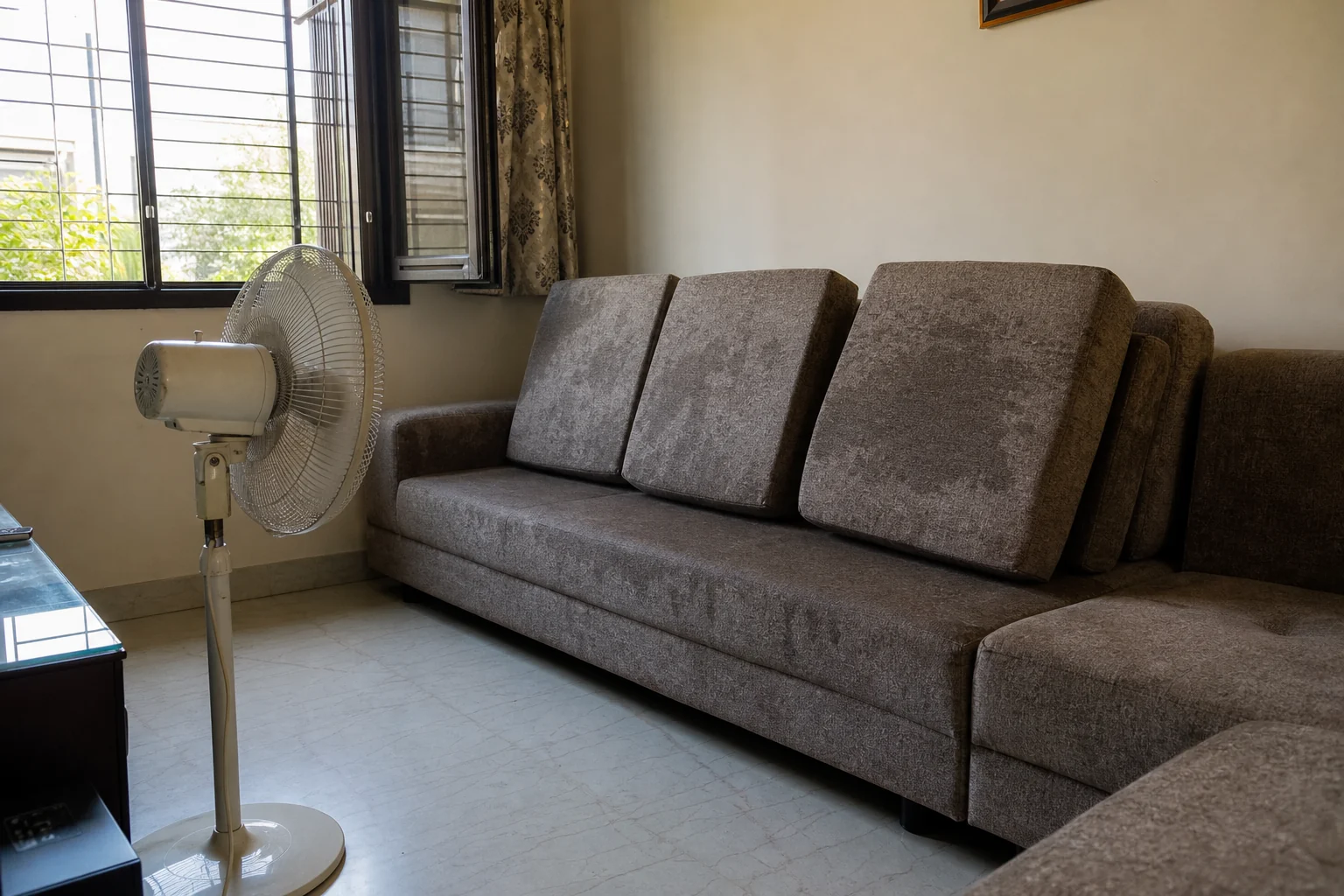
- Run the ceiling fan on full from the moment the crew finishes, and add a pedestal or table fan pointed across the sofa if you have one.
- Open windows and the balcony door when outside air is reasonably dry and the AQI allows it. Cross-ventilation is the single best drying aid.
- Run the AC in cooling or dry mode in humid weather. An AC removes moisture from the room air, which helps a lot during the monsoon.
- Pull the sofa a few inches away from the wall so air can move behind it.
- Stand loose cushions on their edge or lift them slightly so both sides get air, rather than leaving them flat on a damp seat.
- Use a dehumidifier if you own one, especially in the monsoon or in a ground-floor flat that tends to stay damp.
Our crew also does its part before leaving: a thorough wet-vacuum extraction to pull out as much of the water as possible, then grooming the fabric so the pile stands up and dries evenly. A good extraction is the main reason a sofa dries in hours rather than a whole day.
What not to do while the sofa is drying
- Do not use a room heater, blower or hair dryer close to the fabric. Concentrated heat can shrink some fabrics, distort foam, leave water rings where one patch dries much faster than the area around it, and in the worst case it is a fire risk. A heater kept at a safe distance across the room in winter is fine; one pointed at the cushions is not.
- Do not sit or sleep on a damp sofa. Body weight presses moisture deeper into the foam and leaves dirt and oil from clothes on wet fabric, which can show as a dull patch later.
- Do not cover it. Throws, bedsheets, plastic covers and sofa covers trap moisture underneath and are the most common cause of a musty smell the next day. Put covers back only after the sofa is fully dry.
- Do not let pets or children climb on it until it is dry. Paws and shoes leave marks on wet fabric, and damp fabric picks up dirt quickly.
- Do not put coloured cushions or dark throws on light fabric while damp, because dye can transfer.
- Do not put it out in harsh afternoon sun for hours to "speed it up", as strong sun can fade or stiffen some fabrics.
When drying takes too long: what it signals
If a fabric sofa is still wet to the touch the next evening, something went wrong. Usually it means the sofa was over-wetted and under-extracted: too much water or shampoo went in, and not enough was pulled back out with the wet vacuum. Sometimes it is a weak machine, sometimes rushed work, and sometimes a person with a spray bottle and a towel calling it a "shampoo". The warning signs are:
- water pooling or squishing when you press a cushion;
- brown or yellow rings appearing as the fabric dries, which happens when moisture soaks deep and wicks old dirt back to the surface;
- a sour or damp smell the next day;
- a sticky or stiff feel once dry, which points to shampoo residue left in the fabric.
A damp sofa that stays damp for a day or two, especially during the monsoon, is exactly how mould and mildew get a foothold; our guide on sofa mould and musty smell in the monsoon covers what to do if that happens. With a professional sofa cleaning done properly, the sofa should never be dripping when the crew leaves. If you are not satisfied with how damp the fabric is, or with the result, say so before the crew goes, and they will re-do the work on the spot.
Planning the cleaning around your day
Because a fabric sofa needs that overnight window to dry fully, a morning or early afternoon slot works best for most families. The sofa is touch-dry by evening, and the cushions have the whole night to dry through. If you are expecting guests, book at least a day before rather than the same morning. Families who use the sofa as a bed, or who have no other seating, can ask for the cushions to be done first so they get the longest drying time.
Leather and rexine are much easier, since they can be used within the hour; the different care needs of the two materials are covered in our post on fabric versus leather sofa care. Fabric shampoo with extraction starts at ₹349 per seat and leather cleaning with conditioning at ₹599 per seat, both before 18% GST, and once the sofa is dry it is safe for kids and pets.
Frequently asked questions
Can I sit on my sofa the same day it is shampooed?
You can usually sit on it lightly by the evening once it is touch-dry, typically 4 to 6 hours after a shampoo and extraction clean. It is better to avoid heavy use, sleeping on it or putting covers back until the next morning, when the foam underneath has dried fully as well.
Why is my sofa still damp the day after cleaning?
Most often the fabric was over-wetted and not extracted properly, so too much water stayed in the foam. High monsoon humidity, a closed room or very thick cushions can also slow things down. If it squishes when pressed or smells sour the next day, it needs proper extraction and ventilation.
Can I use a hair dryer to dry my sofa faster?
It is not a good idea. Concentrated heat close to the fabric can shrink some materials, distort foam and leave water rings where one patch dries faster than the rest. It is also a fire risk if left running. Fans, open windows and an AC in dry mode are safer ways to speed up drying.
Does a dry cleaned sofa need drying time?
Very little. Low-moisture dry cleaning puts far less liquid into the fabric than shampoo, so it usually feels dry within a couple of hours and is ready for normal use the same day. It is often chosen for delicate fabrics such as some velvets and silk blends that should not be soaked.
How long does a leather sofa take to dry after cleaning?
Almost no time. Leather and rexine are cleaned with a damp wipe and then conditioned, never soaked, so the surface is dry within minutes. It is sensible to let the conditioner settle for around an hour before heavy use so it can absorb into the leather properly.
Does sofa drying take longer in the Delhi monsoon?
Yes, noticeably. In July to September the air is already humid, so fabric releases its water slowly and a sofa can take most of the day to become touch-dry. Keep the ceiling fan on full, add a pedestal fan, run the AC in dry mode and pull the sofa away from the wall.
Why do brown rings appear on my sofa after it dries?
Brown or yellow rings usually appear when the fabric was soaked too deeply. Water wicks old dirt up from the padding to the surface and leaves a tide mark as it dries. Proper wet-vacuum extraction prevents this. Rings can usually be corrected with another careful extraction pass.
Can I put the sofa cover back on right after cleaning?
No, wait until the sofa is fully dry, ideally the next morning. A cover, throw or plastic sheet traps moisture underneath, which is one of the most common causes of a musty smell and, in humid weather, mould. Let the fabric breathe overnight with a fan running.
Is a damp sofa safe for kids and pets?
It is best to keep children and pets off the sofa until it is dry. Wet fabric picks up marks from paws, shoes and clothes, and pressure pushes moisture deeper into the foam. Once the sofa is fully dry, a professional clean using proper products is safe for kids and pets.
What time of day should I book sofa cleaning so it dries in time?
A morning or early afternoon slot is best for fabric sofas. It gives 4 to 6 hours to become touch-dry by evening and the whole night to dry fully. If guests are coming, book at least a day before rather than on the morning of the visit.
Sources & references
- US EPA: Mold: EPA guidance on mould and why damp materials should be dried quickly.
- India Meteorological Department: Official source for Delhi NCR seasonal humidity and weather conditions.
Last verified: 4 November 2026.