
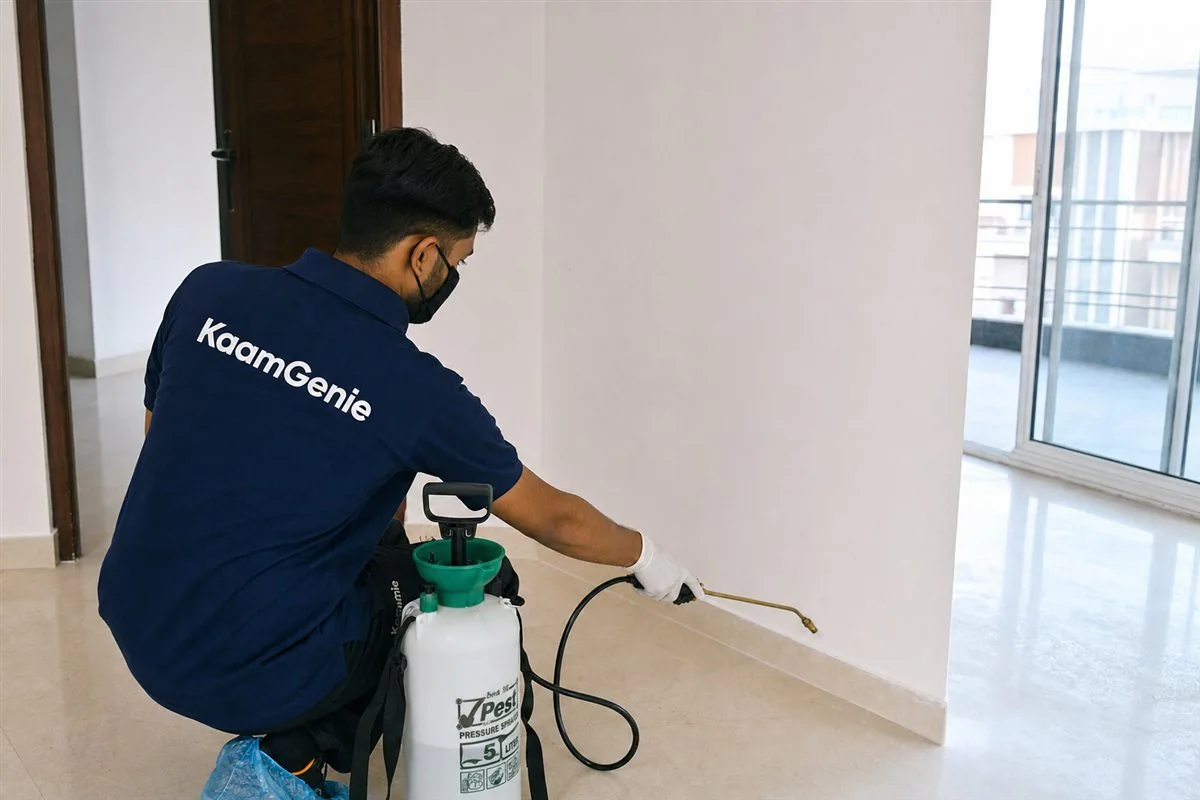
Quick answer — pest control before moving into a Delhi home (2026)
- Treat while it’s empty: an empty flat is the cheapest and most thorough time to do pest control — full reach into every cabinet, skirting and corner, no furniture to move, chemicals dry before your things arrive.
- What to get done: a general crawling-pest treatment, a termite inspection (treat if found), cockroach gel in the kitchen, and sealing of entry points — pipe gaps, drains and door bottoms.
- It changes by home type: a new builder flat mostly needs entry-point sealing and a light general spray; an old resale flat needs a full general treatment plus a termite check; a rental needs a quick reset because you don’t know its history.
- Real cost (2026): general treatment from ₹999, a termite inspection-and-treat from ₹2,499, cockroach gel from ₹599; a combined pre-move package is usually cheaper than booking each later. GST 18% extra.
- Timing: book 2–5 days before your shifting date so the flat can be treated, aired and dry before move-in.
- No honest service promises a pest-proof home forever — but doing it empty gives you the cleanest possible start. We cover all of Delhi.
Why an empty flat is the perfect (and cheapest) time to treat
Here is the thing almost nobody tells you when you buy or rent a place in Delhi: the few days between getting the keys and moving the furniture in are the single best window you will ever get for pest control. Once the sofa, the beds, the wardrobes and forty cardboard boxes are in, that window slams shut — and it doesn’t open again cheaply.
Think about what a technician actually has to do. To treat properly he needs to reach the skirting along every wall, the back of every kitchen cabinet, the gaps where pipes enter under the sink, the corners behind where your fridge will sit, the bottom of every door. In an empty flat he walks straight to all of it in one pass. In a furnished flat, half of it is blocked — he sprays what he can reach and writes “could not access” for the rest. You pay the same money for a worse job. That is the whole argument in one paragraph.
There are three more reasons the empty window wins. First, drying time. Sprays and gels need a few hours undisturbed; an empty flat gives them that without you tiptoeing around damp skirting with a toddler. Second, safety — no food in the kitchen, no clothes in the cupboards, no fish tank, no pet underfoot, so the technician can use the full protocol without working around your life. Third, you start clean. Whatever the previous occupant left behind — cockroach egg cases tucked behind a cabinet, a quiet ant trail, a termite mud-tube starting up a wall — gets dealt with before it becomes your problem in month two. I have lost count of the families in Saket and Mayur Vihar who called me four weeks after shifting, furniture everywhere, asking me to treat a kitchen that would have taken twenty minutes when it was bare.
What to actually get done before you move in
You do not need everything under the sun. A sensible pre-move job in a Delhi home is four specific things, and I’d rank them in exactly this order of importance.
- 1. A general (crawling-pest) treatment. This is the base layer — a residual spray and targeted treatment along skirting, corners, the back of cabinets, bathrooms and balconies, knocking down cockroaches, ants, silverfish and the general crawl. In an empty flat this is quick, complete and cheap, from around ₹999. If you do only one thing, do this.
- 2. A termite inspection — and treatment if found. Delhi sits on termite-friendly soil, and an empty flat is the only time you can actually see the walls. The technician checks for mud tubes along skirting, around door frames, on the back walls of wardrobes and near any wood. If there’s active termite, treating it now — before your wooden furniture and wardrobes go in — is far easier and starts around ₹2,499. Catching it empty can save you a ruined bookshelf later.
- 3. Cockroach gel in the kitchen. The kitchen is where roaches set up, and a bare kitchen is the perfect time to apply gel bait into hinge gaps, cabinet corners, behind where the chimney and slab units will go, and around the sink pipe. Gel keeps working for weeks as it gets carried back to the nest. From around ₹599, and it’s the highest-value twenty minutes in the whole job.
- 4. Sealing the entry points. This is the bit cheap services skip and the bit that actually keeps pests out long-term. The gaps where water and gas pipes pass through walls under the sink and behind the washing machine, open or unscreened floor drains in bathrooms and the balcony, the gap under the main door — these are the motorways pests use. Sealing pipe collars, fitting drain covers and a door sweep while the flat is empty is simple and stops re-entry. Ask for it by name; many quotes leave it out.
One honest note on language: a good service gives you before-and-after photos and a proper GST invoice for what was done — useful records, especially in a rental where you may want to show the landlord. Don’t get hung up on fancy paperwork; the photos and the invoice are what matter.
| What to get done | Why do it while empty | Starting price (2026) |
|---|---|---|
| General crawling-pest treatment | Full reach to every skirting, corner and cabinet back — no furniture in the way | From ₹999 |
| Termite inspection (treat if active) | Walls are visible; treat before wooden furniture and wardrobes go in | Inspection light; treatment from ₹2,499 |
| Cockroach gel baiting in kitchen | Bare cabinets let gel reach hinges, corners and the sink pipe | From ₹599 |
| Entry-point sealing | Pipe collars, drain covers and door sweep fitted with clear access | Add-on (often bundled) |
Got the keys but not moved in yet?
That empty window is the best time to treat — full reach, no furniture, dry before your things arrive. General treatment of an empty flat from ₹999 (GST 18% extra).
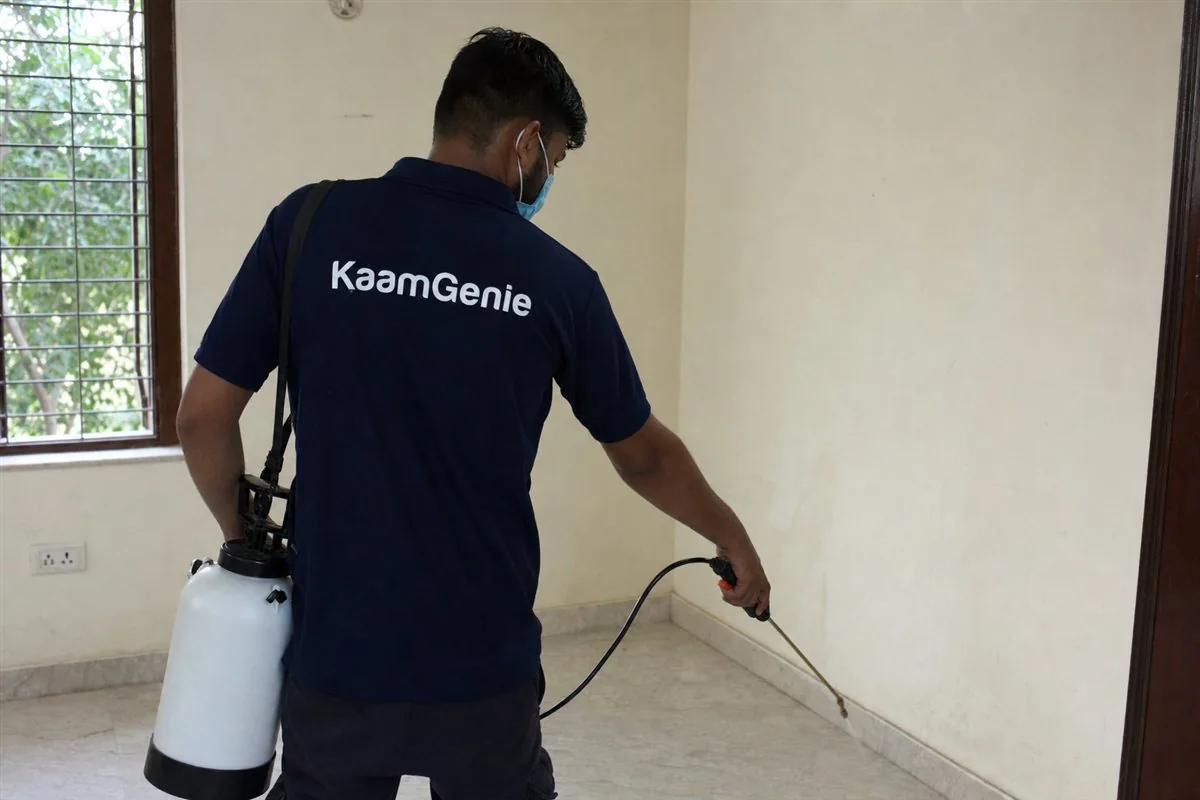
New builder flat vs old resale vs rented — what each actually needs
Not every move is the same, and the right pre-move job depends a lot on what kind of home you’re walking into. Here’s how I’d treat each one differently.
A brand-new builder flat — a fresh handover in a Dwarka or Noida-side tower, never lived in. People assume new means clean, and largely it is, but new construction brings its own issues. Damp from recent plastering and curing draws silverfish and the odd cockroach up through the drains, and the building’s common shafts are shared with dozens of other units. What a new flat mainly needs is entry-point sealing (those service-duct and pipe gaps are wide open on handover) and a light general treatment as a baseline. Termite is usually low-risk on a new slab if the builder did the pre-construction soil treatment — but ask, because plenty don’t, and you can’t tell by looking.
An old resale flat — a 15- or 20-year-old place in Lajpat Nagar, Rajouri Garden or Greater Kailash that you’ve just bought. This is the one that genuinely needs the full job. You have no idea what the previous family lived with: there may be an established cockroach population in the kitchen, ant colonies in wall cavities, and — the big one — termite, which loves old wooden door frames and built-in wardrobes. For a resale flat I’d always do a full general treatment plus a proper termite inspection, and budget for termite treatment in case the inspection finds active tubes. Doing it empty here is worth real money.
A rented flat — where you don’t own the place and may only stay a year or two. You won’t want to spend big, and you shouldn’t have to, but you also don’t know the home’s history or who lived there before you. The sensible move is a quick general reset — a general treatment and kitchen gel so you start on a clean footing — and a quick word with the landlord about who pays. For tenancies, many Delhi landlords will cover a pre-move treatment if you ask before signing; get the GST invoice so it’s on record. Save the heavy termite work for the owner’s account, not yours.
| Home type | Main risks | What I’d book |
|---|---|---|
| New builder flat | Open service-duct & pipe gaps, post-construction damp, silverfish | Entry-point sealing + light general treatment; confirm builder did anti-termite |
| Old resale flat | Unknown history, established roaches/ants, termite in old woodwork | Full general treatment + termite inspection (treat if active) + kitchen gel |
| Rented flat | Unknown history, short stay, cost-sharing with landlord | Quick general reset + kitchen gel; ask landlord to fund, keep the invoice |
What it costs in 2026 — and why doing it empty saves money
Let me give you honest 2026 numbers so you can spot both a lowball and an overcharge. The base prices are the same whether the flat is empty or full — but the value you get is not. In an empty flat you get a complete job for the standard price; in a furnished flat you pay the same for partial access. That difference is the real saving, even before you bundle.
| Service | What it covers | Starting price (2026) |
|---|---|---|
| General pest control | Crawling pests — cockroaches, ants, silverfish; full flat | From ₹999 |
| Cockroach gel treatment | Kitchen gel-baiting, hinge and corner application | From ₹599 |
| Termite treatment | Inspection and treatment of active termite found | From ₹2,499 |
| Rodent control | Bait and proofing if there are signs of rats/mice | From ₹999 |
| Annual AMC (optional) | Scheduled visits across the year once you’ve settled in | From ₹2,999/year |
My honest recommendation: for a resale flat, ask for a combined pre-move package — general treatment, termite inspection and kitchen gel done in one visit. Bundling is almost always cheaper than booking three separate jobs after you’ve moved in, and you only have to be there once. For a new flat, the lighter sealing-plus-general combination is enough. And don’t feel pushed into an AMC on day one — that’s a sensible thing to add a few months in, once you know what your particular flat actually attracts, not a pre-move essential.
Want the whole pre-move job in one visit?
General treatment, a termite inspection and kitchen gel-baiting, done together before you shift. Ask for a combined package — usually cheaper than booking each later.
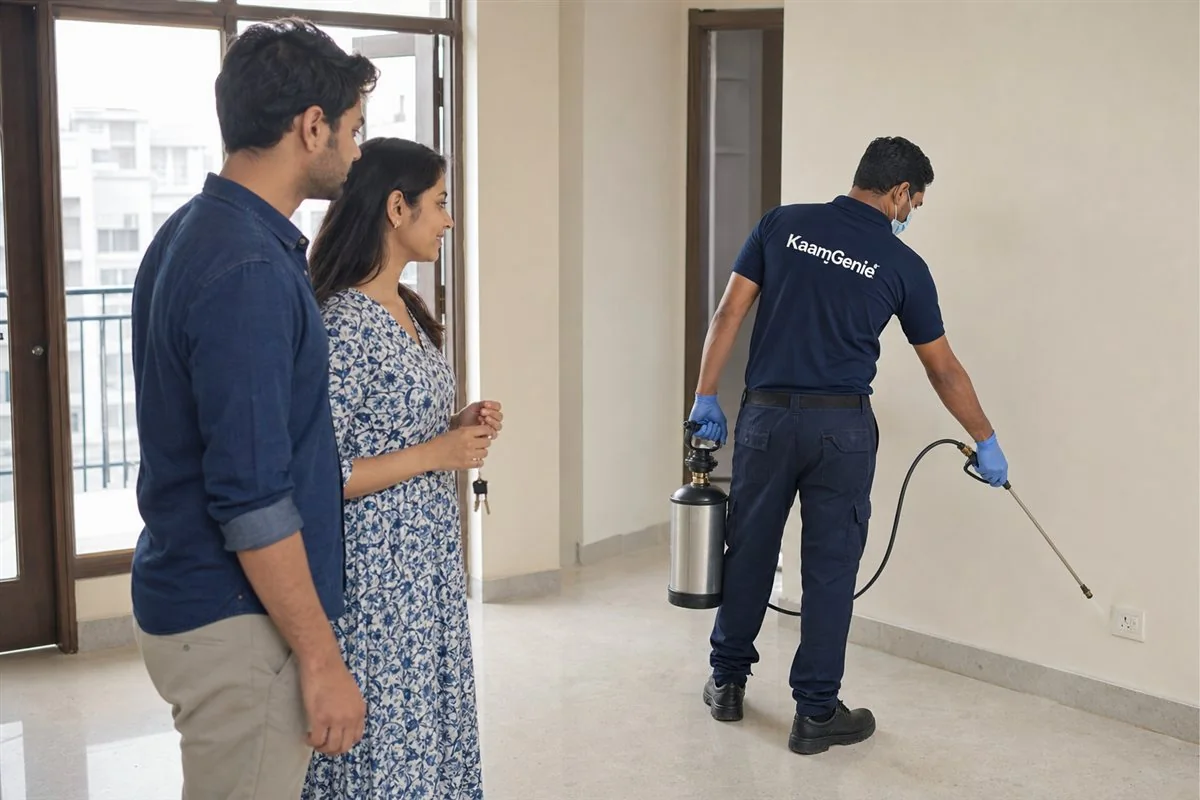
Timing it right — how many days before the shifting date?
This is the question that decides whether the whole thing works, so get it right. You want the treatment done after you have the keys and access, but before the furniture truck arrives — with enough breathing room for the flat to be aired and dry. In practice that means booking the pest job for 2 to 5 days before your shifting date.
The rhythm I’d suggest: collect the keys, get the flat cleaned (or do the deep-clean and pest treatment back to back — pest after the cleaning, never before, or you’ll mop away the residual spray), let everything dry for a few hours, open the windows, and then bring the furniture in a day or two later walking into a treated, aired, clean home. If your move is in the thick of Delhi’s peak shifting season — the stretch around the end of one tenancy and the start of another, and the busy pre-monsoon weeks — book the technician a few days ahead, because slots fill up. We do same-day where slots allow, but for a move you’ve planned for weeks, there’s no reason to leave it to chance.
One sequencing point people get wrong: don’t do the pest treatment and then have painters or a carpenter come in and sand, drill and wash down the walls — that strips the residual layer you just paid for. Finish the dusty work first, then clean, then pest control, then move in. In that order the treatment lasts the way it should.
Pre-move vs post-move pest control — how thorough the job really is (2026)
Rough share of the home a technician can properly reach and treat, from what we see on the ground.
Start your new Delhi home clean — we cover the city
Moving house is stressful enough without discovering a cockroach problem in your new kitchen the first week. The fix is genuinely simple and cheap: treat the flat while it’s empty, get the four things done — general treatment, termite check, kitchen gel and entry-point sealing — and time it for a couple of days before the truck. You walk into a clean start instead of inheriting someone else’s pests. If you’d like a trained technician to handle it before you shift, that’s exactly what we do, and we’ll give you before-and-after photos and a GST invoice for your records. We serve homes across Delhi — from Dwarka, Janakpuri and Rohini in the west and north, to Saket, Lajpat Nagar and Greater Kailash in the south, to Mayur Vihar, Preet Vihar and Laxmi Nagar in the east, plus Central and North Delhi. Coming soon: Gurgaon, Noida, Faridabad and Ghaziabad. Call 95603 66362 a few days before your move and we’ll get your new place sorted before you settle in.
Frequently asked questions
Should I do pest control before or after moving into a new home in Delhi?
Before — while the flat is empty. An empty home is the cheapest and most thorough time to treat: the technician reaches every skirting, cabinet back and corner in one pass, the sprays and gels dry before your furniture arrives, and you start clean instead of inheriting the previous occupant’s pests. Once the furniture is in, the same money buys a worse, partial job.
What pest control should I get done before moving in?
Four things, in order of importance: a general crawling-pest treatment of the whole flat; a termite inspection (and treatment if active termite is found); cockroach gel baiting in the kitchen; and sealing of entry points like pipe gaps, floor drains and the gap under the main door. The general treatment is the must-do; the rest depend on the home.
How much does pre-move pest control cost in Delhi in 2026?
A general treatment of an empty flat starts around ₹999. Cockroach gel baiting starts from ₹599, and termite inspection-and-treatment from ₹2,499 if active termite is found. A combined pre-move package — general, termite check and kitchen gel in one visit — is usually cheaper than booking each separately later. GST 18% is extra.
How many days before moving in should I book pest control?
Book it for 2 to 5 days before your shifting date — after you have keys and access, but before the furniture arrives, with enough time for the flat to be aired and dry. Do any painting or carpentry first, then cleaning, then pest control, then move in. In busy shifting season, book a few days ahead because slots fill up.
Does a brand-new builder flat need pest control before moving in?
Yes, though a lighter version. New flats mostly need entry-point sealing — the service-duct and pipe gaps are wide open on handover — plus a light general treatment as a baseline, because post-construction damp draws silverfish and the odd cockroach up through drains. Ask the builder whether pre-construction anti-termite soil treatment was done, since you can’t tell by looking.
What does an old resale flat need before move-in?
The full job. You don’t know the home’s history, so there may be an established cockroach population, ant colonies in wall cavities, and termite in old door frames and built-in wardrobes. For a resale flat, book a full general treatment plus a proper termite inspection (and budget for treatment if active tubes are found), and gel-bait the kitchen. Doing it empty saves real money here.
Should pest control be done before or after deep cleaning?
After cleaning, never before. If you do the pest treatment first and then mop and scrub the walls and floors, you wash away the residual spray you just paid for. The right order is: dusty work (paint, carpentry) first, then deep cleaning, then pest control, then move the furniture in.
Do I need a termite inspection before moving in?
It’s strongly worth it, especially for a resale flat or any home with wooden door frames and built-in wardrobes. An empty flat is the only time you can actually see the walls and skirting where termite mud tubes appear. Catching and treating active termite before your wooden furniture goes in is far cheaper than dealing with damage later. Treatment starts from ₹2,499.
Is pre-move pest control safe if I have kids or pets?
Doing it before you move in is the safest possible timing, because there’s no food, clothing, pet or fish tank in the flat while the technician works, and everything has hours to dry and air before your family arrives. Licensed services use approved products at the correct dose. Just ventilate the flat well before bringing children or pets in.
Who pays for pest control in a rented flat — tenant or landlord?
It varies, but many Delhi landlords will fund a pre-move treatment if you ask before signing the agreement, since it protects their property too. For a rental, a quick general reset plus kitchen gel is usually enough — you don’t need to pay for heavy termite work on a place you don’t own. Always keep the GST invoice as a record of what was done.
What is included in a general pest control treatment?
A general (crawling-pest) treatment is a residual spray and targeted treatment along skirting, corners, the backs of cabinets, bathrooms and balconies to knock down cockroaches, ants, silverfish and the general crawl. In an empty flat it covers the whole home thoroughly, which is why it’s the base layer of any pre-move job. It starts from around ₹999.
Can pest control make my new home pest-free forever?
No honest service can promise that, and you should be wary of anyone who does. Pests fly and crawl in from shared shafts, neighbours and open drains, and residual sprays wear off over weeks. What pre-move treatment does give you is the cleanest possible start — and sealing entry points keeps re-entry low. Once you’ve settled, an annual AMC from ₹2,999/year keeps things in check.
Treat your new place before you shift in
Let a trained technician do the general treatment, termite check, kitchen gel and entry-point sealing while the flat’s still empty. Before-and-after photos and a GST invoice included. We cover all of Delhi.
Sources & references
- Central Insecticides Board & Registration Committee (CIB&RC) — the Indian regulator that approves the pest-control chemicals and concentrations used in licensed treatments.
- Bureau of Indian Standards (BIS) — publishes IS 6313 on anti-termite treatment of buildings, the basis for pre- and post-construction termite work.
- National Centre for Disease Control (NCDC) — tracks urban pest and vector patterns across Indian cities including Delhi.
- Indian Council of Medical Research (ICMR) — publishes research on pest biology and integrated pest management protocols.
Last verified: 30 June 2026. If you find any of these links broken, please let us know.