Home › Services › Pest Control › Mosquito Control
Service · Pest Control Category · Pre-Monsoon PriorityDelhi monsoon means one thing for public health — dengue and chikungunya peak. Every year between August and November the city’s hospitals fill with fever cases that started with one infected mosquito and one neglected water container. Real mosquito control is not a one-time spray. It’s a three-part job: thermal fogging of adult mosquitoes, larvae treatment of every standing-water breeding site, and physical elimination of breeding sites wherever possible. The two priority windows are pre-monsoon (May-June) before the rains create breeding pools, and post-monsoon (September-October) when adult populations peak. Starting at ₹699. Same-day available across Delhi.
Pick the option that matches your home or premises. Fixed prices · GST 18% extra · Same-day available.
All prices: GST 18% extra · Cash / UPI / Card / Bank transfer · Same-day available · Free phone consultation before booking.
Every quote is confirmed on the phone after a 5-minute description of your premises. We never quote without understanding the job, and we never change the price on arrival.
Delhi’s mosquito problem is seasonal, predictable, and almost entirely preventable — if you treat at the right times. The city’s climate cycle drives the entire dengue calendar.
Pre-monsoon (May-June). Temperatures are at their peak (38-44°C) and water sources are limited. Adult mosquito populations are at their lowest of the year. This is the strategic window: any larvae treatment now hits eggs before the rains arrive. Society tanks, AC drip trays, drain channels, and rooftop water collection points all get sterilised before they become breeding factories. One round in late May prevents a population explosion in August.
Monsoon (July-August). The rains arrive and every uncovered container, every blocked drain, every rooftop with poor slope, every flower pot saucer becomes a breeding site. Aedes aegypti — the dengue vector — lays eggs in clean stagnant water. Within 7-10 days a single rain-filled bucket can produce hundreds of adult mosquitoes. Population starts climbing.
Post-monsoon (September-October). This is when Delhi’s dengue and chikungunya cases spike every year. Adult mosquito populations are at their peak, the weather is still warm and humid, and viral transmission is at its highest. MCD and NDMC ramp up municipal fogging but it’s reactive, not preventive. The second priority window is right here: a household round of fogging plus larvae treatment in late September cuts your direct exposure dramatically.
Winter (December-February). Cold nights below 12°C suppress adult populations. Eggs survive and lie dormant in containers, waiting for the next warm-wet cycle. This is the quietest mosquito window of the year but it’s also when overwintering eggs accumulate — ready to hatch the moment temperatures and rains arrive in summer.
Two rounds a year — late May and late September — cover both ends of the cycle. Households with infants, elderly, or repeated dengue scares in the neighbourhood should add a third quarterly round in mid-August.
Not all mosquitoes are the same. Delhi has three main species and each carries a different disease, breeds in a different kind of water, and bites at a different time. Effective control means knowing which species is the dominant problem in your home.
1. Aedes aegypti — the dengue and chikungunya vector. Identifiable by white stripes on black legs and a distinctive lyre pattern on the thorax. Aedes breeds in clean stagnant water — flower pot saucers, AC drip trays, water tanks with loose lids, rooftop drains, fountains, and discarded plastic containers. Bites during the day, especially mornings and late afternoons, and prefers indoor environments. This is the species behind nearly every Delhi dengue outbreak.
2. Anopheles — the malaria vector. Larger body, distinctive 45-degree resting posture, often dark wing spots. Anopheles breeds in clean fresh water with vegetation — ponds, slow-moving streams, irrigation channels, and large rainwater pools. Bites mostly between dusk and dawn. Malaria cases in Delhi have dropped sharply over decades thanks to municipal control programs, but flare-ups still occur in outer Delhi and construction-heavy zones.
3. Culex quinquefasciatus — the nuisance and filariasis vector. The brown mosquito you slap most often. Culex breeds in dirty stagnant water — clogged drains, septic tanks, sewage runoff, stagnant nullah water. Bites at night, indoors and outdoors. Culex is the species behind most of the late-night buzzing, sleep-disruption complaints in Delhi flats. Less dangerous than Aedes but the biggest day-to-day nuisance.
The three species coexist in nearly every Delhi neighbourhood. A single fogging round affects all three because adulticide chemicals are broad-spectrum. But larvae treatment must target the right kind of water source — clean containers for Aedes, drain channels and clogged gutters for Culex, vegetated water bodies for Anopheles. Our crew identifies which is dominant at your property and adjusts the larvae treatment accordingly.
These two are not interchangeable — they target completely different stages of the mosquito life cycle and serve different purposes. Most cheap operators in Delhi only do fogging because it’s visible and dramatic. Real control needs both.
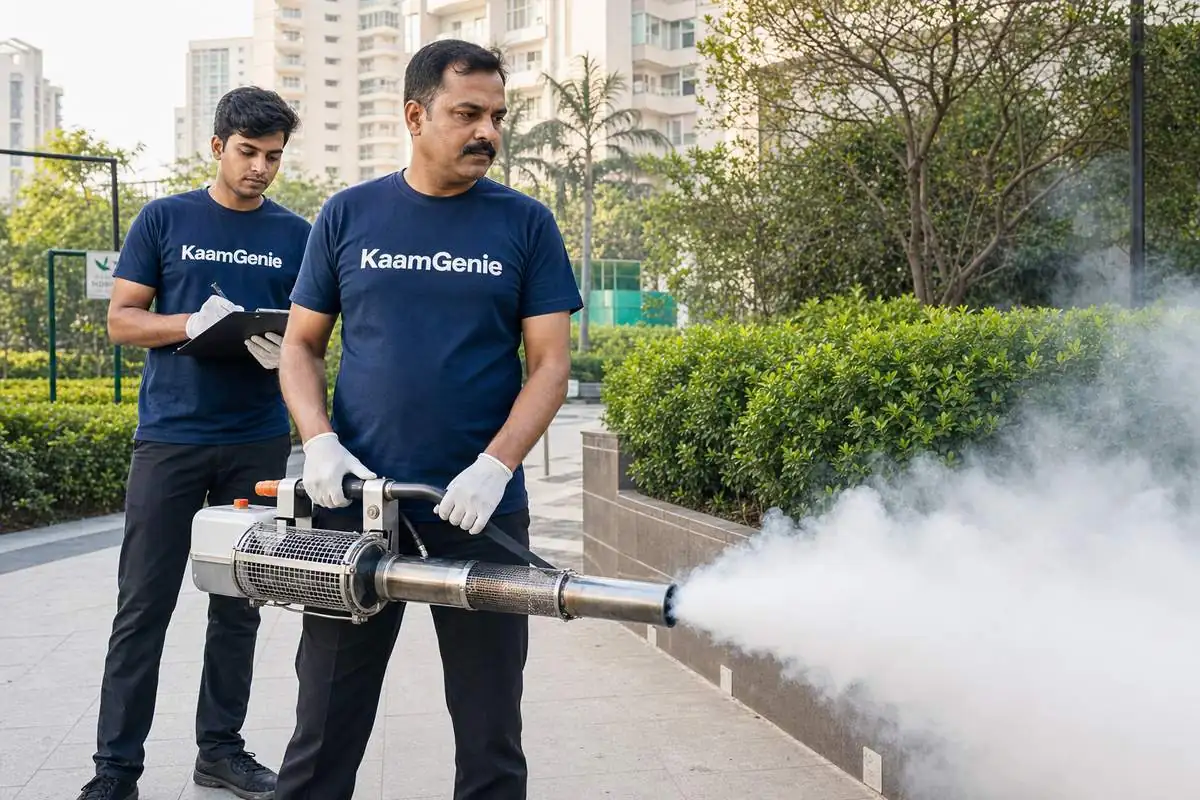
Thermal fogging uses a heated machine to vaporise a glycol carrier carrying CIB&RC-approved adulticide — usually pyrethrin, deltamethrin, or cypermethrin formulations. The fog disperses into corners, foliage, and hard-to-reach areas killing flying adult mosquitoes on contact. Impact is immediate but short-lived: fog dissipates in hours and new adults emerge from breeding sites within 7-10 days. Use fogging when you need fast knock-down before a function, when post-monsoon adult populations are at peak, or when there’s an active dengue case in the building.
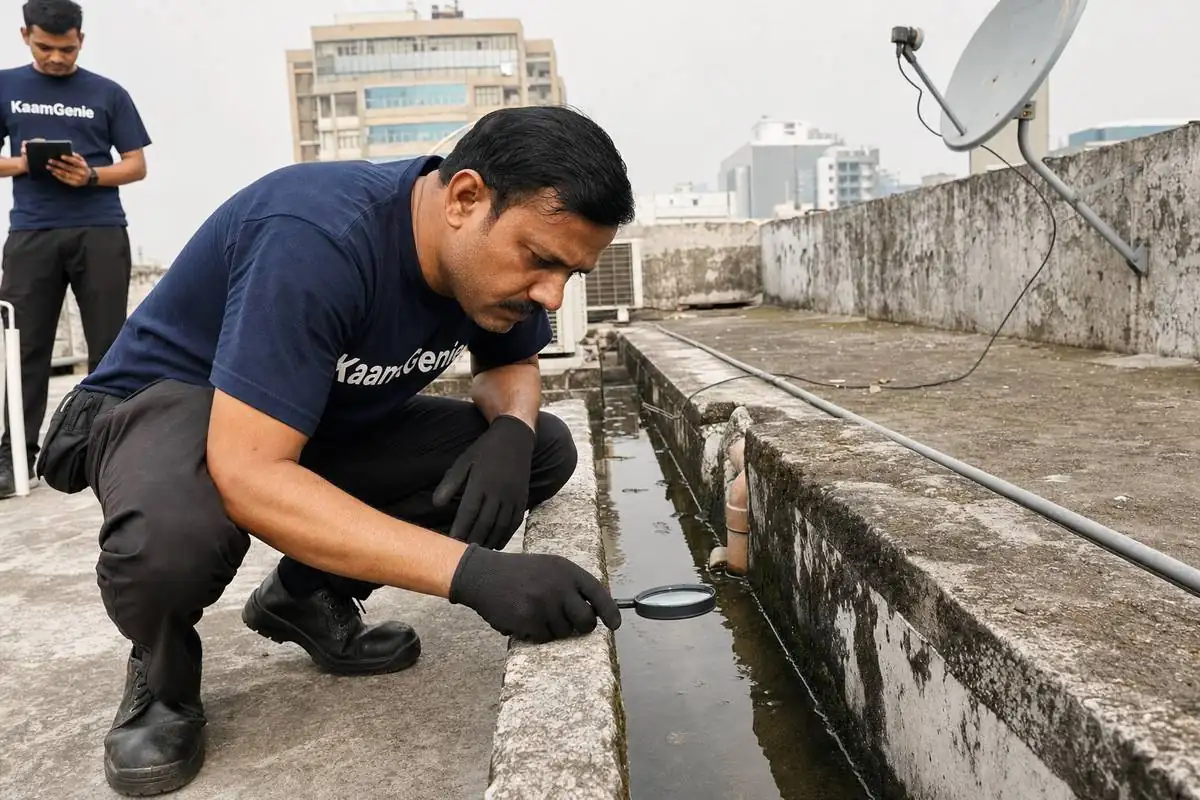
Larva treatment uses temephos granules or biological larvicides (Bti) added directly to standing water sources to kill mosquito eggs and larvae before they become adults. This is the more important treatment for long-term control because it breaks the breeding cycle. Effect lasts 4-6 weeks per dose. Use larvae treatment for water tanks, rooftop drains, AC drip trays, society lawn ponds, and any container that holds water for more than 3 days.
Residual barrier spray is the third leg often added for premium control — a chemical layer applied to walls, window frames, door surrounds, and outdoor mosquito resting spots. Adult mosquitoes that land on these surfaces pick up the chemical and die. Effect lasts 4-8 weeks and is especially useful for households facing repeated mosquito entry from outside.
Our recommendation for nearly every household: fogging + larvae treatment combined as a single visit. Pure fogging-only treatments look impressive but the mosquitoes are back inside two weeks. Pure larvae-only treatments prevent next month’s problem but don’t solve tonight’s buzzing. Both together hit the cycle at both ends.
Same process every visit, every property. The structure is what makes the treatment effective, not random spraying.
Total time on site: 60-90 minutes for a 2-3 BHK Delhi flat. 90-120 minutes for kothis or builder floors with gardens. Society common-area treatment is quoted separately based on building size.
The biggest mistake in DIY mosquito control is missing breeding sites you walk past daily. These are the ones our crew always checks — in this order of importance for Delhi:
1. Water tanks — overhead and underground. Loose lids, broken inlet covers, and unsealed overflow pipes turn every household water tank into a potential Aedes nursery. We check lid seals and dose with food-safe larvicide at approved concentrations.
2. Rooftop drain channels and water collection points. Poorly sloped roofs collect rainwater that doesn’t fully drain. Even an inch of stagnant water at the corner of a chhajja is enough to produce hundreds of adult mosquitoes weekly through monsoon. We treat every collection point we find.
3. AC outdoor unit drip trays. The condensate drip from window and split AC outdoor units pools in trays and below-window sills. Aedes loves these — warm, sheltered, clean water within 1 metre of the bedroom window. Every flat we treat gets AC drip points checked.
4. Flower pots and saucer plates. The plastic saucer under each potted plant collects standing water from watering and rain. Indoor plants especially. We empty and treat each one or recommend replacement.
5. Bathroom and kitchen drains. Slow-draining bathroom floors and kitchen sink drains hold water in the trap and rough surfaces of older drainage systems. Culex breeds heavily here. Treatment is a drain larvicide dose every 30 days.
6. Terrace water collection — chhajja corners, planters, broken parapets. Old kothis especially have multiple terrace pools that never get noticed. We do a full terrace walkthrough on every kothi treatment.
Bonus checks we always do: discarded buckets and tyres in the parking, water meters that pool, lift pits with seepage, basement sumps, gardener tools left filled with water, and society lawn fountains.
Society and RWA contracts are the most effective form of mosquito control in Delhi because they treat shared spaces — common drains, lift shafts, basements, lawns, parking, security cabins — that individual flat treatments cannot reach. A single neglected society water tank can produce mosquitoes that fly into 100 flats.
Standard pre-monsoon contract. A full society sweep in late May or early June covering all overhead and underground tanks, common rooftops, all internal drains, basement, lift pits, parking lots, gardens, and external boundary fogging. Treatment certificate and breeding-site report given to the maintenance office. Most Delhi societies finalise these contracts in April — the earlier you book, the better the date.
Quarterly fogging program. Four rounds spread across the year — pre-monsoon, mid-monsoon, post-monsoon, and winter prep. Includes one larva treatment round in May and visual breeding-site audits at each visit. Resident-facing communication (notice posters, society WhatsApp group reminders 48 hours before fogging) is included.
Reactive single visits. If a society has had a confirmed dengue case in a flat, we offer emergency fogging within 24-48 hours of the call. This is the single best public-health response a maintenance committee can make. Pricing depends on building size and we’ll quote on the phone.
For RWA committee members evaluating proposals: ask the vendor whether the price includes larvae treatment or only fogging. Almost every cheap quote you’ll get is fogging-only, which is why mosquitoes return inside two weeks. Real value is in the combined treatment.
The single most effective mosquito control round of the year is in late May / early June — before breeding sites fill up. CIB&RC-approved chemicals, child and pet-safe, starting at ₹699.
The Central Insecticides Board & Registration Committee (CIB&RC), under the Ministry of Agriculture, regulates which pest-control chemicals can be sold and used in India, at what concentration, and for what use. We use only CIB&RC-cleared adulticides and larvicides — the same chemical families used by MCD and NDMC in municipal fogging programs.
Adulticides (fogging chemicals). Pyrethrin-based formulations, deltamethrin, and cypermethrin at residential-approved concentrations. These are synthetic versions of natural insecticides found in chrysanthemum flowers. They affect insect nervous systems but break down rapidly in sunlight and ventilation, with no persistent residue indoors after the 30-minute ventilation window.
Larvicides (water treatment). Temephos granules at WHO-approved concentrations for drinking water sources — the chemical is so widely tested that it’s used in municipal water systems globally. For households who prefer non-chemical larva control we offer Bti (Bacillus thuringiensis israelensis), a biological larvicide that only affects mosquito and blackfly larvae and is completely safe for fish, humans, and pets.
Safety protocol. Pets, children, pregnant women, asthma patients, and elderly stay out of the actively fogged room for 30 minutes after treatment. Windows are opened for ventilation. Food and water on open counters is covered or removed before fogging. Aquariums get covered and pumps switched off briefly. We brief every household on the protocol before starting. Outdoor fogging in gardens, lawns, and parking lots needs no waiting time once visible fog has cleared.
What we never use: banned chemicals, agricultural-grade concentrates intended for crops, and unmarked grey-market substances that some cheap operators import. If you ever see a vendor refusing to name the chemical they use, they’re hiding something — walk away.
| Treatment | Starting price | What’s included | Duration |
|---|---|---|---|
| 1 BHK flat | Starting at ₹699 | Indoor fogging + larva treatment of all water sources | 45-60 mins |
| 2-3 BHK flat | Starting at ₹1,299 | Indoor fogging + larva treatment + balcony / terrace fog | 60-90 mins |
| Builder floor / 4+ BHK | Starting at ₹1,999 | Full-home fogging + larva treatment + external boundary fog | 90-120 mins |
| Kothi / bungalow | Starting at ₹2,499 | Indoor + garden + boundary wall + residual barrier spray | 2-3 hours |
| Outdoor-only (terrace / garden) | Starting at ₹999 | Thermal fog of outdoor zone + drain larva treatment | 30-45 mins |
| Society pre-monsoon contract | Starting at ₹4,999 | All common areas, tanks, drains, basement, parking, lawns + certificate | Half-day to full-day depending on size |
All prices are starting points. Final quote depends on property size, indoor versus indoor-plus-outdoor coverage, severity of complaint, and whether it’s a one-off or part of an annual contract. We give every quote on the phone after a 5-minute description of your property — and never change the price on arrival.
Three patterns we see most often, drawn from actual jobs across Delhi:
Vasant Kunj kothi, pre-monsoon (late May). Family of four planning a summer holiday, wanted treatment before they left so they’d return to a clean home. We did a full sweep — indoor fogging of 4 BHK ground floor, larva treatment of overhead and underground tanks, terrace drain treatment, AC drip tray check, and a garden boundary fog. Total time: 2.5 hours. Family returned three weeks later to zero mosquito complaints through July — the pre-monsoon larva treatment held through the first rains.
Mayur Vihar society, dengue scare (mid-September). One confirmed dengue case in a 3rd-floor flat triggered an emergency RWA contract for the whole society — 4 buildings, 80 flats. We did same-day fogging of all common areas (lifts, corridors, basement, parking, terraces) and larva treatment of all 8 overhead tanks plus drainage system, followed by per-flat indoor fogging over the next two days for residents who opted in. Resident communication was managed via the society WhatsApp groups. No further cases reported through October.
Lajpat Nagar shopkeeper, post-monsoon (October). Small restaurant owner battling Culex mosquitoes after the rains that were biting customers at dinner service. We treated the restaurant interior plus the back drain channel and the building’s rear water collection points. Switched the owner to a quarterly contract through winter. Customer-complaint logs dropped to zero within a week and stayed there.
The common thread: the right treatment combination, applied at the right time, in the right places — not just spraying chemical in a fog.
Combined fogging + larva treatment in one visit. CIB&RC-approved chemicals, 15-30 day warranty, safe re-entry in 30 minutes.
Mosquito control is currently live across all of Delhi:
Coming soon: Gurgaon, Noida, Faridabad, Ghaziabad. We’re onboarding pest control crews in these zones over the next few months. If your mosquito problem in NCR outside Delhi is urgent, call us anyway — we may be able to arrange a one-off visit while permanent coverage is being set up.
Two windows matter most. Pre-monsoon (May to mid-June) is the single highest-impact window — you treat breeding sites before the rains fill them, which kills the cycle before it starts. Post-monsoon (September to October) is the second priority, because standing water from monsoon has produced peak mosquito populations and dengue cases spike in Delhi every year in these months. If you can only do one round, do pre-monsoon in late May. Year-round societies should do quarterly fogging.
Yes — we use only CIB&RC-approved adulticides like pyrethrin-based and deltamethrin formulations at standard residential concentrations. These are the same chemical families used by Delhi municipal fogging programs. The chemicals break down within hours in sunlight and ventilation. We recommend children, pets, and asthmatic family members stay out of the fogged room for 30 minutes after treatment, then ventilate by opening windows. After that, surfaces and air are safe. We brief every household on the exact protocol before starting.
30 minutes is the standard indoor ventilation window after thermal fogging. The fog dissipates quickly — what looks like smoke is mostly a glycol carrier, with the chemical at very low concentration. After 30 minutes with windows open, the room is safe to re-enter. For households with infants, pregnant women, or asthma patients, we recommend 60 minutes to be conservative. Outdoor fogging in society lawns, terraces, and parking lots needs no waiting time — you can use the area as soon as visible fog clears.
Two completely different jobs. Fogging kills adult mosquitoes already flying — instant impact, but new ones emerge from breeding sites within 7-10 days, so the effect is short. Larvae treatment targets standing water where mosquitoes lay eggs — water tanks, drain channels, AC drip trays, flower pots — using temephos or biological larvicides that stop eggs and larvae from maturing. Larvae treatment lasts 4-6 weeks and prevents the next generation. Real mosquito control needs both — fog the adults, treat the breeding sites, hit both ends of the cycle.
Yes — society and RWA monsoon contracts are one of our largest service categories. The standard package is a pre-monsoon round (late May / early June) covering all common areas, tanks, drains, basement, parking, and lawns, followed by quarterly fogging through the monsoon and post-monsoon months. We coordinate with the maintenance office, give residents 48-hour notice, and provide a treatment certificate after each round. Pricing is per society size — we quote after a free site visit. Most RWA committees finalise contracts in April-May for the year ahead.
For Delhi homes, twice-a-year minimum: one pre-monsoon round in May-June and one post-monsoon round in September-October. Households with regular mosquito complaints, ground-floor flats near drains, kothis with gardens, and homes with elderly or infants should go quarterly. Societies and RWAs should run monthly fogging during July-October peak dengue months. One-off treatments work if you’re reacting to a sudden infestation, but real prevention is calendar-based — book before the season, not after the problem.
Yes — the same fogging chemicals that knock down adult mosquitoes also affect flies, gnats, midges, and small flying insects in the treated zone. This is why post-fogging you’ll often see other insects falling too. However, the effect on non-target pests is short-lived because they breed in different sites. If your main complaint is flies or cockroaches, mosquito fogging is not the right primary treatment — book general pest control instead. For pure mosquito control where flies are a bonus knock-down, fogging is exactly right.
Our standard mosquito control treatment carries a 15-day activity warranty for the fogging component and 30-day warranty for the larvae treatment component. If you see active mosquito breeding in treated water sources within 30 days, we come back and re-treat at no extra cost. Adult mosquitoes can re-enter your home from neighbours or outdoors at any time — that’s not a warranty case but is exactly why we recommend pairing your treatment with quarterly society fogging or a residual barrier spray around windows and doors.
Starting at ₹699 for a 1 BHK flat with combined fogging and larva treatment. 2-3 BHK flats start around ₹1,299, kothis and bungalows from ₹2,499, and society pre-monsoon contracts from ₹4,999 depending on size and number of buildings. Pricing depends on property size, indoor versus indoor-plus-outdoor, severity, and whether it’s a one-off or a contract. Every quote is given on the phone after a 5-minute description — we never change the price on arrival. Cheap ₹300 “mosquito sprays” are mostly diluted spray, not real fogging.
Yes. Outdoor-only fogging is common for kothis with gardens, builder-floor terraces, society parking lots, restaurant outdoor seating, and event venues. We do thermal fogging across lawns, drains, boundary walls, and standing-water collection points without entering the home. Outdoor-only pricing starts at ₹999 for a typical home garden or terrace. Note that indoor mosquitoes will not be affected — if you have mosquitoes inside the house, indoor fogging is needed too. We’ll guide you on the best combination during the booking call.
The pre-monsoon window is the single most valuable round of the year — treat now and you prevent dengue exposure for the whole family through August and beyond. Call +91 95603 66362, WhatsApp here, or click the button below. Same-day available across Delhi.
Published by KaamGenie Private Limited — Delhi NCR’s trusted home services provider for water tank cleaning, pest control, and household maintenance. CIN: U74909DL2026PTC466750. Last updated 5 June 2026.
Every pest control service we offer across Delhi NCR — CIB&RC chemicals, photo documentation, GST invoice, transparent pricing.
Full overview of every pest control sub-service. Starting prices, process, CIB&RC chemicals, what each treatment covers.
Anti-termite chemical injection for Delhi wooden door frames, almirahs, plywood furniture and structural wood.
Combo cockroach, ant, spider, lizard, mosquito treatment for Delhi homes. Pet-safe and child-safe protocols.
Targeted gel-bait protocol for kitchen and bathroom infestations. CIB&RC chemicals, 15-day re-treatment warranty.
Two-visit protocol covering mattress seams, skirting, frame joints. Accounts for 10-14 day egg-hatching cycle.
Tamper-resistant bait stations + entry-point sealing + 30-day follow-up audit. Safe for kids and pets.
Gel baiting and targeted spray for sugar ants, black ants and red ant trails in kitchens and homes.
FSSAI-compliant pest control for restaurants, hotels, offices. Monthly visits, audit-ready documentation.
4 quarterly visits + free re-treatments + scheduled reminders. 20-25% off per-visit pricing.