
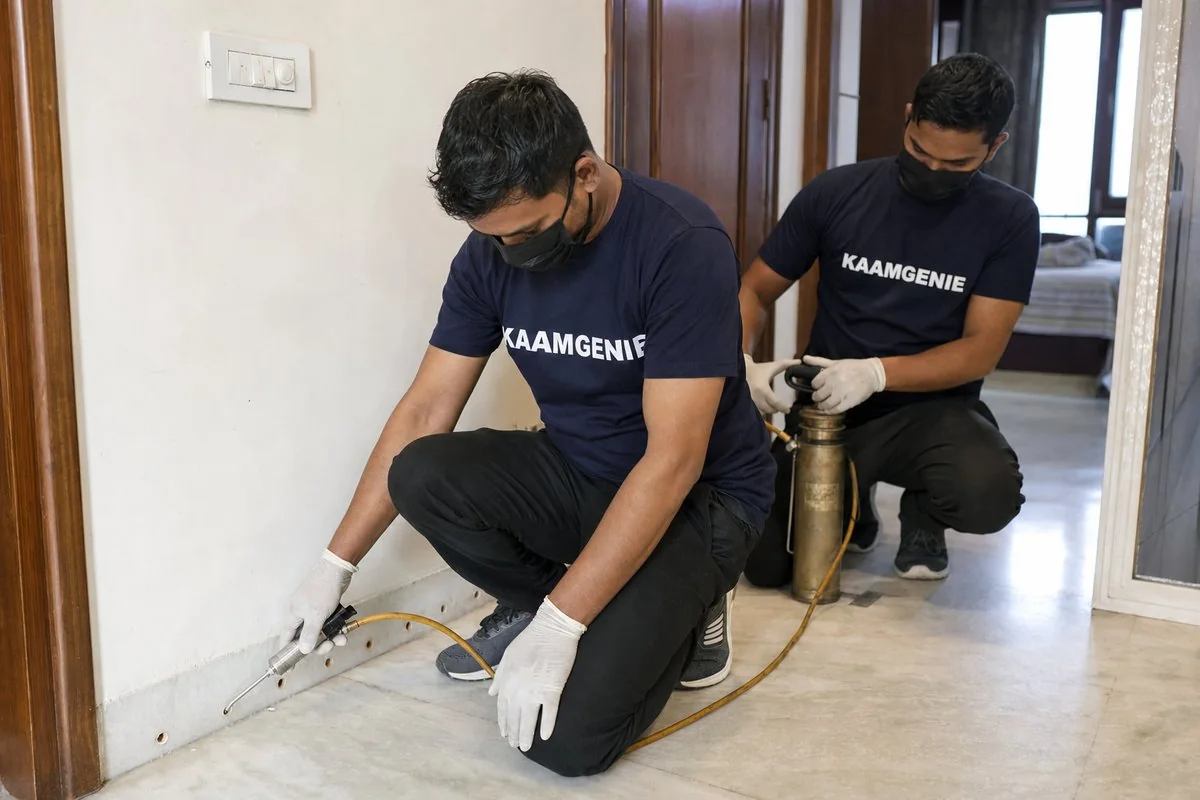
Quick answer — anti-termite treatment cost in Delhi (2026)
- It’s priced per sq-ft, not per “treatment”: the rate is multiplied by your area, so knowing the area is everything.
- Pre-construction (soil treatment during building): roughly ₹6–₹14 per sq-ft of plinth area in Delhi (2026), depending on chemical and soil.
- Post-construction (drill-fill-inject an existing home): roughly ₹9–₹22 per sq-ft of built-up area, because it’s labour-heavy.
- Chemical matters: chlorpyrifos is cheapest; imidacloprid mid; fipronil priciest — and generally the costlier ones last longer.
- Longevity varies — typically multi-year when done to spec; always ask the provider for their written re-treatment terms.
- Small-job floor: a flat or single-area treatment often starts from ₹2,499 rather than pure per-sq-ft. We cover all of Delhi.
Why anti-termite treatment is priced per square foot
Here is the thing nobody explains before they quote you. Termite work is sold by the square foot because that is genuinely how the cost is built up. The technician is either treating a volume of soil under and around your building, or drilling a grid of holes through your floor and injecting chemical into the soil beneath — and both of those scale directly with floor area. A 1,000 sq-ft flat needs roughly half the chemical, half the drilling and half the labour of a 2,000 sq-ft one. So when a provider says “₹12 per sq-ft”, the real bill is that rate multiplied by your area. Know your area and you control the conversation.
But — and this trips up almost everyone — there isn’t one per-sq-ft rate. There are two completely separate rate cards, because there are two completely different jobs hiding under the words ‘anti-termite treatment’:
- Pre-construction anti-termite treatment is done while the house is being built, before the floor is laid. The soil itself — the foundation pits, the plinth fill, the area around pipes — is drenched with termiticide so the building sits on a treated barrier from day one. It’s priced per sq-ft of plinth area (the ground-floor footprint).
- Post-construction (curative) treatment is the drill-fill-inject job you call for when the house already exists — either as a precaution or because deemak has shown up. Holes are drilled along the wall-floor junction, chemical is injected under pressure, and the holes are sealed. It’s priced per sq-ft of built-up area, and it costs more per foot because it’s slow, manual and disruptive.
For most people reading this in a finished Delhi flat in 2026, the second one — post-construction — is what you actually need. But if you’re building, the first one is the single cheapest insurance you’ll ever buy against termites. Let’s price both, honestly.
Pre-construction anti-termite cost (per sq-ft of plinth)
If you’re building a home anywhere from Dwarka to Chattarpur to the new floors going up across South Delhi, this is the stage to act — and it’s cheap relative to the protection. The soil is treated in stages: the bottom and sides of foundation pits, the top surface of the plinth fill before the floor slab, the junction where the building meets the earth, and around all the points where pipes and conduits pierce the slab. Because the soil is open and accessible, labour is low and the rate per sq-ft is the lowest you’ll see.
Realistic Delhi 2026 ranges, on plinth area:
| Chemical used | Per sq-ft (plinth) | Typical for |
|---|---|---|
| Chlorpyrifos (basic) | ₹6–₹9 | Budget builds, standard contractor spec |
| Imidacloprid (mid) | ₹9–₹12 | Most quality residential builds |
| Fipronil (premium) | ₹11–₹14 | Longer protection, branded jobs |
A worked example: a 1,200 sq-ft plinth treated with imidacloprid at ₹10/sq-ft is about ₹12,000 plus GST — for a barrier under the entire house, done once, while it’s easy. Compare that to drilling the same house open later and you’ll see why builders who skip this to save a few thousand rupees are being penny-wise. One caveat worth knowing: pre-construction treatment has to be timed to the construction schedule. Miss the plinth stage and you can’t go back — you’re now a post-construction job at double the rate. Coordinate with your contractor early.
Want a real per-sq-ft quote for your place?
Tell us your built-up area and we’ll give you an itemised rate — chemical, coverage and terms in writing. Termite treatment from ₹2,499 (GST 18% extra).
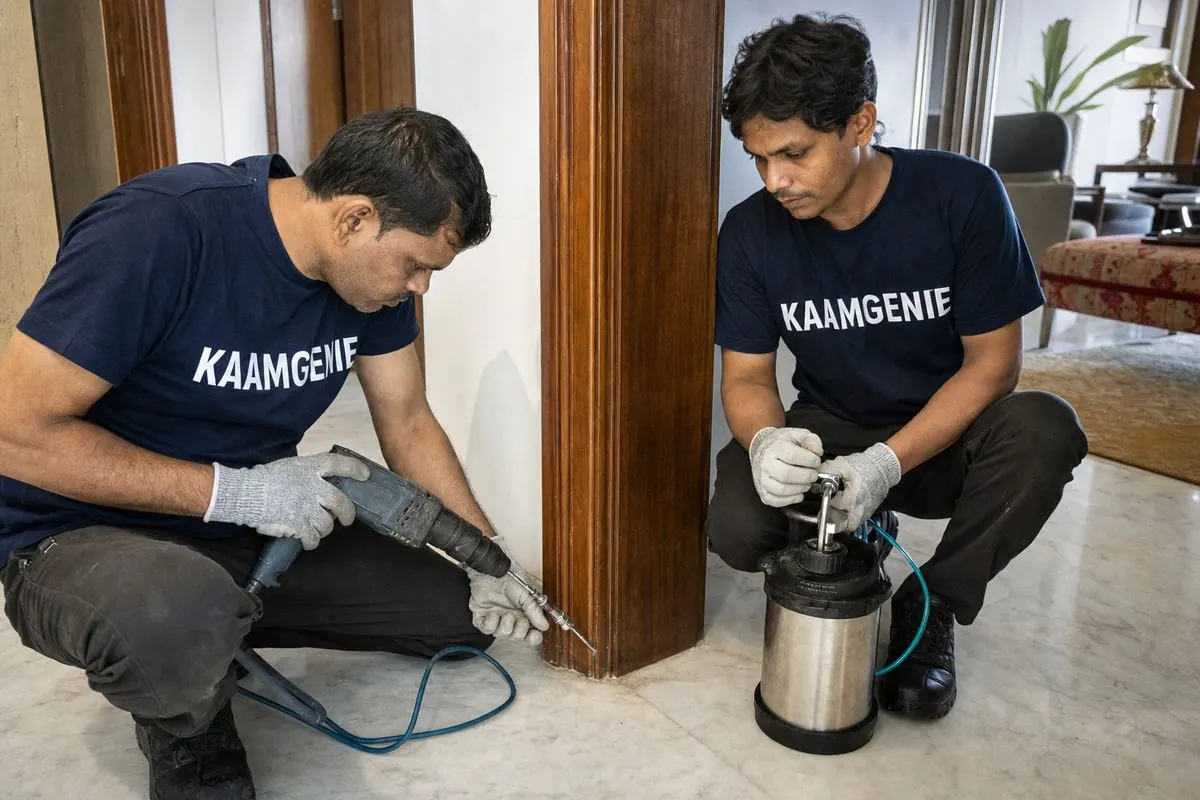
Post-construction anti-termite cost (per sq-ft of built-up area)
This is the one most Delhi homeowners pay for. The house is finished, the floor is tiled, and now someone has to create that soil barrier the hard way — by drilling. The standard method is drill-fill-inject: holes about 12mm wide are drilled roughly 30cm apart along the wall-floor junction (and around door frames, expansion joints and pipe entries), termiticide is injected into each hole under pressure to saturate the soil below, and the holes are sealed flush with white cement. It’s methodical, dusty work, and that labour is why the per-sq-ft rate runs higher than pre-construction.
| Chemical used | Per sq-ft (built-up) | Typical for |
|---|---|---|
| Chlorpyrifos (basic) | ₹9–₹13 | Cost-first jobs, shorter expected life |
| Imidacloprid (mid) | ₹13–₹18 | The common, sensible middle choice |
| Fipronil (premium) | ₹16–₹22 | Active infestations, longest protection |
Worked example: a 1,000 sq-ft built-up flat treated with imidacloprid at ₹15/sq-ft is around ₹15,000 plus GST. The same flat done in fipronil for an active infestation might be ₹20,000. Two honest notes on how this is measured. First, many providers quote on built-up (carpet plus walls) area, not just the area being drilled — ask which, so you’re comparing like with like. Second, very small jobs — a single bathroom, a doorframe, one affected wall — usually don’t go by pure per-sq-ft. They carry a minimum job charge, which is why our termite work starts from ₹2,499: sending a trained technician with pressure equipment for ten holes still costs what it costs.
How chemical choice changes the price — and the longevity
The single biggest lever on your per-sq-ft rate is which termiticide goes in the ground. All three below are approved by the Central Insecticides Board & Registration Committee (CIB&RC) for anti-termite use; the difference is chemistry, persistence and cost.
| Chemical | Relative cost | How it works | Typical longevity* |
|---|---|---|---|
| Chlorpyrifos | Lowest | Older organophosphate; strong repellent barrier, noticeable odour | Few years (varies) |
| Imidacloprid | Mid | Non-repellent; termites pass through and carry it back to the colony | Multi-year (varies) |
| Fipronil | Highest | Non-repellent, low-odour; strong ‘transfer effect’ through the colony | Longest of the three (varies) |
*Longevity is not a fixed promise. How long a barrier holds depends on the chemical, the dose actually applied, soil type, drainage, moisture and whether the barrier was ever broken by later plumbing or renovation work. Treatment longevity varies — typically multi-year when done properly — so always ask your provider for their specific, written re-treatment terms rather than trusting a round-number “guarantee” said aloud on the doorstep. The newer non-repellent chemicals (imidacloprid, fipronil) have an edge worth understanding: instead of just repelling termites, they let the insect walk through the treated zone and carry the active back to the nest, which can knock out the colony rather than merely fencing it off. That’s often worth the higher per-sq-ft rate when you have an active infestation.
Anti-termite cost per sq-ft by treatment type — Delhi (2026)
Mid-range per-sq-ft figures (imidacloprid). Pre-construction is cheapest because the soil is open; curative drill-fill-inject costs most.
How to measure your area before you ask for a quote
You don’t need a survey diploma to sanity-check a quote — you need a number. Here’s how to get it for each job type so nobody can fog you with “trust me, it’s a big house”.
- For post-construction (built-up area): take the external length × external width of your flat or floor in feet. A standard 2 BHK in Delhi is commonly 900–1,200 sq-ft built-up; a 3 BHK 1,300–1,800. If you have your registry or builder agreement, the super built-up / built-up figure is printed on it — though super built-up includes common areas, so it slightly overstates what gets drilled. Ask the provider whether they’re quoting on built-up or carpet.
- For pre-construction (plinth area): it’s the ground-floor footprint — the outer dimensions of the building at plinth level. Your architect’s drawing or the sanctioned plan has this exactly.
- Reality check the multiplication: if you’re quoted a flat lump sum, divide it by your area to back out the per-sq-ft. If a “1,000 sq-ft” flat is quoted at ₹40,000 for a routine imidacloprid job, that’s ₹40/sq-ft — well above the 2026 range, and worth questioning.
One more practical tip from years of doing this in Delhi: measure the perimeter too, roughly. Post-construction drilling follows the wall-floor junction, so a flat with lots of internal walls and partitions has more linear drilling than an open-plan one of the same area — which is one honest reason two same-size flats can be quoted differently.
Building a house right now?
Pre-construction soil treatment is far cheaper than treating later — but it has to be timed to the plinth stage. Get a per-sq-ft quote before you backfill.
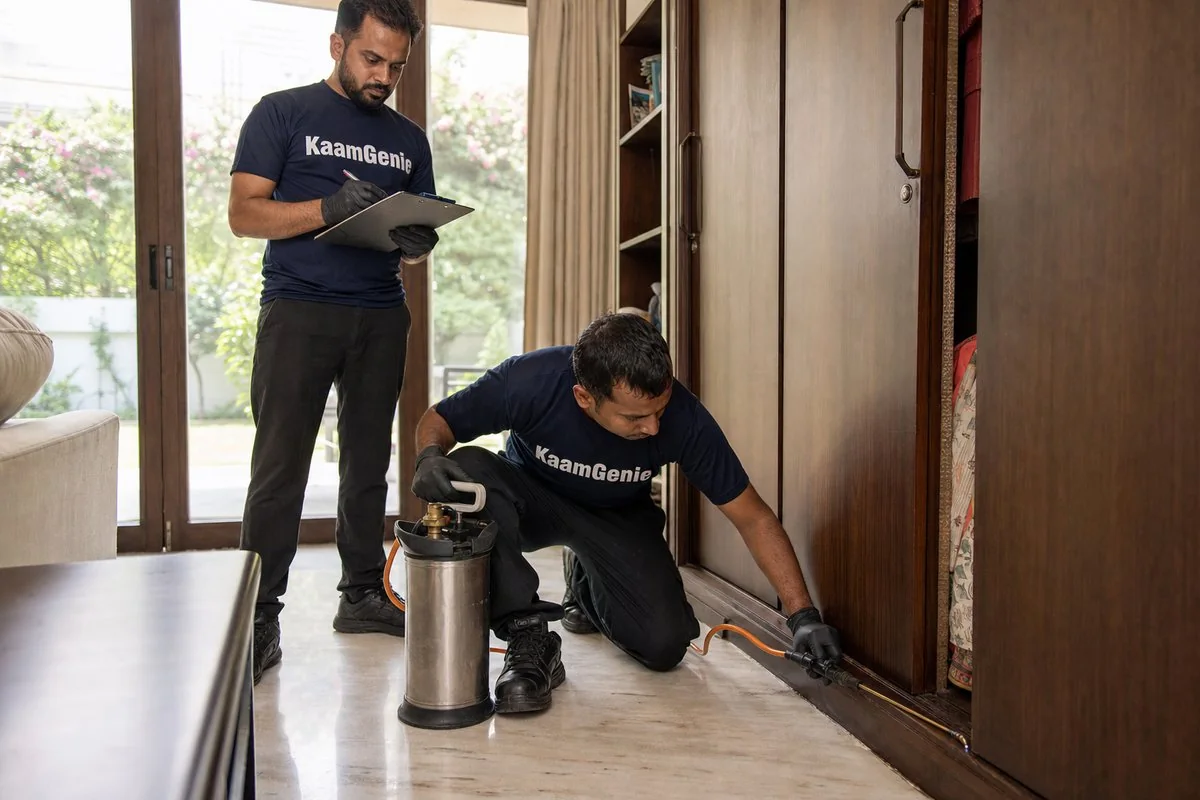
Why two quotes for the ‘same’ house can differ so much
People send me two quotes that are ₹8,000 apart and ask which one is the scam. Usually neither is — they’re pricing different work and calling it the same name. Here’s what actually moves the per-sq-ft number, so you can read a quote properly:
- Chemical and brand. Chlorpyrifos vs imidacloprid vs fipronil is the biggest swing, as the table above shows. A “cheap” quote is often a cheaper chemical at a lower dose.
- Dose and dilution. The cut-price operator’s real trick is over-diluting the chemical — same litres of liquid, far less active ingredient in the ground. You can’t see it on the day, only when termites come back. Ask for the product name and the dilution ratio in writing.
- Built-up vs carpet vs drilled area. One firm quotes ₹15/sq-ft on carpet area, another ₹13 on built-up — the second can end up dearer. Always confirm the base.
- Pre vs post and access. Ground-floor units, basements, and homes with lots of tiled hard flooring to drill cost more in labour than an open under-construction plinth.
- Re-treatment terms. A provider offering a longer written re-service period prices it in — and that’s usually money well spent versus a bare one-day job.
- GST. Pest control is taxed at 18%. A quote “inclusive” vs “plus GST” is an 18% difference before you compare anything else.
My honest steer for a Delhi home in 2026: don’t chase the lowest per-sq-ft. Pick a non-repellent chemical (imidacloprid or fipronil), get the product, dose and re-treatment terms in writing, and treat a mid-range rate as the sensible zone. The cheapest drill-and-spray that fails in a year isn’t cheap — you pay twice and lose a season of flooring to deemak in between.
What you should get on paper — and where we treat
Whatever you pay per sq-ft, insist the job leaves a paper trail. A proper anti-termite treatment should come with a GST invoice stating the area treated, the chemical and dose used, the method, and the written re-treatment terms — plus before/after photos of the drilling and sealing. Those are your audit-ready records if you ever sell, hand over to a tenant, or need a re-service called. If a provider won’t put the chemical, dose and area on the bill, that tells you something about what actually went in the ground.
We do both pre- and post-construction anti-termite work across Delhi — from South Delhi colonies like Greater Kailash, Vasant Vihar, Saket and Defence Colony, to West and North Delhi, the East Delhi belt around Mayur Vihar and Preet Vihar, and Central Delhi. Coming soon: Gurgaon, Noida, Faridabad and Ghaziabad. Tell us your area and whether you’re building or already moved in, and we’ll give you an itemised per-sq-ft quote with the chemical and terms spelled out — termite treatment from ₹2,499. Call 95603 66362.
Frequently asked questions
What is the per sq-ft cost of anti-termite treatment in Delhi in 2026?
It depends on the type. Pre-construction soil treatment runs roughly ₹6–₹14 per sq-ft of plinth area, and post-construction drill-fill-inject runs roughly ₹9–₹22 per sq-ft of built-up area. The chemical chosen — chlorpyrifos, imidacloprid or fipronil — sets where in that range you land. GST 18% is extra, and small jobs carry a minimum charge from around ₹2,499.
Why is post-construction termite treatment more expensive per sq-ft than pre-construction?
Because of labour. Pre-construction is done while the soil is open during building, so the technician simply drenches accessible earth — fast and cheap. Post-construction means drilling a grid of holes through finished, tiled floors along every wall-floor junction, injecting chemical under pressure, and sealing each hole. That manual, disruptive work pushes the per-sq-ft rate higher.
Is anti-termite treatment priced per square foot or as a flat fee?
Mostly per square foot — the rate is multiplied by your plinth area (pre-construction) or built-up area (post-construction). Very small jobs, like a single doorframe or one affected wall, usually go by a minimum job charge instead, because sending a trained technician with pressure equipment costs the same whether it’s ten holes or fifty.
How do I measure my area to check a termite treatment quote?
For post-construction, take the external length times width of your flat or floor in feet — a 2 BHK in Delhi is commonly 900–1,200 sq-ft built-up, a 3 BHK 1,300–1,800. Your registry or builder agreement also prints the built-up figure. For pre-construction, use the ground-floor footprint from the sanctioned plan. Then divide any lump-sum quote by your area to back out the real per-sq-ft rate.
Which chemical is best for anti-termite treatment — chlorpyrifos, imidacloprid or fipronil?
Chlorpyrifos is the cheapest and works as a repellent barrier but has a strong odour. Imidacloprid is the sensible mid choice — non-repellent, so termites carry it back to the colony. Fipronil is the priciest, low-odour, with the strongest colony transfer effect, and is the usual pick for active infestations. All three are CIB&RC-approved; the costlier ones generally last longer.
How long does anti-termite treatment last in Delhi?
It varies — typically multi-year when the job is done to spec with the right chemical and dose. Real longevity depends on the chemical, the dose actually applied, soil type, drainage and whether later plumbing or renovation broke the barrier. There’s no honest fixed number; ask your provider for their specific written re-treatment terms rather than trusting a round-number guarantee said aloud.
What does pre-construction anti-termite treatment cost in Delhi?
Roughly ₹6–₹14 per sq-ft of plinth area in 2026, depending on chemical: about ₹6–₹9 for chlorpyrifos, ₹9–₹12 for imidacloprid, and ₹11–₹14 for fipronil. A 1,200 sq-ft plinth in imidacloprid is roughly ₹12,000 plus GST — cheap insurance compared with treating the same house after it’s built.
What does post-construction termite treatment cost for a flat in Delhi?
Roughly ₹9–₹22 per sq-ft of built-up area in 2026. A 1,000 sq-ft flat in mid-range imidacloprid is around ₹15,000 plus GST; the same flat in fipronil for an active infestation might be about ₹20,000. Smaller, single-area jobs start from a ₹2,499 minimum charge.
Why are two quotes for the same house so different?
Usually they’re pricing different work. The chemical and brand, the dilution and dose, whether they quote on built-up or carpet area, access and amount of hard flooring to drill, the re-treatment period offered, and whether GST is included all move the number. A cheaper quote is often a cheaper or over-diluted chemical — ask for the product, dose and dilution in writing.
Can I do pre-construction termite treatment after my house is built?
No — that’s the catch. Pre-construction treatment has to be timed to the plinth stage, before the floor slab is laid. Once the house is finished you can only do post-construction drill-fill-inject, which costs roughly double per sq-ft. If you’re building, coordinate the soil treatment with your contractor early so you don’t miss the window.
Is GST charged on anti-termite treatment, and is it extra?
Yes. Pest control, including anti-termite treatment, is taxed at 18% GST. Always check whether a quote is ‘inclusive’ or ‘plus GST’ before comparing two providers — that’s an 18% gap before you weigh anything else. A proper job gives you a GST invoice listing the area, chemical, dose and re-treatment terms.
What paperwork should I get after anti-termite treatment?
Insist on a GST invoice that states the area treated, the chemical and dose used, the method, and the written re-treatment terms, plus before/after photos of the drilling and sealing. These are your audit-ready records if you sell the home, hand it to a tenant, or need a re-service called. A provider who won’t put the chemical and dose on the bill is a warning sign.
Get an itemised per-sq-ft quote — pre or post construction
Tell us your area and whether you’re building or already moved in. We’ll spell out the chemical, coverage and re-treatment terms in writing. Termite treatment from ₹2,499. We cover all of Delhi.
Sources & references
- Central Insecticides Board & Registration Committee (CIB&RC) — the Indian regulator that approves termiticides such as chlorpyrifos, imidacloprid and fipronil and their concentrations.
- Bureau of Indian Standards (BIS) — publishes IS 6313 covering pre- and post-construction anti-termite treatment methods referenced in this guide.
- Indian Council of Medical Research (ICMR) — publishes research on insecticide use and integrated pest management protocols in India.
Last verified: 13 June 2026. If you find any of these links broken, please let us know.