
Quick answer — kitchen ants in Delhi (2026)
- Don’t spray the trail (2026): killing the ants you see leaves the queen and nest untouched — and some species split into new colonies when you spray them.
- Bait, don’t hunt: a slow-acting gel or bait station lets foragers carry the dose back and wipe out the whole nest over a few days.
- Wipe with vinegar or soapy water: erasing the invisible scent trail stops the marching line far better than any “repellent”.
- Seal the food, seal the gaps: sugar, honey, ghee and pet food in steel or glass jars; caulk the cracks around pipes and window frames.
- Real cost (2026): general pest control starting at ₹999, GST 18% extra — a fraction of what a termite or rodent problem costs.
- Same-day ant treatment available across most of Delhi.
Want a technician to handle it end to end? See our professional ant control service in Delhi — targeted gel baiting that clears the nest, not just the trail you can see.
Why spraying the ant trail makes it worse
This is the single biggest mistake I see in Delhi kitchens. You spot a line of ants, you grab whatever spray is under the sink, and you blast it. The ants drop on the spot. Satisfying — but you’ve only killed the foragers, the worker ants sent out to scout for food. They’re the most expendable members of the colony. For every ant on your counter there are hundreds you never see: a queen, eggs, larvae, and a whole nest tucked inside a wall cavity, under the floor tiles, or behind the kitchen platform.
The queen is the only one that matters, and the spray never touches her. As long as she’s alive and laying, she replaces every worker you kill within days. So you spray, the line vanishes, and by the weekend a fresh batch is marching along the same skirting board. People then spray harder and more often, which is where it gets genuinely counter-productive.
Some ants “bud” when you stress them — they split into new colonies. A few common household species, when they sense a chemical attack on their trail, respond by scattering: a group of workers carries off some eggs and a spare queen and starts a second nest a few feet away. So one nest near the window becomes two — one near the window and one behind the fridge. I’ve walked into homes in Lajpat Nagar and Mayur Vihar where six months of regular spraying had turned a single trail into ants showing up in three different rooms. The repellent smell also pushes them deeper into the wall, where you can’t reach them at all.
Contact sprays are built to kill on touch, fast. That speed is exactly the problem. A good ant solution needs to be slow, so the worker survives long enough to walk home and share the poison. Fast death at the counter = nest stays safe. That’s the whole logic of why the method matters more than the product.
Know your Delhi kitchen ant
Not all ants are the same, and the fix changes slightly with the type. You don’t need to be an entomologist — you just need to tell roughly which of three groups is in your kitchen, because where they nest decides how you go after them.
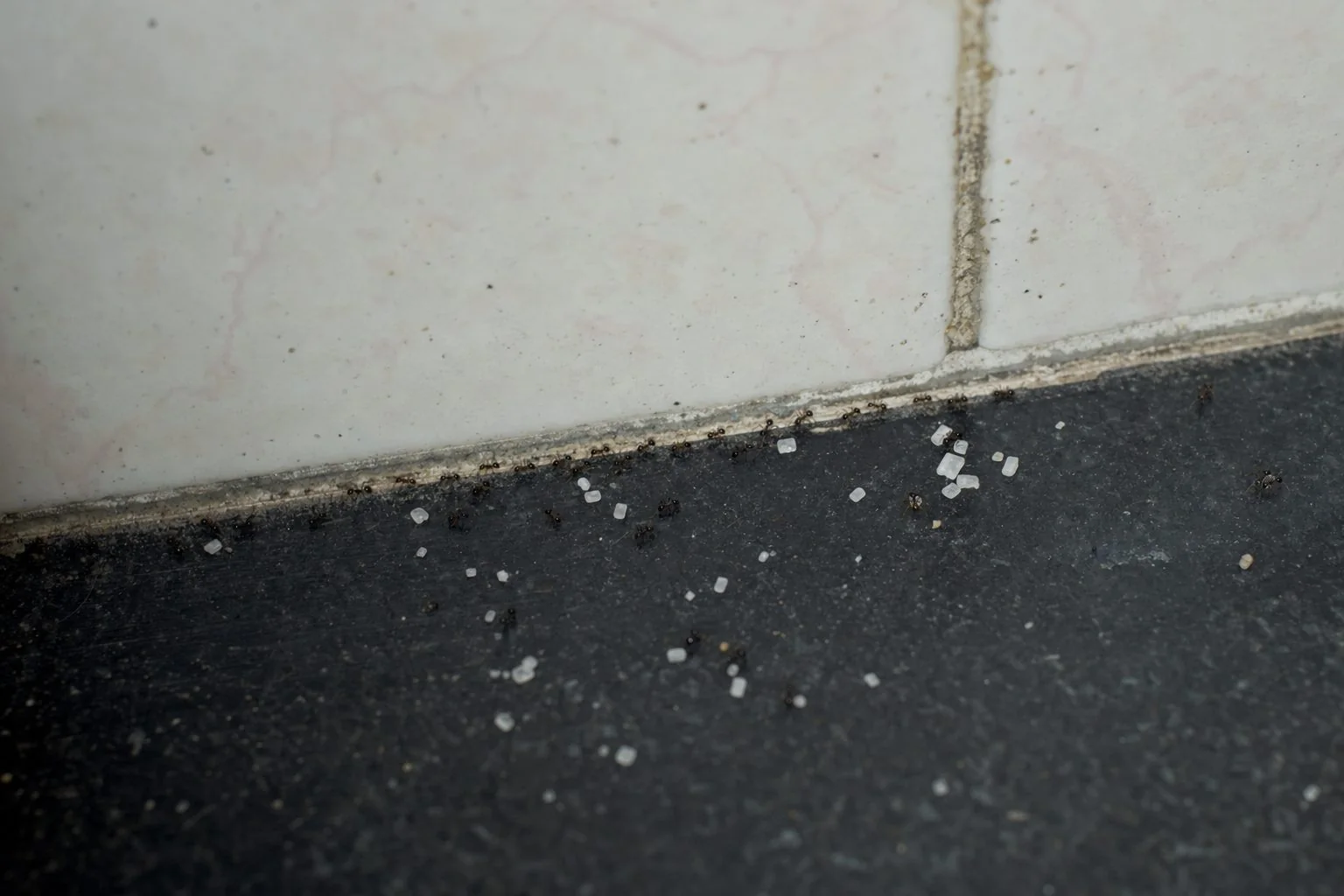
The tiny black/brown sugar ants are what 80% of Delhi homes deal with. About 2–3mm, they move in neat single-file lines toward anything sweet or greasy — the sugar jar, a honey drip, last night’s mithai box, even pet food. These usually nest indoors: inside wall voids, behind tiles, under the sink, in the gap behind the modular kitchen. Because the nest is inside, baiting works brilliantly on them.
The bigger garden ants are the 4–6mm ones that wander in from outside — common in ground-floor flats and homes with a balcony garden or a plot in areas like Dwarka, Saket and the older colonies of South Delhi. They nest outdoors in soil or under paving and only come inside to forage. For these, sealing the entry point matters as much as baiting.
The biting ants — reddish, more aggressive, the ones that sting when you brush a counter — are less common indoors but show up in monsoon. If you’re getting bitten, that’s the group, and it’s the one I’d most recommend handing to a professional rather than chasing yourself.
| Type | Size & look | Where it nests | Best approach |
|---|---|---|---|
| Tiny sugar/black ants | 2–3mm, single-file lines | Inside walls, behind tiles, under sink | Sweet/protein bait gel |
| Larger garden ants | 4–6mm, wander in singly | Outdoors in soil, under paving | Seal entry points + bait |
| Reddish biting ants | 3–5mm, sting/bite | Soil, wall cracks, monsoon-driven | Call a professional |
The method that actually wipes out the nest
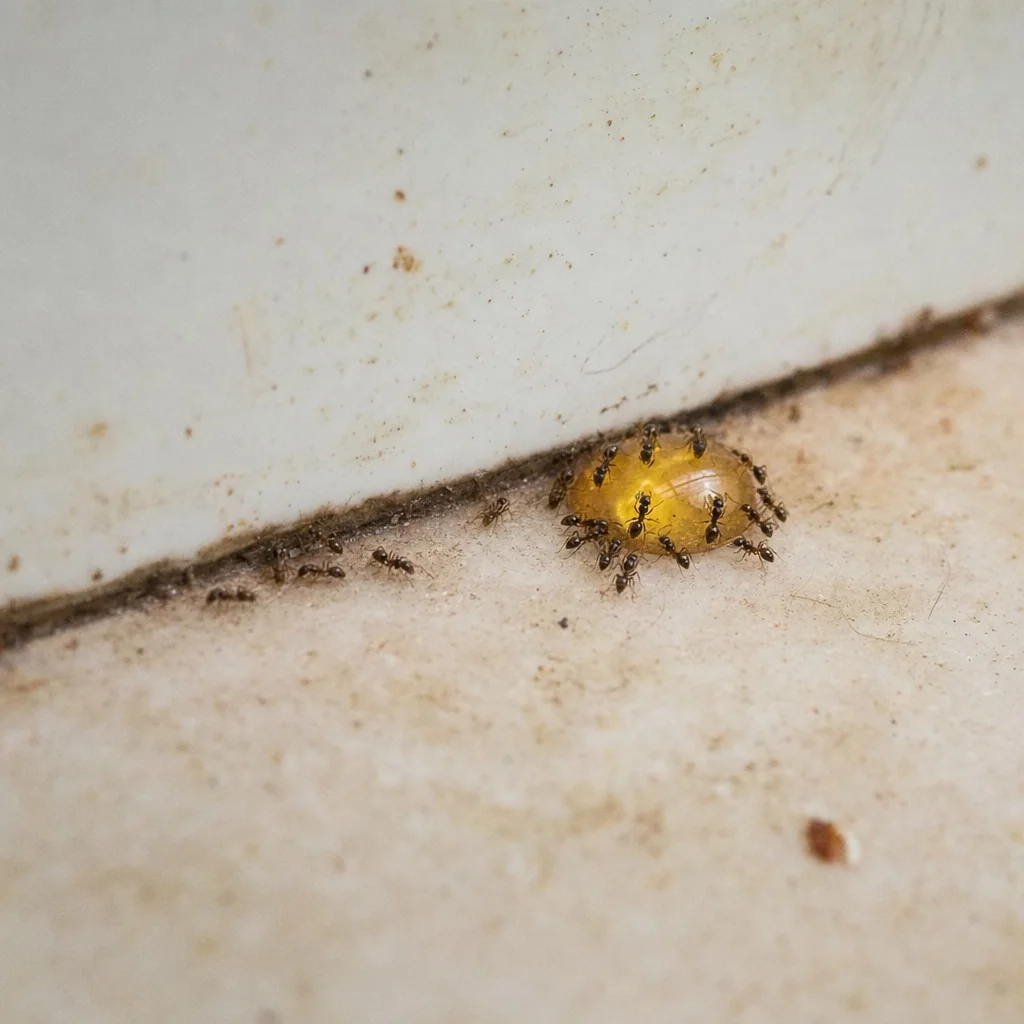
Bait, don’t hunt. The whole game is to turn the ants’ own teamwork against them. A slow-acting ant bait — a gel or a small bait station — is a sweet (or protein) lure mixed with a small dose of insecticide. A forager finds it, eats a little, carries more back, and feeds it to the larvae, the other workers and — this is the point — the queen. Over three to seven days the nest poisons itself from the inside. No queen, no colony.
Place the bait on the trail, not where you wish the ants were. Put a small dot of the gel right beside the line they’re already walking — the corner of the counter, the base of the wall, beside the sink pipe. Use a few small dots rather than one big blob; ants take cleaner doses from small amounts. The baits sold in India for this go through the Central Insecticides Board & Registration Committee (CIB&RC), so stick to approved products and follow the label dose.
Now the hard part: do nothing. For the next few days you will see more ants, not fewer — they’ve found a food source and recruited their friends. This is exactly what you want. It means the bait is being carried home. Do not spray, do not wipe the bait away, do not panic. If you kill the carriers now, the dose never reaches the queen and you’re back to square one.
Keep the rest of the kitchen boring. While the bait does its work, the ants should have nothing else worth eating — no open sugar, no crumbs, no sticky jar rims. If they can choose between your honey and the bait, some will pick the honey and the kill slows down. Bait plus a clean counter is the combination that finishes a nest in 2026, not bait alone.
One more rule: never use spray and bait together. The repellent smell of a spray warns ants off the very bait you’re relying on. Pick the bait. If you’ve already sprayed an area, wipe it down with soapy water first so the bait isn’t sitting in a no-go zone.
Ants back within a week, every week?
If you’ve sprayed three times and they keep returning, it’s a nest you can’t see. Professional ant treatment starts at ₹999 (GST 18% extra).
Natural and home fixes, honestly rated
The internet is full of kitchen-cupboard “cures” for ants, and most of them are half-true. Some genuinely help, some buy you a day, and a couple are pure folklore. Since I’ve had customers swear by all of them, here’s my honest take after years of actually walking into infested kitchens — not a copy-paste list.
The two that really work are unglamorous. Wiping the trail with vinegar or plain soapy water erases the invisible chemical scent track ants lay down for each other — cut the path and the line genuinely breaks up, at least until they re-scout. And moving all the sweet, oily food into steel or glass jars with tight lids simply removes the reason they came. Do those two and you’ve solved half the problem before spending a rupee.
The aromatics — cinnamon, bay leaf, clove, peppermint, lemon peel — are mild deterrents at best. A line of cinnamon across a doorway might nudge ants to try another route for a day. It does nothing to the nest, and the smell fades fast in Delhi’s heat. Fine as a stop-gap, useless as a cure. Chalk lines (the “Lakshman rekha” trick) are the most overrated of the lot — that’s an insecticidal chalk, not magic, and drawing a line is a poor way to dose ants. I’d skip it.
| Remedy | What it actually does | Honest rating |
|---|---|---|
| Vinegar / soapy water wipe | Erases the scent trail so the line breaks up | Works — do this |
| Food in steel/glass jars | Removes the food source entirely | Works — essential |
| Slow ant bait gel | Carried back; kills the queen and nest | Works best for the nest |
| Cinnamon / bay leaf / clove | Mild, short-lived deterrent at entry points | Mild — buys a day |
| Peppermint / lemon spray | Masks scent briefly; smells nice | Mild — not a cure |
| Chalk line (“Lakshman rekha”) | Insecticidal chalk, poorly dosed | Mostly useless |
| Contact spray on the trail | Kills foragers; warns nest; can cause budding | Backfires — avoid |
Sanitation and sealing — the real long-term fix
Bait kills the nest you have; sanitation stops the next one. Ants come back to a kitchen for two reasons only — food and an easy way in. Take away both and you stop fighting the same battle every monsoon. This is the boring, unsexy part that actually keeps a kitchen ant-free, and it costs almost nothing.
On food: wipe counters at night, never leave dirty utensils soaking till morning, take the kitchen bin out daily and keep its lid shut, and clean the sticky rim of the honey, jam and oil bottles — that thin sugary film around a cap is a five-star buffet for sugar ants. Don’t leave pet food or its bowl out overnight either; that’s a trail magnet I see constantly in flats across Rohini and Pitampura.
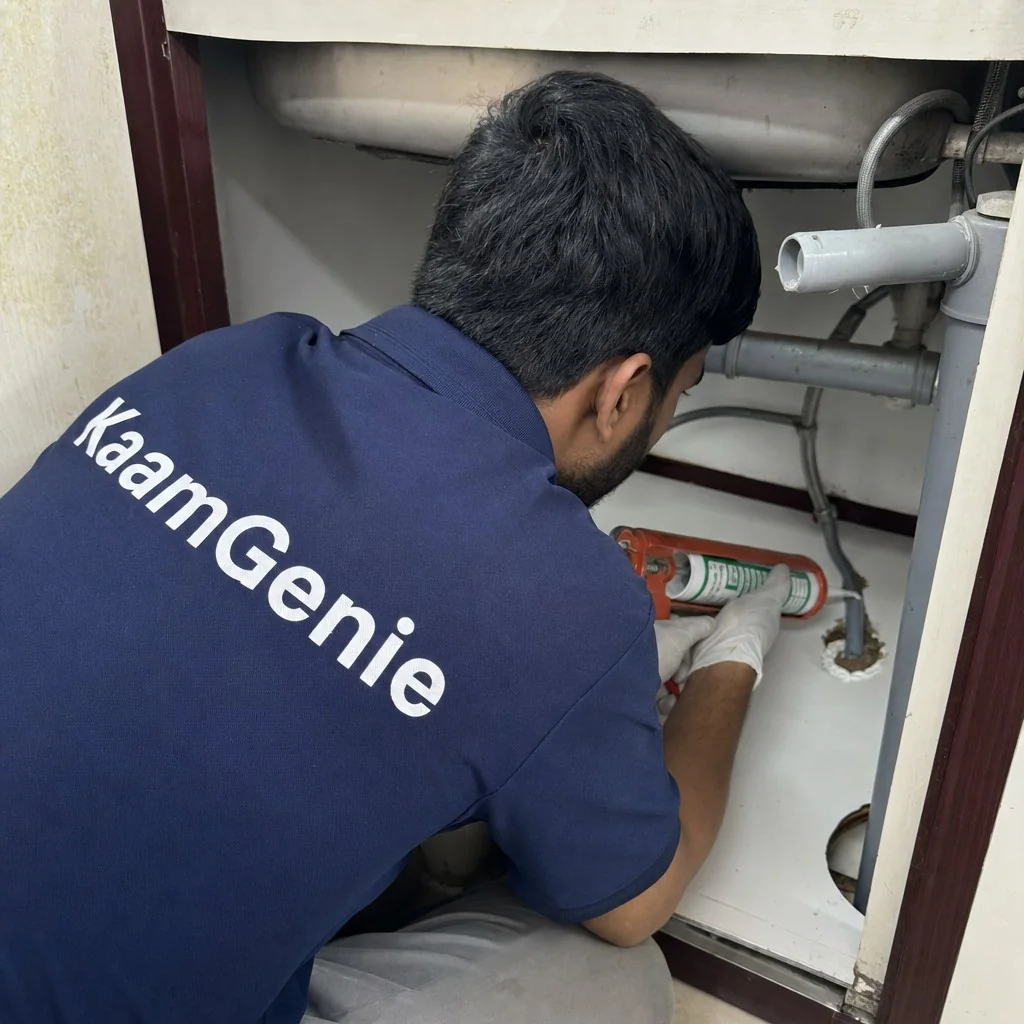
On entry points: ants get in through gaps you barely notice — the space where the water pipe enters under the sink, hairline cracks where the platform meets the wall, the gap around an old window frame, the bottom of a balcony door. Walk the kitchen, find where the trail disappears into, and seal those gaps with caulk or even M-seal. In older Delhi buildings — the kind common in Karol Bagh, Janakpuri and parts of South Delhi — settling cracks are everywhere and that’s the usual highway. Fixing a dripping tap helps too; ants need water as much as food, especially in the dry pre-monsoon weeks.
When to call a pro — and what it costs in 2026
Most simple sugar-ant lines you can handle yourself with bait and a clean counter. I’d rather tell you that honestly than sell you a treatment you don’t need. But some situations are worth handing over, and the price is genuinely small for the trouble it saves.
Call someone when: the ants keep coming back after weeks of correct baiting; you’re seeing multiple trails in different rooms (a sign of budding or several nests); they’re biting; the nest is clearly inside a wall or under the floor where you can’t reach; or it’s a restaurant, tiffin service or shop kitchen where you simply can’t afford a recurring problem. A professional reads the trails to locate the nest, places the right bait or applies a residual treatment at the harbourage points, and treats entry routes — not just the line you can see.
On price: general pest control with KaamGenie starts at ₹999, with GST 18% extra, and a single ant-focused visit for a normal flat sits at the lower end of that. Compare that to what a termite job or a rodent problem costs and ants are the cheapest pest you’ll ever deal with. Here’s a rough idea of 2026 pricing by home size — final quote depends on the level of infestation and access.
| Home size | Typical single visit* | Good for |
|---|---|---|
| 1 BHK / studio | From ₹999 | One or two active trails |
| 2–3 BHK | ₹1,200 – ₹1,800 | Kitchen + bathrooms covered |
| Large flat / 4 BHK+ | ₹1,800 – ₹2,800 | Multiple rooms, several nests |
| Shop / small kitchen | Quoted on visit | Commercial, recurring cover |
*Indicative only. GST 18% extra. Final price depends on infestation level and site access.
Not sure if it’s a sugar ant or something worse?
Send us a photo on WhatsApp and we’ll tell you what you’re dealing with and a fair price — no obligation.
The ant-free kitchen scorecard — what actually works
If you only remember one chart from this guide, make it this one. It’s the difference between the two most common approaches, measured the way it matters — how many kitchens are still ant-free three weeks later. The numbers are realistic, drawn from what I see across Delhi homes, not lab figures.
Spray the trail vs bait the nest (2026)
Share of Delhi kitchens still ant-free three weeks after treatment.
Your quick prevention checklist
Tape this inside a cupboard door if it helps. Done consistently, these eight habits keep the average Delhi kitchen ant-free without any chemicals at all — and they make any bait you do use far more effective.
| # | Habit | Why it works |
|---|---|---|
| 1 | Wipe counters & stove every night | No crumbs or grease film to forage |
| 2 | Sugar, honey, ghee in sealed steel/glass jars | Removes the prime attractant |
| 3 | Clean sticky bottle rims and caps | That sugary film is a magnet |
| 4 | Empty the bin daily, keep the lid shut | Cuts off the easiest food source |
| 5 | Don’t leave pet food out overnight | Removes a common trail trigger |
| 6 | Seal cracks around pipes and window frames | Blocks the highway in |
| 7 | Fix dripping taps; dry the sink at night | Ants need water too |
| 8 | Wipe any fresh trail with vinegar/soapy water | Erases the scent before it grows |
Areas we serve across Delhi. KaamGenie runs ant and general pest control across most of the city — South Delhi (Saket, Lajpat Nagar, Greater Kailash), East Delhi (Mayur Vihar, Preet Vihar), West Delhi (Janakpuri, Rajouri Garden), North & North-West (Rohini, Pitampura, Karol Bagh) and Dwarka. Coming soon: Gurgaon, Noida, Faridabad and Ghaziabad. If you’re in Delhi and the ants won’t quit, send us a photo on WhatsApp and we’ll tell you straight what it’ll take.
Frequently asked questions
Why do ants keep coming back to my kitchen even after I spray them?
Because spray only kills the foragers you can see. The queen and the nest — usually hidden inside a wall, under tiles or behind the kitchen platform — stay untouched, and the queen replaces every worker you kill within days. In 2026 the only thing that actually clears a kitchen is killing the nest with bait, plus removing the food that drew them in.
What is the fastest way to get rid of ants in the kitchen?
Honestly, there’s no instant fix that lasts. The fastest lasting method is to wipe the trail with vinegar or soapy water to break the scent path, seal all sweet and oily food, and place a slow ant bait gel right on the trail. The bait takes three to seven days to wipe out the nest — that patience is what makes it stick.
Is it safe to use ant bait gel around kids and pets?
Ant gels approved by the Central Insecticides Board (CIB&RC) are low-toxicity and used in tiny dots, but you should still place them out of reach of children and pets — inside the cupboard corner, behind appliances, along the skirting. Follow the label dose. If you have crawling babies or pets that lick everything, a professional placement is the safer route.
Do natural remedies like cinnamon, vinegar or bay leaves actually work on ants?
Partly. Vinegar (and plain soapy water) genuinely works because it erases the scent trail ants follow. Cinnamon, bay leaf, clove and peppermint are mild, short-lived deterrents at doorways — they buy a day, not a cure, and they do nothing to the nest. Sealing food in jars works. Chalk lines are mostly folklore.
How much does professional ant control cost in Delhi in 2026?
General pest control with KaamGenie starts at ₹999, with GST 18% extra. A single ant-focused visit for a normal 1–2 BHK flat usually sits at the lower end of that. Larger homes or multiple nests run higher. It’s the cheapest pest treatment you’ll ever pay for compared to termites or rodents.
Why am I suddenly seeing MORE ants after putting down bait?
That’s a good sign, not a bad one. The ants have found a food source and recruited more workers to carry it back to the nest — which means the poison is reaching the queen. Don’t spray or wipe the bait away. Within a few days the numbers fall off sharply as the nest dies.
Should I spray and bait at the same time for faster results?
No — this is a common mistake. The repellent smell of a spray warns ants off the bait you’re relying on, so they stop feeding and the nest survives. Pick one method, and for a lasting result that’s the bait. If you’ve already sprayed, wipe the area with soapy water before placing bait.
Where are the ants in my kitchen coming from?
Tiny sugar ants usually nest indoors — inside wall voids, behind tiles, under the sink or behind the modular kitchen. Larger ants often nest outdoors in soil and come in through gaps around pipes, cracks where the platform meets the wall, or old window frames. Follow the trail to where it disappears; that’s your entry point or nest.
Can ants in the kitchen contaminate food or make us sick?
Ants aren’t as dangerous as cockroaches, but they do walk across bins, drains and floors before reaching your food, so they can carry bacteria onto surfaces. More practically, they ruin open food and are a real problem for any home cook, tiffin service or restaurant. Keeping food sealed protects both your health and your groceries.
How do I stop ants from coming back for good?
Remove the two things they want: food and an easy way in. Wipe counters nightly, seal sugar and oil in steel or glass jars, clean sticky bottle rims, take the bin out daily, don’t leave pet food out, fix dripping taps, and caulk the cracks around pipes and window frames. Do that and you rarely need chemicals at all.
Cheeti bhagane ka asli tarika kya hai?
Sabse pehle trail ko sirke (vinegar) ya saabun-paani se saaf karein taaki unka raasta toot jaaye. Phir saari meethi aur chikni cheezein steel ya glass ke dabbe mein band karein. Trail ke paas dheere asar karne wali ant bait gel lagayein — cheentiyaan use nest tak le jaati hain aur 3–7 din mein poora nest khatam ho jaata hai. Spray na karein, warna queen bach jaati hai.
Do I really need a professional, or can I handle kitchen ants myself?
Most simple sugar-ant trails you can clear yourself with bait, a clean counter and sealed gaps — I’d rather say that than oversell. Call a pro when ants keep returning after weeks of correct baiting, you see multiple trails in different rooms, they bite, the nest is deep inside a wall, or it’s a commercial kitchen you can’t risk.
Tired of fighting the same ants every month?
Let KaamGenie find the nest and treat it properly. Ant & general pest control across Delhi, starting at ₹999 (GST 18% extra). Same-day available.
Sources & references
- Central Insecticides Board & Registration Committee (CIB&RC) — regulates the ant baits and insecticides approved for use in India.
- National Centre for Disease Control (NCDC) — tracks Indian urban pest patterns referenced in this guide.
- Indian Council of Medical Research (ICMR) — publishes research on household pest biology and control.
Last verified: 9 June 2026. If you find any of these links broken, please let us know.