
Quick answer — how to actually get rid of cockroaches permanently
- DIY spray fails because: Delhi cockroaches have built up resistance to common over-the-counter chemicals (cypermethrin), spray only kills what it touches (95% of colony hides inside walls), and egg cases survive to hatch a new wave in 2-3 weeks.
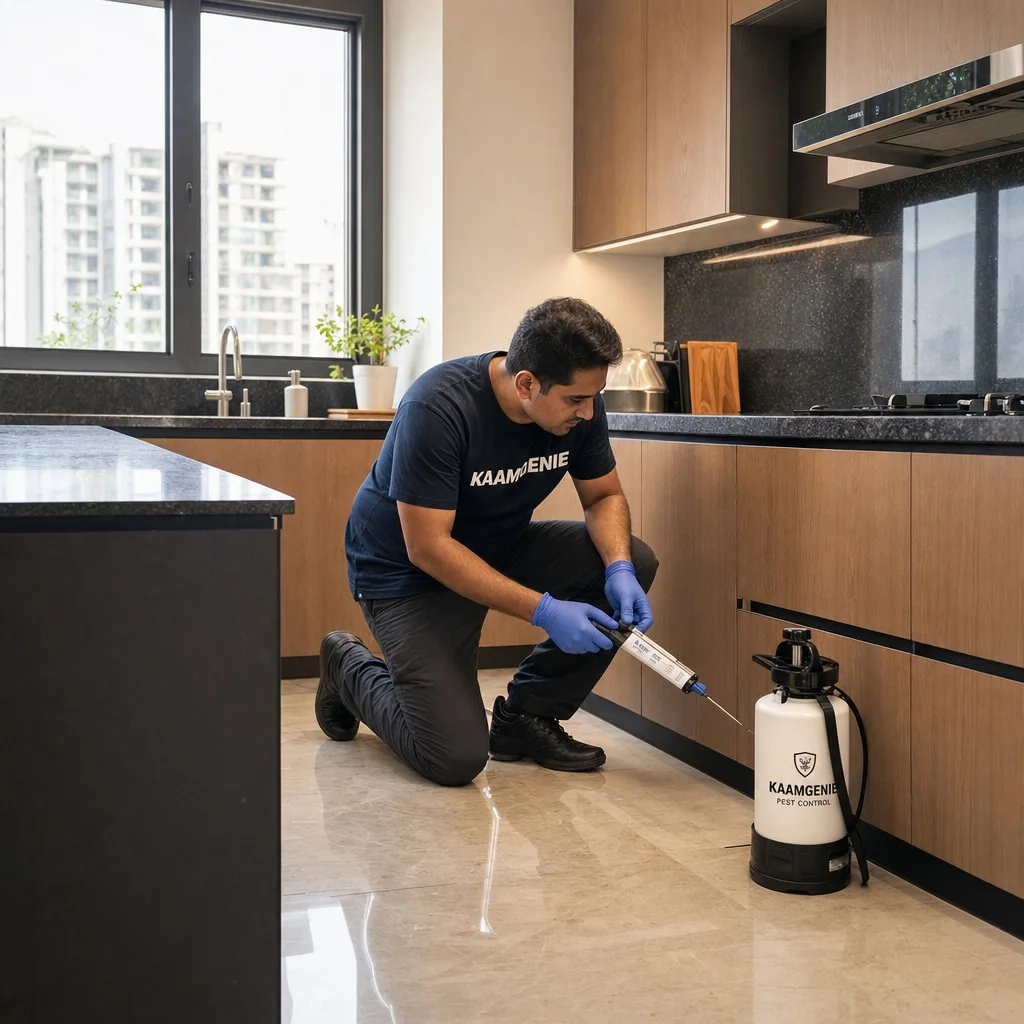
- The permanent answer: CIB&RC-approved gel bait (fipronil 0.05% or imidacloprid 2.15%) placed in concealed harbourage points where cockroaches travel.
- Time to full colony collapse: 7-14 days after professional treatment.
- Cost in Delhi (2026): Starts at ₹599 for a 1 BHK kitchen + bathroom, ₹1,099 for a 3 BHK whole-flat. AMC from ₹3,999/year.
- Warranty: 45-day re-treatment if live cockroaches return inside the treated zones.
- Pet-safe and child-safe: Gel bait placed inside cabinet hinges and behind appliances, no airborne residue. Cooking can resume the same day.
- Same-day visits available across all of Delhi NCR.
Why DIY cockroach treatment doesn’t work permanently in Delhi homes
Every Delhi household has tried the same playbook. A can of HIT or Mortein. Lakshman Rekha chalk drawn around the kitchen counter. A plug-in ultrasonic repellent from Amazon that the seller swore would clear the kitchen in a week. You get 4-7 good days. Then they’re back — sometimes worse than before. After two or three cycles of this, you start to wonder if there’s any way to fix it for good.
There is. But it’s not what you’ve been doing. The reason DIY fails comes down to three specific things that the over-the-counter products simply cannot solve. Once you understand them, the professional gel-bait approach makes obvious sense.
1. Resistance. Delhi’s German cockroach population (the small light-brown ones in your kitchen) has been exposed to cypermethrin and deltamethrin sprays for over two decades. Field studies in Indian metros now show 60-90% resistance to the active ingredients in shop-bought sprays. You can spray a kitchen until the can is empty and watch them walk away unaffected. The chemicals available at a kirana shop are 10-15 years behind what professional pest control uses.
2. Surface-only kill. Spray only kills what it touches. The cockroaches you can see and spray are roughly 5% of the colony. The other 95% are inside the wall cavity, behind the chimney, under the gas stove insulation, inside the toaster motor compartment, in the gap between the modular cabinet carcass and the wall. None of those get touched by your spray. Worse: heavy spray scatters the survivors deeper into hidden spots, making them harder to reach next time.
3. Egg cases survive. Female cockroaches carry egg cases (called oothecae) with 30-40 eggs each. The casing is wax-coated and largely impermeable to spray chemicals. So even if you kill every adult you can see, the cases hatch 2-3 weeks later and you’re right back where you started. This is why you get 4-7 days of relief followed by a return wave.
This pattern is amplified in Delhi by four neighbourhood-specific factors: older building stock (most DDA pockets in Mayur Vihar, Rohini, Janakpuri were built in the 1970s-90s with shared drain stacks), high-grease cooking culture that feeds the colony even in clean kitchens, monsoon humidity that accelerates egg hatching, and ground-floor flats near common drains where re-introduction is constant. If you’re in any of these situations, no amount of HIT spray will fix the problem permanently.
The science: what “permanently” actually means for cockroaches
Let’s define the word honestly, because it’s the question every Delhi homeowner really wants answered. “Permanent” cockroach removal doesn’t mean “no cockroach ever sets foot in your home again for the rest of your life.” That’s not realistic in any Indian metro. It means: no live cockroach activity inside your home for 6-12 months after treatment, and re-infestation only happens when there’s a clear external source bringing fresh cockroaches in.
For a properly treated, isolated home — say, a third-floor flat in Vasant Kunj with no restaurant downstairs and an intact kitchen window mesh — permanent means 12+ months between professional visits. The colony you treated dies, and there’s no external pressure refilling it. Many of our Defence Colony and Vasant Kunj customers go a full year or more between treatments after the first gel-bait round.
For a ground-floor flat, a restaurant-adjacent home, or a flat directly under a unit with active infestation, “permanent” requires ongoing maintenance — not because the treatment didn’t work, but because the external pressure keeps refilling the colony from outside. For these homes the right answer is an annual maintenance contract (AMC) where we come back every 3 months and top up the gel bait before the new colony can grow back. That’s how the Mayur Vihar Phase 1 ground-floor DDA blocks stay clean year-round on our quarterly schedule.
The honest framing: permanent for isolated homes = one professional treatment, possible re-visit every 12-18 months. Permanent for ground-floor or restaurant-adjacent homes = quarterly AMC. Anyone who promises a single one-time treatment that lasts forever regardless of your situation is overselling.
The professional gel-bait protocol — why it gets rid of them permanently
Professional cockroach treatment in Delhi has moved decisively from spray-based to gel-bait-based over the last decade. The reason is the chemistry: gel bait solves all three of the DIY failures above in one mechanism.
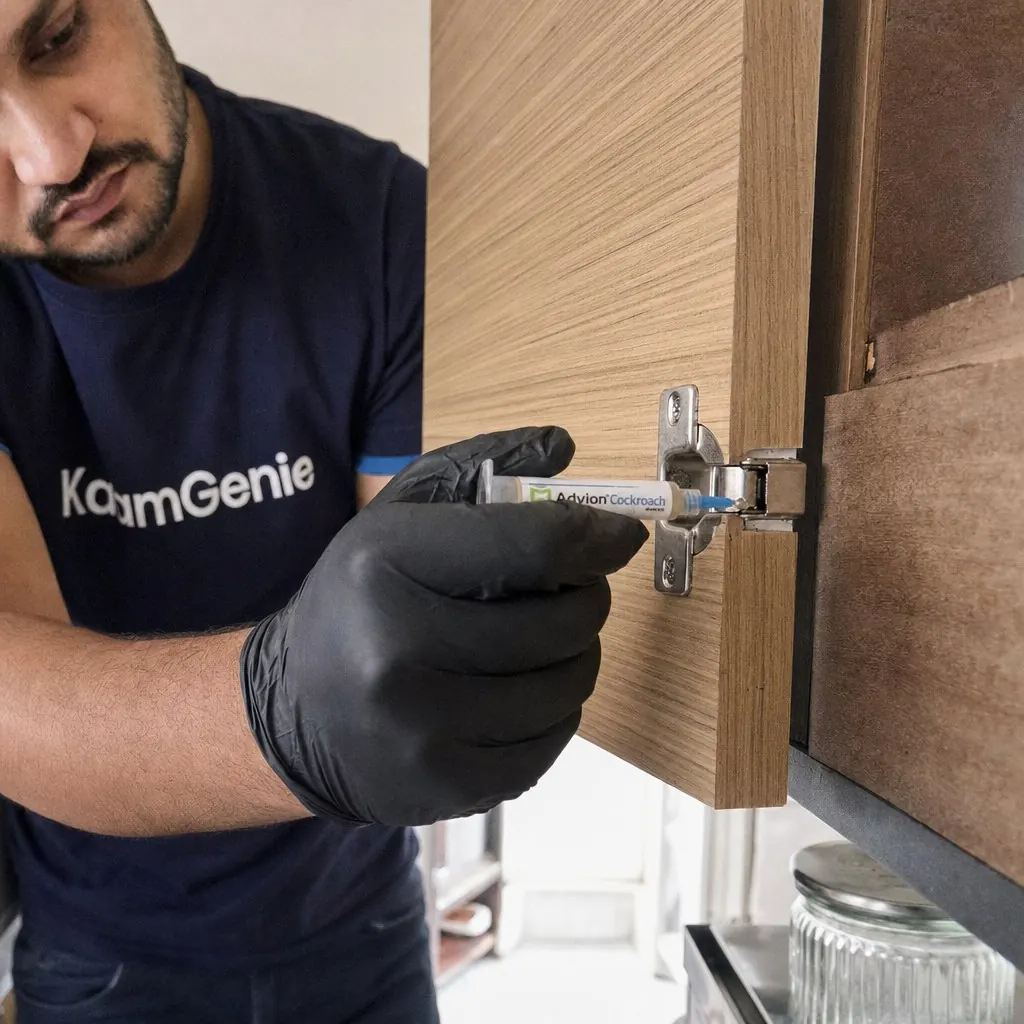
The gel itself is a water-based or hydrocarbon-based sticky paste containing a low-concentration insecticide (typically 0.05% to 0.6%) plus food attractants — sugars, proteins, fats. The active ingredient is one of two CIB&RC-approved chemicals: fipronil 0.05% (the standard residential bait, same active used by global brands like Goliath and Maxforce) or imidacloprid 2.15% (used for heavy infestations and where fipronil resistance is suspected, because it works through a different chemical pathway).
Here’s how the colony collapse works: a small pinhead dot of gel is placed inside a cabinet hinge cavity. A cockroach finds it overnight (they’re drawn to the food attractants), feeds on a tiny amount, then walks back into the wall cavity or behind the appliance where the rest of the colony lives. It dies 24-48 hours later. Other cockroaches feed on its body and on its droppings, both of which now contain the active ingredient — this is a behaviour called trophallaxis. Within 4-5 days the bait has spread through the colony. By day 7-10 the egg-bearing females die before laying. By day 14 the colony is functionally collapsed.
The bait does NOT kill on contact like spray. It works through ingestion and social spread. That’s why our crew tells you not to wipe the gel dots, not to spray any other insecticide over them, and not to deep-clean the cabinets for 15 days — if you disturb the bait, you stop the colony spread before it completes.
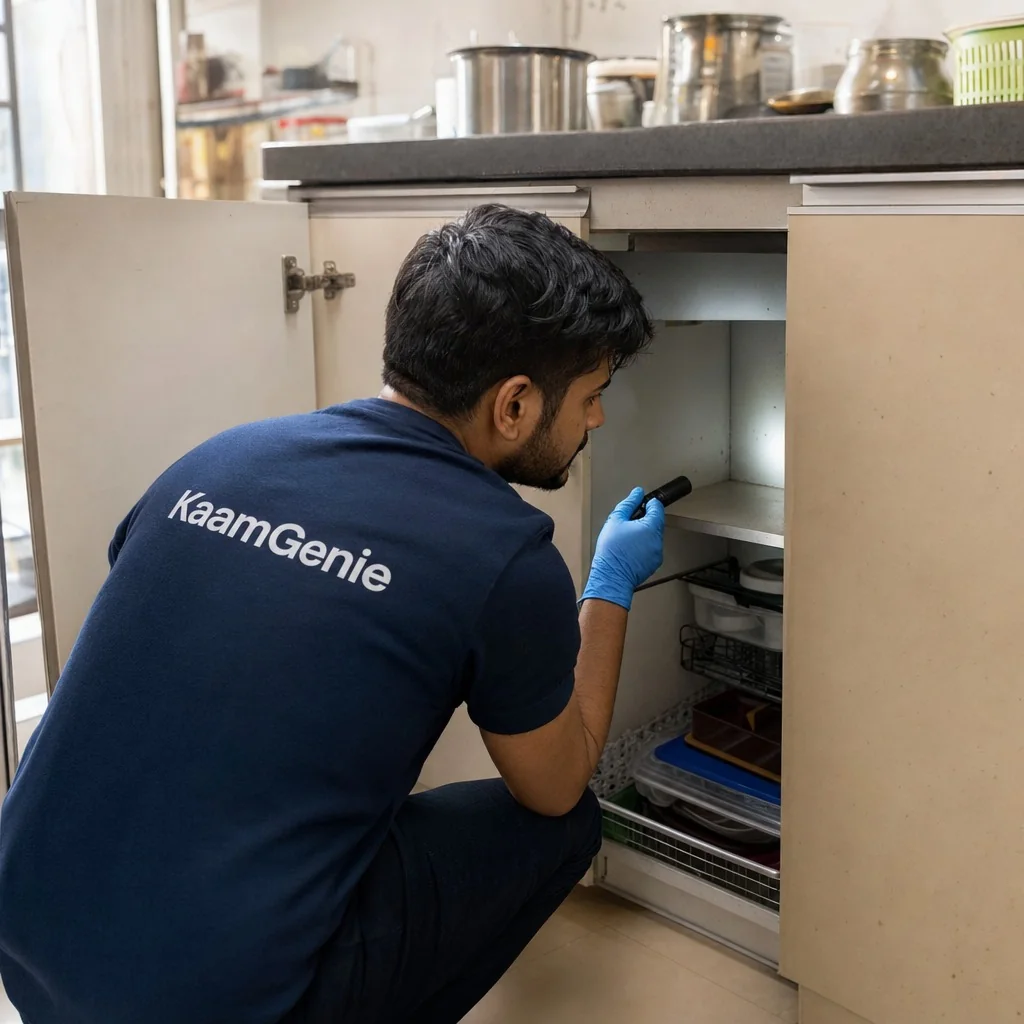
A typical Delhi kitchen treatment places gel bait at 12-18 specific hotspots: cabinet hinge cavities, the gap behind the chimney duct, under the gas stove, behind the fridge motor area, inside the U-bend below the sink, the back wall behind the microwave shelf. In bathrooms: the floor drain rim, the U-bend below the sink, the corner where wall meets the cistern. Total gel used: 3-5 grams for a whole flat. Tiny amount. Massive effect.
Ready to get rid of cockroaches permanently?
One professional gel-bait visit covers a 2-3 BHK Delhi flat in 60-90 minutes. CIB&RC-approved chemicals, pet-safe placement, 45-day warranty. Same-day visits available.
Cost: what permanent cockroach removal actually costs in Delhi (2026)
Real prices, from our actual booking sheet, no platform markup. GST 18% extra. No hidden visit charges within standard Delhi zones.
| Home size | Cockroach treatment | Scope | Warranty |
|---|---|---|---|
| 1 BHK | ₹599 | Kitchen + bathroom, gel-bait + targeted spray | 45-day |
| 2 BHK | ₹799 | Whole flat, spray + gel, drain coverage | 45-day |
| 3 BHK | ₹1,099 | Whole flat, all corners + utility | 45-day |
| 4 BHK | ₹1,499 | Whole flat + storeroom + balcony | 45-day |
| Small bungalow (up to 2,500 sqft) | ₹2,499 | Multi-floor + garden boundary | 45-day |
| Large bungalow (5,000+ sqft) | Custom quote | Whole property + outhouse | 45-day |
| Annual AMC (1-2 BHK) | ₹3,999/yr | 4 visits + free re-treatment | Continuous |
If you’ve been quoted ₹200-300 for a residential cockroach treatment somewhere on Justdial or Sulekha, that’s not professional gel-bait work — that’s a 5-minute spray-and-leave job using shop-grade chemicals, exactly the kind that gives you 4-7 days of relief and then reinfestation. If you’ve been quoted ₹2,500+ for a 2 BHK flat, you’re paying for platform markup, not a better treatment. The honest range for a real gel-bait job in Delhi is ₹599-1,499 depending on size.
6 things to do in your home BEFORE the treatment
The treatment works much better when the home is prepped correctly. None of this is hard, but skipping any of it can drop the treatment’s effectiveness by 30-50%.
- Stop spraying ANY insecticide 48 hours before our visit. This is the single most-skipped step. Spray residue on surfaces acts as a repellent that drives cockroaches AWAY from where we’re placing the gel bait. The colony won’t come to the bait, and the treatment fails. If you’ve sprayed in the last 24 hours, tell us — we may suggest pushing the appointment by a day.
- Do not use cockroach chalk (Lakshman Rekha) in the kitchen or bathroom. Same logic: it’s a repellent. Cockroaches avoid the marked areas, which is exactly where our crew needs to place the gel bait.
- Don’t deep-clean cabinets immediately before. Strong cleaning products — especially anything with eucalyptus oil, citronella, lemon-based cleaner, or harsh detergent — leave smells that interfere with the bait’s attractant. A normal day-to-day wipe-down is fine. Just don’t scrub everything with strong cleaner the morning of the visit.
- Move perishable food off open shelves. Loose atta, dal, sugar, masalas left in open containers can attract cockroaches once they’re drawn out of harbourage. Move into sealed containers or move to a separate room for the first 7-10 days.
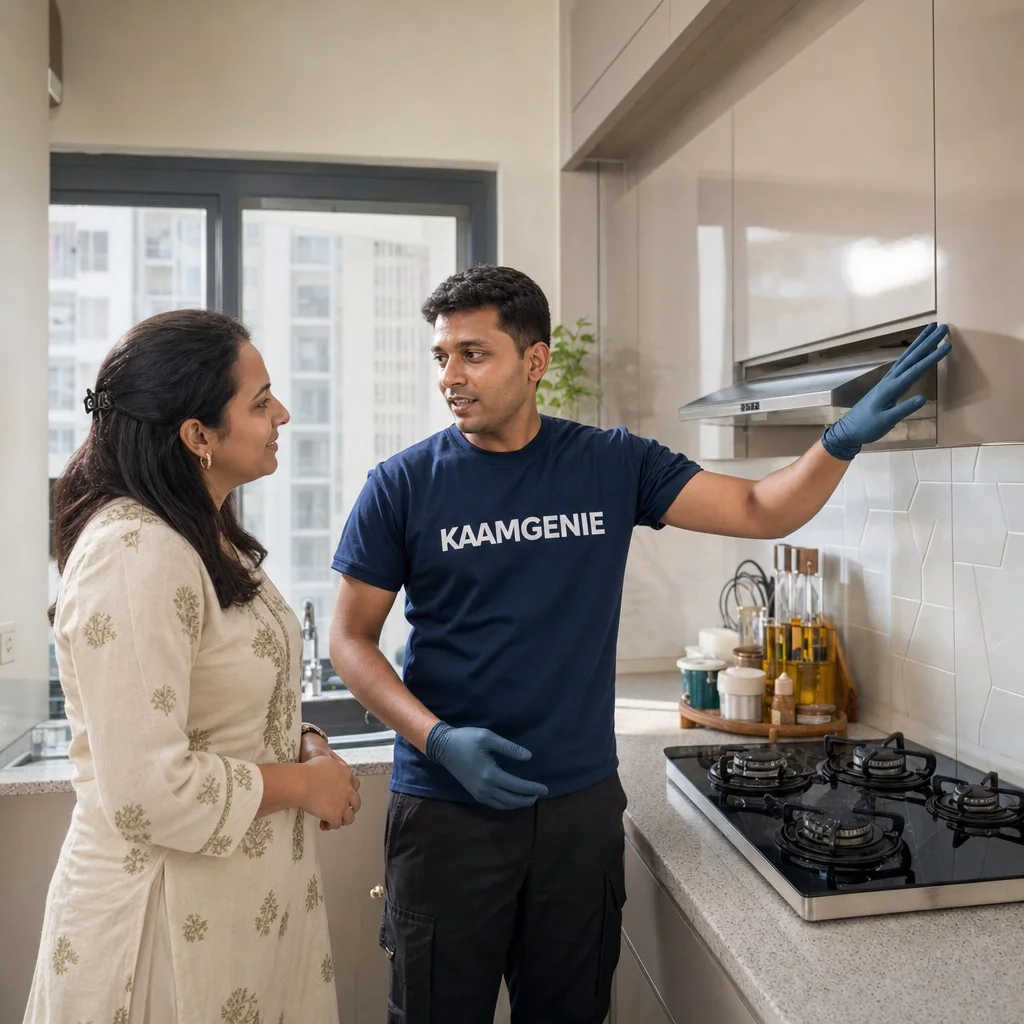
- Identify your hotspots for the crew. If you’ve seen cockroaches consistently in one spot — under the kitchen sink, behind the chimney, in one specific bathroom corner — tell the crew lead during the walkthrough. They’ll prioritise placement at those points.
- Plan to NOT wipe the gel dots for 15 days. The crew will show you exactly where every dot is placed. They’re inside cabinet hinges and behind appliances, so they’re mostly out of sight anyway. Just know in advance that you’re not to disturb them for two weeks. Same goes for spraying anything over them — not even Colin or Lizol.
The crew will walk you through all of this during the safety briefing on the day, but if you can do steps 1-2 in the 48 hours before our visit, the treatment outcome is noticeably stronger.
What you’ll see after treatment — day-by-day breakdown
This is the part most homeowners want to know but rarely ask about until they’re panicking on day 2. Here’s exactly what to expect, so you don’t panic.
Day 1-3: You’ll see MORE cockroaches than usual. This is counter-intuitive and freaks people out, but it’s actually the bait working. Sick and dying cockroaches leave their harbourage zones because they’re disoriented. They come into the open to die. So in the first 24-72 hours you may see 5-15 dead or dying cockroaches in your kitchen that you never normally saw. Don’t spray. Don’t panic. Don’t call us angry. Just sweep them up and throw them in the dustbin. This is exactly what success looks like in week one.
Day 4-7: Activity drops sharply. The colony spread through trophallaxis is now reaching the egg-bearing females in deep harbourage. You’ll see far fewer dead cockroaches in the open. Most are now dying inside the wall cavity where you can’t see them. The smell of dying cockroaches is rare in Indian kitchens — they’re too small to produce noticeable odour — so don’t worry about that.
Day 8-14: Colony collapse complete. You should see zero live cockroaches in treated zones. The egg cases that were already laid before treatment will hatch around days 10-14, but the new nymphs walk straight onto active gel bait and die within 24-48 hours. By day 14 you should have nothing.
Day 15+: Wrap-up. If you’re seeing zero, you’re done. Surfaces can be wiped (carefully avoiding visible gel dots), cabinets can be deep-cleaned. The gel itself stays active for 60-90 days but most of its work is finished. If you ARE still seeing live cockroaches in treated zones, that’s your warranty trigger — call us and we send the crew back free for a re-treatment under the 45-day window.
Most Delhi customers don’t need the warranty re-treatment. About 1 in 12 do, usually because of external pressure (society common drain) that we then address separately, or because they sprayed insecticide during the 15-day window despite the briefing.
Why some homes get reinfested (and how to prevent it)
You did everything right. The treatment cleared the colony. Six months later, cockroaches are back. What happened?
One of three things, almost always. Once you can spot which one, you can fix it.
Reason 1: You’re on the ground floor near a common drain. Most Delhi DDA pockets — Mayur Vihar, Yamuna Vihar, Patparganj, Rohini ground-floor flats — have shared building drains that run from the rooftop tank down through every flat to the basement. Cockroaches travel up and down these drains constantly. You clean your kitchen perfectly, get treatment, and a fresh batch arrives from the upstairs flat (which still has an active infestation) within 60-90 days. The fix here is an AMC — we come every 3 months and top up the gel bait before the new colony can grow back. About 70% of our AMC customers fit this pattern.
Reason 2: There’s a restaurant or food business directly downstairs (or next door). Most ground-floor commercial units in Karol Bagh, Lajpat Nagar Central Market, Khan Market, and the older South Delhi colonies are eateries or food storage. If the unit below you is a kitchen, cockroaches travel up through plumbing and electrical conduits. The fix is the same AMC pattern — quarterly visits keep the colony pressure capped before it visibly comes back.
Reason 3: A specific structural gap is letting them in. Sometimes the cause is fixable: a broken kitchen window mesh, a gap behind a modular kitchen cabinet, a drain U-bend that’s lost its water trap (very common in less-used bathrooms), a chimney duct that vents into a society shaft. We’ll point these out during the visit if we spot them. Fix the structural issue and the reinfestation pressure drops sharply, sometimes to zero.
For most isolated mid-floor and top-floor flats in Delhi, the single professional treatment lasts 12-18 months between visits. For ground-floor flats and restaurant-adjacent flats, AMC is the right answer. Be honest with yourself about which one you are — it determines whether one visit is enough or whether you need ongoing coverage.
Ground-floor flat with constant cockroach pressure?
Our quarterly AMC at ₹3,999/year for a 1-2 BHK keeps the colony pressure capped year-round. 4 visits, free re-treatment between visits, priority booking. Call us and we’ll quote based on your home size + floor.
Real Delhi cases: 3 permanent removals from this year
Three real cases from the last 6 months, anonymised. They represent the three most common patterns we see in Delhi homes.
Defence Colony 2 BHK — kitchen cockroaches, single visit, 8 months clear. Working couple in Defence Colony second-floor flat. Had been spraying HIT every night for two months. Saw 8-12 cockroaches per evening in the kitchen. Our crew did the standard 60-minute residential protocol: inspection walkthrough, 14 gel-bait placement points across kitchen + 2 bathrooms, brief spray on the sink U-bend where they were emerging. Customer was warned about the day 1-3 increase. Sent photo proof. At day 21 follow-up call: zero activity. Today, 8 months later, still zero activity. Total cost: ₹799 + GST. One visit. Real permanent.
Mayur Vihar Phase 1 — ground-floor DDA flat with society-drain pressure, AMC instead of one-time. Family of four. Tried one-time treatment with another service 18 months earlier, got 3 months of relief, then back to baseline. When they called us we explained the ground-floor + common drain reality: a one-time treatment was going to fail again within 90 days because the upstairs flats in the block were still infested. They went with AMC. 6 months in, three visits done, zero kitchen activity, and the family stopped buying HIT cans for the first time in years. Cost: ₹3,999/year. The honest answer to “permanent” for this pattern of home.
Lajpat Nagar Central Market restaurant kitchen — pre-FSSAI audit, commercial protocol. Mid-range North Indian restaurant, kitchen footprint about 350 sqft, FSSAI inspection in 10 days. Owner had been spraying every night for two weeks and the cockroach traffic was getting worse. Our crew did a 9 PM-to-midnight visit (kitchen closed), full gel-bait protocol at 32 placement points including the deep-fry station, tandoor, dishwashing sink, dry-storage shelves. By the day of the audit, zero visible activity. Restaurant passed cleanly. Now on quarterly maintenance because that’s how commercial “permanent” works. Cost: commercial site visit + ₹2,499 + GST.
When “permanent” is realistic — and when it isn’t
The honest summary, written from 8 years of Delhi field experience and several thousand kitchens treated:
- Top-floor flat, no restaurant nearby, kitchen window mesh intact: one professional gel-bait treatment, no activity for 12-18 months. Repeat in 18-24 months if you start seeing them again. This is what permanent looks like for most South Delhi and Vasant Kunj customers.
- Mid-floor flat, society block: one professional treatment, no activity for 9-15 months. Same maintenance cadence as above.
- Ground-floor flat near common drain: AMC is the right answer — quarterly visits, zero activity year-round. One-time will give you 90 days then return.
- Restaurant downstairs or next door: AMC, same reasoning.
- Restaurant or commercial kitchen yourself: quarterly commercial protocol with FSSAI documentation. Permanent for commercial means kept-under-pressure, not zero-cockroach-forever.
If you’re honest about which situation you’re in, you can pick the right treatment and the right cadence. Anyone selling you a single magic treatment that lasts forever regardless of your floor or your neighbours is overpromising. The professional answer is “here’s the right treatment for your specific home’s pressure level.”
Areas we serve for cockroach treatment in Delhi
Same-day available across all of Delhi: South Delhi (Saket, Lajpat Nagar, Defence Colony, GK-1, GK-2, Vasant Kunj, Chattarpur, Mehrauli, Khanpur, Sangam Vihar, Hauz Khas), Central Delhi (Karol Bagh, Patel Nagar, CP, Paharganj), East Delhi (Mayur Vihar, Preet Vihar, Laxmi Nagar, Patparganj, Yamuna Vihar), West Delhi (Janakpuri, Tilak Nagar, Rajouri Garden, Dwarka, Uttam Nagar, Punjabi Bagh), North Delhi (Civil Lines, Model Town, Kamla Nagar, Mukherjee Nagar), North-West Delhi (Rohini, Pitampura, Shalimar Bagh, Ashok Vihar). Coming soon: Gurgaon, Noida, Faridabad, Ghaziabad — call us anyway if urgent.
Frequently asked questions
How long does it take to permanently get rid of cockroaches in my home?
Professional gel-bait treatment clears the colony in 7-14 days. You’ll see more cockroaches in days 1-3 (dying and leaving harbourage), sharp drop in days 4-7, zero activity by day 14. “Permanent” in this context means 12-18 months of zero activity for an isolated mid- or top-floor flat. For ground-floor flats near common drains, permanent requires quarterly AMC.
Will I see all cockroaches die immediately after the professional treatment?
No. Gel bait works through ingestion and social spread, not contact kill like spray. You’ll actually see MORE cockroaches in days 1-3 because they leave harbourage zones to die in the open. By day 7 activity drops sharply. By day 14 colony collapse is complete. Do not spray insecticide during this window — it stops the bait from spreading and the treatment fails.
Why are the cockroach sprays from the shop not working in my Delhi kitchen?
Three reasons. Delhi cockroaches have built up 60-90% resistance to common over-the-counter chemicals like cypermethrin. Spray only kills what it touches — the 95% of the colony hiding inside walls stays untouched. And spray doesn’t reach egg cases, so a new wave hatches in 2-3 weeks. You’re getting 4-7 days of relief followed by reinfestation, and the cycle keeps repeating.
Is the professional gel-bait chemical safe if I have a baby or pets at home?
Yes. Gel bait is CIB&RC-approved and placed in concealed spots — inside cabinet hinges, behind appliances, under the sink U-bend — where babies and pets cannot reach. No airborne residue, no smell, no need to evacuate. Cooking can resume the same day. We have treated 800+ Delhi homes with infants, dogs, cats, and rabbits with zero incidents.
How much does professional cockroach treatment cost in Delhi (2026)?
Starts at ₹599 for a 1 BHK (kitchen + bathroom coverage), ₹799 for 2 BHK whole flat, ₹1,099 for 3 BHK, ₹1,499 for 4 BHK, ₹2,499 for a small bungalow up to 2,500 sqft. AMC from ₹3,999/year for 1-2 BHK (4 visits + free re-treatment between visits). GST 18% extra. No hidden visit charges within standard Delhi zones.
What if the cockroaches come back after professional treatment?
Within the 45-day warranty window, we send the same crew back for a free re-treatment, no questions asked. If reinfestation is from external pressure (society common drain, restaurant downstairs, neighbour’s flat), we’ll switch you to an AMC at a discount. Most one-time treatments hold for 12-18 months in isolated flats. Ground-floor flats near common drains realistically need AMC for permanent results.
Do I need to leave my home during professional cockroach treatment?
No. Gel-bait + targeted spray protocols don’t require evacuation. The crew works around you. Pets can stay in the same room. Cooking resumes the same day. The whole visit takes 60-90 minutes for a 2-3 BHK Delhi flat. You can be sitting in your living room watching TV during the treatment.
Can I cook in the kitchen the same day after the treatment?
Yes. Gel bait is placed in concealed spots — inside hinge cavities, behind appliances, under sink U-bends — not on counters or food-prep surfaces. There is no spray residue on cooking surfaces, no airborne chemical, no smell. You can cook the same day, wash dishes normally, and use the kitchen as usual. The only rule: don’t wipe or scrub the gel dots themselves, which are out of sight in any case.
How often will I need to repeat professional cockroach treatment in my Delhi home?
For an isolated mid- or top-floor flat: every 12-18 months. For a ground-floor flat near a common drain: every 3 months as part of an AMC. For a restaurant or commercial kitchen: quarterly under a commercial AMC, because external pressure is constant. The honest answer depends on your home’s reinfestation risk, not on a one-size-fits-all schedule.
What if I have a ground-floor flat next to a society common drain?
Single one-time treatment will give you 60-90 days of relief, then cockroaches return from upstairs flats through the common drain stack. The honest fix is a quarterly AMC at ₹3,999/year — we top up the gel bait every 3 months before the new colony can grow back. This pattern is most common in Mayur Vihar, Yamuna Vihar, Rohini, and Janakpuri DDA blocks. AMC is the right answer here, not repeated one-time bookings.
Book home pest control today
Starting at ₹499 for multi-pest. CIB&RC chemicals. Pet-safe + child-safe. Same-day available across Delhi. Call us, WhatsApp, or use the form — we’ll confirm timing within 30 minutes during business hours.
Sources & references
- Central Insecticides Board & Registration Committee (CIB&RC) — the Indian regulator that approves which pest-control chemicals can be sold and used in India. Sets the active-ingredient list and concentration limits referenced throughout this guide.
- National Centre for Disease Control (NCDC) — tracks Indian metro patterns of urban pest resistance, including the German cockroach resistance to cypermethrin that this guide cites.
- Indian Council of Medical Research — Vector Borne Diseases division — publishes research on cockroach biology, harbourage patterns, and integrated pest management protocols.
Last verified: 7 June 2026. If you find any of these links broken, please let us know.