
Quick answer
- Shampoo and wet extraction: deepest clean, suits most sturdy fabrics.
- Dry cleaning: low moisture, for delicate fabrics that cannot be soaked.
- The fabric care label (W, S, W-S, X) tells you what is safe.
- Wet cleaning dries in 4 to 6 hours; dry cleaning is faster.
Shampoo and wet extraction
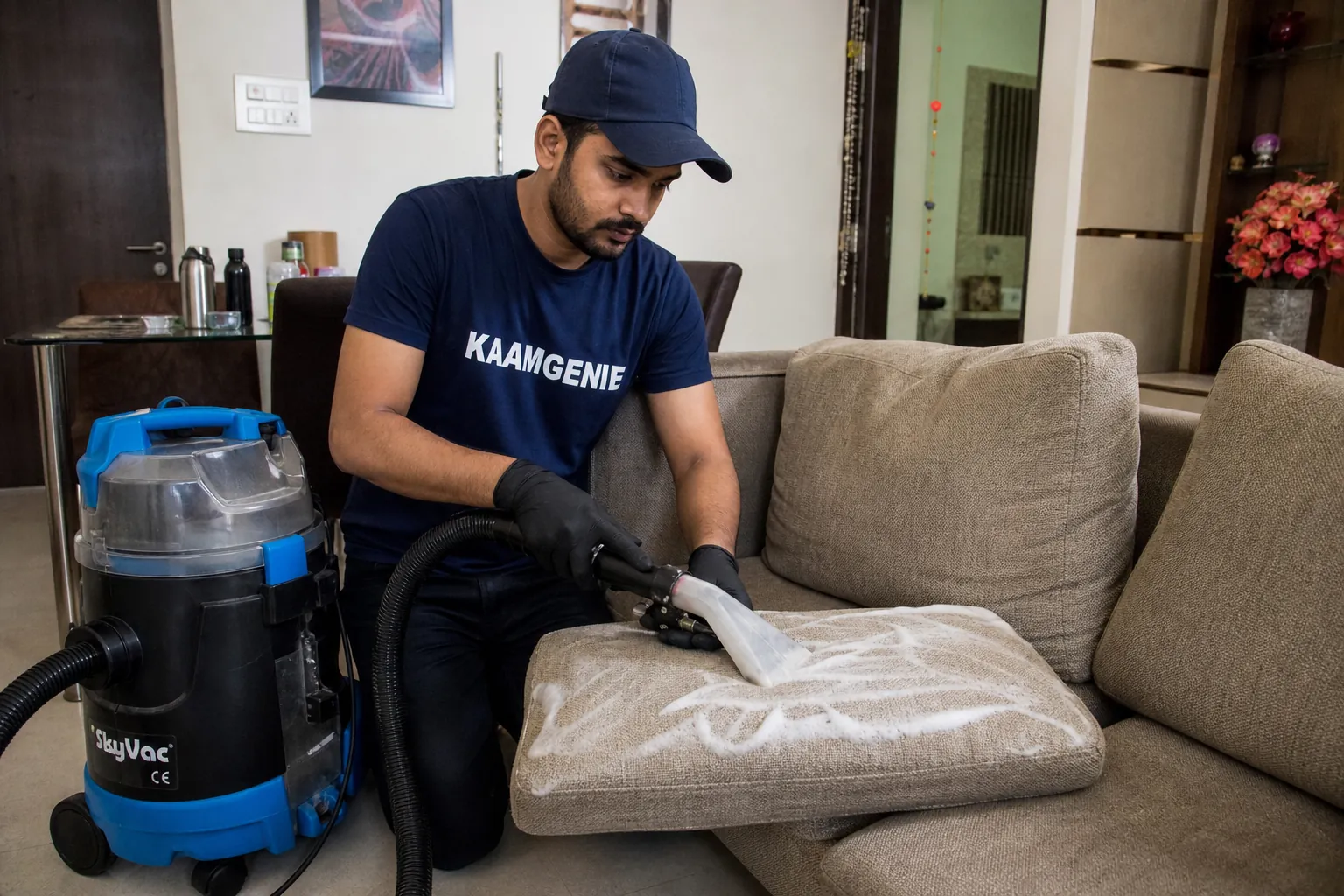
This is the standard deep clean for most fabric sofas. A foam or liquid shampoo is worked into the fabric and agitated so it lifts the embedded dust and body oils, then a wet-vacuum extraction machine pulls the shampoo and loosened dirt back out along with most of the moisture. Because it puts water and cleaning solution into the fabric and draws it back, it reaches deeper than a dry method and gives the most thorough result. It suits cotton, polyester, most blends and sturdy weaves.
Dry cleaning
Dry cleaning uses little or no water. A solvent-based compound or foam is applied, does its work lifting dirt, and is then vacuumed away. Because it barely wets the fabric, it is the safe choice for delicate materials that can shrink, watermark or bleed if soaked, such as some silks, viscose and certain velvets. It dries very quickly, but it does not reach as deep as wet extraction, so for a heavily soiled sturdy sofa, wet cleaning wins.
Rather leave it to a pro? Book a home sofa clean across Delhi NCR.
Fabric shampoo, leather conditioning, or a full deep clean with stain and odour treatment. Per-seat pricing from ₹349.
Read the care label first
Most sofas carry a cleaning code that tells you what is safe. W means water-based cleaning is fine, so shampoo and extraction work. S means solvent only, so dry cleaning is the safe route. W-S means either is fine. X means vacuum only, no wet or solvent cleaning, so it needs a specialist. A good cleaner checks this label and always tests on a hidden patch before cleaning the whole sofa.
Drying time and practicalities
A fabric sofa cleaned with shampoo and wet extraction is usually touch-dry in about 4 to 6 hours and fully dry by the next morning, faster with a fan or an open window. Dry cleaning is quicker because so little moisture goes in. Leather is a separate case entirely: it is never shampooed or soaked, only cleaned with a pH-safe cleaner and conditioned, which you can read about in our fabric vs leather sofa care guide.
So which should you pick?
For most fabric sofas in normal use, shampoo and wet extraction is the better, deeper clean. Choose dry cleaning when the fabric is delicate or the care label says solvent only. If you are not sure of your fabric, you do not have to decide alone: tell us on the call and we will identify it and recommend the safe method. Book a fabric sofa clean and we will match the method to your material.
Frequently asked questions
Is shampoo or dry cleaning better for a sofa?
For most sturdy fabric sofas, shampoo with wet-vacuum extraction gives the deepest clean. Dry cleaning is better for delicate fabrics that cannot be soaked, such as some silks and viscose. The fabric care label decides which is safe.
Will wet cleaning leave my sofa soaking?
No. A wet-vacuum extraction machine pulls most of the moisture back out, so the sofa is damp rather than soaked and is usually touch-dry in 4 to 6 hours. A fan or open window speeds it up.
What does the W, S, W-S or X label mean?
W means water-based cleaning is safe, S means solvent only so dry cleaning, W-S means either is fine, and X means vacuum only with no wet or solvent cleaning. Always check this label before cleaning.
Which method is used for leather sofas?
Neither. Leather is never shampooed or dry-cleaned with solvent compounds meant for fabric. It is cleaned with a pH-safe leather cleaner and then conditioned so it stays soft.
Is steam cleaning the same as shampooing?
Not exactly. Steam or hot-water extraction uses heated water and suction and is often part of a deep clean, while shampooing works a foam cleaner into the fabric before extraction. Both are water-based and suit sturdy fabrics.
Which method dries faster?
Dry cleaning dries fastest because very little moisture goes in. Shampoo with wet extraction is touch-dry in about 4 to 6 hours. Leather, cleaned without soaking, has almost no drying time.
Can shampooing damage my sofa?
Not when done correctly with a patch test and proper extraction. Damage happens when a delicate fabric is over-wetted or the shampoo is not fully extracted, which is why the care label and method matter.
Which method removes stains better?
Wet extraction generally lifts more, because water-based cleaning and suction reach into the fabric. Dry cleaning is gentler and better for delicate fabrics but does not reach as deep into heavy soiling.
Do professionals use dry or wet cleaning?
A good cleaner uses whichever the fabric needs, decided by the care label and a patch test. Most sturdy fabric sofas get wet extraction, while delicate or solvent-only fabrics get dry cleaning.
Is dry cleaning better for velvet sofas?
Often yes. Many velvets watermark or crush if over-wetted, so a low-moisture or dry method is safer. We always patch-test velvet first and choose the gentlest effective method.
Sources & references
- The Spruce: upholstery cleaning codes explained.
- IICRC: professional upholstery cleaning standards.
Last verified: 24 September 2026.