
Quick answer
- Your quote is confirmed on the phone and does not change when the crew arrives.
- The crew brings all equipment, protects the floor, inspects and patch-tests before cleaning.
- Process: dry vacuum, pre-treat stains, foam shampoo, wet-vacuum extraction, spot-treat, groom.
- A 3-seater takes roughly 45 minutes to an hour; fabric is touch-dry in 4 to 6 hours.
- Check the result before the crew leaves; anything you are not happy with is re-done on the spot.
Before the visit: the booking call and your quote
A sofa cleaning visit really starts on the phone. When you call or message us, we ask a few simple questions: how many seats, fabric or leather, whether it is an L-shape or has recliners, any stains or smells you are worried about, and roughly how old the sofa is. If you can send two or three photos on WhatsApp, including a close-up of any stain, even better. From that we give you a quote and confirm it on the call, and that price does not change when the crew reaches your door.
For reference, starting prices before 18% GST are ₹349 per seat for fabric shampoo with wet-vacuum extraction (a 3-seater from ₹999, a 3+2 set from ₹1,499, a 7-seater or L-shape from ₹1,999), ₹499 per seat for a deep clean with stain and odour treatment, ₹599 per seat for leather or rexine cleaning with conditioning and ₹599 per recliner unit. The minimum booking is about ₹999. You can get a quick estimate on the sofa cleaning cost calculator before you call. Offices, societies and bulk jobs get a free assessment and a written quote instead.
It is a one-time booking. There is no annual contract and no lock-in, and you are not asked to sign up for anything.
Arrival and setting up
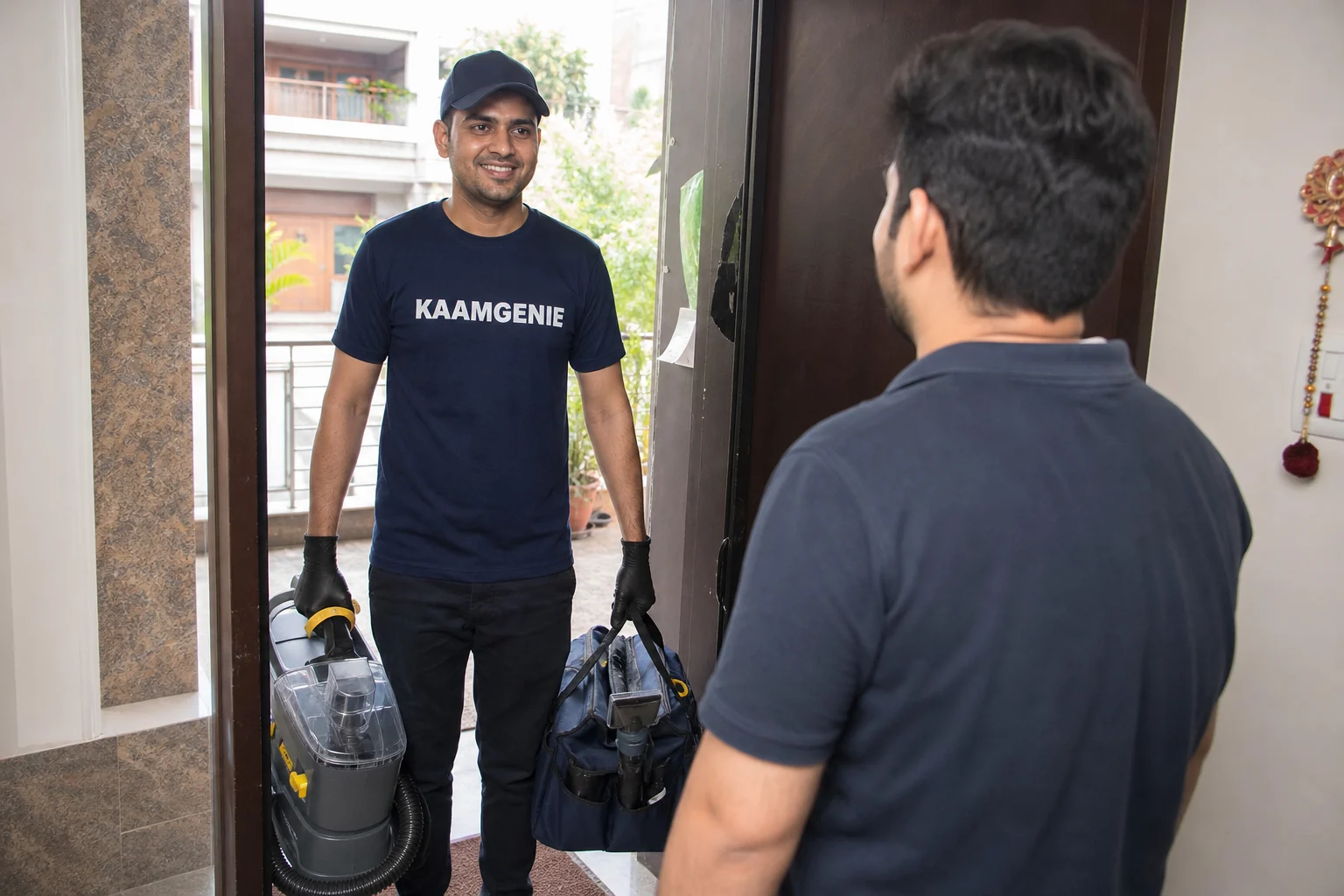
On the day, the crew calls before arriving so you can arrange society entry, the visitor pass or a word with the guard. Cleaning happens at your home, not in a workshop, so they come with everything: the shampoo machine, the wet vacuum, brushes, cleaning solutions, sheets to protect the floor and extension cords. All they need from you is a power socket near the sofa and a tap or bathroom where they can fill and empty water.
Before any machine is switched on, the floor around the sofa is covered so carpets, wooden flooring and marble do not get wet or marked. If the sofa needs to be moved slightly to reach the back, the crew will do it carefully and put it back.
Inspection and patch test
This step is the one that separates a careful cleaner from a rushed one. The crew first looks at the fabric, the care label if there is one, the stitching, any loose seams and every stain you are concerned about. Then they do a patch test on a hidden spot, usually the back or underside of a cushion, to check that the fabric is colour-fast and reacts well to the cleaning solution.
Based on this, they tell you honestly what to expect. Fresh spills and general dirt usually come out well. Old, set-in stains such as ink, turmeric or a tea mark that has been there for a year may only lighten. Heavy pet urine can need a repeat treatment. Delicate fabrics like some velvets and silk blends may be switched to a low-moisture dry clean rather than shampoo, and leather is never soaked. If you want to understand when each method is chosen, our post on sofa dry cleaning versus shampooing compares the two. Hearing the limits before the work starts is far better than being disappointed after.
Rather leave it to a pro? Book a home sofa clean across Delhi NCR.
Fabric shampoo, leather conditioning, or a full deep clean with stain and odour treatment. Per-seat pricing from ₹349.
The cleaning process, step by step
For a standard fabric sofa, the professional sofa cleaning process follows the same sequence every time:
- Dry vacuum: a thorough vacuum of every seam, the piping, the gap between seat and backrest and under the loose cushions. This removes crumbs, hair, sand and loose dust so the shampoo is not just turning it into mud.
- Pre-treat stains: each visible stain gets a suitable treatment and a few minutes to work before the main clean.
- Foam shampoo and agitation: a foam shampoo is applied and worked into the fabric with a brush so it lifts dirt and body oils from the fibres.
- Wet-vacuum extraction: the machine pulls the dirty foam and water back out. This is the step that does the real cleaning, and most customers are surprised when they see the colour of the water in the tank.
- Spot-treat what remains: stubborn marks get a second, targeted pass.
- Groom and air-dry: the pile is brushed in one direction so it dries evenly and looks uniform, then the sofa is left to air-dry.
A deep clean adds hot-water extraction, a stronger stain breakdown, deodorising and an anti-microbial rinse. Leather and rexine get a gentle surface clean followed by conditioning to keep the material supple. Recliners get extra time for vacuuming into the mechanism and detailing the hinges and gaps. A fabric protection coat (from ₹99 per seat) can be applied at the end if you have asked for it.
How long it takes
Time depends on the size, the fabric and how dirty the sofa is, but as a rough guide a 3-seater takes about 45 minutes to an hour, a 3+2 set about 1 to 2 hours, and a large L-shape or 7-seater a little longer. Heavy stains, pet hair or a deep clean add time. If you have also booked mattresses, dining chairs or other upholstery, which are priced separately, plan for the extra time.
Drying, the final check and payment
A fabric sofa is usually touch-dry in about 4 to 6 hours and fully dry by the next morning, faster with the fan on and windows open. Low-moisture dry cleaning dries faster, and leather needs almost no drying time. The crew will tell you how to help it along; our guide on how long a sofa takes to dry has the full list of do's and don'ts. Once dry, the sofa is safe for kids and pets.
Before the crew packs up, they walk you through the result. Look at it in good light, press the cushions, check the stains you pointed out. If you are not satisfied with any part, tell them then and there and they will re-do it on the spot. That is why we ask you to check before they leave rather than the next day.
Payment is made after the work, by cash, UPI, card or bank transfer, and it matches the quote you were given on the phone.
How to prepare: a customer checklist
A little preparation makes the visit quicker and the result better.
- Clear the area: remove cushion covers you wash yourself, throws, toys, remotes, newspapers and anything kept under the sofa. Move the coffee table and side tables a little away.
- Sort out entry: inform the society gate or RWA, keep the lift booking or service lift details ready if your building needs them, and tell us about parking near the tower so the crew is not stuck at the gate with heavy equipment.
- Keep pets in another room: machines are noisy, and wet fabric picks up paw marks easily.
- Point out every stain and smell: tell the crew what caused it if you know (tea, ink, oil, urine, vomit), because the right pre-treatment depends on it. Do not try a home remedy just before the visit; some, like bleach or strong detergents, set the stain or damage the fabric. Our guide to removing stains from a sofa covers what is safe to try in the meantime.
- Plan around drying: a morning or early afternoon slot gives the sofa the evening and night to dry, so book at least a day before guests arrive.
- Keep a socket and water point free: the crew will need both for the duration.
Questions to ask any sofa cleaner before you book
Whoever you hire, these questions quickly tell you whether the job will be done properly:
- Is the price per seat or per sofa, and is GST included or extra?
- Will the price stay the same when you arrive, or can it change after inspection?
- Do you use a wet-vacuum extraction machine, or only spray and wipe?
- Will you do a patch test on a hidden spot first?
- Which method will you use for my fabric, and is it safe for velvet or leather if I have them?
- How long will it take to dry in this season?
- What happens if I am not satisfied before you leave?
- Are the products safe for kids and pets once dry?
- Do you protect the floor, and do you bring your own equipment?
A cleaner who answers these clearly, without dodging, is usually one who will do the work carefully. Spray-and-wipe jobs with no extraction leave the sofa wet and the dirt inside, which is exactly what you are paying to avoid.
Frequently asked questions
Do I need to be at home during sofa cleaning?
Yes, someone should be home to let the crew in, point out stains, approve the plan after the patch test and check the result before they leave. You do not need to watch the whole process, but being available at the start and end makes sure nothing is missed and any re-do happens on the spot.
Does the sofa cleaner bring their own machine and chemicals?
A professional crew should bring everything: the shampoo machine, wet vacuum, brushes, cleaning solutions and floor protection sheets. KaamGenie crews arrive fully equipped. You only need to provide a power socket near the sofa and access to a tap or bathroom to fill and empty water.
Can the price change after the cleaner arrives?
With KaamGenie the quote is confirmed on the phone based on seats, material and the details or photos you share, and it is not changed on arrival. That is why it helps to mention recliners, an L-shape or heavy stains during the call. Ask any cleaner this question clearly before booking.
How long does it take to clean a 3+2 sofa at home?
A 3+2 fabric set usually takes about 1 to 2 hours, depending on how dirty it is and how many stains need treatment. A deep clean or heavy pet hair can add time. A single 3-seater typically takes about 45 minutes to an hour.
Why does the cleaner do a patch test first?
A patch test on a hidden spot checks that the fabric is colour-fast and reacts well to the cleaning solution before it is used on the whole sofa. It prevents colour bleeding, shrinking or water marks. It also helps decide whether shampoo or a low-moisture dry clean suits the fabric.
What should I do with my pets during sofa cleaning?
Keep pets in another room while the crew works, since the machines are loud and some pets get anxious. Keep them off the sofa until it is dry, as paws leave marks on wet fabric. Once the sofa is fully dry it is safe for pets to use again.
Will my society allow sofa cleaners with machines inside?
Most societies allow it like any other home service, but rules differ. Inform the gate or RWA in advance, arrange a visitor entry if needed and check whether a service lift must be used. Sharing parking details helps the crew reach your flat quickly with their equipment.
How do I pay for sofa cleaning, before or after?
Payment is made after the work is completed and you have checked the result. KaamGenie accepts cash, UPI, card and bank transfer. The amount matches the quote confirmed on the phone, with GST shown separately since all quoted prices are before 18% GST.
What if I am not happy with the sofa cleaning result?
Inspect the sofa in good light before the crew packs up and point out anything you are unhappy with. KaamGenie crews re-do it on the spot. Keep in mind that very old set-in stains may only lighten, and the crew should explain that during the inspection, before cleaning starts.
Should I remove stains myself before the cleaner comes?
It is better not to experiment just before the visit. Harsh home remedies like bleach, strong detergent or rubbing hard can set a stain or damage the fabric, making it harder to remove. Blot fresh spills gently, then tell the crew what caused each stain so they choose the right pre-treatment.
Sources & references
- US EPA: Indoor Air Quality (IAQ): Background on indoor air quality and why cleaning household furnishings matters.
- Asthma and Allergy Foundation of America (AAFA): Guidance on reducing dust and allergens in upholstered furniture at home.
Last verified: 4 November 2026.