
Quick answer
- Monsoon humidity plus a sofa pressed against a damp or seeping wall is the most common cause of mould.
- Keep a gap of 10 to 15 cm from the wall, use a dehumidifier or AC dry mode, and air the room on dry days.
- Light surface mildew can be brushed off outdoors, vacuumed and dried; do not soak or bleach the fabric.
- Mould deep in the foam cannot always be fully removed, and replacing the foam insert is sometimes the honest fix.
- A deep clean with anti-microbial rinse is Rs 499 per seat; book on a dry day and keep fans running afterwards.
Why sofas go musty in the Delhi NCR monsoon
From roughly July to September, Delhi NCR swings from dry heat to sticky, humid air almost overnight. Relative humidity regularly stays high for days at a time, rain keeps windows shut, and sunlight disappears behind cloud for long stretches. Upholstered furniture is full of fabric and foam that absorb moisture from the air like a sponge, and when that moisture has nowhere to go, it gives mould and mildew exactly what they need: dampness, warmth, still air and a bit of dust and skin flakes to feed on.
That is why so many families notice the same thing every year. The sofa that was fine in May starts to smell earthy and stale by August, and sometimes small grey, green or black dots appear on the back panel or underside. A musty smell is not the same as a sweat or food smell; if your sofa smells of body odour, hair oil, smoke or spilled chai, our guide on removing a bad smell from a sofa covers that. If the smell comes from a pet accident, see our post on pet hair and urine on sofas. This post is only about damp, mould and mildew.
Damp walls, seepage and where the problem usually starts
In most of the musty sofa cases we inspect, the sofa itself is not the original problem. The wall is. Older builder floors, ground-floor flats and top-floor flats with a leaking terrace are the most common culprits, along with any wall shared with a bathroom or kitchen.
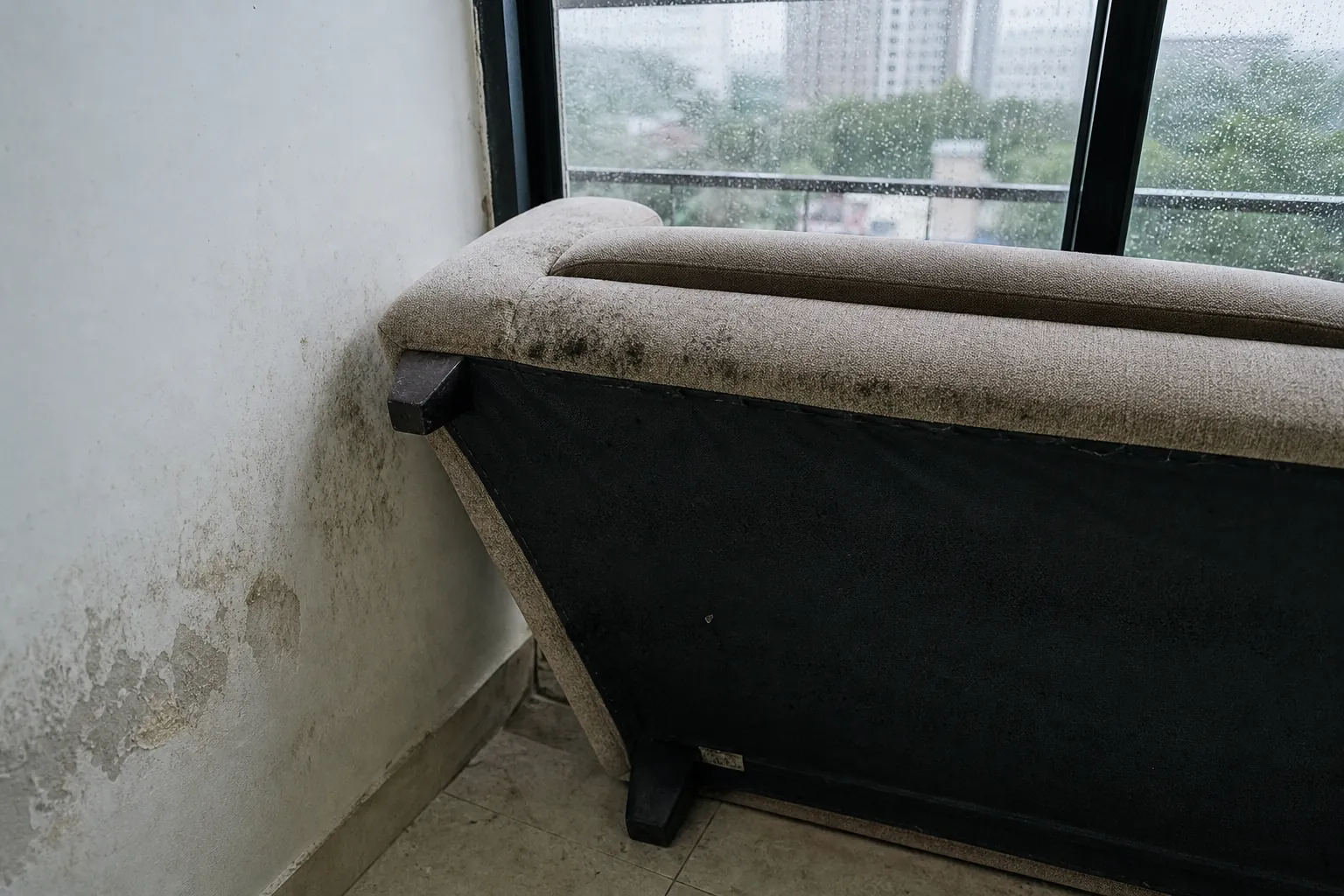
- Sofa pushed flat against a wall: with no gap, the back panel touches a wall that is colder and damper than the room. Moisture condenses there, air cannot circulate, and the back of the sofa stays damp for weeks.
- Seepage patches: if you see peeling paint, bubbling putty, white salty deposits or a dark tide mark on the wall behind the sofa, water is coming through the masonry. The sofa will keep picking up that moisture until the seepage is fixed.
- Exterior walls facing the rain: walls that take the brunt of monsoon rain often stay damp inside for days after a downpour.
- Ground-floor and basement rooms: rising damp from the floor can affect the sofa base and legs, especially wooden frames.
- Closed-up rooms: a drawing room that is kept shut for guests, with curtains drawn, is a common place to find a mildewed sofa.
Pull the sofa away from the wall and look at both surfaces. If the wall is damp, fix that first (a waterproofing or plumbing repair), or every clean will be undone by the next monsoon.
Mildew spots, musty smell and the health side
Mildew is a surface mould. On sofas it usually shows as fine grey, white or greenish powdery spots, often on the back panel, the underside, the base of cushions, or the seams. Deeper mould growth can look like black or dark green speckles that do not wipe away. The musty, earthy smell often arrives before you can see anything at all, because the growth starts inside the foam or on the hidden underside.
Mould releases spores and other particles into the air. For many healthy adults this is mainly an unpleasant smell, but for people with asthma, allergies or weak immunity, and for young children and elderly family members, damp and mould indoors can trigger sneezing, a blocked or runny nose, itchy eyes, coughing and wheezing. Health authorities such as the WHO and the US EPA advise controlling indoor dampness and dealing with mould promptly rather than living with it. If someone in your home has breathing problems that seem worse in the room with the sofa, take it seriously and speak to a doctor.
Rather leave it to a pro? Book a home sofa clean across Delhi NCR.
Fabric shampoo, leather conditioning, or a full deep clean with stain and odour treatment. Per-seat pricing from ₹349.
Prevention: keeping the sofa dry through July to September
Preventing mould is far easier and cheaper than removing it. These steps make the biggest difference in NCR homes:
- Leave a gap from the wall. Keep the sofa at least a few inches (roughly 10 to 15 cm) away from the wall, especially an outer wall or one with any sign of seepage. That gap lets air move behind the sofa and stops condensation on the back panel.
- Use a dehumidifier or AC dry mode. A portable dehumidifier in the living room, or running the air conditioner on its dry (dehumidify) mode for a few hours a day, pulls moisture out of the room and the upholstery. Empty the dehumidifier tank regularly.
- Air the room whenever the weather allows. On days when it is not raining, open windows on opposite sides and run a fan for cross-ventilation. Ceiling and pedestal fans aimed at the sofa help foam stay dry.
- Lift cushions and let them breathe. Once or twice a week, stand seat cushions on their edges for a few hours so the underside and the deck below them can dry out.
- Do not put damp things on the sofa. Wet umbrellas, damp towels, rain-soaked clothes and wet school bags left on the sofa add moisture directly to the foam.
- Vacuum regularly. Mould feeds on dust, skin flakes and crumbs. Weekly vacuuming of seams, gaps and the underside removes much of its food.
- Silica gel and moisture absorbers for storage. If you store spare cushions, covers or a folded sofa-cum-bed mattress in a box bed or cupboard, add silica gel packets or moisture-absorber boxes and change them as directed. Never store cushions in sealed plastic while they are even slightly damp.
- Time your cleaning sensibly. Any wet shampoo needs good drying. If you book a clean during the monsoon, plan for fans and, ideally, AC dry mode afterwards. Our guide on how long a sofa takes to dry explains what to expect.
What to do if mould has already appeared
The right response depends on how far the mould has gone. Be honest with yourself about which of these describes your sofa.
Light surface mildew
If you see a few powdery spots on the fabric surface or the underside, and the foam does not smell strongly when you press your nose to it:
- Take the sofa or cushions to a well-ventilated area, or open the windows wide, and wear a mask so you do not breathe in spores.
- Use a soft brush to loosen dry mildew, then vacuum it up immediately, ideally with a vacuum that has a HEPA filter. Do not brush it indoors in a closed room.
- Wipe the area with a cloth that is only slightly damp, then dry it thoroughly with a fan and, if possible, some sunlight on removable covers.
- Fix the cause (wall gap, dehumidifier, ventilation), or it will come back within weeks.
Avoid bleach on coloured upholstery; it can strip the dye and damage fibres. Avoid spraying lots of liquid, because adding moisture to a mouldy sofa often makes it worse.
Mould that has gone deep into the foam
If the musty smell is strong from inside the cushion, the spots come back soon after cleaning, or you open a cover and see dark patches on the foam itself, the mould is growing inside. Surface cleaning will not fix that. A professional deep clean can remove a lot of it, but we want to be straightforward about the limits:
- Foam is porous, and mould that has grown deep through a cushion cannot always be fully removed, even with professional extraction and anti-microbial treatment.
- If the foam is visibly blackened inside, soft and crumbly, or smells strongly musty after a professional clean, replacing the foam insert is usually the honest and healthier fix. Cushion foam can be replaced by an upholsterer while keeping your frame and cover.
- A wooden frame with mould or rot from long-term damp may need an upholsterer or carpenter to assess it.
When our crew inspects a mouldy sofa, we tell you on the spot whether cleaning will genuinely help or whether some foam should be replaced, before any work starts.
When to book a deep clean with anti-microbial rinse
A professional clean is worth booking when the musty smell does not go after a week of better ventilation, when mildew spots keep returning, or after the monsoon ends and you want to reset the sofa before winter. KaamGenie's deep clean with stain and odour treatment (₹499 per seat, before GST) is the right service for damp and mildew, because it includes hot-water extraction to pull out spores and grime, a deodorising step, and an anti-microbial rinse to reduce regrowth. Standard fabric shampoo from ₹349 per seat suits a sofa that is simply dusty and stale without any mould.
A few practical points for monsoon bookings:
- Choose a day that is not forecast for heavy rain, and plan to run fans or AC dry mode for the rest of the day. Fabric touch-dries in about 4 to 6 hours and is fully dry by the next morning in normal conditions; in very humid weather it can take longer, which is exactly why airflow matters.
- Move the sofa away from the damp wall before the crew arrives, or ask them to help, so the back panel can be cleaned and dried properly.
- For delicate fabrics such as some velvets, a low-moisture dry clean may be safer in the monsoon because it adds less water.
The crew cleans at your home with their own machine and chemicals, protects the floor, and the products are safe for kids and pets once dry. You can see the full process and book on our sofa cleaning service page. Clean the sofa, keep the gap from the wall, control the humidity, and next August should smell a lot fresher.
Frequently asked questions
Why does my sofa smell musty during the rainy season?
High monsoon humidity soaks into the fabric and foam, and with closed windows and little sunlight it cannot dry out. Mould and mildew grow in that damp, still environment and produce the earthy musty smell. A sofa placed against a damp or seeping wall is affected most, especially on the back panel.
How do I know if my sofa has mould or just dirt?
Mildew usually shows as fine grey, white or greenish powdery spots, while deeper mould looks like black or dark green speckles that do not wipe off. It is often on the back, underside or seams, and comes with a musty smell. Dirt marks are usually on the seat and armrests where people touch.
Is mould on a sofa harmful to health?
Mould releases spores into the air. For people with asthma or allergies, young children, elderly family members and anyone with weak immunity, indoor damp and mould can trigger sneezing, coughing, itchy eyes and wheezing. Health bodies advise dealing with it promptly. Consult a doctor if symptoms seem linked to the room.
How far should a sofa be kept from the wall to avoid damp?
Keep it at least 10 to 15 cm away from the wall, and more if the wall is an exterior wall or shows any sign of seepage. The gap lets air circulate behind the sofa so condensation does not build up on the back panel. Fix the seepage itself for a lasting solution.
Does AC dry mode really help keep a sofa free of mould?
Yes, it helps. Dry or dehumidify mode removes moisture from the room air, which lets upholstery and foam give up the damp they have absorbed. Running it for a few hours a day in the monsoon, along with fans and occasional airing, noticeably reduces musty smells and mildew growth.
Can I clean mildew off my sofa at home?
Light surface mildew can usually be handled at home. Wear a mask, brush the dry spots off in a ventilated area or outdoors, vacuum straight away, wipe with a barely damp cloth and dry thoroughly with a fan. Avoid bleach and heavy spraying, and fix the damp source or it will return.
When does sofa foam need to be replaced because of mould?
If the foam is visibly blackened inside, has gone soft and crumbly, or still smells strongly musty after a professional clean, replacement is usually the healthier choice. Porous foam with deep mould growth cannot always be fully cleaned. An upholsterer can replace cushion foam while keeping your frame and cover.
Is it safe to get my sofa shampooed during the monsoon?
Yes, as long as you plan the drying. Book on a day without heavy rain, keep fans or AC dry mode running afterwards, and keep the sofa away from damp walls. For delicate fabrics like some velvets, a low-moisture dry clean may be better in humid weather because it adds less water.
What does a mould and odour sofa treatment cost in Delhi NCR?
KaamGenie's deep clean with stain and odour treatment, which includes hot-water extraction, deodorising and an anti-microbial rinse, costs Rs 499 per seat before 18% GST. A standard fabric shampoo for a stale but mould-free sofa starts at Rs 349 per seat. The quote is confirmed on the phone.
How do I store spare sofa cushions so they do not get mouldy?
Make sure cushions and covers are completely dry before storing them, then keep them in a breathable cotton bag rather than sealed plastic. Add silica gel packets or moisture-absorber boxes in the box bed or cupboard and replace them as directed. Take them out and air them every few weeks during the monsoon.
Sources & references
- US EPA: Mold: Guidance on indoor mould, moisture control and cleanup.
- WHO Guidelines for Indoor Air Quality: Dampness and Mould: WHO guidance on the health effects of indoor dampness and mould.
- India Meteorological Department: Monsoon onset, rainfall and humidity information for Delhi NCR.
Last verified: 4 November 2026.