
Quick answer — is pest control safe for babies & pets in Delhi? (2026)
- Yes — when it’s done right (2026). A targeted gel-bait treatment with CIB&RC-approved chemicals, placed in concealed spots out of reach, is very low-risk for babies, pregnant women and pets. It’s the whole-room spray and fogging done carelessly that causes problems.
- Babies & toddlers: gel-bait beats spray. Keep them off treated surfaces until dry, wipe reachable areas, air the rooms. Never fog a nursery with the baby home.
- Pregnancy: prefer non-spray gel-bait, step out during any spraying, ventilate — and if you’re unsure or in the first trimester, check with your doctor first.
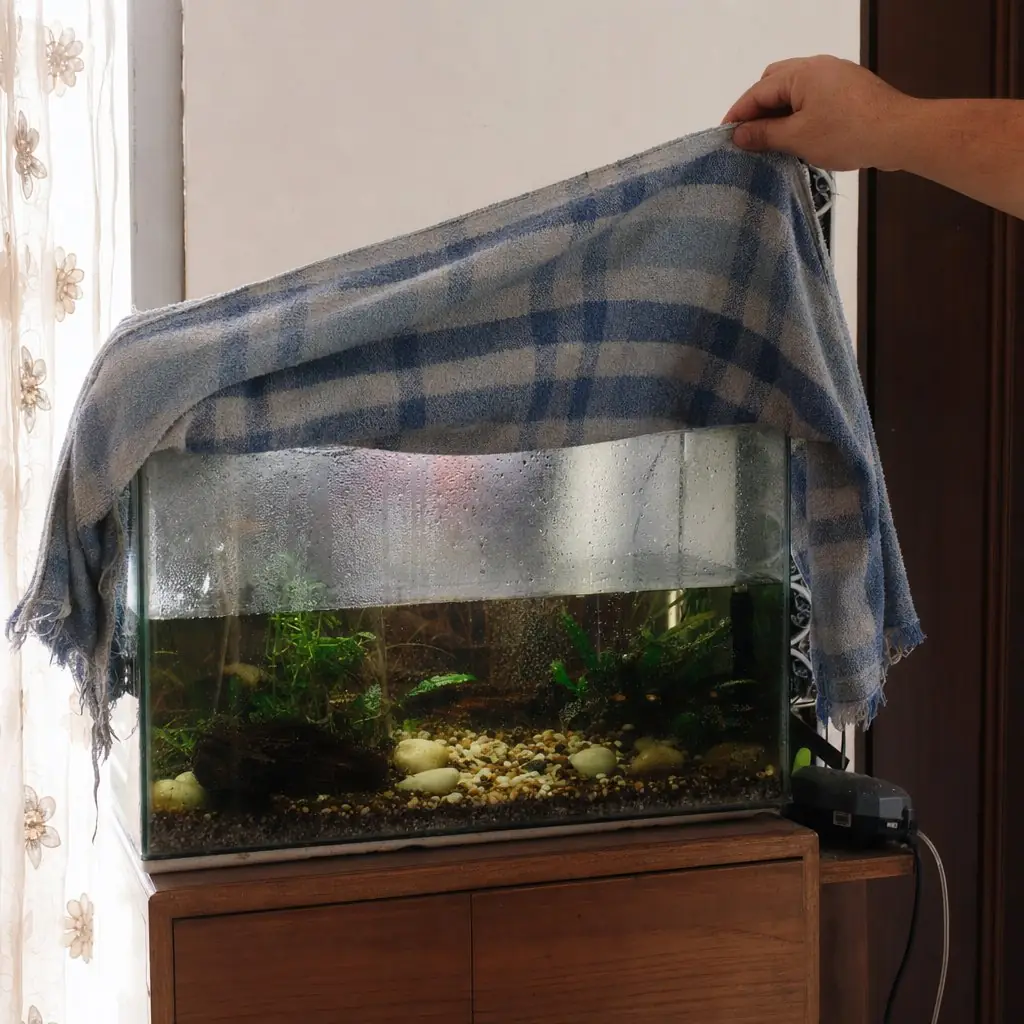
- Pets: dogs and cats stay away till surfaces dry; fish and birds are far more sensitive — cover the aquarium and turn off the air pump, move bird cages out of the room.
- Cost (2026): general pest control from ₹999; child- and pet-safe gel-bait from ₹599; GST 18% extra.
- We’ll talk it through first. No method gets used in your home until you’ve had your questions answered.
The honest short answer — yes, when it’s done right
Let me answer the actual question before anything else. Yes — in 2026, professional pest control is safe for babies, pregnant women and pets when it’s done the right way. That means a CIB&RC-approved chemical (the Central Insecticides Board is the Indian regulator that decides which actives are legal and at what strength), placed as gel-bait in concealed spots rather than sprayed all over open surfaces, with a few sensible precautions while it sets. Done like that, the risk is very low. I won’t tell you it’s “100% safe” or “zero risk” — nobody honest says that about any chemical, even a kitchen cleaner. What I’ll tell you is that the difference between safe and not-safe is the method, not luck.
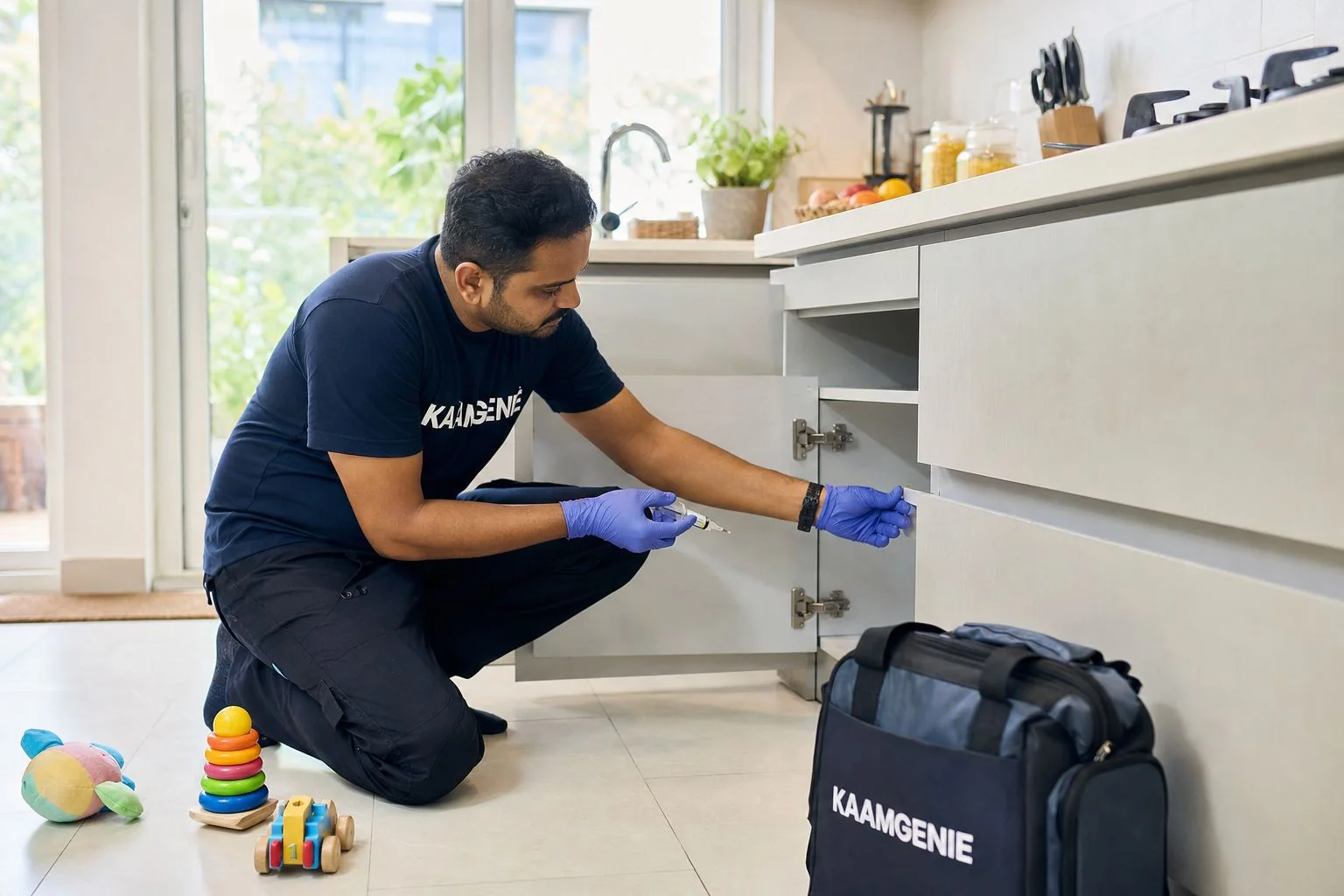
Here’s the thing most people get wrong. They picture a man in a mask fogging the whole flat in a cloud of chemical — and yes, that picture is risky around a newborn or a fish tank. But that’s old-style work, and it’s the wrong tool for a home with a baby in it. The modern residential standard is gel-bait: a paste the size of a pinhead, tucked inside cabinet hinges, behind the fridge, under the sink U-bend — places a crawling baby or a curious cat physically cannot get to. No cloud, no smell, no need to empty the house for a day.
I run a Delhi pest-control crew, so I’m not neutral — but I’m also the person who has to pick up the phone if something goes wrong. Across 800+ Delhi homes with infants, dogs, cats and rabbits, we have zero safety incidents on file when the gel-bait protocol is used. That record exists because we refuse to fog a flat with a baby home and we tell pregnant customers to step out during any spray. The rest of this guide is exactly how to tell the safe version from the careless version — whether you book us or anyone else.
Is pest control safe for babies and toddlers?
Yes — targeted gel-bait pest control is safe for babies and toddlers when the gel goes in concealed, out-of-reach spots and you keep the child off treated surfaces until they’re dry. The risk comes from whole-room spraying or fogging done with the baby in the house, not from a pinhead of bait inside a cabinet hinge. For a home with a baby, gel-bait is the right method and fogging is the wrong one.
Babies and toddlers are more sensitive than adults for obvious reasons — lower body weight, hands constantly in the mouth, time spent crawling on the floor where spray settles. That’s exactly why the placement matters so much. A gel dot inside a hinge cavity or behind the washing machine is somewhere your toddler will never reach. A surface sprayed across the skirting and the floor is somewhere they crawl an hour later. Same chemical class, completely different exposure.
So for a home with a little one, ask for gel-bait, not a whole-room spray — and definitely not fogging in the nursery. After any treatment that does involve a small targeted spray (say on a drain rim or a U-bend), the sensible routine is the same one we give every Delhi parent in places like Dwarka, Mayur Vihar and Saket: step out of that room while it’s applied, open the windows for an hour, and wipe down any low surfaces the child actually touches once it’s dry. We’ve treated hundreds of homes with crawling babies on the standard gel-bait protocol with zero incidents on file — but those precautions are what keep that record true.
Is pest control safe during pregnancy?
Generally yes — a non-spray gel-bait treatment is low-risk during pregnancy, because there’s no airborne chemical to breathe in. The cautious approach is to prefer gel-bait over spray, step out of the room during any spraying, ventilate well afterward, and — this part matters — if you’re in the first trimester or unsure, check with your doctor before going ahead. There’s no shame in waiting a couple of weeks.
I’ll be straight with you: pregnancy is the one situation where I lean hardest toward caution, and I’d rather lose the booking than push it. The good news is that the lowest-exposure method — gel-bait in concealed spots — happens to be the one that works best for cockroaches and ants anyway, so you’re not trading safety for results. There’s no fog, no fine mist hanging in the air, nothing you inhale walking past.
Where I’d slow down: if the problem genuinely needs spraying (a heavy bed-bug situation, for instance), don’t be in the room when it’s done. Have someone else home, step out for a few hours, and let the place air properly before you go back. And I’ll say it again because it’s the honest line and not a disclaimer to skip — if you’re pregnant and unsure, ask your doctor first. A good crew will happily reschedule around that. We do it all the time, and in plenty of 2026 cases we’ve told an expecting mum in, say, Lajpat Nagar to just hold off until after the first trimester. That’s the answer that keeps people safe, even when it’s not the answer that books a job today.
Not sure it’s safe with a baby at home? Ask us first.
Tell us your home — newborn, toddler, dog, cat, fish, bird — and we’ll explain exactly what we’d use and why. No booking pressure. Child- and pet-safe gel-bait from ₹599.
Is pest control safe for pets — dogs, cats, birds and fish?
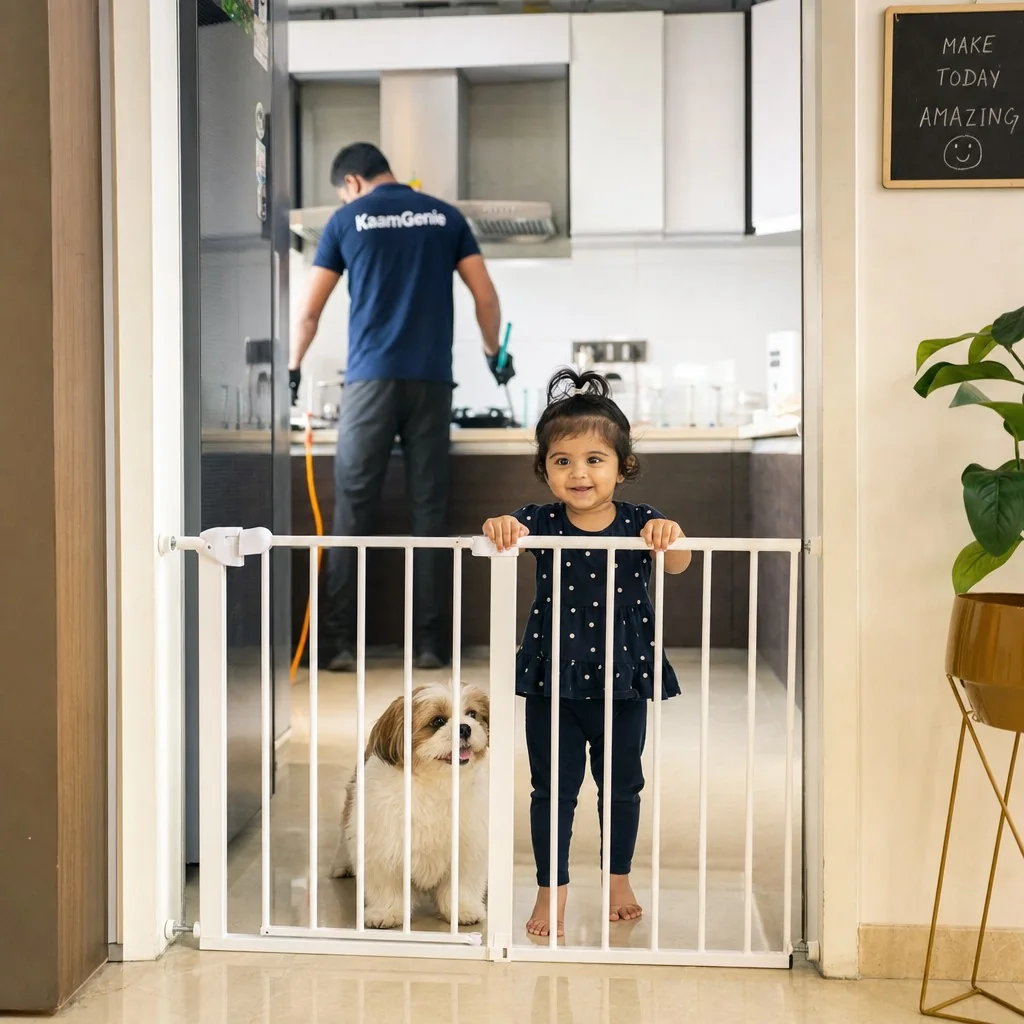
Yes for dogs and cats — keep them out of the treated room until surfaces are dry, and they’re fine. But fish, birds and reptiles are a different story: they’re far more sensitive, so cover aquariums and switch off the air pump, and move bird cages and reptile tanks right out of the room before any treatment. This is the bit careless operators skip, and it’s the bit that actually matters.
Dogs and cats are roughly in the same boat as toddlers — the concern is them licking a wet treated surface or eating a bait dot, not the air. Since gel-bait goes in concealed spots they can’t reach, and any small spray dries quickly, the routine is easy: keep them in another room or out on a walk while the crew works, wait until everything’s dry, and you’re done. If you have a dog that eats absolutely anything off the floor (every Labrador owner in Delhi knows the type), just tell the technician so they’re extra careful with placement.
Fish and birds need real attention. Fish are extremely sensitive to airborne insecticide because it dissolves into the water through the surface and through the air pump — so before any spraying, cover the aquarium completely with a damp cloth or its lid and turn off the air pump for the duration, then turn it back on once the room has aired. Birds have delicate respiratory systems and can react badly to fumes that wouldn’t bother a dog at all — move the cage to a completely different room, ideally another floor, well before work starts. Same goes for reptiles in open or mesh enclosures. With gel-bait there’s little to no airborne anything, which is one more reason it’s the method I’d use in a home full of pets. We’ve done it in plenty of Delhi flats with fish tanks and parrots — the trick is just doing the covering and moving before, not after.
Here’s the quick reference we give pet owners when they book — what each kind of pet needs and how sensitive they really are.
| Pet | Sensitivity | What to do |
|---|---|---|
| Dogs & cats | Moderate | Keep in another room or out on a walk; let back once surfaces are dry (~2–4 hrs after spray) |
| Fish (aquarium) | High | Cover the tank, switch off the air pump before treatment; pump back on after the room airs |
| Birds | Very high | Move the cage to another room or floor before work; bring back only once fully aired |
| Reptiles | High | Move open or mesh enclosures out of the room; treat like birds |
| Rabbits & small pets | Moderate–high | Move the hutch or cage out of the treated room; keep off treated surfaces until dry |
What actually makes a treatment safe — what to ask for
Safety isn’t a label on a can — it’s a set of choices the crew makes. Here’s what separates a safe treatment from a risky one, and the exact things to ask for on the phone. A good operator will answer all of these without flinching.
1. A named, CIB&RC-approved chemical. The residential standard is fipronil 0.05% or imidacloprid 2.15% in gel form — both approved by the Central Insecticides Board for indoor use at those concentrations. If the person on the phone can name the chemical and the strength, that’s a good sign. If they say “imported formula” or “professional-grade, don’t worry about it,” that’s a red flag — you cannot judge safety on a chemical nobody will name.
2. The right method for your home. Gel-bait for cockroaches and ants in a home with kids or pets; targeted spray only where bait won’t work; fogging reserved for empty homes or specific heavy infestations — never as the default in an occupied flat with a baby. The method should be chosen for your situation, not applied the same way to every house.
3. A written re-entry time. A real operator tells you how long to stay off treated surfaces or out of a sprayed room. For gel-bait that’s essentially zero — you can use the kitchen the same day. For a targeted spray it’s usually a couple of hours until dry. If someone can’t give you any re-entry guidance, they haven’t thought about your safety.
Here’s how the three methods compare for a home with babies and pets, and when each one is actually the right call.
| Method | Safety around babies & pets | When it’s the right choice |
|---|---|---|
| Gel-bait (concealed placement) | Lowest risk — no airborne chemical, out of reach, use the room the same day | Cockroaches and ants in any home, and the default choice when there’s a baby, pregnancy or pets |
| Targeted spray (drains, U-bends, cracks) | Low risk with care — step out, ventilate, keep off until dry (~2–4 hrs) | Spot treatment where bait won’t reach, or alongside gel-bait for drains |
| Whole-room fogging | Higher risk in an occupied home — airborne; not for a nursery with the baby present | Empty flats, severe bed-bug or mosquito jobs — with the family and pets out for hours |
The red flags — what is NOT safe
If you spot any of these, stop and ask more questions — or walk away. A cheap quote isn’t worth a risk to your baby or your pets. These are the signs of work that hasn’t been thought through:
- An unnamed “imported” chemical. If they won’t tell you the active ingredient and concentration, you can’t judge whether it’s safe for your home. Non-negotiable.
- Fogging the whole flat with the kids or pets still home. The single most common careless move. Fogging fills the air; an occupied nursery is exactly where it shouldn’t happen.
- No re-entry guidance. “You can go back in straight away” after a heavy spray, with no mention of drying or airing, means they haven’t considered exposure at all.
- Refusing to adjust for a fish tank or a bird. If you mention an aquarium and they don’t immediately say “cover it and turn off the pump,” they don’t know what they’re doing.
- No GST invoice, no crew verification, cash-only and vague. Not a safety issue on its own — but operators who cut those corners usually cut the safety corners too.
Want a treatment built around your pregnancy or your pets?
Message us with your situation and we’ll suggest the lowest-risk method for your home — and tell you honestly if it’s worth waiting. We answer questions before we quote.
How to prepare your home with a baby or a pet
Good preparation does most of the safety work for you. None of it is hard — it’s mostly putting things away and planning to be out for a bit. A reputable crew will walk you through it, but here’s the before / during / after so you know what to expect. The chart below shows roughly how long to keep everyone off treated areas by method — the single number most parents actually want.
Keep-away / re-entry time by method (Delhi, 2026)
How long to keep babies and pets off treated surfaces or out of the room — lower is safer and easier.
Before the crew arrives: put away open food, the baby’s bottles, sippers and utensils. Bag up soft toys and any chew toys the dog leaves on the floor. Cover the aquarium and plan to switch off the air pump; move the bird cage and any reptile tank to another room or floor. If you can, plan for the family and pets to be out of the house, or at least the treated rooms, for a few hours — especially for anything beyond gel-bait.
During the treatment: keep babies, toddlers and pets in a room that isn’t being worked on, or out of the house. Let the technician place gel-bait in the concealed spots without little hands or paws following along. It’s genuinely quick — a gel-bait kitchen job is usually 45–60 minutes.
After: open the windows and air the rooms, particularly if anything was sprayed. Wait until treated surfaces are dry before letting the baby crawl or the dog wander back in. Wipe down low surfaces the child actually touches — chair legs, the bottom of the fridge, skirting near their play area. Turn the aquarium pump back on and bring the bird home once the room is fully aired. Leave the gel-bait dots alone; they’re out of sight and they need to stay put to do their job.
Do herbal and organic options actually work?
Sometimes — and honestly is the only useful answer here. Botanical and low-toxicity treatments (plant-based oils, diatomaceous earth, certain neem-derived products) genuinely exist, and they have a real place: nurseries, homes with a severe-allergy member, families who simply want the lowest-tox option available and are willing to accept a trade-off. They’re a legitimate choice, not a gimmick.
But I won’t oversell them, because that would be doing you a disservice. The trade-off is durability. Herbal and organic treatments generally don’t last as long as a CIB&RC-approved gel-bait, and they often need repeat visits to keep a problem down — especially for an established cockroach colony or a real bed-bug situation, where the gentle option frequently isn’t strong enough on its own. For a mild ant trail or as ongoing maintenance, they can work nicely. For a heavy infestation in a ground-floor Delhi flat near a common drain, they usually won’t hold.
So how I’d think about it in 2026: if your worry is exposure, remember that gel-bait in concealed spots is already very low-risk — for most families it gives you both safety and results without going fully herbal. If you specifically want the gentlest possible option and you’re okay with more frequent visits, ask for the botanical route and we’ll be straight with you about what it can and can’t do. Either way, the right answer is a conversation about your actual home, not a sales pitch.
We run safe, child- and pet-aware pest control across Delhi — South Delhi (Saket, Lajpat Nagar, Defence Colony, GK-1, GK-2, Vasant Kunj, Hauz Khas), East Delhi (Mayur Vihar, Preet Vihar, Laxmi Nagar, Patparganj), West Delhi (Janakpuri, Rajouri Garden, Dwarka, Punjabi Bagh), North and North-West Delhi (Rohini, Pitampura, Model Town, Civil Lines) and Central Delhi (Karol Bagh, Patel Nagar). Coming soon: Gurgaon, Noida, Faridabad, Ghaziabad. Wherever you are, the rule is the same — we answer your safety questions before anything goes into your home.
Frequently asked questions
Is pest control safe for babies and newborns in 2026?
Yes, when it’s done right. A targeted gel-bait treatment with a CIB&RC-approved chemical, placed in concealed spots a baby can’t reach, is very low-risk — there’s no airborne chemical to breathe. The risk comes from whole-room spraying or fogging done with the baby home. Keep the child off treated surfaces until dry, wipe low surfaces, and air the rooms. Never fog a nursery with the baby present.
Can I do pest control with a newborn at home?
For gel-bait, usually yes — keep the baby in a separate room while the crew places the bait, then you’re fine because there’s nothing airborne. For anything that involves spraying, it’s far better to have the baby out of the house for a few hours and air the place well before they come back. If in any doubt, plan to be out — it’s the simplest way to remove the risk entirely.
Is pest control safe during pregnancy, especially the first trimester?
Generally low-risk if you use non-spray gel-bait, step out during any spraying and ventilate well afterward. But pregnancy is the one case where we lean hard toward caution — if you’re in the first trimester or at all unsure, check with your doctor before going ahead, and don’t hesitate to postpone. A good crew will happily reschedule. We’d rather you wait than worry.
Do I need to leave the house during pest control?
For a gel-bait treatment, usually not — just stay out of the room being worked on. For a targeted spray, step out of that room and air it for a couple of hours. For whole-room fogging, yes: the whole family and all pets should be out for several hours and the place aired thoroughly before anyone returns. The honest rule of thumb is the more spraying involved, the more reason to be out.
How long should my dog or cat stay away after pest control?
Until treated surfaces are dry — typically around 2 to 4 hours for a targeted spray, and essentially no wait for concealed gel-bait beyond keeping them out while the crew works. Keep them in another room or take them for a walk during the visit, then let them back once everything’s dry. If your dog eats things off the floor, tell the technician so they’re extra careful with bait placement.
Is gel bait safe if my toddler or pet touches it?
Gel-bait is placed in concealed spots — inside cabinet hinges, behind appliances, under the sink — specifically so toddlers and pets can’t reach it, and each dot is tiny. It’s low-risk by design. That said, you should still keep an eye out, and if a child or pet does somehow get hold of a bait dot, wipe their hands or mouth and call your doctor or vet to be safe. Don’t panic, but do check.
Is pest control safe for fish and aquariums?
Fish are very sensitive to airborne insecticide because it dissolves into the water through the surface and the air pump. Before any spraying, cover the aquarium completely with a damp cloth or its lid and switch off the air pump for the duration, then turn it back on only after the room has aired. With concealed gel-bait there’s little to no airborne chemical, which is why it’s the safer method in a home with a tank.
Is pest control safe for pet birds?
Birds have delicate respiratory systems and can react badly to fumes that wouldn’t bother a dog. Move the cage to a completely different room — ideally another floor — well before any treatment starts, and bring it back only once the room is fully aired. The same caution applies to reptiles in open or mesh enclosures. Tell your crew about any birds or reptiles when you book so they plan around them.
What chemicals are used and are they approved for indoor use?
The residential standard in 2026 is fipronil 0.05% or imidacloprid 2.15% in gel form, both approved by the CIB&RC (the Central Insecticides Board) for indoor use at those concentrations. A trustworthy operator will name the exact chemical and strength on request. If someone refuses to name it or just says ‘imported formula’, treat that as a red flag — you can’t judge safety on a chemical nobody will identify.
Is herbal or organic pest control actually safe and effective?
Botanical and low-tox options are a legitimate gentler choice and suit nurseries or severe-allergy homes. But be realistic: they usually don’t last as long and often need repeat visits, and for a heavy cockroach colony or real bed-bug problem the gentle option frequently isn’t strong enough on its own. For most families, concealed gel-bait is already very low-risk and gives you both safety and lasting results — so going fully herbal is a preference, not a necessity.
What precautions should I take after pest control with kids or pets at home?
Air the rooms, wait until treated surfaces are dry before letting kids crawl or pets wander back, and wipe low surfaces the child actually touches. Turn the aquarium pump back on and bring birds home only after the room is fully aired. Leave the gel-bait dots alone — they’re out of sight and need to stay put. Store food and bottles back once surfaces are clean and dry.
How much does child- and pet-safe pest control cost in Delhi (2026)?
General pest control starts at ₹999, and a child- and pet-safe gel-bait treatment starts from ₹599, with GST 18% extra. The exact price depends on your home size and the pest. We’d rather talk through your situation — baby, pregnancy, pets — and recommend the lowest-risk method before quoting, instead of pushing the cheapest spray.
Still have questions? Let’s talk before you book anything.
Tell us about your home — the baby, the pregnancy, the dog, the fish tank — and we’ll explain exactly what we’d use and why, in plain language. No pressure, no upsell. We answer your safety questions first, then you decide.
Sources & references
- Central Insecticides Board & Registration Committee (CIB&RC) — the Indian regulator that approves which pest-control chemicals are legal and at what concentration — the basis of a safe treatment.
- US EPA — Safer Pest Control — authoritative guidance on lower-risk methods and reducing pesticide exposure for children and pets.
- WHO — Pesticide residues — global reference on pesticide exposure and the safety margins behind re-entry and ventilation advice.
- Indian Council of Medical Research (ICMR) — publishes Indian research on pesticide exposure and integrated pest management.
Last verified: 9 June 2026. If you find any of these links broken, please let us know.