
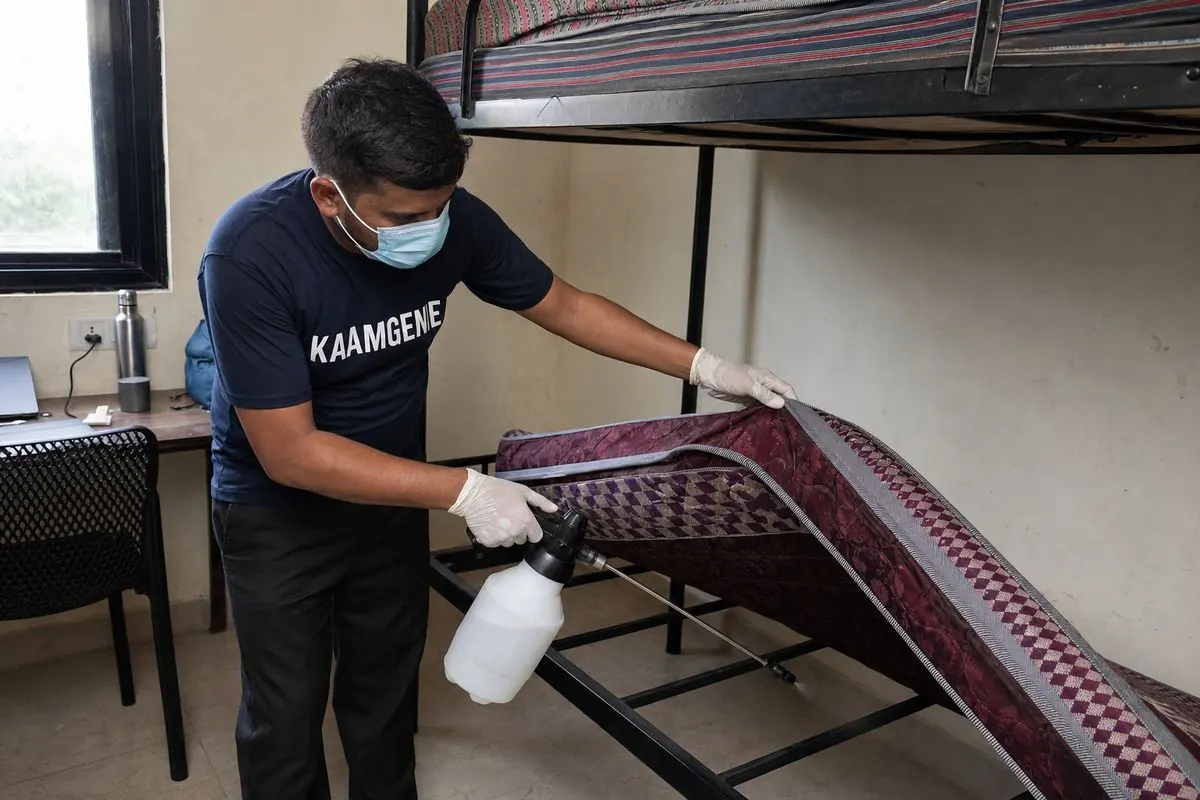
Quick answer — pest control for PGs, hostels & co-living in Delhi (2026)
- The two big pains: bed bugs (shared mattresses, second-hand furniture, room-to-room spread) and cockroaches (shared kitchens and dustbins). Both spread fast in shared living.
- Bed bugs need two treatments: a single spray never works — eggs survive it, so a follow-up visit 10–14 days later is essential to break the egg cycle.
- Treat the property, not one room: in shared housing pests travel through walls, corridors and shared furniture, so a whole-floor or whole-property treatment beats clearing one room while the one next door reinfests it.
- Real cost (2026): bed bug treatment from ₹1,299 per room (two-visit cycle), cockroach control from ₹599, general/home from ₹999; whole-property quotes work out cheaper per room. AMC for a multi-room PG from around ₹2,999/year upward by size. GST 18% extra.
- Who pays: usually the owner for the property and shared areas; tenants help by prepping their own room and not bringing infested second-hand furniture in.
- We cover student belts across Delhi — Mukherjee Nagar, Laxmi Nagar, Kingsway Camp, GTB Nagar, Satya Niketan, Katwaria Sarai and more. Same-day where slots allow.
Why infestations spread so fast in shared living
A PG, hostel or co-living floor is the single easiest environment in Delhi for a pest problem to explode, and once you understand why, the whole approach to treating it changes. In a family home a bed-bug or cockroach problem is contained — one kitchen, one set of beds, one set of habits. In shared housing you have eight, twelve, twenty strangers cycling through the same building, sharing the same kitchen, the same corridors, sometimes the same furniture, and rotating in and out every few months. Every move-in is a fresh chance to import a problem, and every shared surface is a road for it to travel.
Bed bugs are the textbook example. They don’t fly and they don’t jump — they hitchhike. A student arrives in Mukherjee Nagar for coaching with a suitcase that picked up bed bugs from a train berth or a previous hostel, or the owner buys a cheap second-hand mattress and bed frame to furnish a new room. Within days the bugs are in the seams of that mattress and the joints of that wooden frame. Then they crawl — along the skirting, through the gap where a pipe passes through the wall, under the connecting door — into the next room. By the time the first tenant complains of bites, the rooms on either side are usually already seeded. This is the central fact of PG pest control: the unit of infestation is the building, not the room.
Cockroaches follow the same logic but through the kitchen. A shared PG kitchen in Laxmi Nagar runs near non-stop — tea and Maggi at midnight, dabbas stacked in a common fridge, a dustbin emptied once a day if you’re lucky, grease behind a shared gas stove that nobody cleans because nobody owns it. German cockroaches breed in that warmth and ride out on grocery bags and egg cartons into every room’s store shelf. Add the density — more people, more food, more bins, more clutter per square foot than any home — and you have a building that manufactures pests faster than a single-room spray can ever clear them.
Bed bugs vs cockroaches — reading the signs in a shared room
The two pests that decide a PG’s reputation are bed bugs and cockroaches, and they announce themselves very differently. Catching them early — before a tenant posts about it — is half the battle, so it pays for owners, wardens and tenants to know what to look for. Bed bugs are silent, nocturnal and hide in the bed itself; cockroaches are loud about their presence the moment you switch on a kitchen light at night.
| What to check | Bed bugs | Cockroaches |
|---|---|---|
| Where they hide | Mattress seams, bunk-bed joints, headboard, behind skirting near the bed | Kitchen cabinets, behind the fridge and stove, dustbin area, drain pipes |
| First sign tenants notice | Itchy bite lines on arms and legs in the morning | Roaches scattering when the kitchen light comes on at night |
| Physical evidence | Tiny dark blood spots on the sheet, pale shed skins, a sweetish musty smell | Pepper-like droppings in drawers, brown egg cases, smear marks |
| How it spreads | Second-hand furniture, luggage, room-to-room along walls and shared beds | Shared kitchen, grocery bags, drains connecting rooms |
| Treatment needed | Two-visit cycle (10–14 days apart) to break the egg cycle | Gel bait in cracks plus kitchen hygiene; recheck on follow-up |
| Reputation risk | Very high — bites and bad reviews empty rooms fast | High — a roach in the kitchen kills food trust instantly |
Mosquitoes deserve a mention too — cooler water tanks, balcony buckets and the damp around a shared bathroom breed them through the Delhi monsoon — but in student housing they’re a distant third behind bed bugs and roaches. The rough split below is what we see across the PG and hostel sites we handle.
Most common pests reported in Delhi PGs, hostels & co-living (2026)
Rough share of complaints we log across student-housing sites, by pest type.
The two-treatment bed-bug cycle — why one visit is wasted money
If you take one thing from this guide, take this: a single bed-bug treatment does not work, and any service that promises to clear bed bugs in one visit is either lying or about to disappoint you. This isn’t a sales line to book you twice — it’s biology. Bed bug eggs are glued into the deepest cracks of a mattress seam and a wooden bed joint, and they are remarkably resistant to the products that kill adult bugs. A first treatment knocks out the adults and nymphs you can reach, but the eggs ride it out. Around a week to ten days later, those eggs hatch into a fresh generation of hungry nymphs — and if you stopped at one visit, you’re right back where you started, except now the tenant has lost faith.
The fix is a deliberate two-visit cycle. The first treatment targets the live bugs in the mattress seams, bunk-bed joints, headboard, skirting and any cracks around the bed — usually a combination of a residual treatment and heat or steam on the seams. The second treatment, 10 to 14 days later, is timed precisely to catch the newly hatched nymphs before they mature and lay their own eggs. That second visit is what actually breaks the cycle. Skip it and the money on the first visit is wasted. For a PG this matters double, because while you’re waiting between the two visits, the tenant has to keep using the room with proper prep — so the scheduling and the communication matter as much as the chemistry. We’ll do same-day for the first visit where slots allow, but we always book the follow-up in at the same time so it doesn’t get forgotten.
Bed bugs spreading through your PG rooms?
Don’t treat one room and hope — we treat the affected rooms and their neighbours, then follow up to break the egg cycle. Bed bug treatment from ₹1,299/room; whole-property quotes cheaper per room. GST 18% extra.
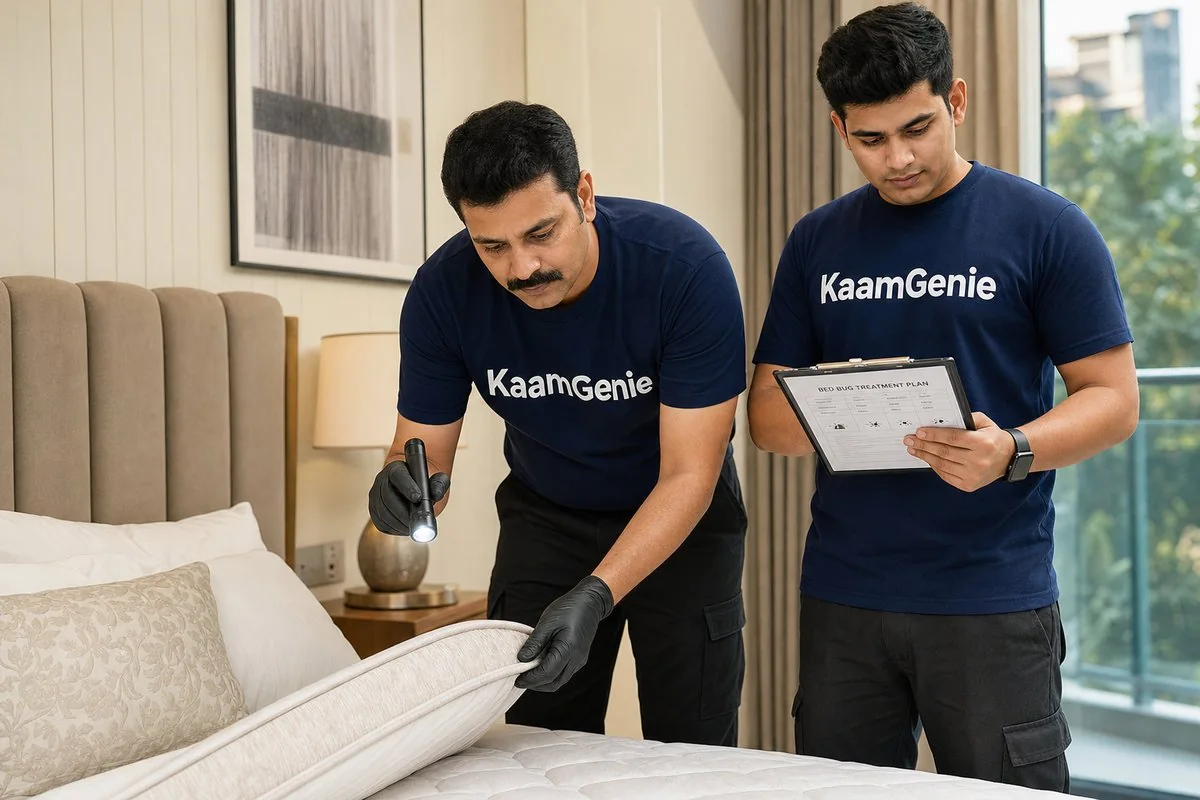
Single room or whole property? Treat the building, not the bed
Owners ask this constantly, and I understand why — treating one room is cheaper than treating ten, so the temptation is to deal only with the room that complained. In a PG that almost never works, and here’s the honest reasoning. By the time one tenant reports bed bugs, the bugs have usually already crawled into the adjoining rooms through the shared wall, the corridor and the common furniture. Treat only the complaining room and you push the survivors next door; a fortnight later the room you cleared gets reinfested from the room you ignored. You end up paying for room-by-room treatments forever and never getting ahead.
The smarter approach is to treat the affected room plus its immediate neighbours as a block, and for an established bed-bug problem across a small PG, to treat the whole property in one coordinated sweep. It costs more upfront, but it’s cheaper than three rounds of single-room firefighting, and it actually ends the problem. The same is true for cockroaches running through a shared kitchen — you bait the kitchen and every room’s store shelf together, or they simply migrate back. A whole-property quote also comes out cheaper per room than booking rooms one at a time, so it’s the better deal even on pure cost.
| Property size | Single-room (per room) | Whole-property sweep (approx) | Best for |
|---|---|---|---|
| Bed bugs — one room only, caught early | ₹1,299–₹1,800 (incl. follow-up) | — | A genuinely isolated, just-spotted case |
| Small PG (up to 6 rooms) | ₹1,299/room | ₹6,000–₹9,000 | Bed bugs in 2+ rooms; shared kitchen roaches |
| Medium PG / hostel (7–15 rooms) | ₹1,299/room | ₹9,000–₹18,000 | Building-wide bed bug or cockroach problem |
| Large hostel / co-living (16+ rooms) | ₹1,299/room | Custom quote | Whole-property programme, usually on an AMC |
Prices are indicative for 2026 and assume the bed-bug figure includes the second follow-up visit; an honest quote comes after a quick survey of the property, because the number of rooms, the furniture and how far the problem has spread all move the figure. Cockroach control starts from ₹599 and general/home treatment from ₹999 where those are the issue rather than bed bugs.
Who pays — owner or tenant?
This is where PG pest control gets awkward, and it’s worth being clear about because a dispute over the bill often delays treatment while the infestation gets worse. My straightforward view, and the one most reasonable owners land on: the property and the shared areas are the owner’s responsibility. The kitchen, the corridors, the common bathrooms, the structure of the building and the furniture the owner provides — including those second-hand mattresses and beds — are all the owner’s to keep pest-free. A PG that markets itself as a clean, furnished place to live can’t reasonably hand the bed-bug bill to a 19-year-old student who just moved in.
Tenants aren’t off the hook entirely, though. A tenant who brings in an infested second-hand sofa, ignores obvious bites for weeks, or keeps a filthy room that breeds roaches shares some responsibility — and a sensible PG agreement says so in plain language. The practical answer that avoids fights: the owner pays for the treatment (it protects the whole property and the owner’s reputation), and the tenant’s job is to prep their room properly and not import problems. Putting a one-line pest-control clause in the rent agreement, and treating proactively rather than arguing reactively, saves owners far more than the cost of a visit.
Running a multi-room PG or hostel?
An AMC keeps the whole property under control between move-ins and gives you before/after photos and a GST invoice for your records. Plans for a multi-room PG from around ₹2,999/year by size.
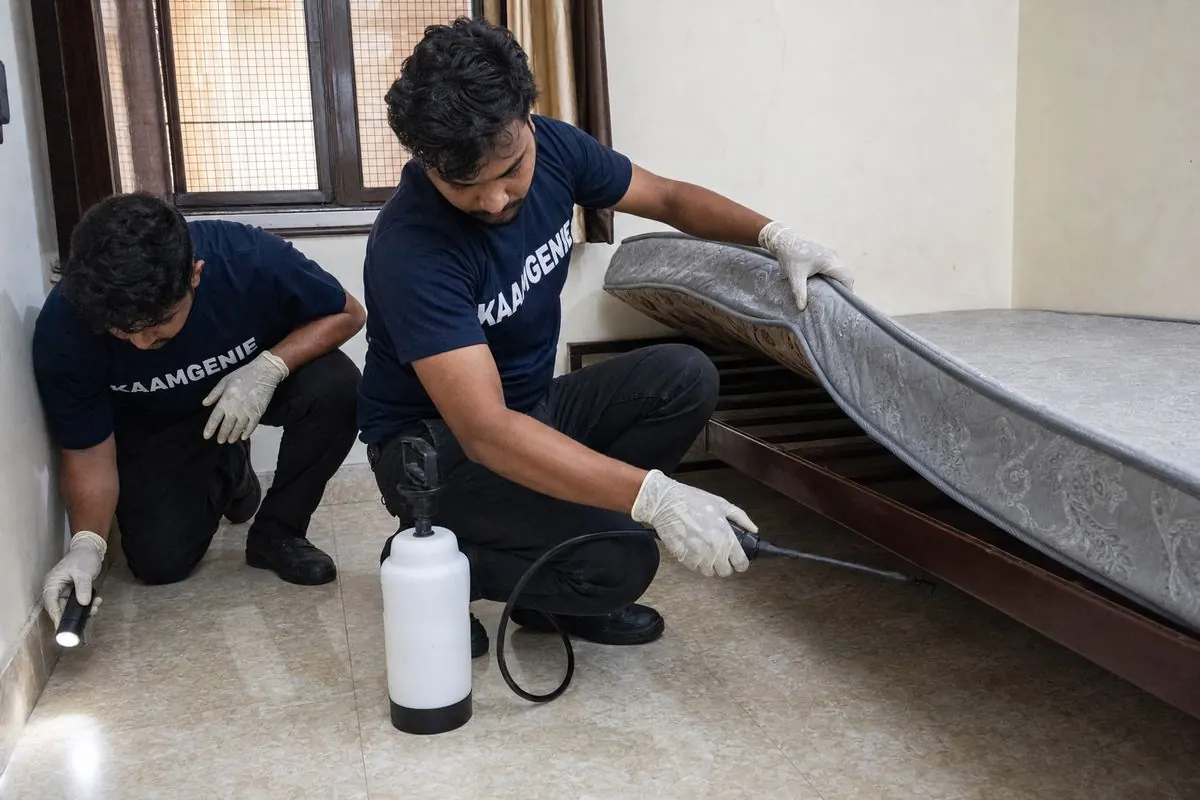
Reputation, reviews and the case for an AMC
In 2026 a PG or co-living brand lives and dies on its reviews. Prospective tenants and their parents read Google, JustDial and the housing apps before they ever visit, and nothing tanks a rating faster than the phrase “bed bugs” in a review. One detailed complaint with a photo of bites can cost an owner months of bookings, and student belts like GTB Nagar and Old Rajinder Nagar are small worlds where word travels through coaching-centre WhatsApp groups overnight. The cheapest reputation insurance an owner can buy isn’t a marketing budget — it’s pest control that stops the complaint being written in the first place.
That’s the real argument for an Annual Maintenance Contract on a multi-room property. Instead of reacting after a tenant complains, a technician walks the building on a schedule — checks the high-risk rooms, baits the shared kitchen, inspects new move-ins’ rooms — and catches a problem at the two-bug stage. An AMC also gives the owner before/after photos and a GST invoice for every visit, which is genuinely useful: you can show a worried parent that the property is professionally maintained, and you keep a clean record if a tenant ever disputes a deposit over “pests”. For a small PG an AMC starts around ₹2,999 a year and scales with the number of rooms and the visit frequency; for a large hostel it’s a custom quote. Either way it’s far cheaper than the bookings you lose to one bad review.
Prevention between tenants — the move-in/move-out checklist
The highest-risk moment in any PG is the changeover — one tenant leaves, another arrives, and the room flips over in a day. That gap is exactly when an owner can stop the next infestation before it starts, and it costs almost nothing but discipline. The table below is the routine I’d hand every PG warden in Delhi; tenants can use the same list to protect their own room.
| When | Owner / warden does | Tenant does |
|---|---|---|
| Before a new tenant moves in | Inspect mattress seams & bed joints; vacuum and wipe; encase old mattresses or replace; clear clutter | Ask to see the room; check the mattress seams yourself |
| On move-in day | Don’t accept unvetted second-hand furniture into the building | Don’t bring an infested mattress, sofa or suitcase straight in; inspect/wash luggage contents |
| Ongoing in the room | Provide a bin with a lid; fix leaks and damp; keep skirting gaps sealed | Keep food in sealed boxes; empty the bin daily; report bites or roaches early, not after weeks |
| Shared kitchen | Daily bin clearance; clean behind fridge/stove; schedule cockroach baiting | Wash up the same night; don’t leave dabbas or crumbs out |
| On move-out | Deep-clean and inspect the room before re-letting; treat if any sign found | Declutter; flag anything you saw so the next person isn’t caught out |
None of this replaces professional treatment once a problem takes hold — you can’t vacuum your way out of an established bed-bug infestation — but a tight changeover routine dramatically cuts how often you need us, and that’s money in the owner’s pocket.
Booking PG, hostel & co-living pest control across Delhi
Student housing has its own rules — the building is the unit, bed bugs need two visits, and one bad review costs more than the treatment ever will. We run pest control for PGs, hostels and co-living properties right across Delhi’s student belts — Mukherjee Nagar, Laxmi Nagar, Kingsway Camp, Old Rajinder Nagar, Satya Niketan, Kamla Nagar, GTB Nagar, Munirka and Katwaria Sarai, and beyond. Coming soon: Gurgaon, Noida, Faridabad and Ghaziabad. Tell us how many rooms you have and whether it’s bed bugs, cockroaches or both, and we’ll survey the property and quote an honest whole-property treatment or AMC — with the bed-bug follow-up booked in from the start. Call 95603 66362 and keep your rooms full and your reviews clean.
Frequently asked questions
How much does bed bug treatment cost for a PG room in Delhi in 2026?
Bed bug treatment for a PG room starts from around ₹1,299 per room, and that should include the essential follow-up visit 10–14 days later. For a building-wide problem a whole-property sweep works out cheaper per room — roughly ₹6,000–₹9,000 for a small PG up to six rooms. GST 18% is extra, and an honest figure comes after a quick survey because the number of rooms and how far it has spread move the price.
Why do bed bugs need two treatments instead of one?
Because bed bug eggs are glued deep in mattress seams and bed joints and survive the first treatment. A single spray kills the adults but the eggs hatch about a week to ten days later and you’re back to square one. A second treatment 10–14 days later is timed to catch the newly hatched nymphs before they mature and lay eggs — that follow-up is what actually breaks the cycle. Any service promising a one-visit bed bug cure is overselling.
Should I treat just the affected PG room or the whole property?
For bed bugs in a PG, treating only the room that complained almost never works — the bugs have usually already crawled into the adjoining rooms through shared walls and corridors, so they reinfest the cleared room within a couple of weeks. The smart approach is to treat the affected room plus its neighbours, or the whole property in one coordinated sweep for an established problem. A whole-property quote is also cheaper per room than booking rooms one at a time.
Who should pay for pest control in a PG — owner or tenant?
Usually the owner. The property, the shared kitchen and bathrooms, the corridors and any furniture the owner provides — including second-hand mattresses and beds — are the owner’s responsibility to keep pest-free. Tenants share responsibility only if they bring in infested second-hand furniture, ignore an obvious problem, or keep a filthy room. The practical answer: the owner pays for treatment, the tenant preps their room and avoids importing problems. A one-line clause in the rent agreement avoids disputes.
Why do bed bugs and cockroaches spread so fast in a PG or hostel?
Because shared living concentrates everything pests need and rotates people through constantly. Bed bugs hitchhike in on luggage and second-hand furniture, then crawl room to room along skirting, walls and shared beds. Cockroaches breed in the shared kitchen — midnight cooking, a common fridge, an unemptied dustbin, grease behind the stove — and ride out into every room’s store shelf. The density and the steady stream of new move-ins make a building manufacture pests faster than a single-room spray can clear them.
How do I tell if my PG room has bed bugs or cockroaches?
Bed bugs are silent and live in the bed: look for itchy bite lines on your arms and legs in the morning, tiny dark blood spots on the sheet, pale shed skins in the mattress seams, and a sweetish musty smell. Cockroaches give themselves away in the kitchen — roaches scattering when you switch on the light at night, pepper-like droppings in drawers, and brown egg cases behind the fridge and stove.
Can students or tenants keep using the room between the two bed-bug visits?
Yes, with proper prep. After the first treatment the room is still usable — keep the bedding laundered on a hot wash, avoid moving items between rooms, and follow the technician’s instructions on what to wash and seal. The second visit 10–14 days later catches the hatchlings. The key is not to skip or delay that follow-up; we book it in at the time of the first visit so it doesn’t get forgotten.
Is an AMC worth it for a PG or hostel owner?
For a multi-room property, usually yes. An AMC means a technician walks the building on a schedule, baits the shared kitchen, checks high-risk and newly let rooms, and catches problems early instead of after a tenant complains and posts a review. It also gives you before/after photos and a GST invoice per visit for your records. Plans for a small PG start around ₹2,999 a year and scale with rooms and visit frequency — far cheaper than the bookings one bad bed-bug review can cost you.
How does a PG bed-bug problem affect reviews and bookings?
Heavily. The phrase “bed bugs” in a Google or housing-app review, especially with a photo of bites, can cost an owner months of bookings, and student belts are tight-knit — word travels through coaching-centre WhatsApp groups fast. Proactive, scheduled pest control is the cheapest reputation insurance an owner can buy, because it stops the complaint being written in the first place.
What can tenants do to prevent pests in a shared PG room?
Don’t bring in an infested second-hand mattress, sofa or suitcase — inspect and wash luggage contents on arrival. Keep food in sealed boxes, empty the bin daily, wash up the same night, and check your mattress seams when you move in. Most importantly, report bites or roaches early rather than after weeks — early reporting lets the owner treat a small problem before it spreads through the building.
Which Delhi PG and student areas do you cover?
We cover the main student-housing belts across Delhi, including Mukherjee Nagar, Laxmi Nagar, Kingsway Camp, Old Rajinder Nagar, Satya Niketan, Kamla Nagar, GTB Nagar, Munirka and Katwaria Sarai, plus co-living and hostel properties citywide. We offer same-day treatment where slots allow and can quote a whole-property sweep or an AMC for multi-room properties. Gurgaon, Noida, Faridabad and Ghaziabad are coming soon.
Does cockroach control in a shared PG kitchen work differently from a home?
The method is the same — gel bait placed in cracks behind the fridge, stove and cabinets, plus kitchen hygiene — but the scale and discipline differ. A shared kitchen has more food, more bins and more people not cleaning up, so you bait the whole kitchen and every room’s store shelf together, and pair it with daily bin clearance. Treat one room’s shelf alone and the roaches simply migrate back from the kitchen. Cockroach control starts from ₹599.
Keep your Delhi PG pest-free and fully booked
Let us survey your property and run a whole-property treatment or scheduled AMC — with the bed-bug follow-up booked in and audit-ready records. PGs, hostels and co-living across Delhi.
Sources & references
- Central Insecticides Board & Registration Committee (CIB&RC) — the Indian regulator that approves the pest-control products and concentrations used in residential and shared premises.
- National Centre for Disease Control (NCDC) — tracks urban pest and vector patterns relevant to high-density shared housing in Delhi.
- Indian Council of Medical Research (ICMR) — publishes research on bed bug and cockroach biology and integrated pest management protocols.
- World Health Organization (WHO) — documents bed bug behaviour, the role of luggage and second-hand furniture in spread, and control methods.
Last verified: 13 June 2026. If you find any of these links broken, please let us know.