
The short version
- A brand-new tank is not a clean tank — it holds cement film, sand, screed dust, plastic shavings and packaging from construction.
- The first cleaning after possession is really a commissioning job: you’re turning a building component into a drinking-water vessel.
- Book it before you start drinking the water — ideally in your first week or two, before the RO and geyser pull debris through the lines.
- In most Gurgaon towers, water lands in a basement underground reservoir (UGR), gets pumped to rooftop tanks, then to your flat — debris collects at every stage.
- A standard flat tank starts at ₹699 onwards; UGR and society-wide jobs are quoted by capacity.
The builder handed you a finished flat. Nobody handed you a clean tank — that part is on you.
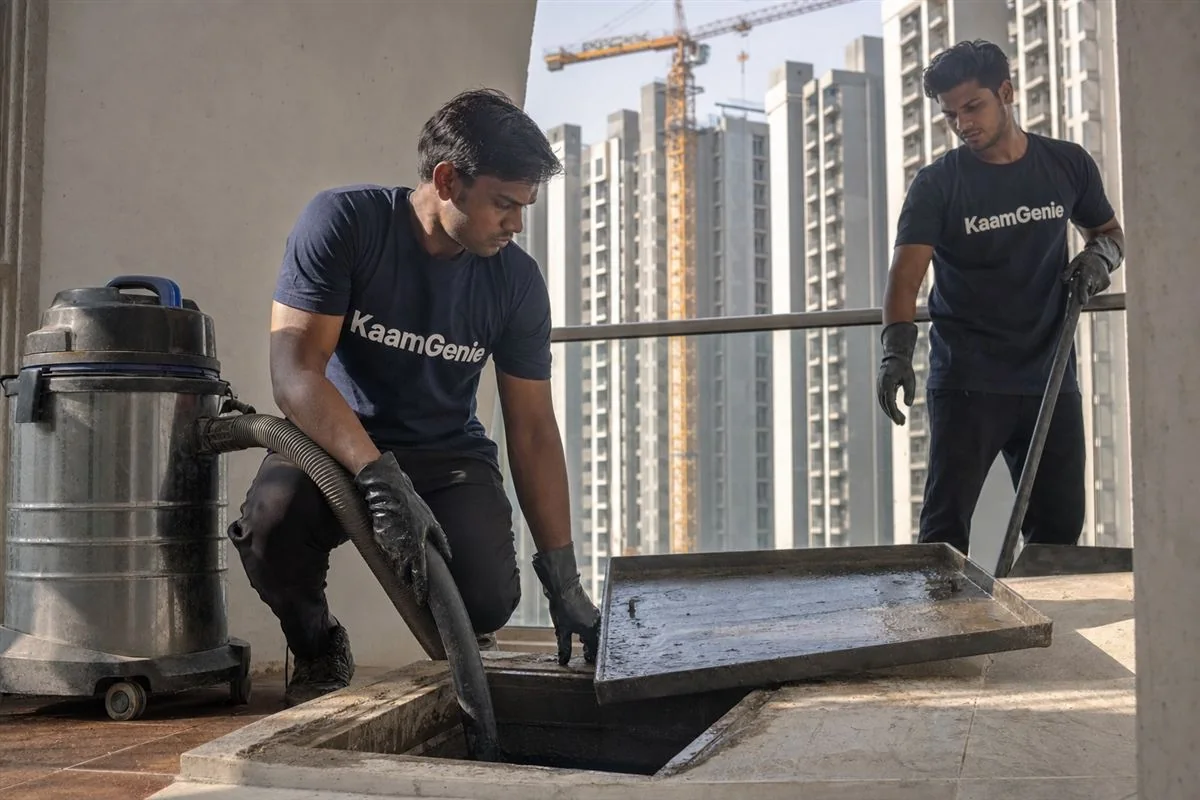
Possession week in a new Gurgaon high-rise is chaos in the best way — carpenters, modular kitchen fitters, the RO guy, the curtain measurer, all arriving at once. In all of it, the water tank is the one thing nobody thinks about, because it looks brand new and brand new feels clean. It isn’t. We commission tanks in the new-tower belt every week — the Dwarka Expressway corridor, the Southern Peripheral Road (SPR), the Sohna Road extension, the sector grid of New Gurgaon — and the inside of a freshly handed-over tank tells the same story every time.
What’s actually inside a “new” tank
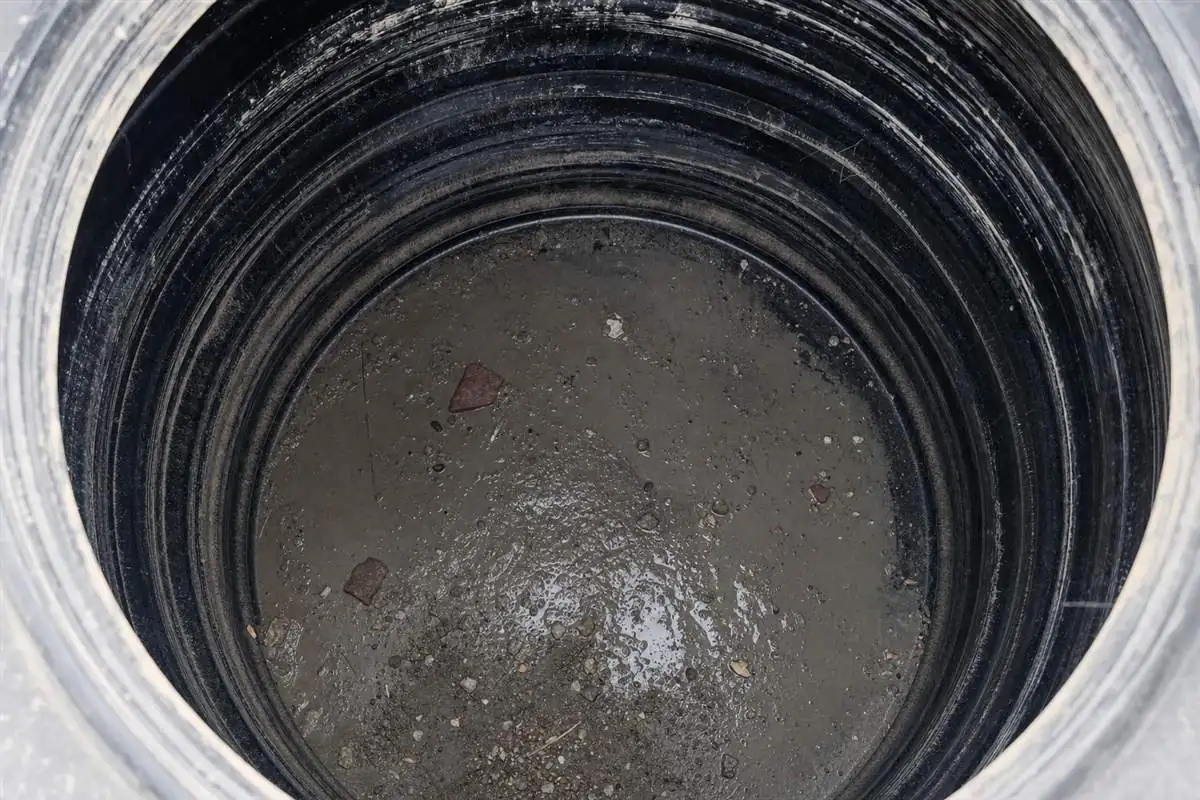
When a tower is built, the tanks are installed long before the water is. They sit through months of cutting, drilling, plastering and screed work with their lids open or loosely covered. Here’s what we routinely scoop out of a tank that has technically never been used:
- Cement and grout slurry — a fine grey film bonded to the walls and floor, washed down during plumbing and tiling work.
- Sand and screed dust — a gritty layer at the bottom that no amount of flushing clears on its own.
- Plastic shavings and pipe offcuts — from cutting the inlet, outlet and overflow pipes to size.
- Packaging film and labels — new Sintex and moulded tanks ship with protective film and stickers that flake off into the water.
- Stray construction debris — brick chips, cable ties, putty, and on memorable occasions a forgotten trowel or a paint-roller sleeve.
None of this is the builder being careless — it’s simply the residue of building. But it’s also why the first fill of a new tank runs cloudy and grey, and why your RO membrane will choke within weeks if you skip this step. This is genuinely different work from a routine clean, which is why it’s worth understanding the full process for a brand-new builder-floor or tower tank before you book.
| Factor | New tank after possession | Old tank (years uncleaned) |
|---|---|---|
| Main contaminant | Cement film, sand, plastic, packaging | Biofilm, algae, rust, mineral scale |
| Bacteria load | Low at first, rises fast in standing test water | High — established colonies |
| Hardest part of the job | Scrubbing bonded cement film + extra rinse | Sludge removal + descaling |
| Risk if skipped | Cloudy water, choked RO, grit in taps | Illness, smell, discoloured water |
| Best timing | First 1–2 weeks after possession | Immediately, then every 6 months |
Commission your new flat’s tank the right way
The first clean after possession — cement, sand and packing debris out, food-grade disinfection in, before/after photos. ₹699 onwards.
Why the first clean matters more than any other
With an old tank, you’re removing the result of slow neglect. With a new tank, you’re setting the baseline for everything that follows. Get the commissioning clean right and your tank starts its life genuinely empty of grit; skip it and that cement-and-sand layer becomes the foundation that every future deposit builds on. Three reasons it’s the one to not skip:
- It protects your appliances from day one. RO membranes, geyser elements, washing-machine inlet valves and tap aerators all clog on construction grit. Replacing an RO membrane in month two of a new flat is an avoidable annoyance.
- Standing test water turns fast in Gurgaon’s heat. Builders often fill tanks to pressure-test plumbing, then leave the water standing for weeks before handover. Warm, still water with organic dust in it is exactly how biofilm starts.
- It establishes your maintenance record. The before/after photos and cleaning certificate from the first clean are your proof for the AOA, and a clean opening entry if you ever rent or sell.
Flat tank, rooftop tank, or the basement reservoir?
This is the part new owners find confusing, so here’s the plain version. Most Gurgaon towers don’t plumb you straight to the mains. Water — usually a mix of hard borewell groundwater and bought-in tankers, since the new-tower belt leans heavily on tanker supply — lands first in a large underground reservoir (UGR) in the basement. Pumps then lift it to overhead tanks on the roof, and gravity carries it down to each flat, sometimes via a smaller tank dedicated to your unit.
For a single flat, the clean that affects your taps directly is your overhead or flat-level tank. The basement UGR and pump room are the building’s shared infrastructure — that’s an AOA or maintenance-agency job, and it’s worth pushing for, because a dirty UGR re-contaminates every clean tank above it. If you’re not sure which tank feeds you, our crew traces it on site before quoting. For the whole-building picture, the way these shared systems are scheduled is covered in our guide to tank cleaning across the Dwarka Expressway new-tower belt.
What the commissioning clean actually involves
The core process is the same professional sequence we run on any tank — inspection, drain, sludge and debris removal, manual scrubbing with food-grade brushes, high-pressure jet wash, wet-vacuum, food-grade disinfection with a proper contact time, and refill with before/after photos. A first-clean after possession adds two things on top:
- Extra scrubbing for bonded cement film. Grey cement slurry keys into the tank surface and needs more brush time than ordinary sediment — a quick rinse will not shift it.
- An additional clear-water rinse. After disinfection we run an extra rinse-and-vacuum to be certain no fine cement particles or grit remain before the tank goes into drinking-water service.
That’s why a commissioning clean can sit a little above a routine clean — it’s genuinely more work — but it’s still a fixed quote you agree before we start. If you want the full breakdown of what drives the number up or down, the honest pricing logic is in our Gurgaon tank-cleaning cost guide. The same trained crews and fixed rates run right across the city — we book water tank cleaning in Gurgaon from the established DLF colonies to the newest towers, and it’s part of our wider NCR water tank cleaning services.
Where construction debris settles in a new tower — by stage
Rough share of debris our crews remove at each point in the chain
Illustrative pattern from new-tower commissioning cleans — the lower the storage in the chain, the more sand and cement settles there. This is why cleaning only your flat tank, while a dirty UGR sits below, gives short-lived results.
A realistic possession-week checklist
Slot the tank clean in among the fit-out rush without making it complicated:
- Ask the builder, in writing, whether the tanks were cleaned before handover. “Filled for testing” is not the same as cleaned.
- Confirm which tanks are yours vs the AOA’s. Get the flat tank done yourself; push the AOA to schedule the UGR and rooftop tanks.
- Don’t drink the water yet. Use it for cleaning and flushing until the first clean is done and your new RO cartridges have been run.
- Book the clean before plumbing in the RO and geyser fully — or at least before relying on them — so grit doesn’t get pulled into the appliances.
- Keep the cleaning certificate. It’s your maintenance baseline and your evidence if there’s a builder snag dispute.
If you’re ever unsure whether your tank needs attention between cleans, the tell-tale signs — grit in the aerators, cloudy first-draw water, a faint earthy smell — are the same warning signals we describe for any Gurgaon home.
New keys, clean water — sorted in one visit
Tell us your tower and sector; we’ll trace which tank feeds your flat and quote before we start. Residential commissioning clean ₹699 onwards.
Book your new flat’s first clean across Gurgaon
Whether you’ve just taken possession in a tower off the Dwarka Expressway, a high-rise on Sohna Road, or a New Gurgaon project around Sector 82 or Sector 102, the commissioning clean is the same trained-crew job at the same fixed price. Start from the water tank cleaning in Gurgaon hub to see coverage and pricing, or just call and tell us your tower — we’ll work out which tank feeds your flat and get you clean water from day one.
Frequently asked questions
We just got possession — do we really need to clean a brand-new water tank?
Yes, and arguably more than an old one. A brand-new tank has never held drinking water before — what it has held is construction. Cement slurry, fine sand, drilling dust, plastic shavings from the inlet pipes and the protective film that ships on new Sintex tanks all sit at the bottom. The first cleaning isn’t maintenance; it’s commissioning the tank for human use.
What exactly is left inside a new tank after construction?
On the new Gurgaon towers we commission most often, we find a fine grey cement film on the walls, a gritty layer of sand and screed dust on the floor, plastic offcuts and pipe shavings from the plumbing, and sometimes bits of packaging, cable ties or a forgotten trowel. Underground reservoirs that sat open during construction also collect rainwater silt and brick dust.
How soon after moving in should we book the first cleaning?
Before you treat the water as drinkable — ideally in the first week or two after possession, before the RO and geyser get plumbed in and start pulling debris through. If the builder filled the tanks for testing and they’ve been standing for weeks, clean sooner rather than later, because standing construction water grows biofilm fast in Gurgaon’s heat.
Who is responsible for the first clean — the builder, the AOA, or the flat owner?
It depends on the tank. The common underground reservoir and the pump room are usually the builder’s or the AOA/maintenance agency’s responsibility under the handover. The individual rooftop or flat-level tank that feeds only your unit is generally yours. In practice many builders hand over without cleaning either, so it’s worth confirming in writing and, if in doubt, getting your own flat tank done.
How much does the first water tank cleaning cost for a new Gurgaon flat?
A standard residential flat tank starts at ₹699 onwards. A first clean after possession can sit slightly higher than a routine clean because cement and grout residue take extra scrubbing and an extra rinse, but it is still a flat, fixed quote agreed before we start. Common underground reservoirs and society-wide jobs are quoted separately by capacity.
Our tower has a common underground reservoir and rooftop tanks — what gets cleaned?
Both matter. In most Gurgaon towers the tanker or borewell water lands in a large underground reservoir (UGR) in the basement, gets pumped to overhead tanks, and then flows down to flats. Construction debris collects at every stage. For a single flat we clean your overhead/flat tank; for the whole building the AOA books the UGR, pump room and rooftop tanks together. We’ll tell you honestly which one is actually feeding your taps.
Is the water from the builder’s tanker safe to drink before the first clean?
Treat it as non-potable until the tank is cleaned and you’ve checked your purifier. Early-occupancy Gurgaon towers run almost entirely on tanker water with hard borewell groundwater, and the tank itself still has cement and sand in it. Use it for cleaning and flushing, but don’t drink it — even through an RO — until the first cleaning is done and the new filter cartridges have been run.
How long does the first cleaning take and do we need to be home?
A flat-level tank takes about 75–90 minutes for the full process; a basement reservoir takes longer. You don’t have to stay the whole time — someone just needs to give us access to the tank and the inlet valve. We send before/after photos and the cleaning record on WhatsApp, which is also useful proof for your AOA or for the builder snag list.
How often should we clean after the first one in a Gurgaon tower?
Every six months is the sensible default for Gurgaon, because the hard borewell water and heavy tanker dependence leave scale and sediment faster than soft municipal supply. New towers in their first year often need it sooner — fit-out work in neighbouring flats keeps dust and debris circulating through shared lines until the building is fully occupied.
Sources & references
- Bureau of Indian Standards (BIS) — IS 10500:2012 is the canonical Indian Standard for drinking water specification, defining acceptable limits for physical, chemical, and biological parameters.
- WHO Guidelines for Drinking-water Quality, 4th edition — the global reference for water quality standards, including guidance on storage and disinfection.
- Food Safety and Standards Authority of India (FSSAI) — defines water quality requirements for food businesses, including hygiene standards for stored water and acceptable disinfection chemicals.
- WHO Fact Sheet on Drinking Water — overview of safe drinking water requirements and contamination risks.
- CPHEEO — Manual on Water Supply and Treatment — the Government of India’s engineering manual covering tank design, cleaning protocols, and disinfection practices.
Last verified: 29 June 2026. If you find any of these links broken, please let us know.