
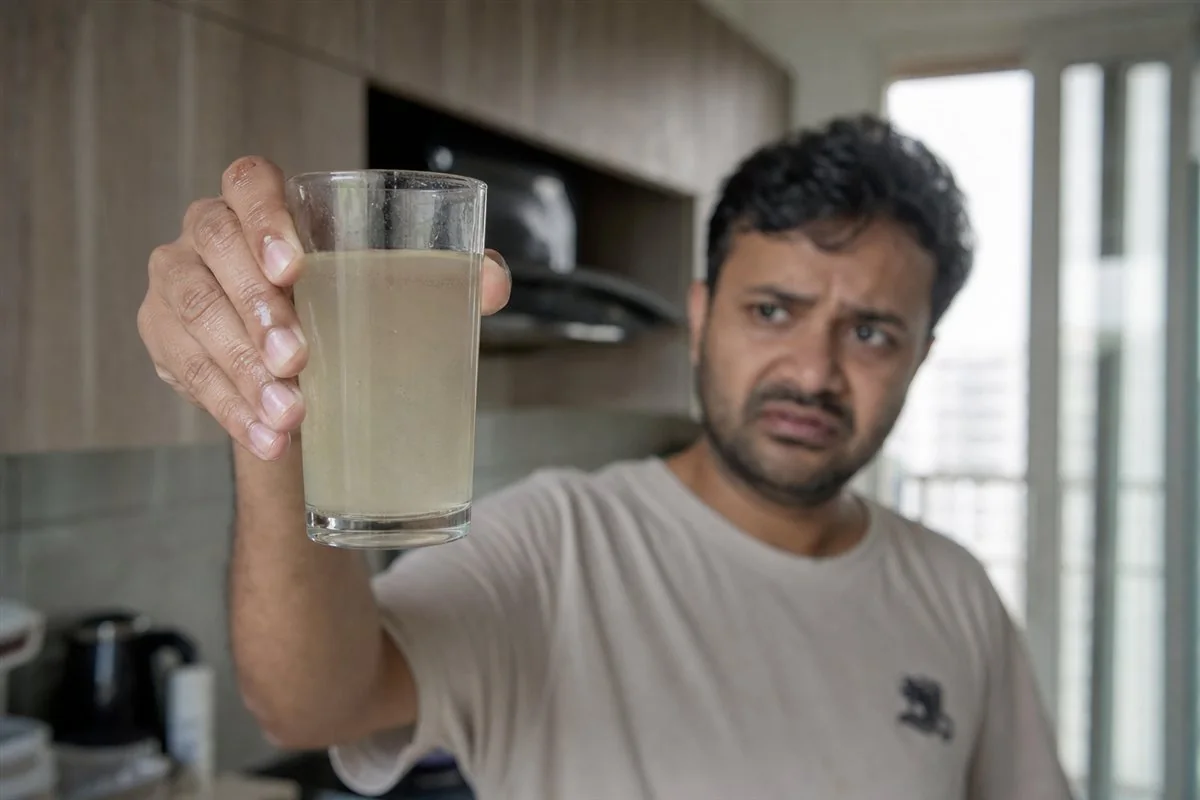
The 7 signs at a glance
- White chalky scale on the rim, walls, or float valve (hard-water limescale)
- Cloudy or gritty water that doesn’t clear — sediment from tanker supply
- A smell or off taste — musty, earthy, eggy, or metallic
- Low or dropping pressure at upper-floor taps
- Skin, hair, or stomach trouble across the whole household
- Yellow, brown, or tinted water at the tap
- You can’t remember the last cleaning — or it was 6+ months ago
Even one of these usually means the tank floor already holds sediment and scale. Two or more — book a cleaning before the next tanker fill.
| # | Sign | Likely Gurgaon cause | Urgency |
|---|---|---|---|
| 1 | White chalky scale | Hard borewell & tanker water (calcium/magnesium) | Soon |
| 2 | Cloudy / gritty water | Silt carried in by tanker fills, stirred-up sediment | Now |
| 3 | Smell or off taste | Bio-film, algae, or rust in the stored water | Now |
| 4 | Low / dropping pressure | Scale and sludge narrowing outlets & pipes | Soon |
| 5 | Skin / hair / stomach trouble | Bacteria + hard-water minerals + residue | Now |
| 6 | Yellow / brown tint | Rust, disturbed sediment, organic staining | Now |
| 7 | 6+ months since last clean | Normal build-up — faster here than most cities | Overdue |
Spotted one of these? Book a Gurgaon cleaning
Fixed price, before/after photos, food-grade disinfection. Don’t wait for the next tanker fill. ₹699 onwards.
Before we go sign by sign, one thing worth saying up front: this is a Gurgaon-specific checklist. If you want the general, all-of-Delhi version of the warning signs, we’ve written that separately — see 7 signs your tank needs cleaning urgently. Everything below is tuned to what we actually find inside tanks here: the hard groundwater, the heavy tanker dependence, the big underground reservoirs feeding rooftop tower tanks across DLF, Sohna Road, Golf Course Road, and the new-tower belt along SPR and Dwarka Expressway.
Sign 1 — White chalky scale on the rim, walls, and float valve
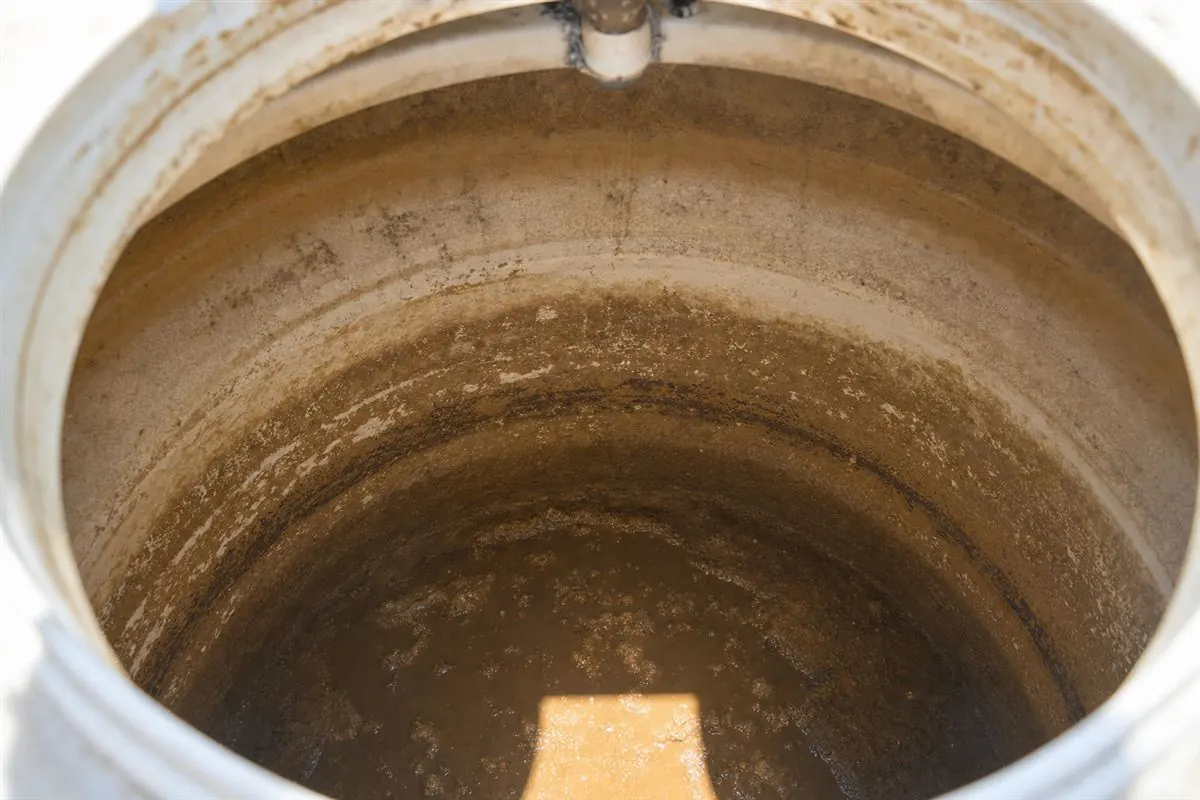
What you notice: a white or off-white chalky crust around the tank rim, on the inside walls near the water line, and caked onto the float valve. You probably see the same deposit on your taps, the geyser, and the kettle.
What it means in Gurgaon: that crust is limescale — calcium and magnesium precipitating out of the city’s hard groundwater. Borewell and tanker supply across most of Gurgaon is mineral-heavy, so scale forms faster here than in soft-water areas. Scale on its own isn’t a health hazard, but it’s a problem because it’s porous: it grips bio-film and sediment against the tank surface, and a rough scaled wall is far harder to keep clean than smooth plastic.
What to do: scale needs to be mechanically removed and de-scaled, not just rinsed — this is the single most common reason a “quick wash” achieves nothing here. We go deeper into why in our guide to hard-water tank cleaning in Gurgaon. If your tank is visibly scaled, it’s due for a proper de-scale and disinfection.
Sign 2 — Cloudy or gritty water that won’t clear
What you notice: water from the tap looks milky or hazy, or there’s fine grit settling at the bottom of a glass. It’s often worst in the hours after a tanker delivery.
What it means in Gurgaon: there are two causes, and they overlap here. Tanker water frequently carries fine silt that ends up on your tank floor. And when a tanker fills the tank, the inrush stirs up whatever sediment is already sitting at the bottom — so cloudiness spikes right after a fill. If the haze clears in a couple of minutes, it’s mostly air and settling. If it stays milky, or grit keeps appearing, the tank is holding a sediment layer that filters downstream can’t fix. Homes that depend almost entirely on tankers — common across newer sectors like Sector 82 and the SPR/Dwarka Expressway towers — see this fastest.
What to do: persistent cloudiness means the tank needs draining, sludge removal, and a scrub — not a top-up filter. If it appeared suddenly after a delivery from a questionable tanker, it’s worth reading how tanker water affects your tank before the next fill.
Sign 3 — A smell or off taste in the water
What you notice: a musty or earthy smell, a rotten-egg whiff, or a metallic taste — sometimes only noticeable first thing in the morning before the water has been running.
What it means in Gurgaon: a musty or eggy smell is bacterial — bio-film or algae growing inside the tank, usually helped along by a loose or cracked lid letting in warmth and light. On exposed rooftop tanks through the Gurgaon summer, algae can take hold surprisingly fast. A metallic taste points to rust from old galvanised fittings or pipework. The key point: the smell is coming from your storage, not your source. No amount of RO or UV filtering downstream cleans the tank itself.
What to do: an odour is a “now” sign, not a “soon” one. The tank needs a full scrub and food-grade disinfection to clear the bacterial load, plus a check on whether the lid seals properly so it doesn’t come straight back.
How soon to act on each sign — our Gurgaon crew’s rule of thumb
A higher bar means don’t wait. Smell, cloudiness, and tint are the “book today” signs.
Editorial guidance from KaamGenie’s Gurgaon jobs, not a measured statistic. Anything you can smell, taste, or see in the glass should be treated as urgent; scale and pressure can be scheduled but shouldn’t be ignored.
Sign 4 — Low or dropping water pressure upstairs
What you notice: taps and showers on the upper floors run weaker than they used to, or the flow has dropped off gradually over months.
What it means in Gurgaon: pressure has many causes, but a dirty tank is a real one and often overlooked. Scale builds up around the outlet, and sludge on the floor gets drawn toward the outlet pipe, slowly narrowing the path the water takes. In Gurgaon’s common setup — a large underground reservoir pumping up to rooftop tower tanks — scale and sediment can accumulate at multiple points, so a building-wide drop in pressure sometimes traces back to tanks that haven’t been cleaned in over a year. This is especially common in older DLF colonies and established condominiums like those off DLF Phase 5.
What to do: rule out the tank before assuming it’s a pump or pipe problem. A cleaning that removes scale and sludge from the outlet area often restores flow on its own — and it’s the cheapest thing to check first.
Sign 5 — Skin, hair, or stomach trouble across the household
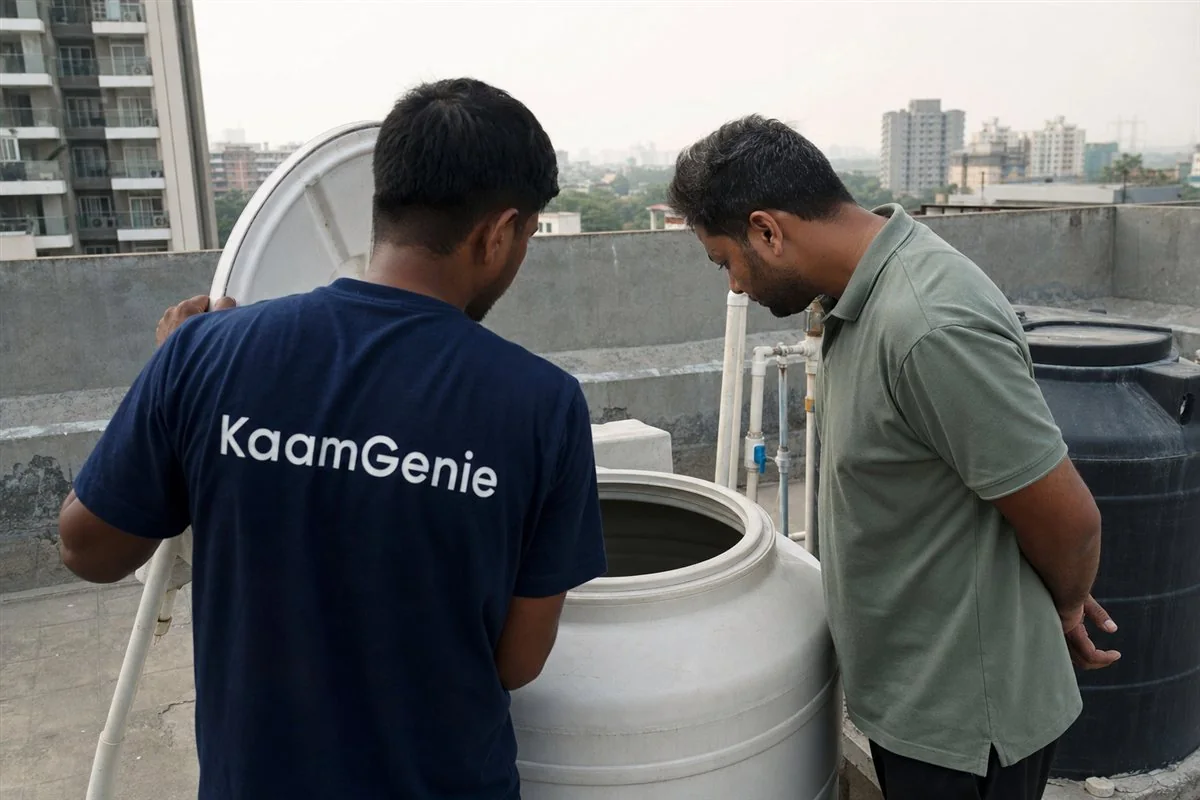
What you notice: dry, itchy skin; a flaky scalp; dull hair; or repeated stomach upsets — and crucially, more than one person in the home is affected at the same time.
What it means in Gurgaon: hard water alone already leaves Gurgaon residents with dry skin and lifeless hair, because the minerals interfere with how soap rinses off. A dirty tank stacks bacteria, sediment, and chemical residue on top of that. When a whole household develops symptoms together and the timing lines up with a long gap since the last cleaning, the shared water supply is the obvious common factor. It’s not a diagnosis — but it’s the cheapest and most common cause to rule out first.
What to do: if symptoms are household-wide, get the tank cleaned and disinfected before chasing more expensive explanations. Many Gurgaon families are genuinely surprised by the before-photos once the lid comes off.
Sign 6 — Yellow, brown, or tinted water at the tap
What you notice: a yellow, brown, or rusty tint in the water, sometimes only in the first flush of the day, sometimes constant.
What it means in Gurgaon: a yellow-brown tint usually means rust — from old galvanised pipes, an ageing metal tank, or corroded fittings — or heavily disturbed sediment colouring the water. First-flush discolouration that clears suggests overnight settling that gets stirred when flow resumes; constant tint suggests a heavier sediment or rust load. Either way, coloured water is never something to live with: it means particulate matter is in the water you’re drinking and cooking with.
What to do: this is an immediate-action sign. The tank needs draining, sludge removal, and disinfection; if the tint is from corroded fittings, those get flagged for repair during the job rather than quietly ignored.
Sign 7 — You can’t remember the last cleaning (or it was 6+ months ago)
What you notice: nothing — and that’s the point. No visible warning, but you genuinely can’t recall when the tank was last opened and cleaned.
What it means in Gurgaon: the absence of a visible sign doesn’t mean the tank is clean — it means contamination hasn’t reached the tap in an obvious form yet. Given Gurgaon’s hard water and tanker dependence, build-up here is faster than the all-India average. For most homes we recommend cleaning every 4 to 6 months; homes running mostly on tanker supply, ground-floor sumps, and the new-tower belt often need it closer to every 4. We lay out the full schedule in our guide on how often to clean a water tank in Gurgaon. Tenants and new movers should be extra cautious — tanks in freshly handed-over flats and builder floors are frequently never cleaned after construction.
What to do: if it’s been more than six months or you simply don’t know, treat it as overdue and book a cleaning. You don’t need to wait for water to turn yellow to act.
The simple home test — and when to call
You don’t need equipment to check most of this. Run a kitchen tap into a clean, clear glass, hold it up to daylight, and give it a smell:
- Look: any cloudiness, floating bits, grit at the bottom, or colour that isn’t perfectly clear?
- Smell: any musty, earthy, eggy, or metallic note?
- Feel: does a thin film or chalky residue cling after washing your hands?
- Open the lid: if you can safely reach the tank, look for scale on the walls, a sediment layer on the floor, or algae near the rim.
If you tick even one of these — and especially if you tick two — it’s time. You can book a standard residential cleaning, or for shared systems we handle society reservoirs, condominium UGRs, and rooftop tower tanks too. Our local crews cover the whole city, from Sohna Road through DLF and the Golf Course corridor to New Gurgaon. You can also explore our full NCR water tank cleaning services if you’re comparing options across cities.
Not sure how urgent yours is?
Send us a photo on WhatsApp and we’ll give you an honest read — and a fixed quote if it needs doing. ₹699 onwards for residential.
Book water tank cleaning in Gurgaon
If you’ve recognised your tank in any of the seven signs above, don’t put it off until the water turns visibly bad — in a hard-water, tanker-fed city the build-up only goes one way. We clean residential overhead tanks, underground sumps and reservoirs, builder-floor tanks, and society and condominium systems right across the city. Start at our water tank cleaning in Gurgaon hub to see coverage, pricing, and how to book, or if it’s urgent, look at same-day water tank cleaning in Gurgaon. To book directly, call +91 95603 66362 or use the booking form on this page — we’ll confirm shortly.
Frequently asked questions
How do I know if my Gurgaon water tank needs cleaning right now?
Run a kitchen tap into a clear glass and look at it in daylight. If you see floating particles or cloudiness that doesn’t settle, a musty or metallic smell, white chalky residue around the rim, or you can’t remember the last cleaning, it’s overdue. In Gurgaon, where most homes mix hard borewell water with tanker supply, any one of these signs usually means the tank floor already has a layer of sediment and scale.
Why is there white chalky scale in my tank and on my taps?
That white chalky deposit is limescale — calcium and magnesium left behind by Gurgaon’s hard groundwater. The borewell and tanker water across most of the city is high in dissolved minerals, so scale builds up faster on tank walls, the float valve, and fittings than it does in soft-water areas. Scale itself isn’t toxic, but it traps bio-film and sediment against the tank surface, which is why scaled tanks get dirty faster and need a proper de-scale, not just a rinse.
My water looks cloudy after a tanker delivery — is that dangerous?
Cloudiness right after a tanker fill is common in Gurgaon because tanker water often carries fine silt and the inrush stirs up whatever is sitting on your tank floor. If it clears within a few minutes, it’s mostly air or settling sediment. If it stays milky, or you see grit at the bottom of the glass, the tank is holding sediment that needs to be drained and scrubbed out — cloudiness that keeps coming back is the tank, not the tanker.
How often should a Gurgaon water tank be cleaned?
For most Gurgaon homes we recommend every 4 to 6 months, which is more often than the standard 6-month rule because of the hard water and heavy tanker reliance here. Homes that run almost entirely on tanker supply, ground-floor sumps that take the first hit of silt, and tanks on the new-tower belt along SPR and Dwarka Expressway often need it closer to every 4 months. We cover the full schedule in our guide on how often to clean a water tank in Gurgaon.
Can hard water in Gurgaon make tank cleaning pointless?
No — but it changes how the cleaning has to be done. Hard water means scale comes back, so a quick rinse genuinely is pointless because it doesn’t remove the mineral layer. A proper job mechanically removes the scale and bio-film and disinfects the surface, which resets the tank and slows down how fast scale re-forms. The fix isn’t to skip cleaning, it’s to clean correctly and on a tighter schedule. See our dedicated guide on Gurgaon hard-water tank cleaning for the de-scaling detail.
The water smells musty or earthy — what does that mean?
A musty, earthy, or rotten-egg smell almost always points to bacterial growth or bio-film inside the tank, often where sunlight and a loose lid have let algae start. A metallic smell points to rust from old galvanised pipes or fittings. Either way the smell is coming from the storage, not the source — once a tank develops that odour, a scrub and food-grade disinfection is the only reliable fix because filters and purifiers downstream can’t clean the tank itself.
Could my skin and hair problems be coming from the tank?
It can contribute. Hard water already leaves Gurgaon residents with dry skin and dull hair, and a dirty tank adds bacteria, sediment, and chemical residue on top of that. If a whole household suddenly develops itchy skin, scalp irritation, or repeated stomach upsets and the timing lines up with a long gap since the last cleaning, the tank is worth ruling out first because it’s the cheapest and most common cause to fix.
We just moved into a new flat or builder floor — should we clean the tank first?
Yes. Tanks in newly handed-over flats and independent builder floors are frequently never cleaned after construction, so they hold cement dust, debris, and stagnant water from the building phase. We strongly recommend a first cleaning before you start drinking or cooking with the water, regardless of how new the tank looks. It’s one of the most common Gurgaon jobs we do for new residents.
How much does water tank cleaning cost in Gurgaon?
Standard residential overhead tank cleaning starts at ₹699 onwards. Underground reservoirs (UGRs), society and condominium tanks, and commercial jobs are quoted on capacity and access because they take longer and need confined-space gear. You get a fixed price before the crew starts, plus before and after photos and a cleaning record — no surprise charges on completion.
Do you offer same-day water tank cleaning in Gurgaon?
Yes, same-day service is available across most of Gurgaon when you book early in the day, subject to crew availability in your area. If you’ve just spotted cloudy water, a smell, or sediment and don’t want to wait, call us and we’ll try to fit you in the same day. Full details are on our same-day water tank cleaning in Gurgaon page.
Sources & references
- Bureau of Indian Standards (BIS) — IS 10500:2012 is the canonical Indian Standard for drinking water specification, defining acceptable limits for physical, chemical, and biological parameters.
- WHO Guidelines for Drinking-water Quality, 4th edition — the global reference for water quality standards, including guidance on storage and disinfection.
- Food Safety and Standards Authority of India (FSSAI) — defines water quality requirements for food businesses, including hygiene standards for stored water and acceptable disinfection chemicals.
- WHO Fact Sheet on Drinking Water — overview of safe drinking water requirements and contamination risks.
- CPHEEO — Manual on Water Supply and Treatment — the Government of India’s engineering manual covering tank design, cleaning protocols, and disinfection practices.
Last verified: 29 June 2026. If you find any of these links broken, please let us know.