
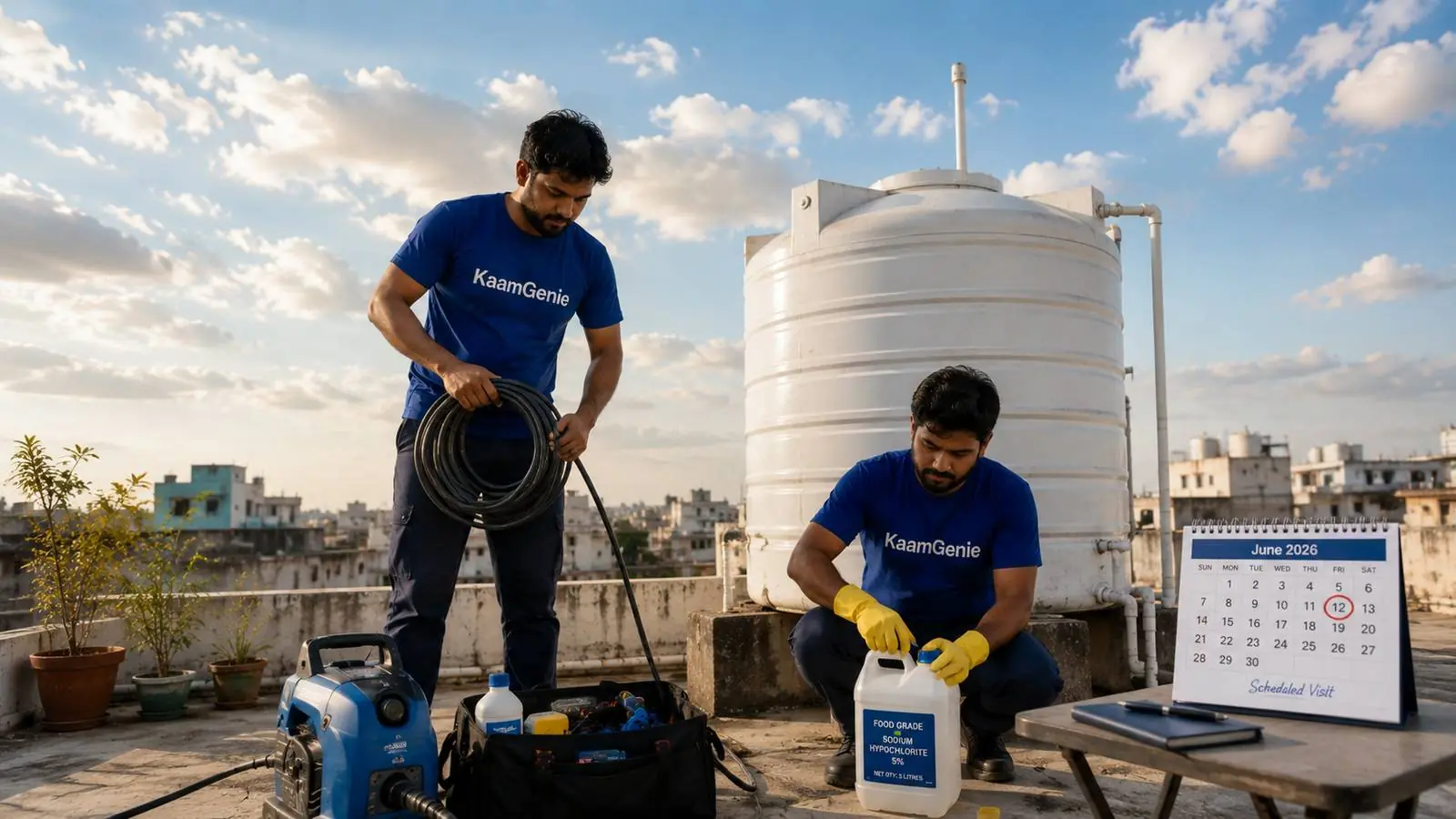
The short version
- Best single month: October — post-monsoon, pre-winter, ideal weather, full reset.
- Best twice-a-year pair: March-April (pre-summer) + October-November (post-monsoon).
- Worst months to book late: May (peak demand) and December 25-Jan 5 (holidays).
- Off-season discounts available: January, February, September — 10-15% common.
- Borewell water: bi-monthly regardless of season.
- FSSAI restaurants: quarterly, not seasonal — fixed cadence beats seasonal optimisation.
Why "when" matters as much as "how often"
Most advice on water tank cleaning treats time as a number — "every 6 months", "twice a year". That’s a fine starting point. But the actual hygiene outcome depends not just on the frequency but on whether the cleaning falls in the right window relative to monsoon dust, summer bacterial growth, and your household’s water demand pattern.
A tank cleaned in February and August looks identical on a spreadsheet to one cleaned in April and October. In practice, the second schedule produces measurably better water quality because it brackets the two seasons where tank water deteriorates fastest. Picking the right months is free; picking the wrong ones costs you nothing extra but quietly undermines the cleaning’s value.
This article walks through the Delhi year, month by month, with the honest reasoning behind why some months are great booking windows and others are best avoided.
The Delhi water-tank year — visual overview
Monthly tank-condition risk in Delhi — relative score
Higher = more contamination risk if left uncleaned through that month
The risk score combines bacterial growth rate (temperature-driven), monsoon dust deposition, and DJB/borewell water quality typical for that month. Pre-summer + post-monsoon cleanings target the two biggest peaks.
The curve has two peaks: one in May-July (heat-driven bacterial activity plus pre-monsoon dust) and another in late July-August (active monsoon). The two natural cleaning windows are immediately before the first peak (March-April) and immediately after the second peak (October-November). Most other months are either quiet or transitional.
Month by month — what’s happening in your tank
| Month | What’s happening | Book? |
|---|---|---|
| January | Cold, low water use, slow bacterial growth. Tanks stable. | Yes — off-season pricing |
| February | Still cold-ish, demand quiet, scheduling easy. | Yes — pre-March prep |
| March | Temperature climbs; tanks start warming up. Bacterial activity resumes. | Yes — ideal pre-summer |
| April | Peak pre-summer demand begins; book early. Last clean window before heat. | Yes — book early-mid April |
| May | Peak summer. High water use, tank turnover fast, bacterial activity maximum. Demand for cleaning is highest of the year. | Only if overdue; expect waits |
| June | Heat continues; pre-monsoon dust starts settling on rooftops. | Possible, but October better |
| July | Monsoon active. Rain disrupts cleaning logistics; dust deposits via rain spatter. | Avoid unless emergency |
| August | Monsoon continues. Humidity inside tank highest of year. | Avoid unless emergency |
| September | Monsoon tail. Cleaner becomes possible again. Demand quiet. | Yes — off-season pricing |
| October | Best single month. Post-monsoon reset, ideal weather, full tank deep-clean. | Yes — the gold standard |
| November | Post-Diwali air quality drop deposits soot/dust on tank lids. Cleaning still ideal. | Yes — post-Diwali clean |
| December | Quiet, cold, low water use. Holiday week (25 Dec-5 Jan) has limited crew availability. | Yes, avoid last week |
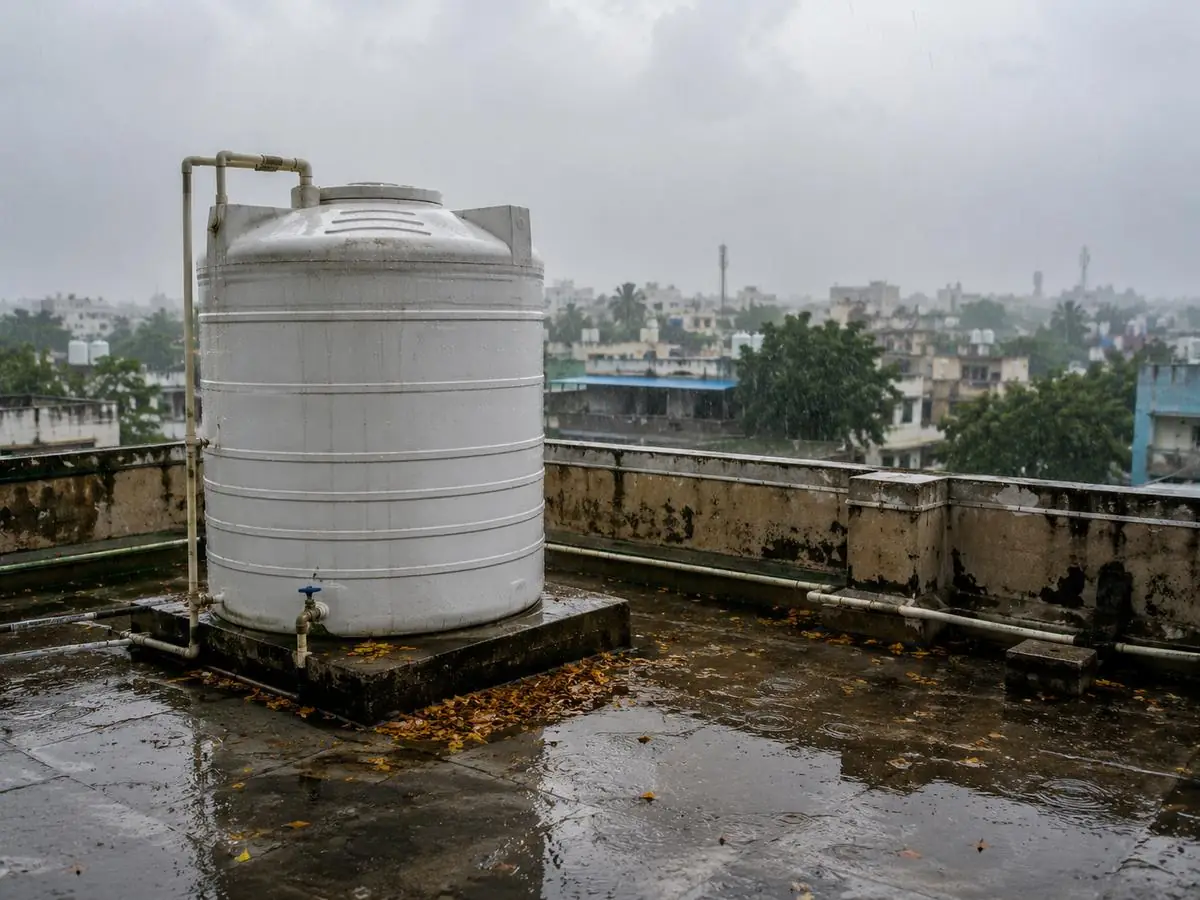
Book ahead for October — the best slot fills fast
October bookings open by late August. Lock in your preferred date and crew — we’ll confirm by SMS + WhatsApp.
The three ideal annual patterns
Depending on your tank type, water source, and household, one of these three patterns will fit you. Pick the one that matches and the timing question is solved for the year.
| Household type | Recommended schedule | Reasoning |
|---|---|---|
| Standard family, DJB water, overhead tank | March/April + October | Two cleanings, brackets the two annual risk peaks |
| Family with infants or elderly | March + July + November | Three cleanings, extra mid-year visit during monsoon-tail |
| Borewell water household | Bi-monthly (6× per year) | Mineral load + scale-buildup requires more frequent intervention regardless of season |
| Sump + overhead combo | Sump: March + October; Overhead: March + July + October | Sump less exposed to dust, can stretch; overhead more exposed |
| Society shared tank | Quarterly (annual contract): Jan/Apr/Jul/Oct | RWA contracts work best on fixed quarterly cadence regardless of season |
| Restaurant / FSSAI premises | Quarterly minimum, fixed cadence | FSSAI compliance trumps seasonal optimisation; documentation must be consistent |
| Vacant / second home | October only (with refill rinse before use) | Low water turnover; one annual deep clean + a rinse before any extended stay |
Why pre-summer (March-April) matters more than people think
The pre-summer cleaning is the most commonly skipped one because the weather still feels manageable and people defer until they actually notice issues. By then, the issues have already affected the family’s water for weeks.
Three things happen in a Delhi water tank between March and June:
- Temperature inside the tank rises sharply. Outdoor temperature goes from ~25°C to 40°C+. Tank water follows, especially in plastic and uninsulated tanks.
- Bacterial growth rates double. Below 20°C, most waterborne bacteria reproduce slowly. Above 30°C, growth accelerates exponentially. A March cleaning resets the baseline before the rate climbs.
- Water turnover increases. Higher use means the tank refills more often — more chlorinated water comes in, but also more sediment and any inlet-pipe contamination cycles through faster.
A clean tank starting summer is a different starting point than a tank that’s been quietly accumulating bio-film all winter. By August, both will need work — but the family drinking from the cleaner one has had three months of better water in between.
Why post-monsoon (October-November) is the single best window
If you can only clean once a year, do it in October. The reasoning:
- Monsoon contamination has accumulated. The four-month period from June to September deposits dust, leaves, and humidity-driven mould on tank lids and surroundings. Some of this gets inside.
- DJB water quality recovers post-monsoon. Municipal water gets cleaner in October as monsoon turbidity drops out of the source water. A clean tank during this window means cleaner refill water for the months ahead.
- The weather is ideal for the work itself. Cleaning crews work faster, chemicals act at optimum temperature, drying is quicker.
- It sets up winter and pre-summer. A thorough October cleaning means the tank is clean baseline through January-February, and the March pre-summer cleaning has less to fight.
If you missed your March-April window, the October cleaning is the recovery option. If you do both, you’ve covered the year well.
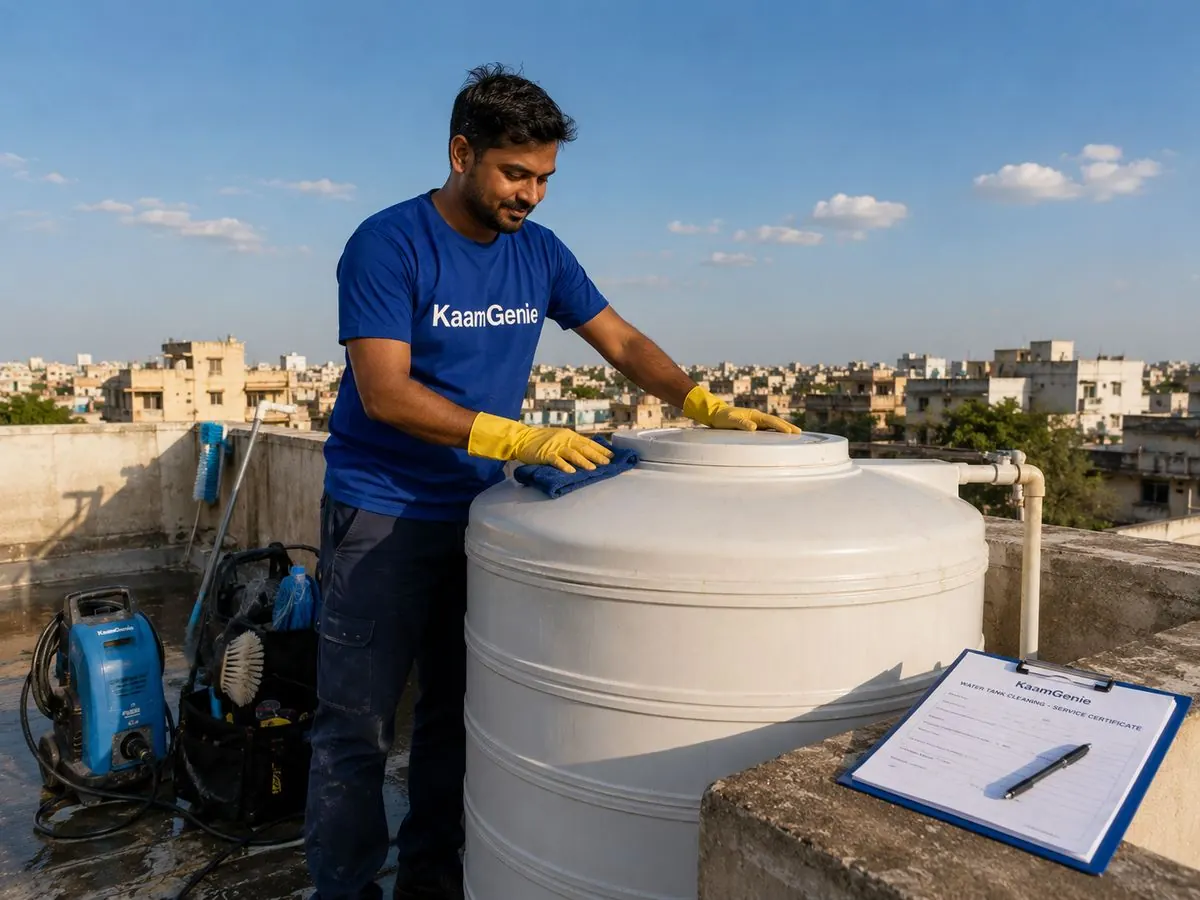
Off-season cleaning — January & September discounts
Quiet months get 10-15% off our standard pricing. Book early in the month for the best slot.
What the seasonal data doesn’t change
A few things stay constant across the year, regardless of the calendar:
- Food-grade chemicals are mandatory in every season. Cold or warm, the disinfectant must be the right product. Don’t let any provider tell you cold months don’t need the same chemicals.
- A dated cleaning record every visit. For RWAs, FSSAI premises, and your own future records.
- Before/after photos. Visual evidence stays useful across seasons.
- Police-verified crew. Off-season demand drops sometimes attract casual labour into the market — stick with verified crew year-round.
- Honest pricing. Off-season discounts are real, but anything that looks much cheaper than the season’s standard fair rate is still suspicious.
Diwali, holidays, and other Delhi-specific timing notes
- Pre-Diwali demand bump (mid-October to early November): bookings spike as households do general cleaning. Book before Navratri to avoid waits.
- Post-Diwali air quality: after the fireworks period, tank lids accumulate fine soot/particulate matter. A follow-up clean 7-10 days after Diwali is genuinely useful, not just commercial.
- Christmas-New Year week (25 Dec to 5 Jan): reduced crew availability; book early-December if you need this window.
- Holi (March): water demand spikes for 2-3 days; some neighbourhoods have temporary supply pressure changes. Schedule your March cleaning either before Holi or 1 week after.
- Wedding season (November-February): if your household is hosting a wedding, schedule the cleaning 7-10 days before the event so the tank water is settled and certificate is in hand.
- School summer vacation (May-June): demand pattern for summer cleaning is partly driven by parents being at home and more aware of tank conditions; if you’re away on vacation in May, a pre-departure cleaning is the cleanest setup.
How to actually plan a year
If you’re reading this in January wondering when to book the first cleaning of 2026, here’s the practical playbook:
- Now (any quiet month): Decide your pattern from the table above. Single, two, or three cleanings? Note the months.
- Two weeks before each scheduled month: Call or WhatsApp the cleaner to book your preferred date and crew. Confirm pricing, time slot, and what’s included.
- On the day: Be available for 90-120 minutes. Be present for the start (verify crew ID, watch the inspection), and at the end (sign the certificate, receive photos).
- After: File certificate digitally and physically. Calendar reminder for the next scheduled month.
- Annual review (in December or January): Did this year’s schedule work? Adjust for next year — maybe add a third visit if you noticed issues mid-year.
If you want us to schedule the whole year for you — with calendar reminders, automatic confirmations, and the same crew across visits — an annual contract handles that. Otherwise, you can schedule a water tank cleaning for each visit individually at +91 95603 66362 or via the booking form. Either way, the calendar above is the right thing to point at.
Frequently asked questions
What’s the best month to clean a water tank in Delhi?
October-November is the single best window — post-monsoon, before winter — for an annual deep clean. For households on a twice-yearly schedule, March-April (pre-summer) and October-November (post-monsoon) is the ideal pair.
Should I clean my water tank before or after the monsoon?
Both is ideal, but if you can only do one — pick AFTER the monsoon. Pre-monsoon cleaning (June) helps but the monsoon brings new contamination via dust, leaves, and humidity. A post-monsoon cleaning (October-early November) removes what built up during the rains and sets the tank up for clean winter water.
Is it safe to clean a water tank in winter in Delhi?
Yes, but with caveats. Cleaning in December-January is fine for the cleaning itself, but the refill water in winter is colder, which slightly slows disinfectant action. Most professional crews adjust the chemical contact time accordingly. Avoid the coldest 2-3 days if possible, but otherwise winter cleaning works fine.
Why is March-April the peak booking season for tank cleaning in Delhi?
Two reasons. First, household water use ramps up sharply as summer starts — people notice the tank, smell any issues, and book. Second, professional cleaners actively recommend pre-summer cleaning because bacterial growth accelerates in warm water. Book by mid-February to get your preferred slot.
Does the rainy season affect water tank cleanliness?
Yes, significantly. Monsoon brings increased dust deposits, leaves and debris on the rooftop near tank lids, higher humidity inside the tank, and sometimes municipal water quality dips because DJB sources get more turbid. A post-monsoon clean (October-November) is one of the most useful annual cleanings.
Should I clean my tank in May during peak Delhi summer?
Only if it’s overdue — May is a tough month to schedule because demand is at its peak and your tank is being used heavily. Better to clean by mid-April. If May is the only option, expect a 1-2 week wait for a quality service and book early in the day to avoid the heat.
How does borewell water vs DJB water change the seasonal schedule?
Borewell water carries higher mineral load year-round, so cleaning frequency should be bi-monthly regardless of season. DJB water quality varies by season — generally cleaner in winter, more turbid in summer and monsoon — so quarterly cleaning aligned with seasons works better for DJB-fed tanks.
Is there a wrong month to clean my water tank?
Not really — any cleaning is better than a postponed one. The ‘worst’ months by booking pressure are May (peak summer demand) and June (last-minute pre-monsoon). The ‘best value’ months are January, February, September, and November when crews have availability and your scheduling is easiest.
How does Diwali affect tank cleaning bookings in Delhi?
Diwali brings two bumps in demand — pre-Diwali cleaning (mid-October to early-November, household preparation) and post-Diwali air quality concerns where soot and pollution increase rooftop deposits near tank lids. The first is anticipatable; the second is genuinely useful as a follow-up clean.
What’s the ideal annual schedule for a Delhi household?
Twice a year — once in March-April (pre-summer) and once in October-November (post-monsoon). Add a third visit in July if you’re on borewell water or notice issues. For families with infants or elderly, three times a year (March, July, November) is a comfortable cadence.
Can I clean my water tank during the monsoon itself?
Possible but not ideal. Rain interrupts the work, the tank gets dust deposited on the lid during the refill if it rains during cleaning, and the disinfectant rinse runoff is harder to manage. Most professional cleaners schedule fewer jobs in July-August because of these issues. Wait until September if you can.
Are there discounts for off-season tank cleaning bookings?
Yes — January, February, and September are typically lower-demand months, and many service providers (including us during certain periods) offer 10-15% off these months to fill schedules. Annual contracts effectively give the off-season discount year-round.
Sources & references
- Delhi Jal Board (DJB) — municipal water supply authority; their seasonal water quality reports inform when DJB-fed tanks benefit most from cleaning.
- Central Ground Water Board (CGWB) — borewell water quality data for Delhi NCR; helps explain why bi-monthly cleaning is recommended for borewell households.
- Bureau of Indian Standards (BIS) — IS 10500:2012 drinking water quality parameters that informed cleaning timing benefits.
- Food Safety and Standards Authority of India (FSSAI) — cleaning cadence requirements for food businesses that override seasonal optimisation.
- WHO Drinking Water Fact Sheet — framework on temperature-bacterial growth relationships that informs why pre-summer cleaning matters.
Last verified: 1 June 2026. If you find any of these links broken, please let us know.