
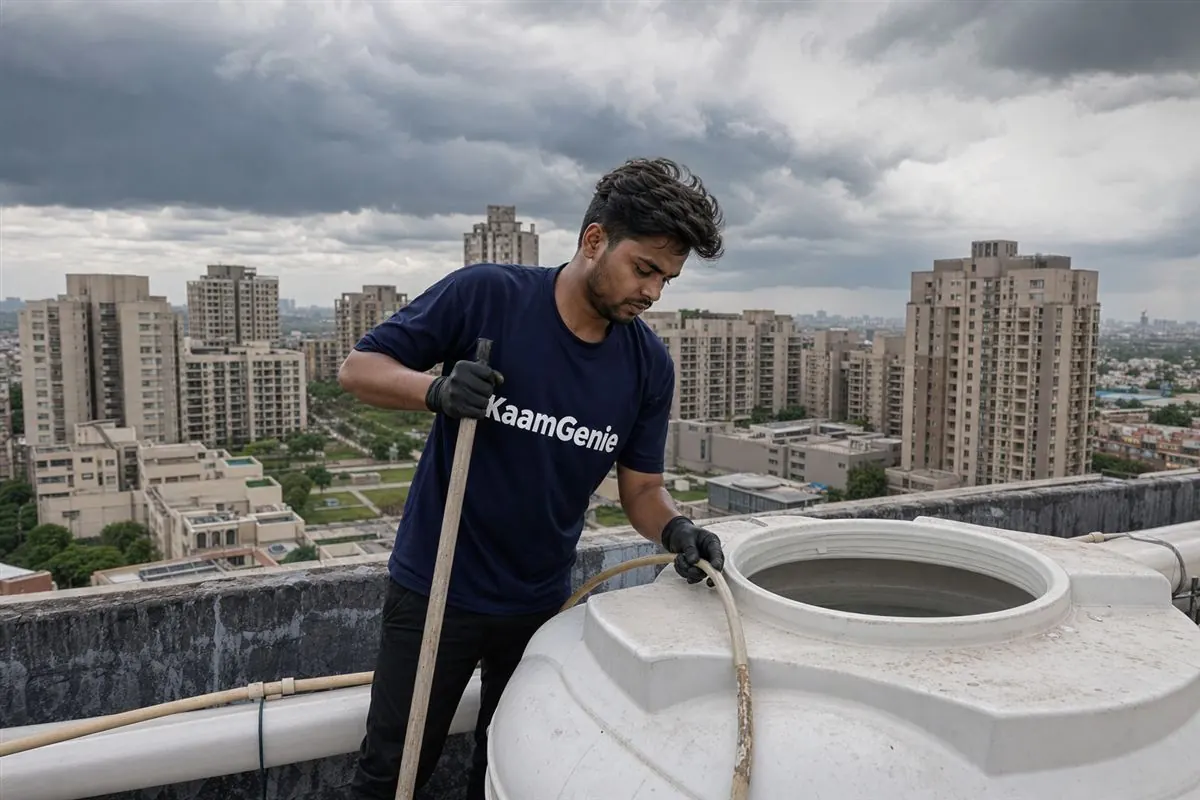
The short version — best windows in Noida
- The #1 window: late May – mid June (pre-monsoon). Clears concentrated summer scale and disinfects the tank just before the humid, bacteria-friendly monsoon.
- The #2 window: late September – October (post-monsoon + festival prep). Flushes out any rain-driven contamination and gets the tank Diwali-ready.
- Peak summer (Apr – Jun) is when scale builds fastest — high water draw plus evaporation concentrating Noida’s hard minerals.
- Monsoon (Jul – Sep) is the highest contamination risk — runoff, overflow and humidity. Go in with a freshly cleaned tank, not a dirty one.
- Winter (Dec – Feb) is low-priority but fine for a catch-up clean — low demand means water stagnates.
- Hard-borewell sectors feel summer scale harder than treated Ganga-supply sectors, so they lean even more on the pre-monsoon clean.
This guide is about when in the year to clean. For how many times a year you should clean, see our separate how often to clean a water tank in Noida guide.
| Months | Season in Noida | What’s happening in the tank | Cleaning priority |
|---|---|---|---|
| Jan – Feb | Cold winter | Low demand; water sits and stagnates, sediment settles | Low — catch-up only |
| Mar | Early heat | Demand starting to climb; scale beginning to form | Optional |
| Apr – mid May | Peak summer building | Heavy draw + evaporation concentrate scale and sediment fast | Good |
| Late May – mid Jun | Pre-monsoon | Maximum summer gunk; humidity about to spike bacteria | Best — #1 window |
| Jul – Sep | Monsoon | Runoff, overflow backflow and humidity = highest contamination risk | Avoid scheduling — clean before, check after |
| Late Sep – Oct | Post-monsoon + festivals | Rain-season residue to flush; guest demand rising for Diwali | Best — #2 window |
| Nov | Post-festival | Demand easing; tank should still be clean from October | Low |
| Dec | Onset of winter | Demand falls; longer standing time begins | Low — catch-up only |
Book your pre-monsoon clean now
Late May to June books out fast across Noida. Lock your slot before the rains — before/after photos, food-grade disinfection, fixed price. ₹699 onwards.
Peak summer (April – June): when scale builds fastest
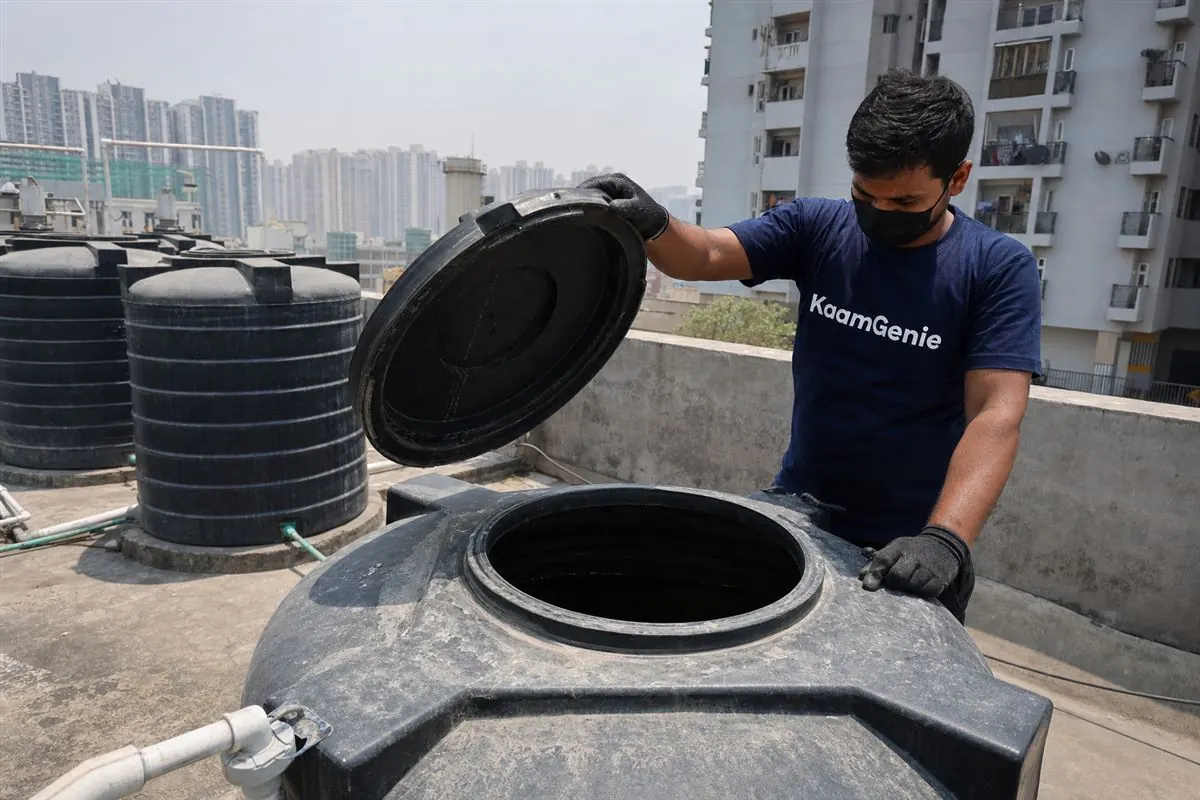
Noida summers do two things to your tank at once, and both make it dirtier fast. First, demand jumps. Through April, May and June every household draws far more water — more bathing, more cooling, more washing — so the tank refills again and again. On Noida’s hard borewell and groundwater supply, every one of those refills carries in fresh sediment and dissolved minerals. More fills, more deposit.
Second, the rooftop bakes. An overhead tank sitting in 44°C surface heat loses water to evaporation and runs warm all day. As water evaporates, the calcium and iron left behind become more concentrated and drop out as scale onto the walls and floor. Warm water also encourages bacterial growth in a way cold winter water doesn’t. The result is the classic Noida summer tank: a hard mineral crust on the walls and a layer of rust-tinged sediment on the floor that wasn’t there in March. (For why that hard-water scale forms so aggressively here, see our dedicated piece on hard-water tank cleaning in Noida.)
This is why peak summer is a genuinely good time to clean — but it’s also why the very end of summer, just before the monsoon, is even better.
The pre-monsoon clean (late May – June): the most important one of the year
If you clean your tank only once a year in Noida, do it in the pre-monsoon window. Here’s the logic, and it’s purely about timing.
By late May, your tank is holding a full season’s worth of concentrated summer scale and sediment — the worst it gets all year. At the very same moment, the monsoon is about to arrive, bringing weeks of warmth and high humidity. Those are exactly the conditions in which any bacteria sitting in that summer residue multiply fastest. If you go into the monsoon with a dirty tank, you’re effectively incubating it.
Clean in late May or June and you flip that around: you strip out the built-up gunk and leave a freshly disinfected surface right before the highest-risk weeks of the year. The tank enters the monsoon clean, sealed and protected, instead of crusted and vulnerable. That single piece of timing is the difference a calendar makes. It’s also why we get booked solid across the Sector 137 high-rise belt and the newer Sector 150 towers from mid-May — everyone wants the slot before the first rain.
Monsoon (July – September): the highest contamination risk — clean before, not during
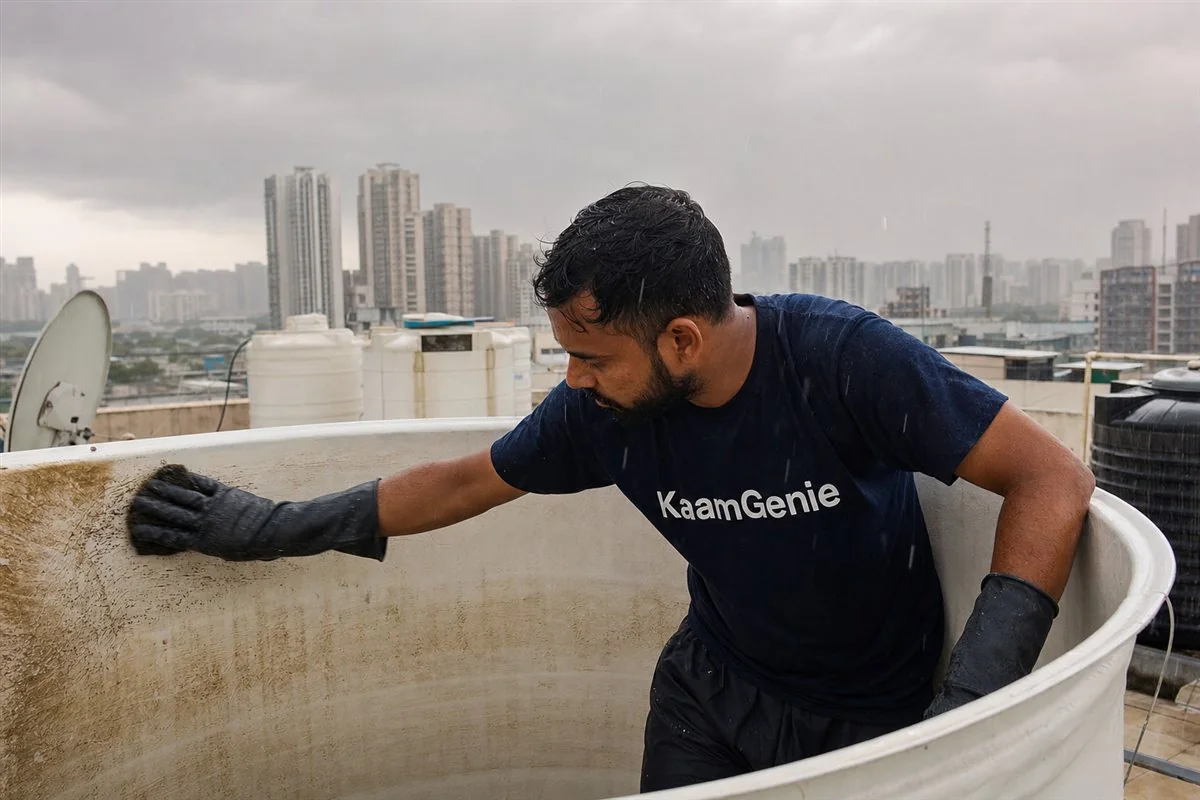
The monsoon is the riskiest stretch of the year for tank contamination, and it’s worth being clear about why. Three things happen at once:
- Rooftop runoff. Rain washes dust, bird droppings and leaf litter across the roof slab toward the tank. Any gap around the lid or inlet is a route in.
- Overflow and backflow. Heavy rain and erratic pumping cause tanks to overflow; a poorly fitted overflow pipe can draw standing rooftop water back in.
- Humidity. Warm, damp air keeps the inside of the tank and the underside of the lid permanently moist — ideal for biofilm.
The practical takeaway: the monsoon is not the time to schedule your main clean. You don’t want the tank drained and opened up while it’s pouring, and a clean done mid-monsoon gets re-contaminated within days if the lid isn’t sealed. Instead, go in with the pre-monsoon clean already done, make sure the lid and overflow are sound, and plan a quick check once the rains ease. If your water turns cloudy or develops a smell during the monsoon, that’s a warning sign worth acting on rather than waiting out.
Post-monsoon (late September – October): the check that doubles as festival prep
Once the rains taper off in late September, open the tank and look. This is the post-monsoon check, and it’s the second key window of the Noida year. You’re looking for anything the rains pushed in: grit or leaf debris near the lid, cloudiness, a musty smell, or fresh sediment on the floor. If you see any of it, clean. If the tank genuinely looks clean and your pre-monsoon job held up, an inspection may be enough — but in practice most Noida rooftops collect something over three months of rain.
The bonus is that this window lines up perfectly with the festival season. A late-September or October clean gets the tank ready for Diwali, when guest numbers and water draw both spike and you want drinking and cooking water visibly clean for visitors. One visit, two jobs done: clear the monsoon’s leftovers and get festival-ready. Across older sectors like Sector 78 we see a clear October rush for exactly this reason.
Relative tank-cleaning urgency through the Noida year
Two clear peaks — pre-monsoon and post-monsoon — driven by the city’s climate, not the calendar date
Illustrative urgency, not a measured index — the shape is what matters. Two peaks: the pre-monsoon clean (late May–June) and the post-monsoon/festival clean (late September–October). How many of these windows you actually use depends on your water source and usage; see the frequency guide for that.
Winter (December – February): low priority, but not a free pass
Winter is the quietest season for tank cleaning in Noida, and that’s mostly fair — demand falls, scale builds slowly in cool water, and there’s no monsoon risk. But “low priority” isn’t the same as “skip it.” The catch in winter is the opposite of summer: with low demand, water sits in the tank far longer between refills. Stagnant water resting on leftover summer sediment can still grow biofilm and develop a stale, flat taste even when it’s cold.
So winter has two honest uses. First, it’s the ideal time for a catch-up clean if you missed your pre-monsoon slot — the cool weather makes the work comfortable and the tank is overdue. Second, it’s a sensible time for a small building or society to schedule a clean if the autumn was too busy. It simply isn’t a priority window the way the two monsoon-edge windows are.
Ganga-supply sectors vs hard-borewell sectors
One Noida-specific nuance: your water source shifts how hard these windows hit, even though it doesn’t change the calendar. Sectors served by treated Ganga water through the Noida Authority Jal Vibhag get softer, lower-mineral supply, so summer scale builds more slowly and the tank stays cleaner between cleans. Sectors and societies running on hard borewell and groundwater — common in newer pockets and across Greater Noida West — see scale form aggressively through the summer.
The implication is simple. Hard-borewell homes should treat the pre-monsoon clean as non-negotiable, and many add a clean during peak summer itself because the scale gets ahead of them otherwise. Ganga-supply homes can often manage on the two main windows alone — but they should not skip them, because the monsoon contamination risk is the same regardless of how soft your incoming water is. The seasons don’t care what your supply line is. For the full source-by-source picture, our water tank cleaning guide for Noida covers how supply type shapes everything else.
Not sure which window your tank needs?
Tell us your sector and water source — we’ll suggest the right cleaning months and book you in. Residential ₹699 onwards; society/UGR custom-quoted.
Book the right window for your tank in Noida
Timing isn’t a detail — in Noida it’s most of the value. A clean done in late May protects your tank through the worst of the year; the same clean done in November mostly just sits there until summer undoes it. Get the pre-monsoon and post-monsoon windows on your calendar and your water stays right through the seasons that actually stress it. Start at our water tank cleaning in Noida hub for sector coverage and booking, and if you’re still unsure how many cleans a year you need, read the companion how often to clean a water tank in Noida guide first.
To book, call +91 95603 66362 or use the booking form on this site — we’ll confirm shortly.
Frequently asked questions
When is the best time of year to clean a water tank in Noida?
The single best window is late May to mid-June — the pre-monsoon clean. It clears the heavy scale and sediment that summer evaporation concentrates, and it disinfects the tank just before the humid monsoon weeks when bacteria multiply fastest. A second strong window is late September to October, right after the monsoon and just before Diwali, so you flush out any rain-driven contamination and start the festival season with a clean tank.
Should I clean my water tank before or during the monsoon in Noida?
Before. Clean in late May or June, ahead of the rains. The monsoon itself is the riskiest period for contamination — rooftop runoff, a loose lid, overflow backflow and high humidity all push dirt and bacteria into the tank — so you want the tank freshly disinfected going into it, not torn open mid-monsoon. Then do a quick post-monsoon check in late September to confirm nothing got in.
Does the summer heat in Noida really make tank water dirtier?
Yes. Through April to June, families draw far more water and tanks refill constantly, which carries in more sediment from Noida’s hard borewell supply. At the same time, fierce surface heat on rooftop tanks speeds evaporation and warms the water, so dissolved calcium and iron drop out as scale faster and the warm water encourages bacterial growth. Summer is when a neglected Noida tank goes from slightly scaled to visibly crusty.
Why is the pre-monsoon clean the most important one of the year?
Because of timing. By late spring the tank holds a full season of concentrated summer scale and sediment, and the monsoon’s warmth and humidity are about to make any bacteria in that residue multiply quickly. Cleaning in late May or June removes the built-up gunk and leaves a freshly disinfected surface right before the highest-risk weeks of the year. Skipping it means the monsoon hits a dirty tank.
Is it worth cleaning the tank again after the monsoon?
A full clean isn’t always needed, but a post-monsoon check in late September or early October is genuinely worth it in Noida. Heavy rain can blow grit and leaf litter onto rooftop lids, overflow events can draw outside water back in, and any lid gap lets contamination through. Open the tank, inspect, and clean if you see sediment, cloudiness or smell. It also doubles as your pre-Diwali clean before guests arrive.
Should I clean my water tank before Diwali or a big family gathering?
Yes — a clean in the week or two before Diwali is one of the most practical times of the year. Guest numbers spike, water draw rises sharply, and you want drinking and cooking water to be visibly clean for visitors. Because it falls right after the monsoon, a late-September to October clean does double duty: it clears any rain-season contamination and gets the tank festival-ready in one visit.
Can I skip tank cleaning in winter because demand is low?
Don’t assume winter is a free pass. Low demand means water sits longer in the tank, and stagnant water with leftover sediment can still grow biofilm and develop a stale taste even when it’s cold. Winter (December to February) is a fine time for a catch-up clean if you missed your pre-monsoon slot, and the cooler weather makes the work comfortable. It just isn’t a priority window the way pre-monsoon and post-monsoon are.
Does the best cleaning time differ for Ganga-supply sectors versus hard-borewell sectors in Noida?
The calendar is the same — pre-monsoon and post-monsoon remain the key windows for everyone — but hard-borewell sectors feel summer scale far more sharply, so the pre-monsoon clean matters even more there and many such homes add a clean during peak summer. Sectors on treated Ganga supply via the Noida Authority Jal Vibhag scale more slowly, but they still face the same monsoon contamination risk, so they should not skip the seasonal windows either.
How is the best time to clean different from how often I should clean?
They answer two different questions. How often is about frequency — how many cleans per year your tank needs based on water hardness and usage. Best time is about where in the calendar those cleans should land so they line up with Noida’s climate stress points — pre-monsoon, post-monsoon and festival prep. For the frequency question, see our separate guide on how often to clean a water tank in Noida; this article is purely about timing.
Sources & references
- Bureau of Indian Standards (BIS) — IS 10500:2012 is the canonical Indian Standard for drinking water specification, defining acceptable limits for physical, chemical, and biological parameters.
- WHO Guidelines for Drinking-water Quality, 4th edition — the global reference for water quality standards, including guidance on storage and disinfection.
- Food Safety and Standards Authority of India (FSSAI) — defines water quality requirements for food businesses, including hygiene standards for stored water and acceptable disinfection chemicals.
- WHO Fact Sheet on Drinking Water — overview of safe drinking water requirements and contamination risks.
- CPHEEO — Manual on Water Supply and Treatment — the Government of India’s engineering manual covering tank design, cleaning protocols, and disinfection practices.
Last verified: 27 June 2026. If you find any of these links broken, please let us know.