
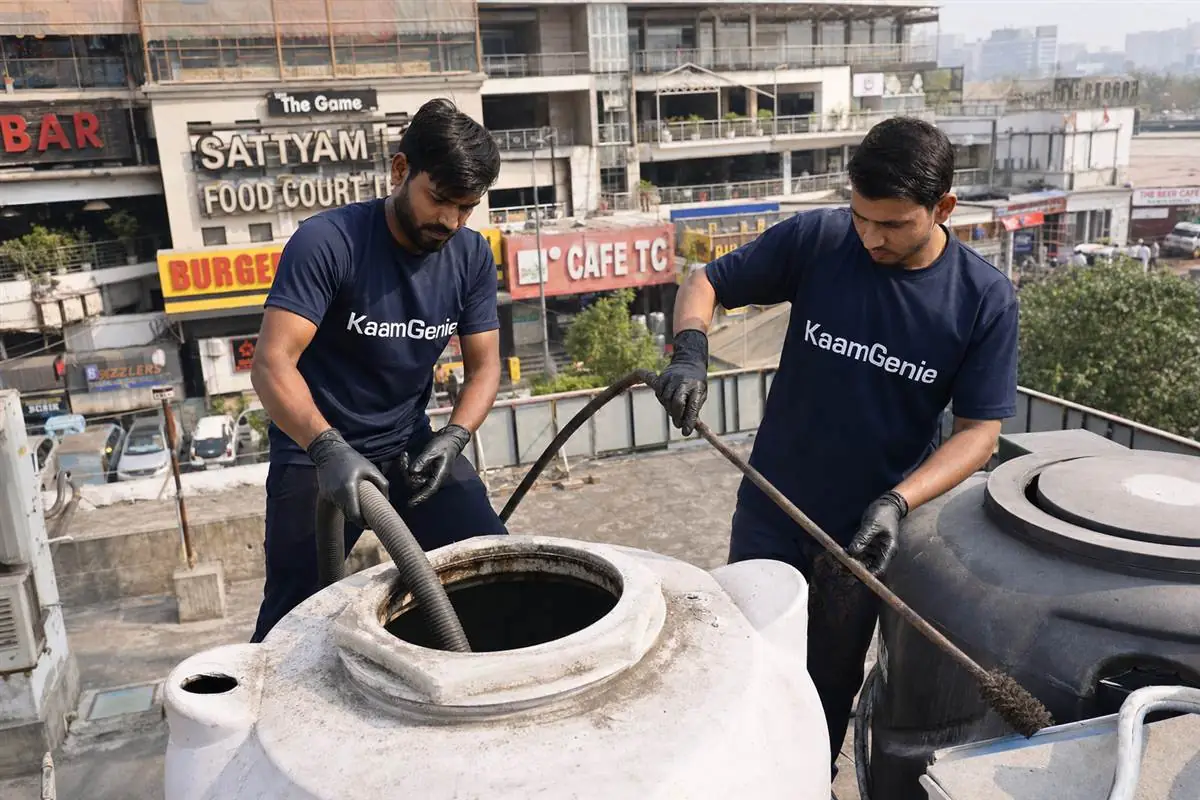
The short version for F&B owners
- Stored water is a food input. FSSAI requires water used for cooking, washing and ice to be potable — so your tank is in scope of a food-safety audit.
- The deliverable is a record, not just a clean. An audit wants a dated certificate, food-grade disinfectant named by spec, and before/after photos.
- Kitchens differ from homes. Higher turnover, grease and fumes nearby, usually a rooftop tank plus an underground sump — both must be cleaned.
- Clean more often than a home. Quarterly is the F&B baseline; high-volume cloud-kitchen clusters often go monthly.
- Failing a water check is expensive. Non-conformity, lower hygiene rating, re-inspection, even licence suspension — far costlier than a scheduled clean.
- Commercial is custom-quoted. Residential single-tank from ₹699 onwards; restaurant/café/cloud-kitchen jobs are priced per tank after a quick survey.
If your kitchen can’t produce a dated tank-cleaning certificate today, you have a compliance gap an auditor can find.
Why FSSAI cares about your water tank
Most owners think of the food licence as being about the kitchen, the cold storage and the staff hygiene. It is — but it’s also about the water, because in a food business water is rarely “just” water. It washes raw vegetables and utensils, it makes the ice that goes into drinks, it’s the base of every gravy, soup, dal and beverage. The FSSAI framework therefore requires that water used in a food business be potable and fit for human consumption. The moment water passes through your storage tank before reaching the kitchen, that tank becomes part of the food-safety chain.
This is the bit operators miss: a tank can deliver perfectly safe municipal water and still fail you, because the contamination happens inside the tank — sediment, iron scale, algae and biofilm that build up between cleans. An inspector or a third-party auditor isn’t assuming your supply is dirty; they’re asking whether you can show the storage is maintained. That’s why the single most useful thing a Noida food business can hold is a dated cleaning certificate with photos. Our broader water tank cleaning in Noida service is built around producing exactly that record for commercial clients.
Noida’s food belts all run on stored water
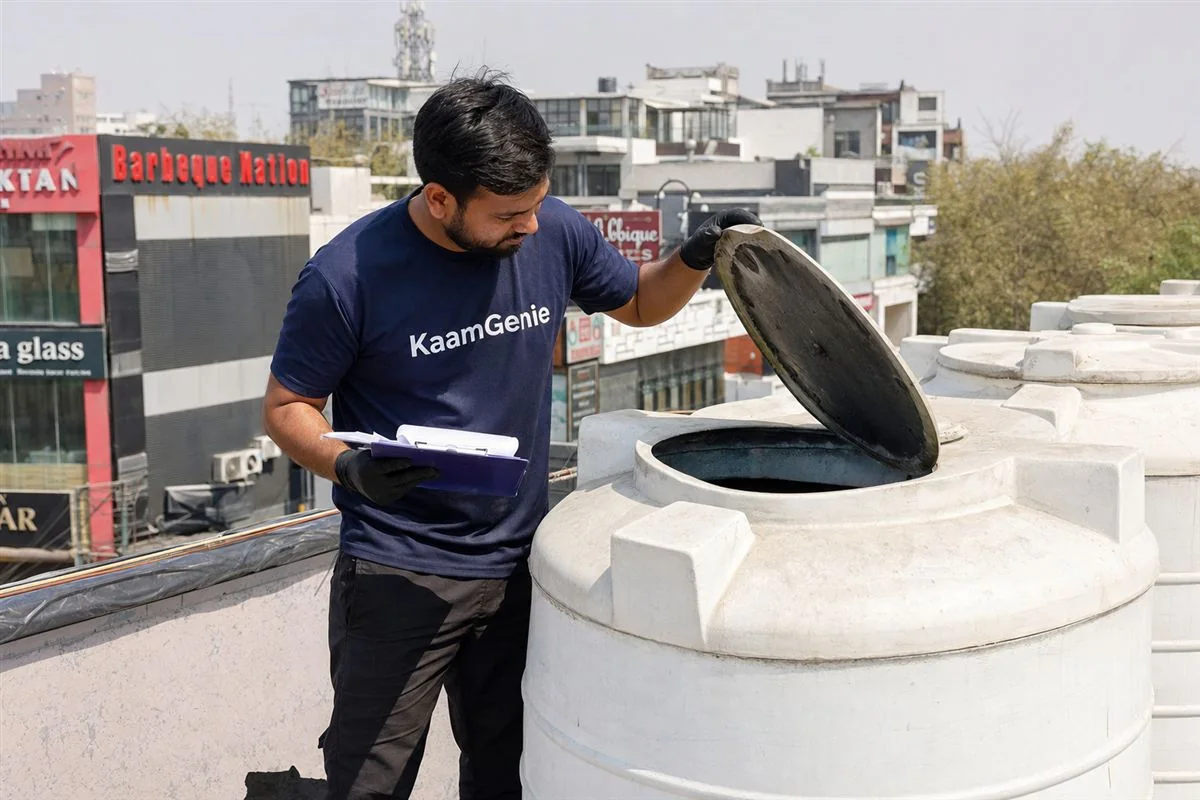
Noida’s food economy is unusually dense, and almost none of it runs on direct mains pressure into the kitchen tap. It runs on stored water:
- Sector 18 market. A packed grid of restaurants, QSR outlets and food courts, many in multi-tenant buildings sharing rooftop tanks and basement sumps. We cover this belt from our Sector 18 water tank cleaning area.
- Sector 62 & the IT corridor. Office cafeterias, cafés and tiffin kitchens feeding the working population — high daytime turnover, tanks that never sit still. See Sector 62 water tank cleaning.
- Film City & the media cluster. Studio canteens, caterers and cafés running long shifts, where a single water issue affects a lot of meals at once.
- Cloud-kitchen clusters. The fastest-growing category — multiple delivery-only brands sharing one building, one set of tanks, and one shared compliance risk if those tanks aren’t maintained.
The common thread: incoming supply lands in a tank, sits there, and only then reaches the kitchen. Whatever is growing in that tank goes into the food. That is precisely the link FSSAI’s potable-water requirement is designed to close.
Why a commercial kitchen tank isn’t a home tank
People assume cleaning a restaurant tank is the same job as a home overhead tank, just bigger. It isn’t — the risk profile is genuinely different, which is why commercial work is custom-quoted rather than charged at a flat home rate:
- Far higher turnover. A busy kitchen refills its tanks repeatedly through the day. Constant inflow stirs up settled sediment and keeps the tank in a state where biofilm establishes quickly.
- Grease, fumes and waste nearby. Rooftop tanks above kitchens sit in warm, greasy, fume-laden air; sumps sit near waste lines. Both environments seed microbial growth faster than a quiet residential roof.
- Two stages, not one. Most F&B premises run an underground sump (UGR) that receives the supply plus a rooftop overhead tank feeding the taps. A real clean covers both — cleaning only the rooftop tank leaves the source full of sludge. Our underground sump cleaning and overhead work are scoped together for kitchens.
- It has to be documented. A home clean just needs to be done. A kitchen clean has to be evidenced to a food-safety standard, with a certificate and photos an auditor can read.
If you want the underlying method, our water tank cleaning process walks through the full step-by-step that every commercial tank deserves.
| Deliverable | What it contains | Why an auditor wants it |
|---|---|---|
| Cleaning certificate | Date, tank ID, capacity, crew — one per tank | Proves the clean actually happened and when |
| Disinfectant by spec | Food-grade sodium hypochlorite named with concentration | Verifiable against acceptable potable-water chemicals |
| Before / after photos | Inside-tank images at start and finish | Visual evidence the tank was genuinely cleaned |
| Defined scope | Inspect, drain, de-sludge, scrub, jet-wash, vacuum, disinfect, certify | Shows a real process, not a rinse-and-run |
| Both stages covered | Underground sump and rooftop overhead tank | Confirms the source tank wasn’t skipped |
| Scheduled frequency | Quarterly (or monthly for high-volume kitchens) on a calendar | Demonstrates ongoing maintenance, not a one-off |
| Water-test option | Periodic test against BIS IS 10500 | Independent confirmation the water is potable |
Get an audit-ready clean for your kitchen
Sump plus rooftop tank, food-grade disinfectant by spec, and a dated certificate with before/after photos for your FSSAI file. Residential single-tank ₹699 onwards; commercial custom-quoted.
How often should an F&B tank be cleaned?
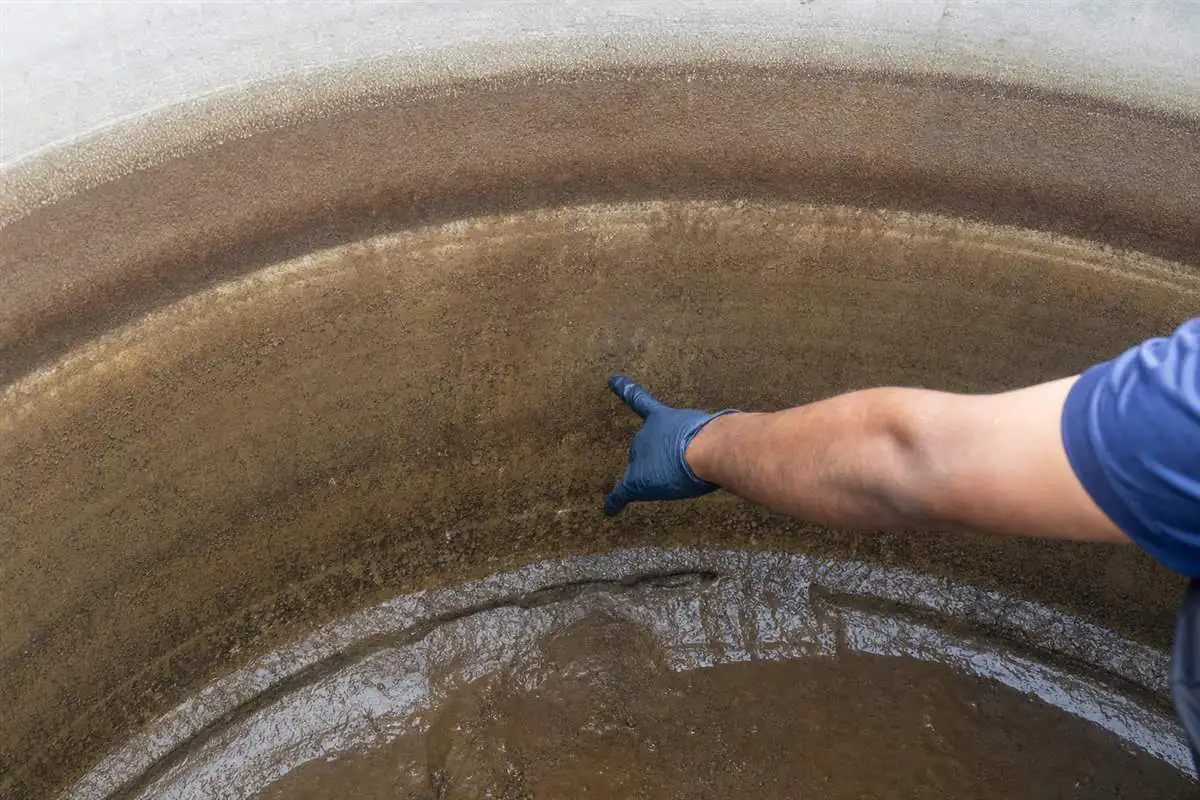
Frequency for a food business should be higher than for a home, and the reasons stack up. A kitchen draws and refills constantly, so the tank never settles clean. It sits in a warmer, greasier environment that favours microbial growth. And Noida’s borewell groundwater is genuinely hard — high in calcium and iron — so scale and rust-coloured sediment drop out of it faster than they would on soft municipal supply.
BIS IS 10500 and CPHEEO guidance treat cleaning stored drinking-water tanks at least twice a year as a floor — but that floor is for ordinary, low-turnover storage. A commercial kitchen is the opposite case. The practical standard we recommend for Noida F&B is quarterly, tightening to monthly or two-monthly for high-volume cloud-kitchen clusters and busy QSR outlets. If you want the full logic behind cleaning intervals, our how often to clean a water tank guide covers it in depth, and the residential side is set out in our water tank cleaning cost guide for Noida.
Recommended cleaning frequency by premises type
Food businesses sit well above the residential baseline — turnover and grease drive it
Illustrative cleaning cadence, not a regulatory schedule. The right interval depends on turnover, tank size, location and source-water hardness — a busy kitchen on hard borewell water should sit at the higher end. Ask for a frequency recommendation as part of your survey.
What happens if you fail a water check
The downside of a neglected tank isn’t hypothetical. During an FSSAI inspection or a third-party food-safety audit, dirty or undocumented stored water is recorded as a non-conformity. Depending on severity, the consequences range from a corrective-action notice and a lower hygiene rating, to a re-inspection, to — in serious cases — suspension of the food licence until the issue is fixed. None of that is good for a business that lives on footfall and delivery ratings.
And the regulator is only half the risk. The bigger exposure is a foodborne-illness incident traced back to contaminated water — the kind of event that closes a kitchen, triggers refunds and complaints, and damages a brand far faster than any fine. Against all of that, a scheduled clean is one of the cheapest line items a food business carries. That’s the calculus that turns tank cleaning from a chore into routine compliance. Our dedicated commercial & restaurant tank cleaning service exists precisely to keep that file complete, and shared-building operators often pair it with our society / RWA water tank cleaning programme.
How booking works for a Noida food business
We keep it simple and built around your service hours so the kitchen barely pauses:
- Quick survey. We confirm how many tanks you run — sump, rooftop, or both — their capacity and access, then give you a per-tank quote. Commercial work is custom-quoted; a single residential tank starts at ₹699 onwards.
- Scheduled around service. We clean early morning, on a weekly off, or between shifts, so water is out only for the clean-plus-refill window. Cloud-kitchen clusters are staged tank by tank so units keep running.
- Full documented clean. Inspect, drain, de-sludge, scrub, jet-wash, vacuum and disinfect with food-grade sodium hypochlorite by spec — both stages, every tank.
- Audit-ready certificate. You get a dated per-tank certificate with before/after photos and the disinfectant named, ready to drop into your FSSAI file.
- Put it on the calendar. We set a quarterly (or monthly) recurring schedule so you never have to remember it and never face an audit with a stale record.
We serve the whole Noida food belt and the wider NCR — restaurants and cafés across the Sector 18 market and the Sector 62 IT corridor, plus Film City and the cloud-kitchen clusters. If your premises sit on the Delhi side, our Delhi water tank cleaning service runs the same audit-ready process. To book, call +91 95603 66362 or use the booking form on this site — we’ll confirm shortly.
Keep your FSSAI file complete
Book a survey and we’ll quote per tank, clean both stages, and hand you a dated certificate with photos every quarter. Commercial custom-quoted; residential ₹699 onwards.
The compliance habit that protects your kitchen
The owners who never sweat an audit aren’t the ones who scramble to clean a tank the night before an inspector visits — they’re the ones who put tank cleaning on a fixed calendar and keep the certificates in a folder. It’s the same discipline you already apply to pest control and waste disposal: a scheduled, documented routine that quietly closes a risk. Stored water deserves exactly that treatment, because it’s the one food input that touches almost every dish you serve. Build the habit once, and the audit becomes a formality rather than a fire drill. To get started, browse our Noida water tank cleaning hub or call us to arrange a survey for your premises.
Frequently asked questions
Does FSSAI require restaurants to clean their water tanks?
Yes, in effect. The FSSAI food-safety framework requires that water used in a food business for cooking, washing, ice and as an ingredient be potable and fit for human consumption. Stored water is treated as a food-safety input, so a food-business operator must keep storage tanks clean and be able to show they are maintained. During an FSSAI inspection or a third-party food-safety audit, dirty or undocumented tanks are a finding. A dated cleaning certificate with before/after photos is the simplest way to demonstrate the tank was actually maintained.
How often should a Noida restaurant or cloud kitchen clean its water tank?
Quarterly is the sensible baseline for food businesses, and busy high-turnover kitchens often go monthly or two-monthly. A commercial kitchen draws far more water than a home and refills its tanks constantly, so sediment, biofilm and scale build up faster. Noida’s hard borewell groundwater accelerates this. BIS and CPHEEO guidance treats twice a year as a floor for ordinary stored drinking water, but a kitchen is not an ordinary case — treat quarterly as the default and tighten to monthly for high-volume cloud-kitchen clusters.
What documents does an FSSAI audit expect for stored water?
Auditors look for evidence that the water is potable and that the tank is maintained on a schedule. The practical deliverable is a tank-cleaning certificate stating the date, tank ID and capacity, the food-grade disinfectant used by name and concentration, the crew, and before/after photographs — plus a record of the cleaning frequency. Many businesses also keep a periodic water-test report against BIS IS 10500. Together these show the auditor the stored water is managed, not assumed.
How is a restaurant water tank different from a home tank?
A commercial kitchen tank has much higher turnover, so it refills constantly and never sits still long enough to settle clean. It often sits near grease, cooking fumes and waste, which seed biofilm faster. Most F&B premises also run two stages — a rooftop overhead tank plus an underground sump (UGR) — and both must be cleaned. And because the water becomes an ingredient, the cleaning has to be documented to a food-safety standard, not just done. That is why commercial cleaning is custom-quoted rather than a flat home rate.
What disinfectant do you use, and is it food-safe?
We disinfect with food-grade sodium hypochlorite dosed to a controlled concentration, then flush and confirm the tank is safe to refill for drinking and cooking use. The certificate names the chemical and concentration so an FSSAI inspector or auditor can verify it against acceptable specifications — not a vague “bleach was used”. We never use industrial cleaners that are not approved for potable-water contact.
What happens if a food-safety inspection finds dirty stored water?
It becomes an audit non-conformity. Depending on severity it can mean a corrective-action notice, a lower hygiene rating, a re-inspection, or in serious cases suspension of the food licence until fixed. Beyond the regulator, contaminated stored water risks a foodborne-illness incident that can close a kitchen and destroy its reputation faster than any fine. The cost of a scheduled clean is trivial against that exposure, which is why F&B operators treat tank cleaning as routine compliance.
Do you clean both the rooftop tank and the underground sump?
Yes. Most Noida commercial premises store water in two stages — an underground sump or reservoir that receives the supply, and a rooftop overhead tank that feeds the kitchen taps. A real clean covers both. Cleaning only the rooftop tank while the sump stays full of sediment leaves the source dirty, and that source feeds everything downstream. Each tank gets its own certificate and photos.
How quickly can you clean a kitchen tank with minimal closure?
A typical restaurant or café clean is scheduled around your service hours — early morning, a weekly off, or between shifts — so the kitchen loses water only for the clean-plus-refill window. For a single rooftop tank that is usually a couple of hours; a sump-plus-rooftop job is longer. For cloud-kitchen clusters sharing a building we stage tank by tank so units keep running. We confirm the timing in advance so you can plan around it.
How much does commercial water tank cleaning cost in Noida?
Commercial F&B cleaning is custom-quoted because it depends on the number of tanks, their capacity, access difficulty, and whether you need a single visit or a recurring schedule. Residential single-tank cleaning starts at ₹699 onwards; a restaurant, café or cloud kitchen with a sump plus rooftop tank and an audit-ready certificate is priced after a quick survey. Ask for a per-tank quote so the whole inventory is covered, not just the easy-to-reach tank.
Sources & references
- Food Safety and Standards Authority of India (FSSAI) — defines water-quality requirements for food businesses, including the use of potable water for food handling and acceptable disinfection practices.
- Bureau of Indian Standards (BIS) — IS 10500:2012 is the canonical Indian Standard for drinking water specification, defining acceptable limits for physical, chemical and biological parameters.
- WHO Guidelines on Drinking Water — the global reference for safe drinking-water requirements, storage and contamination risks.
- CPHEEO — Manual on Water Supply and Treatment — the Government of India’s engineering manual covering tank design, cleaning protocols and disinfection practices.
Last verified: 26 June 2026. If you find any of these links broken, please let us know.