
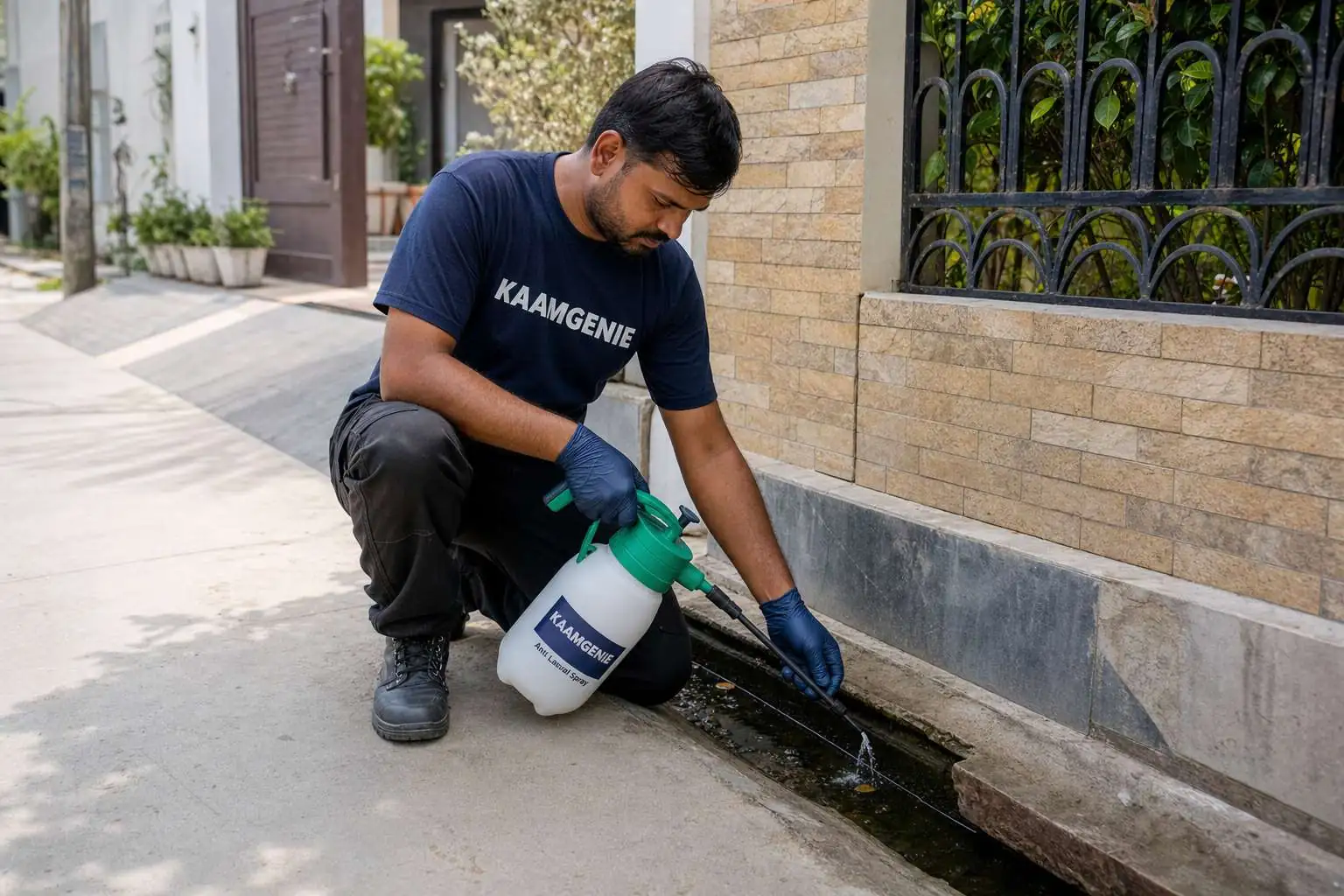
Quick answer — getting rid of mosquitoes & dengue at home in Delhi (2026)
- Kill the breeding spots first (2026): the dengue mosquito breeds in small amounts of clean standing water — cooler trays, plant plates, AC drip, terrace junk. Empty them weekly and you cut most of the problem.
- The dengue mosquito bites in daytime: Aedes aegypti is most active early morning and late afternoon — not at night like the gutter mosquito everyone blames.
- Peak season is Aug–Nov: cases climb through the monsoon. The smart move is to act in May–June, before the rains.
- Fogging is not a cure: it knocks down flying adults for a few hours to a couple of days. It does nothing to larvae. Useful before an event or at peak — never sold as permanent.
- Real cost (2026): one-time residential mosquito treatment starts around ₹1,499–₹2,499; a monsoon AMC from ₹3,999/year. GST 18% extra.
- No honest service promises a mosquito-proof home forever — source reduction is an ongoing weekly habit, not a one-shot fix. We cover all of Delhi.
Delhi’s dengue reality — and why your home is the front line
Let’s clear up the single biggest misunderstanding I hear on the phone. People picture the mosquito that gives you dengue as some filthy thing breeding in the open drain down the lane. It isn’t. Dengue in Delhi is spread by Aedes aegypti — a small black-and-white striped mosquito that prefers clean, clear water and lives quite happily inside and around your house. It does not need a dirty nullah. A cup of rainwater in a discarded paint tin on your terrace will do.
Two things about this mosquito change everything. First, it bites in the daytime — mostly early morning and late afternoon, roughly 6–9am and 4–7pm. So the mosquito coil you light at bedtime is fighting the wrong enemy at the wrong hour. Second, it doesn’t fly far — usually within 100–200 metres of where it hatched. That sounds bad, but it’s actually good news: if it’s biting you indoors, it almost certainly bred within a stone’s throw, which means you can do something about it.
In Delhi the season is predictable. Numbers stay low through the dry pre-monsoon stretch of May and June, then climb as the rains arrive, and peak from August through November — with September and October usually the worst weeks across colonies from Rohini to Lajpat Nagar to Dwarka. By the time the RWA WhatsApp group is in a panic in late August, the breeding has been going on quietly for weeks. Waiting for the municipal fogging van is not a plan. The MCD does outdoor space spraying, and that has its place, but the water sitting in your own balcony pots and cooler is not their job — it’s yours. Your home, and the ten feet around it, is the front line. This guide is about winning that bit.
The one thing that actually works long-term: kill the breeding sources
If you remember nothing else from this page, remember this: source reduction beats everything. No spray, no fog, no plug-in machine comes close to simply removing the standing water where the mosquito lays its eggs. The World Health Organization says it plainly — controlling the breeding sites is the most effective way to cut dengue. I’ve walked through hundreds of Delhi homes, and the culprits are almost always the same short list. Go find them this weekend.
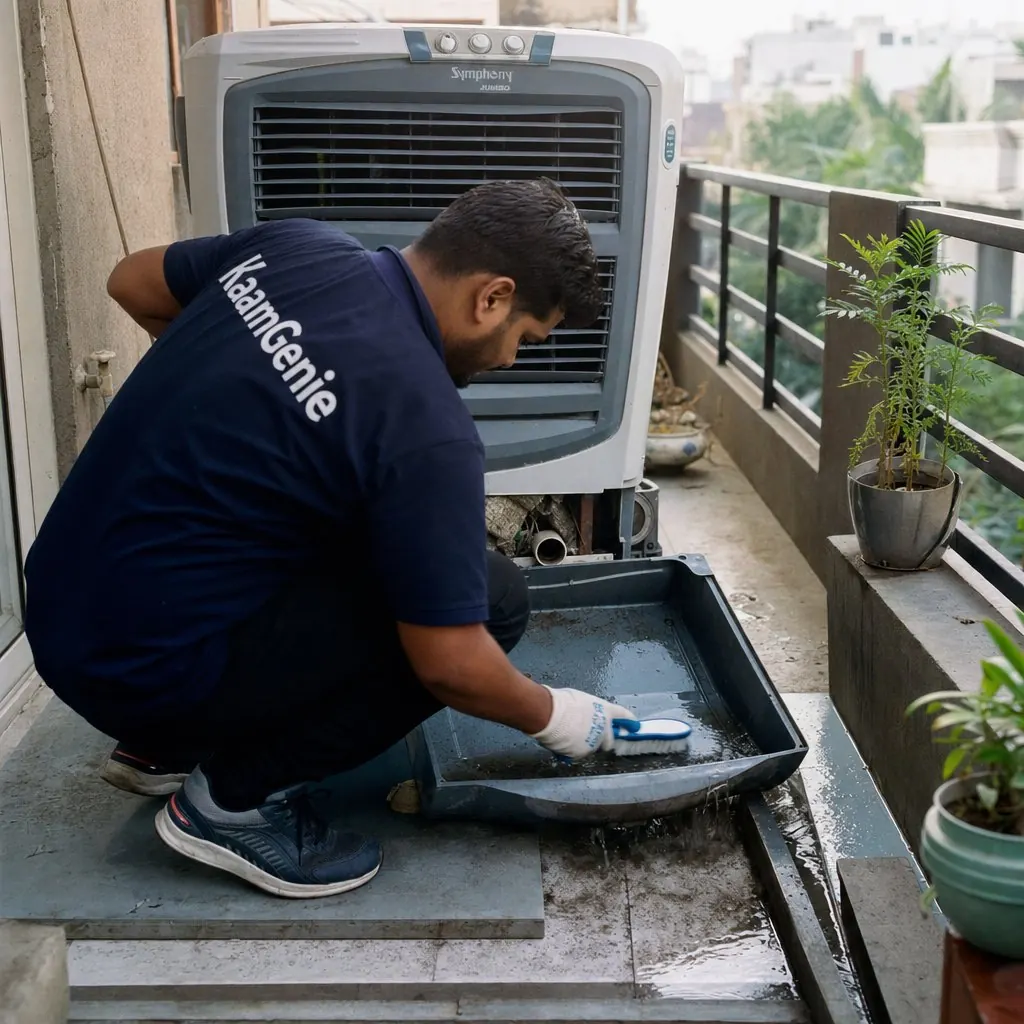
- The desert cooler — Delhi’s number-one offender. That tank of water sitting warm and still for days is a five-star maternity ward for mosquitoes. Empty it completely once a week, scrub the sides, dry it out, then refill. In peak season, if you’re not using the cooler, drain it fully.
- Plant pots and the plates under them. Money plants in water, the saucer catching drainage, the old matka in the balcony — all classic. Tip the plates out twice a week or fill them with sand.
- Terrace and balcony junk. Paint tins, broken buckets, that tarpaulin with a sag in it, an upturned cap on the water tank, old tyres. Anything that holds a cupful of rain after a shower. Clear it or turn it over.
- AC drip trays and the spot under the split-unit drain. The slow drip pools somewhere. Check it.
- Blocked drains and the chhajja (sunshade) above windows. Leaves clog them, water pools, eggs hatch. Clear them before the monsoon.
- The overhead tank lid gap. If the lid doesn’t seal, mosquitoes get in to breed and you’re drinking from it too. Cover it properly — a tight lid or fine mesh.
- Buckets, drums and the bathroom water you store. In areas with patchy supply, people keep water standing. Keep it covered, always.
Here’s the part people don’t want to hear: this is a weekly habit, not a one-time job. The mosquito’s egg-to-adult cycle is only about 7–10 days in Delhi’s warmth, so a fortnightly clean still leaves a window. Pick a day — Sunday morning works — and do a five-minute round of the house. It is genuinely the cheapest, most effective mosquito control there is, and it costs you nothing.
| Breeding spot | How often to check | What to do |
|---|---|---|
| Desert cooler tank | Weekly | Empty fully, scrub, dry, refill; drain if unused |
| Plant pots & saucers | Twice a week | Tip out water or fill saucers with sand |
| Terrace junk (tins, tyres, tarp) | After every rain | Remove, turn over, or puncture so water drains |
| AC drip tray / drain spot | Weekly | Empty tray; redirect drain away from pooling |
| Overhead & storage tanks | Monthly seal check | Tight-fitting lid or fine mesh over any gap |
| Blocked drains & chhajja | Before monsoon | Clear leaves and silt so water cannot pool |
What fogging really does (and what it doesn’t)
I want to be straight with you here, because this is where a lot of money gets wasted. Fogging — that white cloud from a machine, whether the MCD van outside or a private team in your garden — kills flying adult mosquitoes that the fog touches, right then. That’s it. It gives you a quiet evening, maybe a quiet day or two. It does nothing to the larvae wriggling in your cooler water, and it does nothing tomorrow when the next batch hatches and the wind has carried the fog away.
So is fogging useless? No — it has a real, narrow job. Doing a hosting a function, a wedding, a society event in the lawn? Fog an hour before so guests aren’t eaten alive. In the thick of the September peak with cases in your block, a fog gives temporary relief while you fix the breeding sources. That’s the honest use case. What I will argue with, every time, is anyone selling fogging as the answer — a one-shot that makes your home mosquito-free. It doesn’t exist. If a service leads with fogging and never once asks to see your cooler or your terrace, you’re paying for theatre. Good mosquito control kills the babies in the water first; fogging the adults is the supporting act, not the lead.
Tired of swatting mosquitoes every evening?
Our technician surveys your breeding spots and treats them — anti-larval plus residual spray. One-time residential from ₹1,499 (GST 18% extra).
What a real professional mosquito treatment actually involves
When you call us — or any serious pest-control team — for mosquitoes, a proper job is not one person walking through with a sprayer for ten minutes. It’s four things working together, and the order matters.
- A breeding-source survey first. The technician walks your home, terrace, balcony and the area just outside, and finds the water-holding spots. This is the most valuable part and the part cheap services skip. If they don’t look, they can’t fix it.
- Anti-larval treatment. The water that can’t simply be emptied — tanks, certain drains, low spots — gets a larvicide that kills the wrigglers before they ever take wing. This is where the lasting result comes from. The larvicides used in licensed work are approved by the Central Insecticides Board & Registration Committee (CIB&RC); a real service uses the right product at the right dose, not a random bottle.
- Residual spray on resting surfaces. Adult mosquitoes rest on shaded walls, behind furniture, under sinks, in dark corners. A residual insecticide on those surfaces keeps killing for some weeks as mosquitoes land. The effect fades over time — that’s normal, and it’s why AMC plans exist.
- Outdoor space spraying / thermal fogging when it’s warranted. For gardens, society common areas, or a heavy infestation, an outdoor fog knocks the adult population down while the anti-larval work does the long job underneath.
Two honest caveats. One: even a textbook treatment is not permanent. New water collects, new mosquitoes fly in from a neighbour’s terrace, and the residual spray wears off — so this is maintenance, not a cure. Two: be sensible about safety. Tell the technician about kids, pregnant women, asthmatics, fish tanks and pets, vacate treated rooms for the time advised, and ventilate after. A team that won’t talk you through this is cutting corners somewhere else too.
Real mosquito control cost in Delhi (2026)
Prices vary by home size and how bad things are, but here’s an honest 2026 range so you can spot both the lowball and the overcharge. Anything quoted at ₹100–₹200 for “mosquito spray” is the same theatre I mentioned — one bottle, no survey, no larvicide, gone by next week. Real work costs real money, but it’s not extravagant.
| Service | What you get | Starting price (2026) |
|---|---|---|
| One-time residential treatment | Survey + anti-larval + residual spray, 1–2 BHK | From ₹1,499 |
| Larger home / bungalow | Same, 3 BHK to independent house with terrace | From ₹2,499 |
| Outdoor / garden fogging | Thermal fog of lawn, driveway, common area | From ₹1,999 (area-based) |
| Monsoon AMC (yearly) | Multiple visits across the Aug–Nov season | From ₹3,999/year |
| Society / RWA contract | Whole-complex anti-larval + scheduled fogging | Custom quote |
My honest recommendation for a Delhi family home: skip the one-and-done and take a monsoon AMC from around ₹3,999 a year. Mosquitoes are a season, not a single bad day, and a plan that brings someone back through August to November — right when it matters — is far better value than paying per panic. For a flat in a society, push your RWA to fund a complex-wide contract; one house treating its cooler while the next-door terrace is a swamp is a losing game.
What protects you at home — and what’s a gimmick
Source reduction handles the breeding. For the mosquitoes that still get in or that bite when you’re out, here’s what actually works versus what’s sold on hope.
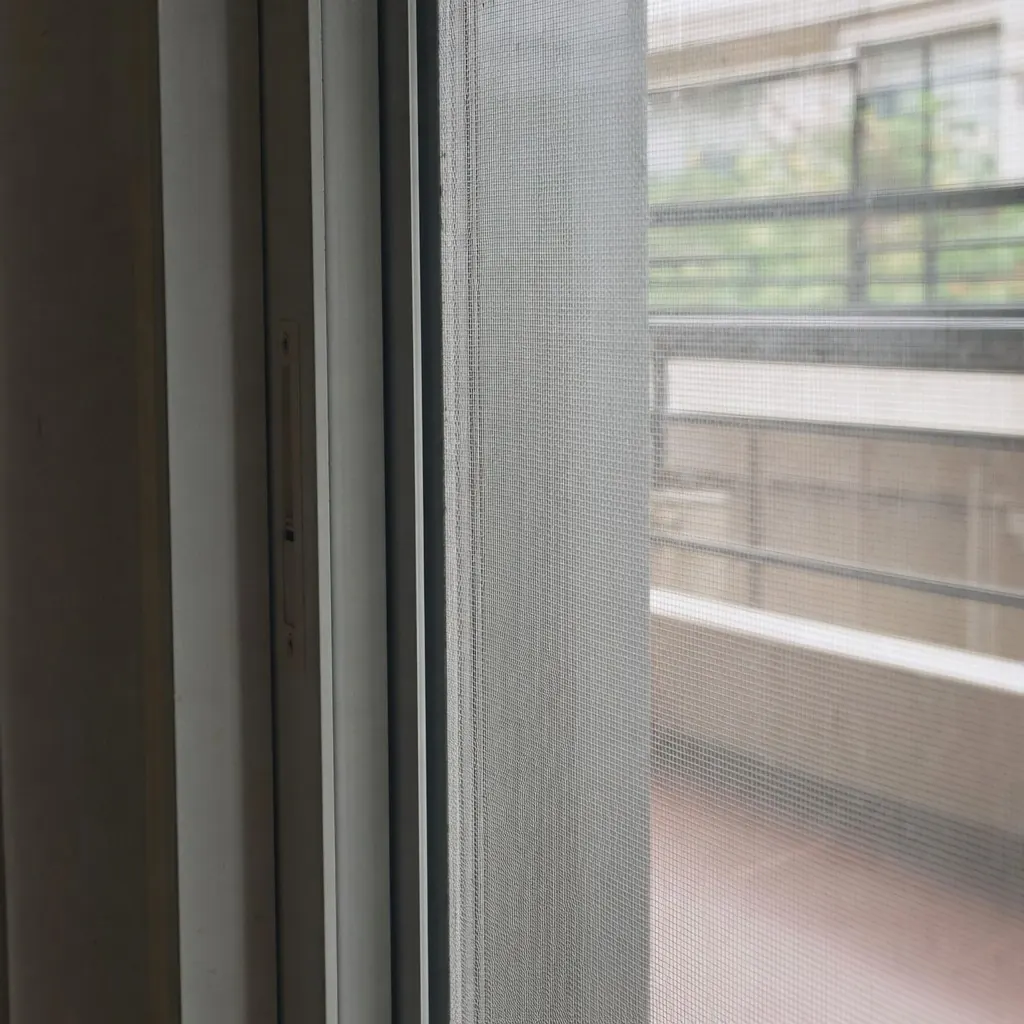
Worth your money: Fine mesh screens on windows and balcony doors are the best investment in a Delhi home — they keep the daytime biters out without any chemical. A good mosquito net over the bed protects the most vulnerable hours for babies and the elderly. Topical repellents with DEET, picaridin or icaridin genuinely keep the Aedes mosquito off your skin for a few hours — useful at dawn and dusk. And the simplest fix of all: full sleeves and long pyjamas at the times this mosquito bites. Cover up at 6am and 5pm and you’ve removed most of your exposure.
Weak or pointless: I’ll say this plainly. Liquid plug-in vaporisers help a little in a small closed room, but in an open Delhi flat with the balcony door swinging, they do far less than the box promises. Ultrasonic apps and wristbands that claim to repel mosquitoes with sound — save your money, they don’t work; the science on that is clear. Vitamin-B patches, “mosquito-repellent” plants on the windowsill as your only defence, gimmick wearables — all weak. None of them replaces emptying the cooler and putting a mesh on the window.
Want it sorted before the monsoon hits?
A May–June pre-monsoon treatment is the highest-impact thing you can do. Monsoon AMC plans from ₹3,999/year.
The pre-monsoon checklist (May–June) — act before the rains
Here is the single most useful thing in this whole guide. The highest-impact month to deal with mosquitoes in Delhi is before the monsoon, in May and June — while the population is still low and you can get ahead of it. Treat in June and you blunt the August–November peak before it builds. Wait until September and you’re firefighting. The chart below is the honest difference I see between homes that only fog at peak and homes that do source reduction early.
Fogging-only vs source reduction — homes still mosquito-light at 4 weeks (2026)
Rough share of Delhi homes reporting low mosquito activity a month later, from what we see on the ground.
Your June checklist, in order of impact: empty and scrub the cooler and keep it that way weekly; clear the terrace and balcony of every tin, tyre and bucket that holds rain; seal the overhead tank lid; clear the drains and chhajja of leaves; fit mesh screens on bedroom windows; and book a pre-monsoon anti-larval treatment if you want a professional to cover the spots you can’t reach. Do these six things in June and your September will be a different month. Skip them and you’ll be on the phone in panic with everyone else.
Stop dengue at your doorstep — we cover Delhi
Dengue isn’t bad luck; it’s standing water you can find and remove. Do the weekly five-minute round, fit a mesh, and treat the spots you can’t empty — that combination is what keeps a Delhi home genuinely livable through the monsoon. If you’d rather have a trained technician survey your breeding sources and handle the anti-larval and residual work, that’s exactly what we do. We serve homes and societies across Delhi — from Dwarka, Janakpuri and Rohini in the west and north, to Saket, Lajpat Nagar and Greater Kailash in the south, to Mayur Vihar, Preet Vihar and Laxmi Nagar in the east, plus Central and North Delhi. Coming soon: Gurgaon, Noida, Faridabad and Ghaziabad. Call 95603 66362 and let’s get ahead of the season before it gets ahead of you.
Frequently asked questions
How do I get rid of mosquitoes at home in Delhi in 2026?
Start with the water, not the spray. Empty and scrub your desert cooler weekly, tip out plant saucers, clear terrace and balcony junk that holds rainwater, seal the overhead tank lid and check AC drip spots. Fit mesh screens on windows. For the spots you can’t empty, book a professional anti-larval and residual treatment. Source reduction is the part that actually lasts; fogging only gives a few hours’ relief.
Does the dengue mosquito bite during the day or at night?
During the day. Aedes aegypti, which spreads dengue in Delhi, is most active early morning and late afternoon — roughly 6–9am and 4–7pm. That’s why a bedtime coil misses it. Cover up and use repellent at dawn and dusk, when it actually bites.
Does the dengue mosquito breed in dirty water or clean water?
Clean water. This is the big misconception. The dengue mosquito prefers clear, still water — cooler tanks, plant saucers, rainwater in tins on the terrace, AC drip trays — not the dirty open drain everyone blames. Even a cupful of clean water is enough for it to lay eggs.
When is dengue season in Delhi?
Cases stay low through the dry pre-monsoon stretch of May and June, climb with the rains, and peak from August through November, with September and October usually the worst. The smart time to act is May–June, before the rains, while mosquito numbers are still low.
Does fogging actually get rid of mosquitoes?
Only temporarily. Fogging kills the flying adult mosquitoes the fog touches, giving you a few hours to a couple of days of relief. It does nothing to the larvae in standing water, so a new batch hatches soon after. It’s useful before an event or during the peak, but no honest service should sell fogging as a permanent fix.
How much does mosquito control cost in Delhi in 2026?
A one-time residential treatment (survey + anti-larval + residual spray) for a 1–2 BHK starts around ₹1,499, and from about ₹2,499 for a larger home or bungalow. Outdoor or garden fogging starts around ₹1,999 depending on area. A monsoon AMC covering multiple visits across the season starts from ₹3,999 a year. GST 18% is extra. Anything quoted at ₹100–₹200 is a single bottle with no survey or larvicide — skip it.
What does a professional mosquito treatment include?
Four things: a survey of breeding sources in and around your home; anti-larval (larvicide) treatment of water-holding spots that can’t simply be emptied; a residual spray on the shaded surfaces where adult mosquitoes rest; and outdoor space or thermal fogging when the infestation or a garden warrants it. The survey and the anti-larval work are what make it last.
Is mosquito control treatment safe for kids and pets?
When done properly, yes. Tell the technician about children, pregnant women, asthmatics, fish tanks and pets beforehand, vacate treated rooms for the time advised, and ventilate afterwards. Licensed services use CIB&RC-approved products at the correct dose. A team that won’t walk you through safety is one to avoid.
Can mosquito treatment make my home mosquito-proof permanently?
No, and be wary of anyone who promises it. New water collects, mosquitoes fly in from a neighbour’s terrace, and residual sprays wear off over a few weeks. Mosquito control is ongoing maintenance — weekly source reduction plus seasonal treatment — not a one-time cure. Anyone guaranteeing 100% or “permanent” is overselling.
Do plug-in machines, ultrasonic apps and repellent wristbands work?
Mostly not. Liquid plug-in vaporisers help a little in a small closed room but do far less in an open Delhi flat. Ultrasonic apps and repellent wristbands that claim to keep mosquitoes away with sound simply don’t work — the research is clear on that. Mesh screens, a bed net, DEET or picaridin repellent, and full sleeves at dawn and dusk are what actually protect you.
What is the single most effective way to prevent dengue at home?
Removing standing water — source reduction. The World Health Organization and India’s vector-control bodies say the same: get rid of the small pools of clean water where the mosquito breeds and you stop dengue at the source. The cooler, plant saucers, terrace junk and tank lid are the spots to target, weekly.
Should I get a one-time treatment or a monsoon AMC in Delhi?
For most Delhi family homes, an AMC is better value. Mosquitoes are a whole season, not a single bad day, so a plan that brings a technician back across August to November — when it matters — beats paying per panic. A monsoon AMC starts from around ₹3,999 a year. A one-time treatment makes sense if you just need to clear a flare-up or prep before an event.
Get ahead of dengue season this year
Let a trained technician survey your breeding spots and treat them — anti-larval, residual spray and fogging where it’s needed. We cover all of Delhi.
Sources & references
- WHO — Dengue and severe dengue — global reference on dengue transmission by the Aedes mosquito and the primacy of source reduction.
- National Center for Vector Borne Diseases Control (NCVBDC) — India’s nodal body for dengue, malaria and chikungunya control and prevention guidance.
- National Centre for Disease Control (NCDC) — tracks vector-borne disease patterns across Indian cities including Delhi.
- Central Insecticides Board & Registration Committee (CIB&RC) — regulates the larvicides and adulticides used in licensed mosquito control.
Last verified: 9 June 2026. If you find any of these links broken, please let us know.