
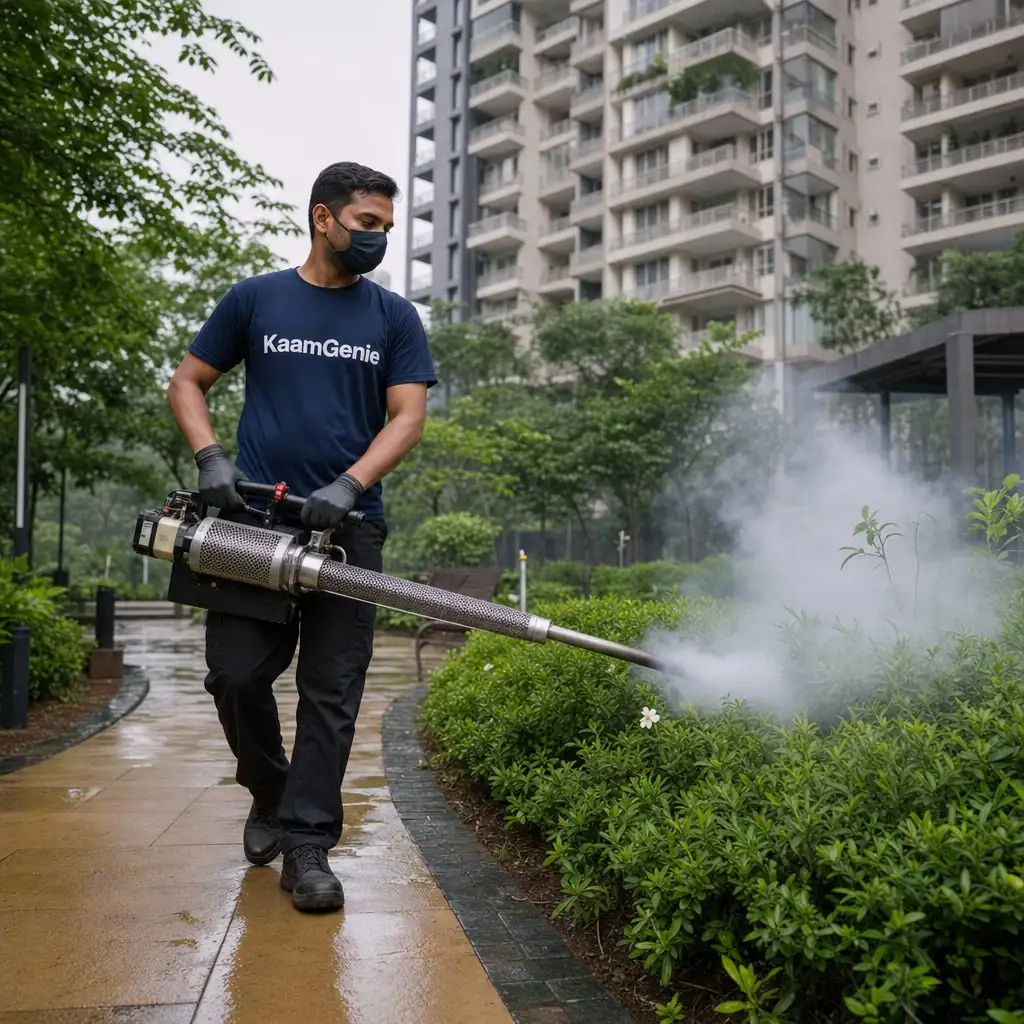
Quick answer — monsoon pest control month-by-month in Delhi
- June (pre-monsoon): Mosquito treatment + larvicidal at standing water sources. Book before the first rain. From ₹699 for 1-2 BHK.
- July (early monsoon): Cockroach gel-bait for the high-humidity colony surge. Egg hatching accelerates — this is when one cockroach becomes ten. From ₹599.
- August (peak monsoon): Whole-home multi-pest visit — cockroach + mosquito + ant. Peak activity month for almost every Delhi pest. From ₹999.
- September (late monsoon): Termite swarming alert. Flying termites emerge after rain showers looking for wooden door frames. Inspect and book treatment if any signs. From ₹2,499.
- October (post-monsoon): Drain larvicidal + general clean-up visit. Residual mosquito breeding in standing water. From ₹699.
- Monsoon AMC package: ₹4,999 for 4 visits across the season (June, July, August, September-October). Cheaper than booking each individually + priority slots during peak season.
Why Delhi monsoon explodes pest activity
Pest pressure in Delhi follows a sharp seasonal curve. February through May is the calmest period — low humidity, hot dry days, slow insect breeding. Mid-June changes everything. The first monsoon shower hits, humidity goes from 30% to 75% overnight, and every pest in the city wakes up.
Three biological reasons monsoon makes pest pressure spike:
Humidity accelerates egg hatching. Cockroach egg cases (oothecae), mosquito eggs, ant eggs — all hatch significantly faster in 70-80% humidity than in dry conditions. A cockroach egg case that takes 35 days to hatch in May can hatch in 22-25 days in July. This means colony doubling time is cut almost in half during monsoon, which is why the same kitchen that had 3 cockroaches in June has 25 by August.
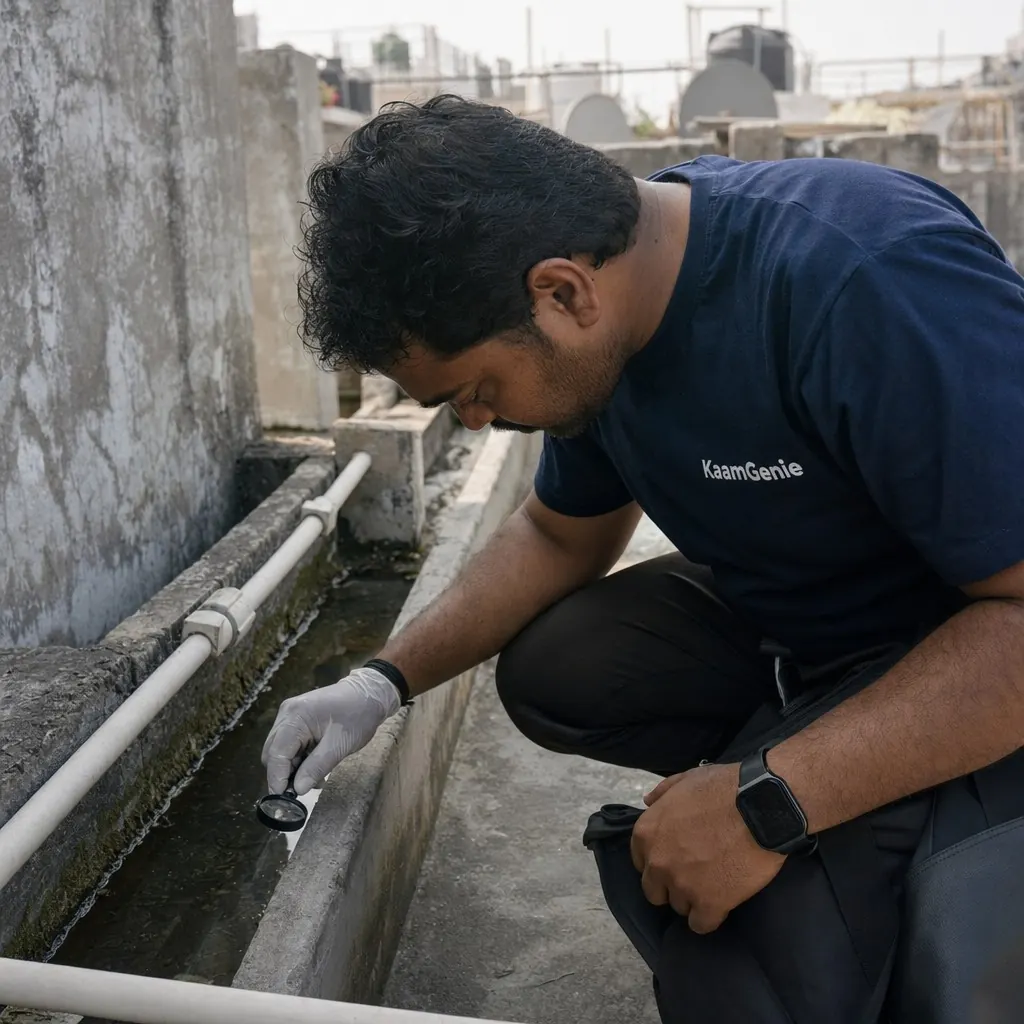
Standing water creates mosquito breeding everywhere. Open buckets on terraces, blocked drains in basement parking, water collected in flower pot saucers, decorative water features in society gardens, AC drip trays, manhole covers with water pools, construction debris with stagnant water. Every one of these is a breeding site within 7-10 days of stagnation. A single open bucket can produce 200 mosquitoes per cycle.
Termites swarm after rain showers. The flying termites you see in late September and early October are not a different species — they’re winged adults from existing colonies, emerging after the first cool rain to mate and find new wood to colonise. They head straight for unprotected wooden door frames, window frames, and wooden furniture. If you have wooden architectural elements, this is when termite activity is most visible.
For Delhi specifically, four neighbourhood factors amplify monsoon pest pressure: older DDA pockets (Mayur Vihar, Rohini, Patparganj) with shared drain stacks that flood; ground-floor flats near common drains; gardens with decorative water features; and the perimeter walls of central south Delhi colonies where construction debris collects monsoon water.
June — pre-monsoon mosquito treatment
June is the single most-skipped month for pest control in Delhi, which is why mosquito surge is so consistently bad by mid-July. The right move is treating the home BEFORE the first rain, not after the mosquitoes show up.
Pre-monsoon mosquito protocol for a Delhi home:
- Larvicidal at standing water sources. Inspect terrace water buckets, balcony plant saucers, AC drip points, society garden water features, basement parking floor. Apply temephos 50% EC at standing water sources — safe for fish and birds at residential dose, kills mosquito larvae for 4-6 weeks.
- Indoor adulticidal spray. Light spray of deltamethrin 2.5% SC on darker corners where adult mosquitoes rest during the day — behind curtains, under beds, behind sofas. Long residual life, lasts 6-8 weeks.
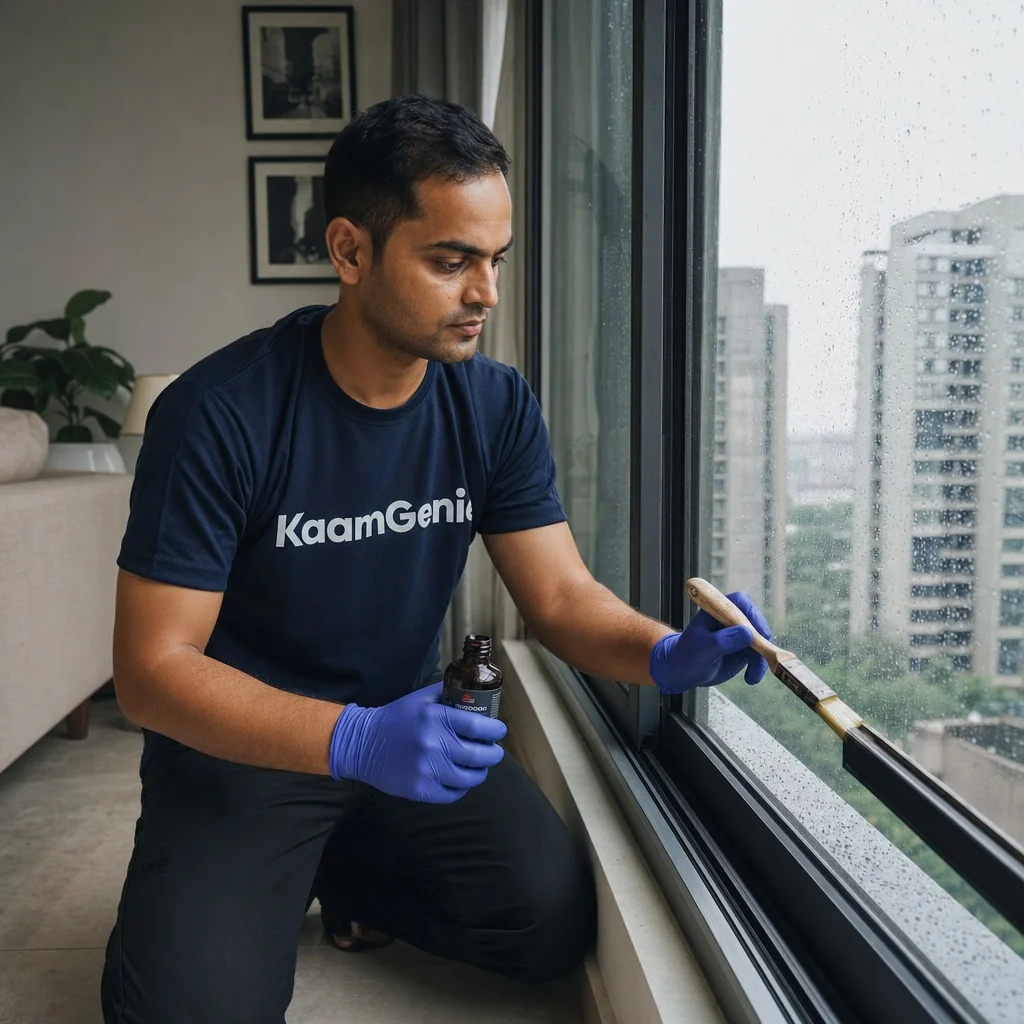
- Window mesh check. Crew inspects window mesh integrity. If torn, we recommend repair before treatment because broken mesh re-introduces mosquitoes immediately.
- Drain U-bend top-up. Many less-used bathrooms have lost their water trap by June. Crew tops up with water and seals temporarily. Drain U-bends without water are mosquito superhighways.
Pricing: ₹699 for a 1-2 BHK pre-monsoon mosquito visit, ₹999 for 3-4 BHK, ₹1,499 for small bungalow. Best booked first or second week of June, before the first rain. Lasts through July if window meshes are intact.
Pre-monsoon mosquito treatment — book before the rains
Larvicidal at breeding sites + indoor adulticidal. CIB&RC chemicals. From ₹699 for 1-2 BHK.
July — cockroach colony surge
By the second week of July, you’ll start seeing more cockroaches in the kitchen. This is not an infestation arriving from outside — it’s the colony you already had (3-5 individuals you barely noticed in May and June) hatching out their accumulated egg cases in the humid environment. Cockroach treatment in July is high-impact because you’re killing the surge before it spreads.
July cockroach protocol:
- Gel-bait placement at 14-18 hotspots in kitchen + bathroom — cabinet hinge cavities, behind chimney, under gas stove, behind fridge motor, sink U-bend, inside microwave shelf back wall, behind toilet cistern, floor drain rim.
- Fipronil 0.05% or imidacloprid 2.15% as the active ingredient. CIB&RC-registered. Pet-safe placement.
- Brief residual spray on the sink U-bend if the customer reports cockroaches emerging from there specifically. Deltamethrin 2.5% SC.
- Drain trap top-up. Same as in the June visit — drains that have lost their water trap are entry points.
Pricing: ₹599 for 1 BHK, ₹799 for 2 BHK, ₹1,099 for 3 BHK. 45-day re-treatment cover. Colony collapse takes 7-14 days — meaning if you book in mid-July, you’ll see zero activity by end of July.
Why timing matters in July: the same colony that takes a single ₹599 treatment in mid-July will need a ₹999 multi-pest treatment in mid-August because by then it’s spread to multiple zones and brought ants along with it. Booking earlier is materially cheaper.
August — whole-home multi-pest
August is peak pest activity month in Delhi. Mosquitoes are at their highest density. Cockroach colonies that weren’t treated in July are at peak size. Ants are foraging aggressively for monsoon-disrupted food sources. And the first signs of monsoon dampness pests (silverfish, booklice) appear in older homes. The right answer is a whole-home multi-pest visit, not single-pest treatments.
August whole-home protocol:
- Mosquito: Re-application of larvicidal at standing water sources, indoor residual spray refresh.
- Cockroach: Gel-bait refresh at all kitchen + bathroom hotspots. If June and July were skipped, full 14-18 point gel placement.
- Ant: Targeted gel bait at ant trails — usually wall-floor junctions in the kitchen, behind the kitchen sink, balcony door tracks. Imidacloprid 2.15% gel.
- Silverfish + booklice (older homes only): Light residual spray in bookshelves and behind framed pictures. Boric acid powder in cupboard corners.
- Drain inspection. Crew checks all floor drains and U-bends for breeding water. Top-up + larvicidal if needed.
Pricing: ₹999 for 1-2 BHK whole-home multi-pest, ₹1,399 for 3 BHK, ₹1,799 for 4 BHK. 30-day cover. Best booked first week of August, before the peak activity surge.
September — termite swarming alert
Late September is when flying termites appear in Delhi. The first cool monsoon shower triggers winged termite adults (called “alates” or swarmers) to emerge from existing colonies. They fly in groups, mate, shed their wings, and look for unprotected wood to start a new colony. If you see them in your home, the response window is short — treatment within 7 days minimises the risk of a new colony establishing.
What termite swarming looks like in a Delhi home: dozens to hundreds of small flying insects with two pairs of equal-length wings, usually around lights at dusk after a rain shower. Shed wings on the floor near windows the next morning. Visible in late September through mid-October.
September termite protocol:
- Inspection walkthrough. Crew checks all wooden door frames, window frames, wooden built-in cupboards, and decorative wooden architectural elements for mud tubes or hollow wood (tap test).
- Wood treatment. If active termites are found, drilling small holes into the wood at strategic points + injection of chlorpyrifos 1% emulsion or imidacloprid 0.075%. Holes are sealed with wood filler after treatment.
- Perimeter soil treatment. If termites have entered from the soil side (most common path), chemical injection along the wall-floor junction of affected rooms.
- Mud tube destruction + sealing of entry points.
Pricing: ₹2,499 for spot treatment of a single affected zone, ₹4,999-7,999 for whole-flat termite if multiple zones are affected, ₹9,999+ for bungalows. 5-year structural re-treatment cover for whole-flat treatments.
Why early September response matters: a new termite colony that establishes in your wooden door frame in October will be invisible for 18-24 months while it grows. By the time you see the damage in 2027 monsoon, you’re looking at ₹25,000-80,000 in repair. Catching swarming activity in September and treating immediately can prevent the colony from establishing at all.
October — post-monsoon cleanup
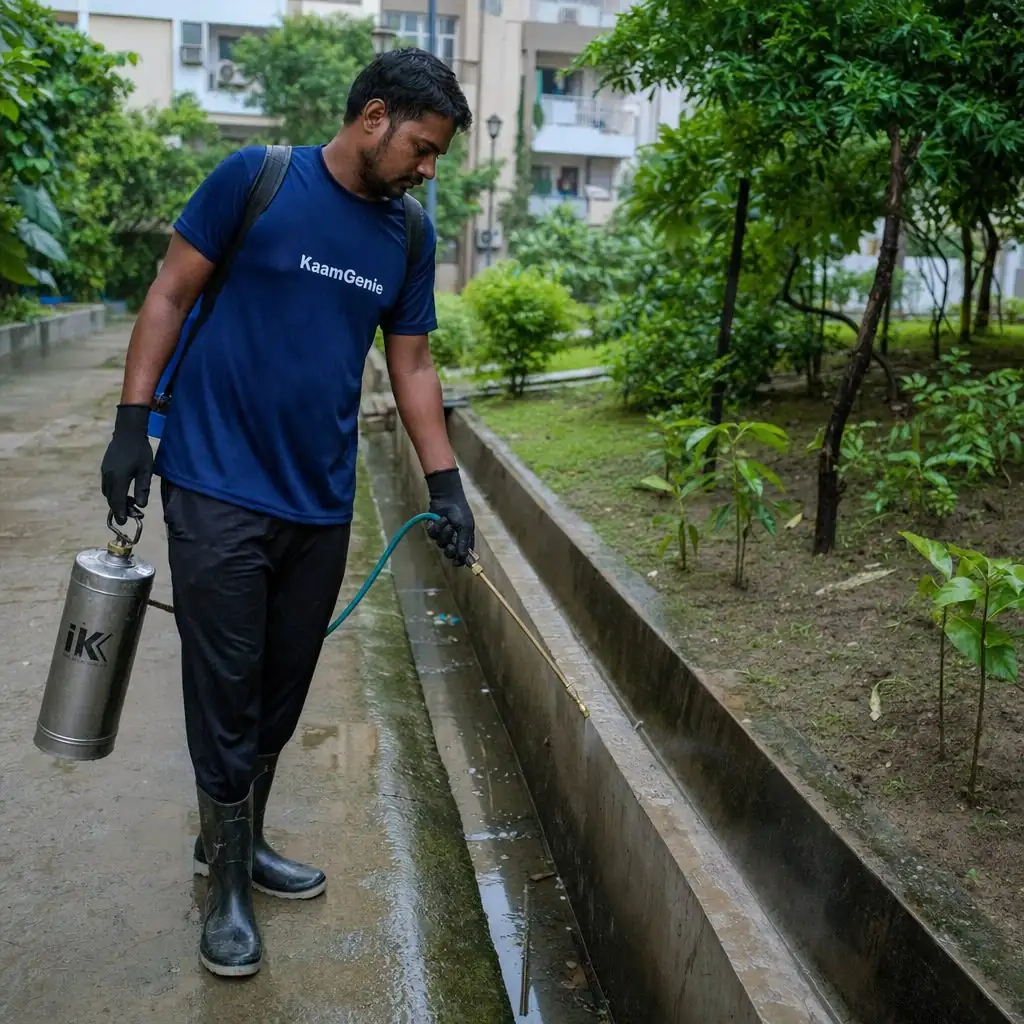
By October the rains have largely ended but the consequences continue. Standing water from late September showers still sits in drain manholes and basement parking floors. Residual mosquito breeding produces what we call the “October bite” — lower mosquito density but more aggressive feeding because adult populations are competing for fewer hosts. Cockroach activity drops but doesn’t disappear. Dampness pests (silverfish, fungus gnats) appear in any home with damp walls.
October cleanup protocol:
- Drain larvicidal across all access points. Final mosquito breeding eradication. Temephos 50% EC.
- Residual indoor mosquito spray refresh if not done in August.
- Damp-pest check. If silverfish or booklice are visible, light residual spray in affected areas + dehumidification advice for the homeowner.
- Termite follow-up for any home that had September swarming. Inspection of treated zones to confirm no colony established.
- General cockroach refresh if July/August treatments are wearing off.
Pricing: ₹699 for 1-2 BHK general post-monsoon visit, ₹999 for 3 BHK, ₹1,299 for 4 BHK. Covers all five protocol items above for typical homes. Larger homes priced on site visit.
Monsoon AMC — the smart Delhi homeowner’s calendar
Booking five separate treatments across June-October sounds expensive but it actually isn’t once you compare to the monsoon AMC package. The maths:
| Month-by-month a la carte | Cost for 2 BHK Delhi flat | Monsoon AMC package | Savings |
|---|---|---|---|
| June mosquito | ₹699 | ₹4,999 for 2 BHK ₹6,999 for 3 BHK ₹8,999 for 4 BHK 4 visits across the season + priority booking + free emergency callback | ₹1,100-1,500 saved + priority slots when same-day mosquito demand spikes |
| July cockroach | ₹799 | ||
| August whole-home multi-pest | ₹999 | ||
| September termite inspection | ₹1,499 (inspection-only rate) | ||
| October post-monsoon | ₹999 | ||
| Total a la carte | ₹4,995 |
The dollar savings on the AMC are marginal — only ₹5-1,100 depending on the package — but the real value is priority booking during the August surge when same-day mosquito treatment slots get hard to find, and free emergency callback if mosquito or cockroach activity spikes between scheduled visits.
Want the full monsoon covered?
Monsoon AMC from ₹4,999 — 4 visits across June-October + priority slots + free emergency callback. CIB&RC chemicals.
What to do BEFORE the monsoon starts (pre-monsoon checklist)
If you do nothing else in late May, do this six-item checklist. Most of it is free, takes one afternoon, and reduces monsoon pest pressure by 30-50% before any treatment is needed.
- Inspect window mesh integrity. Every bedroom, every kitchen, every bathroom window. Look for tears, gaps at the frame, mesh that has come loose from the runners. Repair before the first rain. Mosquitoes enter through tiny gaps you don’t notice in dry months.
- Drain U-bend top-up. Every floor drain in every bathroom, kitchen, balcony. Pour two mugs of water down each. Less-used drains lose their water trap by May, becoming mosquito + cockroach superhighways.
- Remove standing water sources. Empty terrace buckets, plant saucers, AC drip trays, decorative water features. Anything that can hold 50 ml of water for 7 days is a mosquito breeding site.
- Check basement parking floor drainage. If you have a basement parking that floods during heavy rain, talk to the RWA about the drain. Standing basement water is the highest-pressure mosquito source for any society.
- Inspect wooden door and window frames. Tap each one with a knuckle. Solid sound = healthy. Hollow sound = possible termite damage to investigate. Catch termite damage in May before September swarming becomes a re-infestation event.
- Book pre-monsoon mosquito treatment for the first week of June. Saves you the August surge.
None of this is hard. Most homeowners skip it because monsoon feels like a distant problem in May. By mid-July, when the mosquito and cockroach surge is in full swing, the same homeowners are calling for emergency treatment at peak-season rates. Doing the May checklist is honestly the highest-ROI 2 hours a Delhi homeowner spends each year.
Areas we serve for monsoon pest control in Delhi
Monsoon treatment available across all of Delhi NCR: South Delhi (Saket, Lajpat Nagar, Defence Colony, GK-1, GK-2, Vasant Kunj, Hauz Khas, Khanpur, Chattarpur farmhouses), Central Delhi (Karol Bagh, Patel Nagar, CP, Paharganj), East Delhi (Mayur Vihar Phase 1/2/3, Preet Vihar, Patparganj DDA, Yamuna Vihar, Laxmi Nagar, Trilokpuri), West Delhi (Janakpuri, Dwarka all sectors, Punjabi Bagh, Rajouri Garden, Tilak Nagar, Vikaspuri), North Delhi (Civil Lines, Model Town, Kamla Nagar, Mukherjee Nagar), North-West Delhi (Rohini all sectors, Pitampura, Shalimar Bagh, Ashok Vihar). Same-day for mosquito + cockroach during peak season (with priority for AMC customers).
Frequently asked questions
When should I do pest control during Delhi monsoon?
First week of June for pre-monsoon mosquito. Mid-July for cockroach surge. First week of August for whole-home multi-pest. End of September for termite swarming inspection. Mid-October for post-monsoon cleanup. Or book the monsoon AMC package for ₹4,999 and we schedule all four visits.
Do mosquitoes really explode in monsoon — by how much?
Yes. Mosquito populations in Delhi increase 8-15x between late May and mid-August because humidity accelerates the egg-to-adult life cycle from 14 days down to 7-8 days, and standing water from rains creates breeding sites everywhere. A single open bucket can produce 200 mosquitoes per cycle. By mid-August the city-wide mosquito density is at its annual peak.
Is monsoon pest treatment more expensive than dry-season?
Not directly, but same-day availability gets tight during August so booking ahead matters more. Single visit pricing is the same year-round — cockroach from ₹599, mosquito from ₹699, multi-pest from ₹999. The monsoon AMC package gives a small ₹5-1,100 saving plus priority slots which are the real value in August.
Do you do same-day mosquito fogging during peak monsoon?
Yes for most of Delhi when slots are available, but August demand can fill same-day slots by 11 AM. Monsoon AMC customers get priority same-day. For societies, fogging is usually scheduled the day before so the garden is treated when peak activity time hits.
What if I missed pre-monsoon — can I still book in July?
Yes, but the colony surge has already started. July mosquito treatment works but you’re killing more adult mosquitoes than larvae, which is more expensive in long-term residual. Better than nothing — but next year, book first week of June. The cost difference between a June treatment and a July emergency call is meaningful.
Are kids and pets safe during monsoon thermal fogging?
Thermal fogging is for outdoor / society garden / basement parking use, not inside homes. Keep windows closed during fogging and for 30 minutes after. Pets and children should not be in the fogging zone (garden, basement) during the visit. Indoor treatment uses gel bait + residual spray which are safe with no evacuation needed.
How does humidity affect cockroach treatments?
Humidity speeds up gel-bait effectiveness. The food attractants in the bait are more aromatic in humid conditions, drawing cockroaches in faster. Colony collapse that takes 14 days in dry March can complete in 10 days in humid July. The treatment is the same; the timeline is shorter.
What’s a monsoon AMC package and is it worth it?
Monsoon AMC is 4 visits scheduled across June, July, August, and September-October. ₹4,999 for 2 BHK, ₹6,999 for 3 BHK. The dollar savings vs a la carte are small (₹5-1,100) but the value is priority booking during August surge and free emergency callback between visits. Worth it for any home that has had monsoon pest issues two years running.
When are termite swarmers most active in Delhi?
Late September through mid-October, especially in the 48 hours after a monsoon shower when temperatures drop slightly. You’ll see them around lights at dusk — small flying insects with two pairs of equal-length wings. Shed wings on the floor the next morning. Response within 7 days minimises the chance of a new colony establishing in your wooden door frames or built-in cupboards.
What pest treatment should I prioritise if I only get one done in monsoon?
Mid-July cockroach + mosquito combined visit. By July the cockroach colony surge is beginning and mosquito density is mid-rise. A single ₹999 multi-pest visit in mid-July gives you the best year-round value because it stops both the cockroach colony explosion and reduces mosquito carry-over into August. If you can only do one thing, do this.
Monsoon-ready pest control for Delhi homes
Mosquito + cockroach + termite + general. CIB&RC chemicals. Month-by-month calendar or full-season AMC. From ₹699.
Sources & references
- Central Insecticides Board & Registration Committee (CIB&RC) — the Indian regulator that approves every pesticide formulation referenced in this guide, including temephos 50% EC, deltamethrin 2.5% SC, fipronil 0.05%, and imidacloprid.
- National Centre for Disease Control (NCDC) — technical guidance on vector-borne diseases during Indian monsoon, including dengue, malaria, and chikungunya prevention protocols. The mosquito breeding biology and life-cycle timing referenced throughout this guide come from NCDC publications.
- India Meteorological Department (IMD) — provides the long-range Delhi monsoon onset and withdrawal data that informs the month-by-month treatment calendar in this guide. Monsoon timing varies year to year; this guide reflects the typical Delhi pattern.
Last verified: 7 June 2026. If you find any of these links broken, please let us know.