
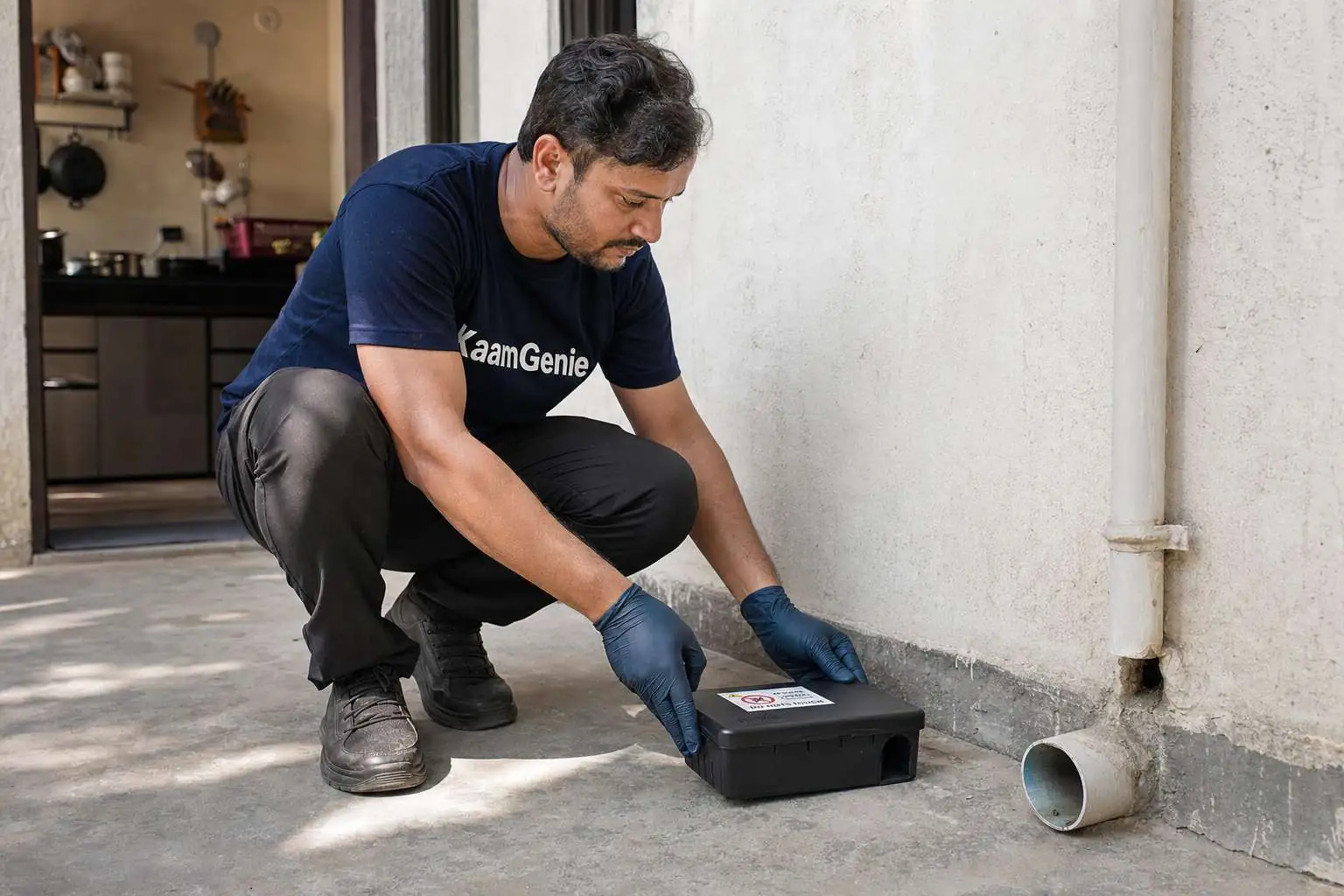
Quick answer — getting rid of rats & mice in Delhi (2026)
- Don’t scatter poison indoors (2026): a rat dies inside a wall or ceiling and you get weeks of a smell you can’t remove — plus a real risk to kids, pets and street dogs.
- What actually works: cut food and water, seal the gaps with steel wool and sealant, snap traps inside, tamper-proof bait stations outside only.
- ID first: a small house mouse needs a different setup than a big brown sewer rat or a roof rat in the false ceiling.
- Real cost (2026): a 1–2 BHK flat is roughly ₹1,499–₹2,499; a bungalow ₹3,500+; shops and restaurants from ₹2,499; GST 18% extra.
- Restaurants & kirana shops: take an AMC with a written service record — FSSAI audits ask to see it.
- Same-day rodent visits available across most of Delhi.
Rat or mouse? Tell them apart before you do anything
People call everything a ‘chuha’, but the type matters, because it changes where you trap and what size trap you use. In Delhi homes you’ll mostly meet three.
The house mouse is the small one — body about the length of your thumb, big ears, a thin tail, droppings like grains of rice. It lives indoors, nests in clutter, in the back of the wardrobe, behind the fridge, inside that storeroom full of old DDA-flat junk. It breeds fast and you usually have more than one.
The brown rat — the sewer rat, Rattus norvegicus — is the big heavy one with a blunt nose and a tail shorter than its body. It comes up through drains, broken sewer lines and gaps near the kitchen waste pipe. This is the one you see in older parts of town — the back lanes of Chandni Chowk, the godown belts of Sadar Bazar and Khari Baoli, ground-floor shops in Lajpat Nagar. It digs burrows along compound walls and under the kitchen platform.
The roof rat is the climber — slimmer, pointed nose, tail longer than its body. This is the one running along the cable tray, in the false ceiling, in the loft over the kitchen, across the boundary wall into a first-floor flat. If your scratching comes from above you at night, it’s almost always a roof rat, not a mouse.
Why bother identifying? Because a mouse will walk into a small snap trap set flush against a skirting board, while a heavy brown rat needs a bigger trap and usually an outdoor bait station near its burrow. Set the wrong thing in the wrong place and you’ll spend two weeks wondering why nothing’s working.
| Sign | House mouse | Brown / sewer rat | Roof rat |
|---|---|---|---|
| Size | Small (thumb-length body) | Big, heavy, blunt nose | Medium, slim, pointed nose |
| Droppings | Tiny, rice-grain size | Large, capsule-shaped | Medium, spindle-shaped |
| Where it lives | Clutter, wardrobes, storerooms | Drains, burrows, ground floor | False ceilings, lofts, cable trays |
| Noise you hear | Light skittering at floor level | Heavy gnawing near drains | Scratching above you at night |
| Best first move | Snap traps indoors | Seal drains + outdoor bait station | Proof ceiling gaps + traps in loft |
Why you should NOT just scatter poison indoors
This is the part nobody at the kirana shop will tell you when they sell you that ₹40 packet of blue pellets. Indoor rodenticide is the single most common mistake I see in Delhi homes, and it backfires in four separate ways.
One — the smell. Poison doesn’t kill instantly. The rat eats it, wanders off, and dies a day or two later in the place it feels safest: inside a wall cavity, above the false ceiling, behind the kitchen cabinet, in the AC duct. You cannot reach it. For the next two to three weeks you live with a thick, sweet rotting smell that no room freshener touches, and in a Delhi summer it’s far worse. People have broken open false ceilings and chipped tiles trying to find one dead rat. That alone is reason enough to keep poison out of the house.
Two — the danger to your family and the street. Most shop rat poisons are anticoagulants. A child who picks up a stray pellet, or a dog or cat that eats it, is in real trouble. Worse is secondary poisoning: a poisoned rat staggers out into the lane, a street dog or a kite or an owl eats it, and the poison passes up the chain. India’s rodenticides are controlled by the Central Insecticides Board & Registration Committee precisely because they’re dangerous when used carelessly — they’re not meant to be flung around a kitchen floor where a toddler crawls.
Three — bait shyness. Rats are cautious and they’re smart. If a few of them get sick and survive, the colony learns to avoid that bait entirely. Now you’ve trained your rats to ignore the one tool you were relying on, and the next product works even worse.
Four — and this is the big one — poison never fixes how they got in. Say it does kill the rats inside. Fine. The gap under the kitchen door is still there. The hole where the AC copper pipe goes through the wall is still open. The cracked drain cover is still cracked. So a fresh rat walks in next week and you’re back to square one, this time with a poison habit and no actual repair done. Poison treats the symptom and ignores the disease.
Hearing scratching in the ceiling at night?
We’ll find the entry points, set traps inside and proof the gaps — rodent visits from ₹1,499 for a flat, GST 18% extra.
The method that actually works — step by step
Professionals call it integrated rodent management. In plain terms it’s four things done together, in order. Do them properly and you don’t need indoor poison at all.
Step 1 — cut the food and water. Rats stay where they eat. Move dry grain, atta, rice and pulses into steel or thick-glass containers with tight lids — not the flimsy plastic ones they chew straight through. Don’t leave the dog’s food bowl out overnight. Take the kitchen bin out at night and keep it lidded. Fix the dripping tap under the sink; a rat can live off that drip alone. This step won’t kill anything, but it makes your traps the most attractive meal in the house.
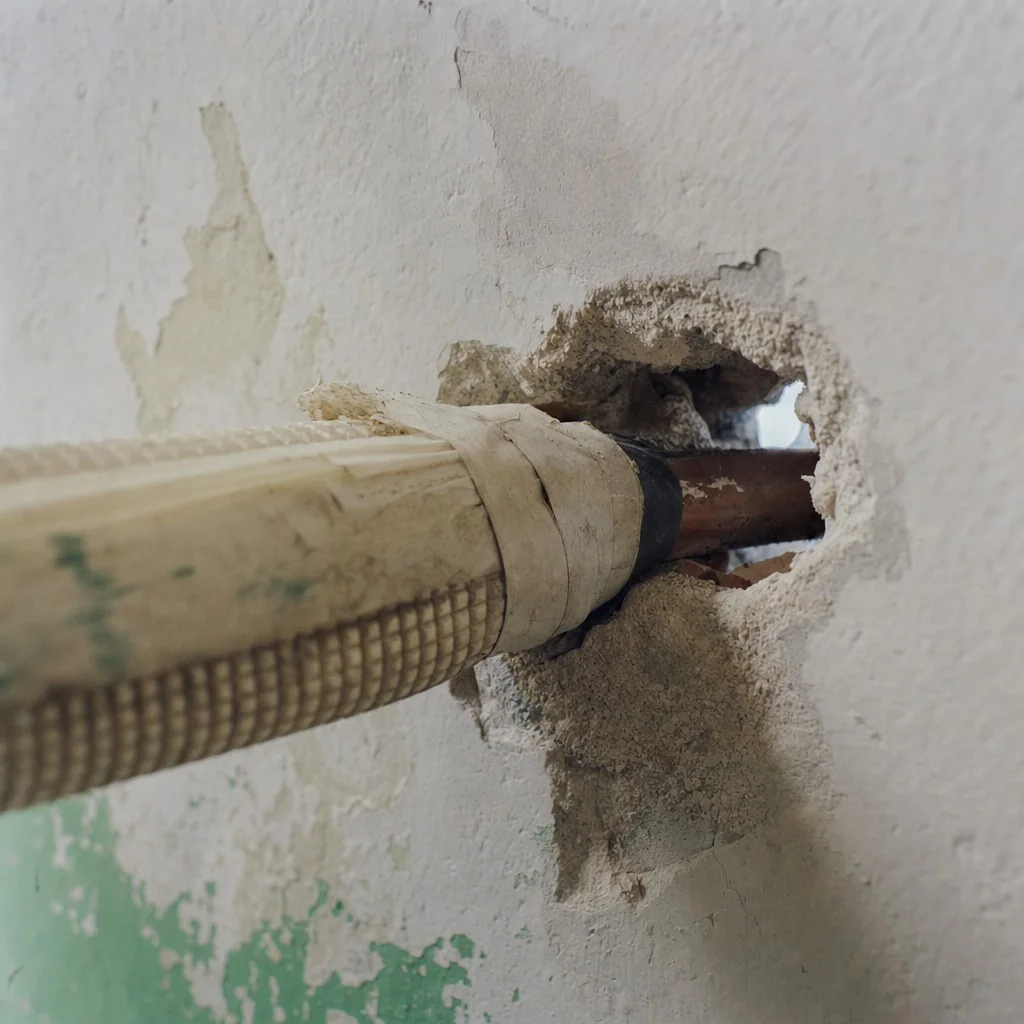
Step 2 — exclusion, the part that actually ends it. This is sealing every way in. A house mouse fits through a gap the width of a pencil; a young rat through a two-rupee-coin hole. Stuff gaps with steel wool packed tight and then seal over it — rats chew through foam, silicone and plaster, but they won’t chew steel wool. Fit a door sweep or brush strip on the gap under the main door and the kitchen door. Put metal mesh over drain mouths, the kitchen exhaust outlet and any open vent. Seal around pipe sleeves — the AC pipe, the water inlet, the gas line. This is the unglamorous work that decides whether they come back.
Step 3 — snap traps, indoors only. Inside the house, a good old snap trap beats poison every time, because the rat dies where you can see it and remove it — no smell in the wall. Set traps flush against walls with the trigger facing the skirting, because rats run along edges, not across open floor. Bait with something sticky they can’t grab and run — a smear of peanut butter works far better than a loose piece of cheese. Use several at once; one trap for a colony is pointless. Glue boards are sold everywhere but they’re slow and cruel, and a strong rat just drags it off — I don’t recommend them indoors.
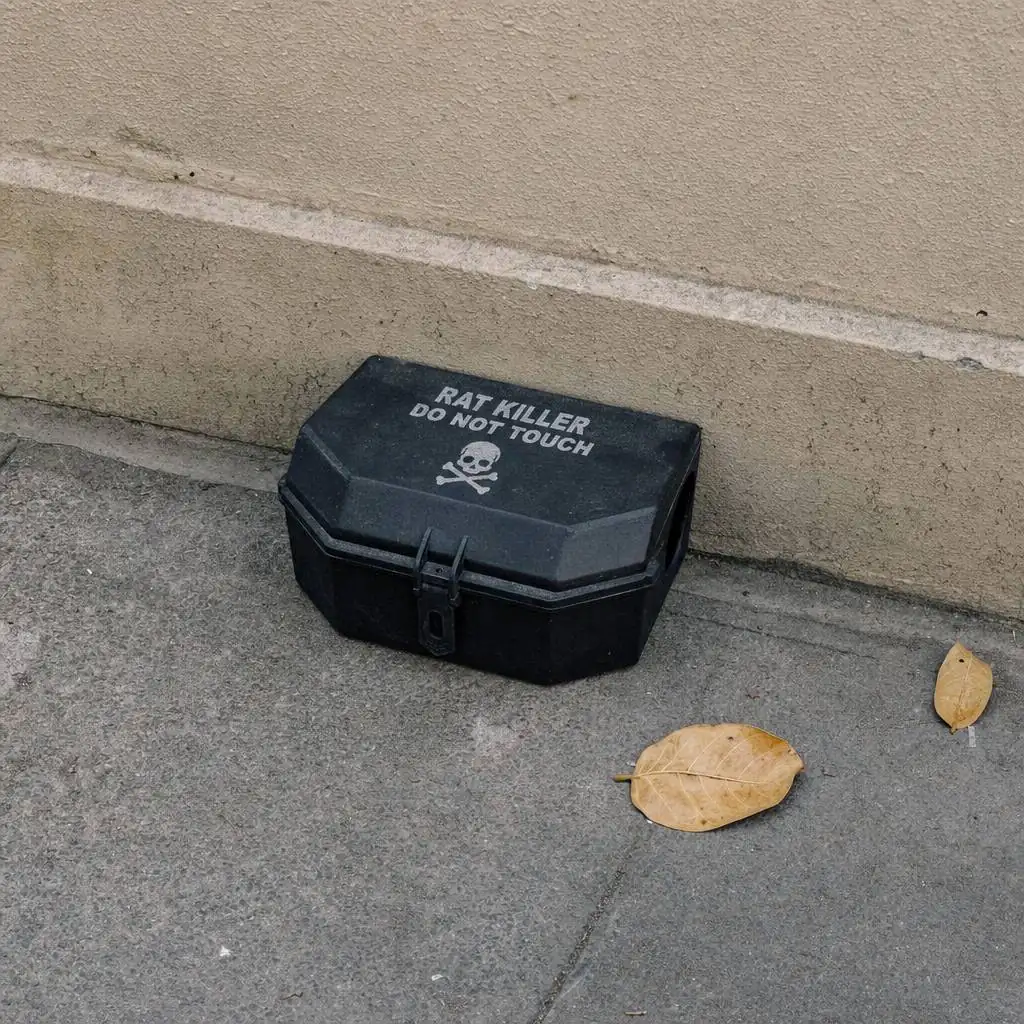
Step 4 — tamper-proof bait stations, outside only. There is a place for bait: in a locked, tamper-proof station, placed outdoors along the compound wall, near burrows, by the gate — never loose, never indoors, never where a child or pet can reach. The station knocks down the population trying to get in from the lane while your indoor traps and proofing handle anything already inside. That’s the difference between how a kirana-shop packet gets used and how a professional uses the same active ingredient safely.
Real rodent control cost in Delhi (2026)
Here’s honest 2026 pricing. A one-off rodent visit means inspection, trap placement, sealing the obvious gaps and an outdoor bait station where it’s safe. For a recurring problem — or any food business — an annual contract (AMC) with scheduled visits works out cheaper and actually keeps them gone.
| Property | One-off visit (from) | What’s included |
|---|---|---|
| 1–2 BHK flat | ₹1,499–₹2,499 | Inspection, indoor traps, gap sealing, 1 outdoor station |
| 3–4 BHK flat / floor | ₹2,499–₹3,200 | More traps, ceiling/loft check, multiple stations |
| Independent bungalow | ₹3,500+ | Full perimeter, burrow baiting, drain proofing |
| Kirana shop / godown | ₹2,499+ | Stock-area traps, station ring, follow-up visit |
| Restaurant / cloud kitchen | ₹2,499+ per visit | FSSAI-style record, monitoring, scheduled service |
| Annual AMC (any home/shop) | ₹4,999/year+ | Scheduled visits, monitoring, written service log |
Treat anyone quoting ₹300 to ‘finish all your rats today’ with suspicion — that’s almost always one loose poison packet flung behind the fridge, which is exactly the dead-rat-in-the-wall scenario you’re trying to avoid. Real rodent work takes inspection time and at least one follow-up.
Why rats are a real risk, not just gross
People tolerate a rat far longer than they should because it feels like an embarrassment rather than a hazard. It’s a hazard.
Fire. Rats’ teeth never stop growing, so they gnaw constantly to file them down — and electrical cable is a favourite. Stripped wiring inside a wall or behind an appliance is a genuine short-circuit and fire risk. Plenty of ‘mystery’ electrical faults in older Delhi homes trace back to a rat chewing the insulation. They’ll also chew through pipes, gas lines and the wiring loom of a car parked in the basement.
Food and surface contamination. A rat doesn’t just eat your grain — it walks through the drain and then across your kitchen platform, leaving droppings, urine and hair on every surface. You end up throwing away far more food than it ever ate, plus you’re prepping on a contaminated counter.
Disease. This is the serious bit. Rodents spread leptospirosis through their urine — a real monsoon risk in a city that floods — along with salmonella and other bugs. The National Centre for Disease Control tracks rodent-borne illness in Indian cities for a reason. A scratching noise in the ceiling is annoying; a sick child is not.
Running a kitchen, kirana shop or cloud kitchen?
Get a rodent AMC with a written service record your FSSAI auditor will actually accept — from ₹4,999/year.
Restaurants, kirana shops & cloud kitchens — you need an AMC
If you run any kind of food business, a one-off visit isn’t enough — and it isn’t just about hygiene, it’s about your licence. The Food Safety and Standards Authority of India expects food premises to have an active pest-control programme, and an auditor will ask to see the records: dates of visits, what was found, what was done, a map of where the bait stations sit. A verbal ‘haan, we get it done sometimes’ will not pass.
A proper rodent AMC gives you scheduled visits (usually monthly for a busy kitchen), tamper-proof stations numbered and mapped, a monitoring log, and a signed service report each time. That paperwork is what keeps your FSSAI file clean. For a cloud kitchen packed into a tight industrial pocket — the Okhla and Naraina belts are full of them — this matters even more, because your neighbours’ rats become your rats the moment one kitchen slacks off. An AMC from around ₹4,999 a year is cheaper than one failed audit.
Keep them out for good — the proofing checklist
Killing the rats inside is half the job; the half that actually lasts is closing the doors they came through. Here’s where they get into Delhi homes, and roughly how well each fix holds up if you do it properly. The bars below are simple — longer and green means it reliably keeps rodents out; shorter and amber means it helps but won’t hold on its own.
Indoor poison vs trap-and-exclude (2026)
Share of Delhi homes still rodent-free three months after treatment — our field experience, not a lab study.
The common Delhi entry points, in the order we usually find them:
| Entry point | The fix |
|---|---|
| Gap under the main / kitchen door | Door sweep or brush strip flush to the floor |
| Hole around the AC copper-pipe sleeve | Steel wool packed in, then sealed over |
| Open or cracked drain mouth | Metal grate / mesh, repair the cracked cover |
| Kitchen exhaust / chimney outlet | Fine metal mesh on the outside vent |
| Gaps where water / gas pipes enter | Seal each sleeve with steel wool + sealant |
| Burrows along the compound wall | Collapse, fill, and ring with outdoor stations |
| Loft / false-ceiling gaps | Seal access points, set traps inside the void |
Areas we serve across Delhi
We do rodent control across most of Delhi — South Delhi (Lajpat Nagar, Greater Kailash, Saket, Malviya Nagar, Khanpur), the old-city and trade belts where brown rats are worst (Chandni Chowk, Sadar Bazar, Khari Baoli, Karol Bagh), the West and Central pockets (Rajouri Garden, Naraina, Patel Nagar), East Delhi (Laxmi Nagar, Mayur Vihar, Preet Vihar) and the North Delhi blocks. If you’re in an older DDA colony with shared drains and a common boundary wall, you’re exactly the kind of place where the trap-and-exclude method earns its keep — sorting one flat without proofing the shared gaps just sends the rats next door and back.
Coming soon: Gurgaon, Noida, Faridabad and Ghaziabad. For now, if you’re inside Delhi and you can hear them, call 95603 66362 and we’ll come look before you reach for a poison packet.
Frequently asked questions
How do I get rid of rats in my Delhi flat in 2026?
Do four things together: store all food in steel containers and fix any dripping tap so they have nothing to eat or drink; seal every gap with steel wool and a door sweep so they can’t get in; set several snap traps flush against the walls indoors; and put a tamper-proof bait station outside only. Skip the indoor poison — a rat that dies inside a wall leaves a smell you can’t remove for weeks.
Why shouldn’t I just use rat poison indoors?
Because the rat doesn’t die where you can reach it. It eats the bait, wanders into a wall cavity or the false ceiling, and dies there — giving you two to three weeks of a rotting smell, far worse in a Delhi summer. Indoor poison is also a real danger to children, pets and street dogs, rats can become bait-shy, and it never seals the gap they came through. Keep poison outdoors in a locked station only.
How can I tell if it’s a rat or a mouse?
A mouse is small with rice-grain droppings and lives in clutter indoors. A brown sewer rat is big and heavy with capsule-shaped droppings and comes up through drains. A roof rat is slimmer, climbs, and lives in lofts and false ceilings — if the scratching is above you at night, it’s usually a roof rat. The type decides what trap you use and where you set it.
What does rodent control cost in Delhi in 2026?
A one-off rodent visit for a 1–2 BHK flat is roughly ₹1,499 to ₹2,499; a 3–4 BHK around ₹2,499 to ₹3,200; an independent bungalow from ₹3,500. Shops and restaurants start around ₹2,499. An annual AMC with scheduled visits starts from about ₹4,999 a year. GST at 18% is extra. Be wary of anyone quoting ₹300 — that’s just a loose poison packet.
Is professional rodent control safe for children and pets?
Done properly, yes. Indoors we use snap traps and proofing, not loose poison, so there’s nothing for a child or pet to pick up. Any bait goes into locked, tamper-proof stations placed outdoors against walls and near burrows, away from where children and pets go. The safety problem comes from scattering shop poison on the floor — which is exactly what we avoid.
How do I stop rats from coming back after I get rid of them?
Seal the ways in — that’s the only thing that lasts. Fit door sweeps on the gaps under doors, pack steel wool into the holes around AC and water pipes, mesh over drains and the kitchen exhaust, and collapse any burrows along the compound wall. Keep food in steel containers. Killing the rats inside without sealing the gaps just invites the next one in within days.
What’s the best bait for a rat trap?
Something sticky they can’t grab and run with — a smear of peanut butter works much better than a loose piece of cheese, which they often steal without setting off the trap. Set the trap flush against a wall with the trigger end towards the skirting, because rats run along edges, not across open floor, and use several traps at once rather than one.
Are glue boards or glue traps a good idea?
Not indoors, in our view. They’re slow, they’re cruel, and a strong rat will simply drag the board off and hide. A snap trap is faster and cleaner. If you do have a heavy brown rat near drains, you’re better off sealing the drain and using an outdoor tamper-proof station than relying on glue.
There’s a dead-rat smell in my wall — what do I do?
This is exactly why we tell people not to poison indoors. Once a rat dies inside a wall or ceiling cavity, there’s no spray that removes the smell — you wait it out over two to three weeks, or you open up the cavity to find it, which often means breaking tiles or the false ceiling. Ventilate hard and use it as the reason to switch to traps-and-sealing in future.
Do restaurants and kirana shops in Delhi need a rodent AMC?
Effectively yes. FSSAI expects food premises to run an active pest-control programme, and an auditor will ask to see dated service records and a map of bait-station locations — a one-off visit won’t cover you. A monthly AMC with a written service log, from around ₹4,999 a year, keeps your FSSAI file clean and is far cheaper than a failed audit.
Can rats really cause electrical or fire problems?
Yes, and it’s common. A rat’s teeth grow constantly, so it gnaws to wear them down, and electrical cable is a favourite target. Stripped wiring inside a wall or behind an appliance is a genuine short-circuit and fire risk — a lot of unexplained electrical faults in older Delhi homes turn out to be rat damage. They’ll also chew car wiring in basement parking.
How long does it take to get rid of rats completely?
For a flat, you’ll usually see results within a few days of trapping plus sealing, with a follow-up to mop up any survivors. A heavy infestation in a bungalow or a shop near drains takes longer and needs ongoing monitoring. Nobody honest will promise ‘100% gone today’ — rodent control is about reducing the population and closing the doors so they stay out.
Stop guessing — let us find the route they’re using
Inspection, indoor traps, gap sealing and a safe outdoor station — no poison flung around your kitchen. Same-day visits across most of Delhi.
Sources & references
- Central Insecticides Board & Registration Committee (CIB&RC) — regulates the rodenticides allowed in India and their safe-use conditions referenced here.
- National Centre for Disease Control (NCDC) — tracks rodent-borne disease risk in Indian cities, including leptospirosis.
- Food Safety and Standards Authority of India (FSSAI) — sets rodent-control and record-keeping requirements for shops, restaurants and food premises.
- Indian Council of Medical Research (ICMR) — publishes research on rodent biology and integrated control.
Last verified: 9 June 2026. If you find any of these links broken, please let us know.