
Key takeaways
- In hospitals, water safety is part of patient safety — hold tanks to a higher standard
- Quarterly cleaning is a common baseline; critical blocks may need shorter intervals
- Track each tank individually with dated records, method and photos
- Pair cleaning with periodic water-quality testing for audit evidence
- Phase cleaning across tanks so critical areas never lose supply
- Fold tank cleaning into a documented facility water-safety plan; AMC 15–25% off
We cover why hospital water demands a higher bar, how often tanks should be cleaned in a healthcare setting, the records and protocols that support an accreditation audit, how to coordinate cleaning without disrupting patient services, and how KaamGenie handles healthcare-grade jobs in Delhi. This is practical operational guidance aligned with the spirit of accreditation standards — not a substitute for your accreditation consultant’s specific checklist — and it reflects what disciplined facilities actually do rather than any fabricated clause.
Why hospital water demands a higher standard
In healthcare, contaminated stored water can affect vulnerable patients directly — through drinking water, food preparation, wound-care areas, dialysis, and instrument reprocessing. Unlike a home, a hospital cannot treat a dirty tank as a minor inconvenience to be dealt with eventually. Large storage volumes, continuous round-the-clock demand, and multiple tanks spread across blocks all increase the surface where biofilm and sediment can form and persist. Accreditation bodies expect facilities to actively manage water safety rather than react to problems after they surface. In practice that means a planned cleaning programme, a defined frequency, and evidence it is genuinely being followed. The underlying principle is simple but demanding: in a hospital, water safety is part of patient safety, so tank hygiene deserves the same discipline, ownership and documentation as any other clinical support system in the building.
How often hospital tanks should be cleaned
Healthcare facilities should clean water tanks more frequently than ordinary buildings because of continuous use and elevated patient risk. A quarterly cycle is a common and sensible baseline, with high-demand facilities and critical-care blocks moving to a shorter interval. Any incident — visible discolouration, odour, a positive water-quality test, or a supply disruption — should trigger an immediate clean outside the normal schedule, because in a hospital the cost of waiting is measured in patient risk. Because hospitals run multiple sumps and overhead tanks serving different blocks, each tank should have its own tracked cleaning date rather than a single blanket entry for the whole facility. The goal is a documented, defensible frequency that reflects actual risk in each area, not a bare minimum done only when someone remembers or an audit date is approaching on the calendar.
Records and protocols that support an audit
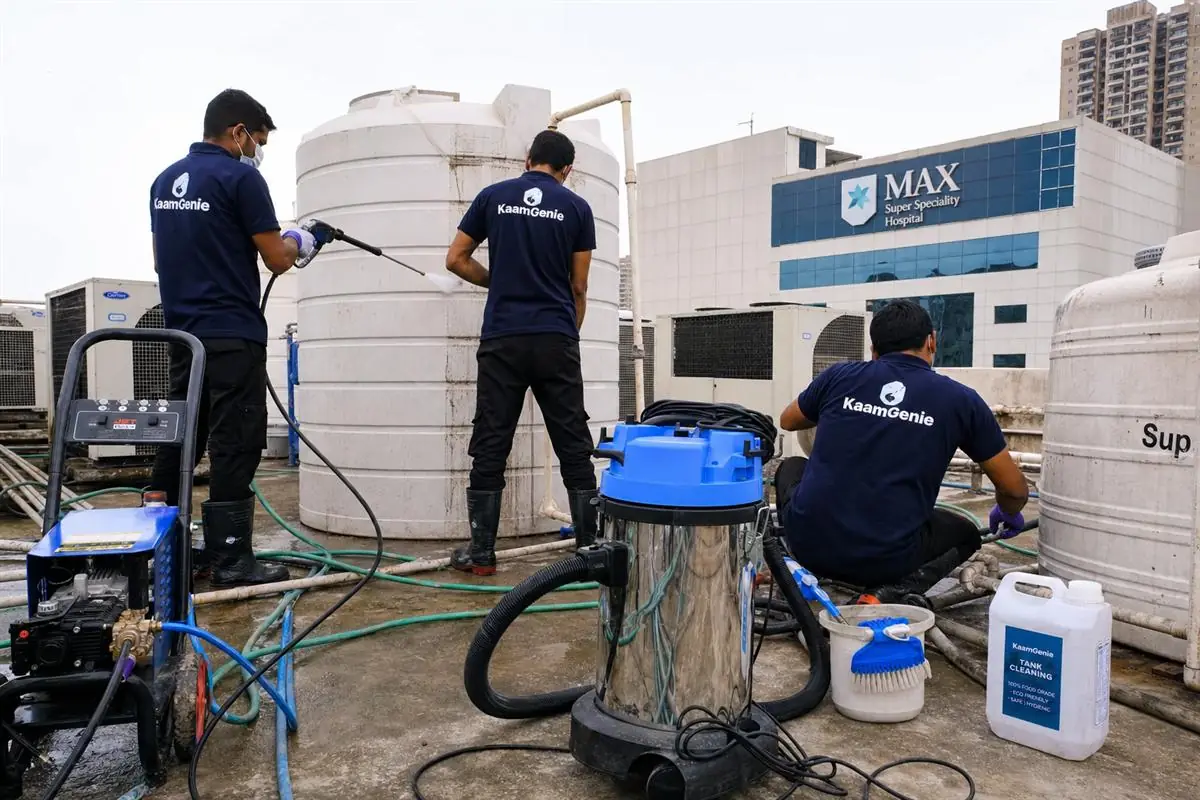
Accreditation is fundamentally about demonstrable, repeatable process, so records matter as much as the cleaning itself. For each tank, keep a record showing the cleaning date, method, personnel, tank identity and capacity, and before-and-after evidence. Pair cleaning with periodic water-quality testing so you can show outcomes, not just activity — a scrubbed tank is not proof of safe water on its own. A written cleaning protocol — drain, scrub, silt removal, disinfection, rinse — that every visit follows makes the whole process auditable and consistent between crews. Our teams follow a consistent method on every water-tank cleaning visit and provide a service record you can file directly. When an assessor asks how you assure water safety, the answer should be a folder of consistent, dated records and test results, not a verbal reassurance from whoever happens to be on shift.
Book your water tank cleaning
Trained crew, food-grade process, before/after photos and a service record every job. ₹699 onwards, same-day where possible across Delhi NCR.
Coordinating cleaning around patient services
Hospitals cannot simply switch off water, so cleaning must be planned carefully around clinical operations. Facilities with multiple tanks can often isolate and clean one at a time while the others maintain supply, avoiding any full shutdown of critical services. Schedule the work during lower-demand windows, coordinate with nursing and housekeeping well in advance, and confirm backup supply for critical areas such as ICUs, theatres and dialysis before draining begins. Clear communication with the facility and infection-control teams keeps everyone aligned and prevents a clean from clashing with a procedure list. A well-run healthcare tank clean is as much about logistics as scrubbing — the aim is spotless tanks with zero interruption to patient care, which is precisely why phasing, timing and coordination matter so much more in a hospital than in an ordinary building.
Delhi-specific risks for healthcare facilities
Delhi hospitals face the same environmental pressures as any building here, amplified by their scale and their patient load. DJB supply is often intermittent, so large sumps store water for long periods during which chlorine dissipates; supplementary borewell water is commonly hard and high in TDS, leaving scale and mineral sediment; and monsoon brings silt and seepage risk to underground sumps every year. Airborne dust settles in overhead tanks between fills, and Delhi’s air quality only adds to that load. For a facility handling immunocompromised or post-surgical patients, none of these can be left unmanaged. A Delhi healthcare cleaning programme should therefore account for both DJB and borewell sources, prioritise the sumps that foul fastest, and step up vigilance through monsoon — the same local factors that affect homes, but with far less tolerance for any lapse.
Building a water-safety plan for the facility
The strongest approach is to fold tank cleaning into a broader water-safety plan rather than treating it as a standalone chore. Start by mapping every tank and sump, what block and services each one feeds, and its capacity, then assign a cleaning frequency to each based on risk. Add periodic testing points, a named responsible person, and a schedule that a facilities team can actually follow and be audited against. This turns water safety from a reactive task into a managed system that an assessor can see at a glance. It also makes handovers between facility managers seamless, because the plan does not live in one person’s head. A documented water-safety plan is exactly the kind of evidence accreditation frameworks reward, and it genuinely reduces the risk of a contamination incident reaching a patient.
Booking healthcare-grade tank cleaning with KaamGenie
KaamGenie services hospitals, nursing homes and clinics across Delhi with a consistent, documented cleaning method and service records suited to accreditation files. We assess your tanks, propose a phased schedule that keeps critical areas supplied throughout, and can run it under an annual maintenance contract at 15–25% below per-visit pricing so your cleaning cadence never lapses between audits. Pricing for healthcare facilities is quoted after a site survey, given the number, size and access of the tanks involved. Call or WhatsApp 95603 66362, or see our Delhi coverage page for details. We are glad to align our protocol and record format with your facility and infection-control team’s specific requirements, so the cleaning evidence fits neatly into how your accreditation documentation is already organised.
Frequently asked questions
How often should a hospital clean its water tanks?
A quarterly baseline is common for healthcare facilities, with high-demand or critical-care areas moving to shorter intervals. Any discolouration, odour, failed water test, or supply disruption should trigger an immediate clean outside the schedule. Each tank should carry its own tracked cleaning date rather than one blanket entry for the whole facility, since blocks differ in risk.
Does NABH require water tank cleaning?
Accreditation frameworks like NABH emphasise safe water and documented facility maintenance, so assessors expect evidence that water safety is actively managed. Rather than quoting a single clause, the practical point is that a planned, recorded cleaning programme with periodic testing is what demonstrates compliance. Confirm the exact checklist wording with your accreditation consultant.
What records should a hospital keep for tank cleaning?
For each tank, record the cleaning date, method, personnel, tank identity and capacity, and before-and-after photos. Pair this with periodic water-quality test results so you can show outcomes as well as activity. A written protocol that every visit follows makes the whole process auditable and answers an assessor’s questions with a consistent, dated evidence file.
Can tanks be cleaned without shutting the hospital’s water?
Usually yes. Facilities with multiple tanks can isolate and clean one at a time while the others maintain supply, avoiding a full shutdown. Scheduling during low-demand windows, coordinating with nursing and housekeeping, and confirming backup supply for critical areas such as ICUs and theatres before draining keeps patient services running throughout the clean.
What Delhi-specific risks affect hospital tanks?
Intermittent DJB supply means large sumps store water for long periods; supplementary borewell water can be hard and high in TDS; and monsoon brings silt and seepage risk to underground sumps. Airborne dust settles in overhead tanks between fills. For facilities treating vulnerable patients, these local factors demand extra vigilance, especially on the sumps that foul fastest.
Are your crew police-verified before they enter a hospital?
Yes. Our teams are trained and police-verified, which matters in a healthcare setting with patients and restricted areas. We can share crew details in advance for your security desk and coordinate with your facility team so the visit meets your access and infection-control expectations without disruption.
Can you clean separate tanks for wards, OT and kitchen on a phased schedule?
Yes. We map your tanks and work zone by zone so critical areas like operation theatres and the kitchen are never all off at once. Each tank gets its own dated record and photos, which keeps your water-safety documentation clear and tied to the specific service it feeds.
What cleaning agents do you use around immune-compromised patients?
We use a food-grade cleaning and disinfection process and rinse thoroughly so no chemical residue remains in the tank. For a hospital we can align on the disinfection step your infection-control team prefers. The aim is a tank that refills clean and is ready for normal use once flushed.
Do you support night or low-occupancy cleaning windows?
Yes. Many hospitals prefer off-peak slots so ward and OT water is affected least. Tell us your quietest window when you book on 95603 66362 and we schedule the crew accordingly, working tank by tank so essential services keep running throughout.
Can we set up an AMC so cleaning and records stay audit-ready year-round?
Yes. An annual maintenance contract fixes the cleaning frequency your facility needs and keeps a continuous, dated paper trail with photos for each visit. That way, when an NABH assessor asks for your water-safety history, the evidence is already organised rather than scrambled together at the last minute.
Sources & references
- Bureau of Indian Standards (BIS) — IS 10500:2012 is the canonical Indian Standard for drinking water specification, defining acceptable limits for physical, chemical and biological parameters.
- WHO Guidelines for Drinking-water Quality, 4th edition — the global reference for water quality standards, including guidance on safe storage and disinfection.
- Food Safety and Standards Authority of India (FSSAI) — defines water quality requirements for food businesses, including hygiene standards for stored water and acceptable disinfection chemicals.
- WHO Fact Sheet on Drinking Water — overview of safe drinking water requirements and contamination risks.
- CPHEEO — Manual on Water Supply and Treatment — the Government of India’s engineering manual covering tank design, cleaning protocols and disinfection practices.
Last verified: 6 July 2026. If you find any of these links broken, please let us know.