
Quick answer — kitchen pest control in Delhi (2026)
- The kitchen is the #1 hotspot: food crumbs, a leaking tap, warmth from the fridge and stove, and the moist drain line under the sink give cockroaches, ants and rats everything they need in one room.
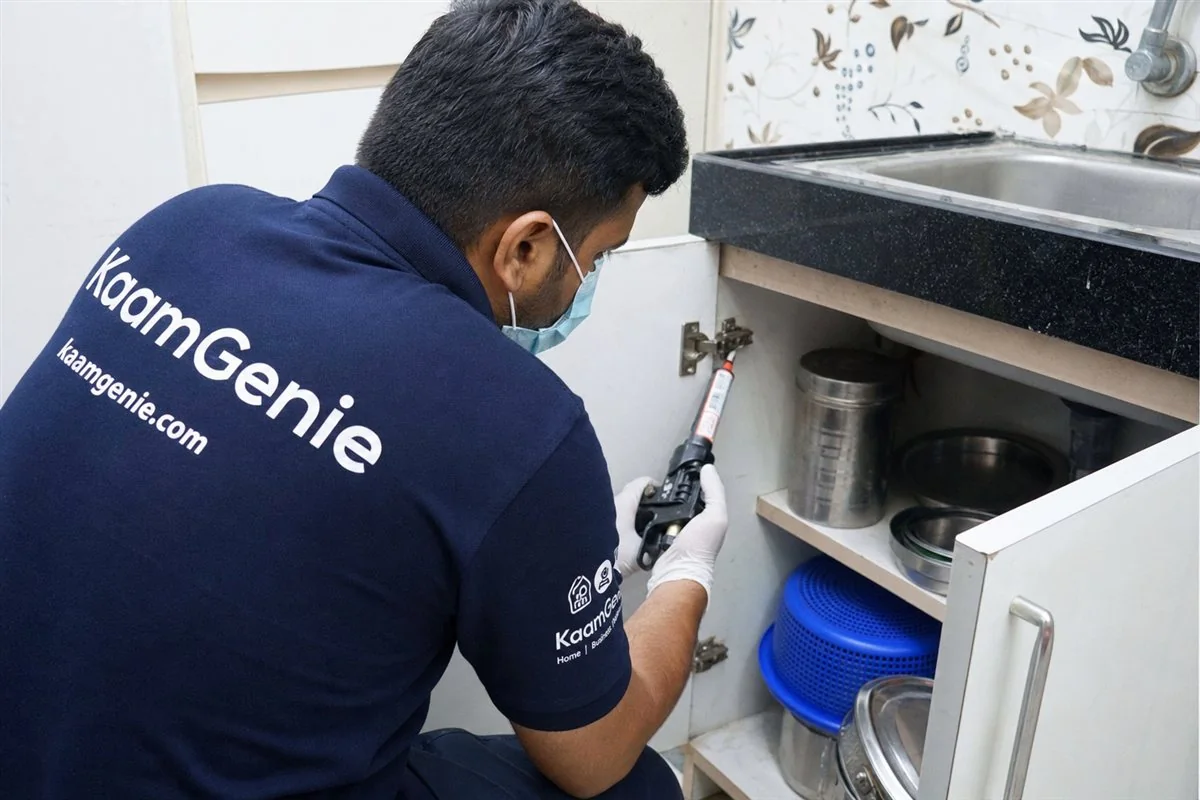
- Gel-bait, not spray, for a kitchen: an odourless food-safe gel is dotted into cracks and hinges — no fumes over your food, no need to empty the whole house. The roaches eat it, carry it back, and the colony collapses over 1–2 weeks.
- Clear before treatment: wipe down counters, empty the under-sink cabinet, and put open food in containers. That’s it — you don’t evacuate for gel-bait.
- Real cost (2026): cockroach gel-bait from ₹599; a full kitchen-and-home general treatment from ₹999; rodent control from ₹999; AMC from ₹2,999/year. GST 18% extra.
- How long it lasts: a good gel-bait round holds for months if you keep the kitchen dry and sealed; most homes do well on two or three visits a year.
- Same-day where slots allow across Delhi. No honest service promises a forever-pest-proof kitchen — hygiene plus treatment is the real fix.
Why the kitchen is Delhi’s #1 pest hotspot
When someone calls and says they have a roach problem, the first question I ask is simple: where do you see them first thing in the morning when you switch on the light? The answer is almost always the kitchen — near the sink, around the gas stove, behind the toaster. There’s a reason for that, and it isn’t bad luck or a dirty house. A kitchen is the one room in any Delhi flat that quietly offers a pest all four things it needs to live and breed, in the same square metre.
Think about what’s in there. Food — crumbs in the toaster tray, a smear of ghee behind the stove, the grain of atta that slips behind the dabba, the bin under the sink. Water — a tap that drips, the wet trap under the sink, condensation behind the fridge, the dishcloth that never quite dries in the Delhi humidity. Warmth — the motor at the back of the fridge and the gap behind it stay warm 24 hours a day, and so does the space around the stove. And shelter — the hinge gaps in modular cabinets, the hollow behind the slab, the cracks where the platform meets the wall, the channel the drain pipe runs through. A cockroach wants a tight, dark, warm crack near food and water, and a fitted Delhi kitchen is basically a hotel built to that brief.
The drain line matters more than most people realise. The pipe under your sink connects to the building’s waste stack, and in older colonies — the kind you’ll find across Lajpat Nagar, Karol Bagh, Laxmi Nagar or any DDA block from the 80s — that shared line is a motorway for the American cockroach (the big reddish-brown one). It comes up the pipe at night from the manhole or a neighbour’s kitchen, which is why you can keep a spotless kitchen and still see roaches: they aren’t yours, they’re commuting. The small light-brown German cockroach is the opposite — it’s a resident, it breeds inside your cabinets, and a single female can found a whole infestation. Knowing which one you have changes how you treat, and that’s the first thing a real technician will check.
The usual suspects: cockroaches, ants, and the occasional rat or lizard
A Delhi kitchen draws a fairly predictable cast. Here’s who you’re actually dealing with and what each one is telling you.
- German cockroaches — small, fast, light brown, found inside cabinets, drawers and around the fridge motor. These breed indoors. If you see little ones (nymphs), you have a resident colony, not visitors, and this is the classic gel-bait job.
- American cockroaches — the big ones that come up the drain at night and scuttle when you turn the light on. Treatment here is as much about sealing the drain and the entry points as baiting.
- Ants — usually the tiny black sugar ants trailing to a spill, or the slightly aggressive ones that show up in the monsoon. The line on your counter is a supply route back to a nest in a wall cavity or behind the tiles; killing the visible ants does nothing, you have to bait the trail so they carry it home.
- Rats and mice — the occasional visitor that gnaws into the atta or leaves droppings in the back of a low cabinet. In Delhi they come from the shared shaft, the gap under the kitchen door, or the drain. A rat in the kitchen is a hygiene and wiring risk (they chew cables), so it’s worth acting fast.
- Lizards — the house gecko on the wall is, honestly, a symptom rather than the disease. Lizards follow insects. If your kitchen has lizards, it has the moths, flies and roaches they’re eating; fix the insects and the lizards drift off on their own. No reputable service should be poisoning geckos.
I mention all of these because a kitchen problem is rarely just one pest. Clear the roaches and the lizards lose their dinner; seal the drain for the roaches and you often block the mice too. Good kitchen pest control treats the room, not a single insect.
| Pest | Where you see it | The right treatment |
|---|---|---|
| German cockroach | Inside cabinets, drawers, fridge motor | Odourless gel-bait in cracks & hinges |
| American cockroach | Up the sink drain at night | Gel-bait + drain sealing & entry points |
| Sugar ants | Trail across counter to a spill | Ant gel-bait at the trail, nest at source |
| Rats / mice | Gnawed atta, droppings in low cabinet | Bait stations, snap traps, seal the gaps |
| House lizard | On the wall near the tube light | Treat the insects it feeds on — not the lizard |
Why gel-bait, not spray, belongs in a kitchen
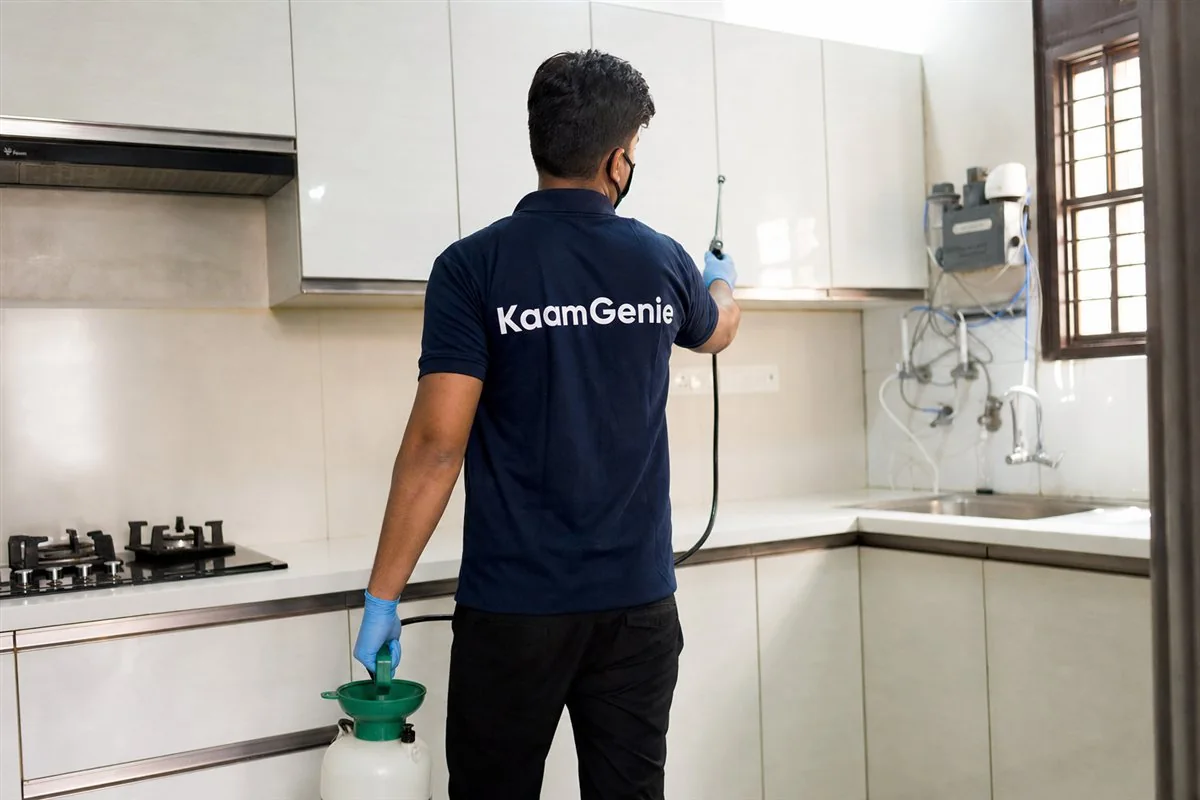
This is the part I feel strongest about, so let me be blunt. You should not be spraying chemical pesticide over the surfaces where your family’s food is prepared. The old-school method — a man with a pressure pump flooding the kitchen with a sharp-smelling spray, telling you to leave the house for four hours — is the wrong tool for this room. The fumes settle on counters you’ll chop vegetables on tomorrow, and worse, it actively fails against German cockroaches, which scatter from the smell and breed in the cracks the spray never reached.
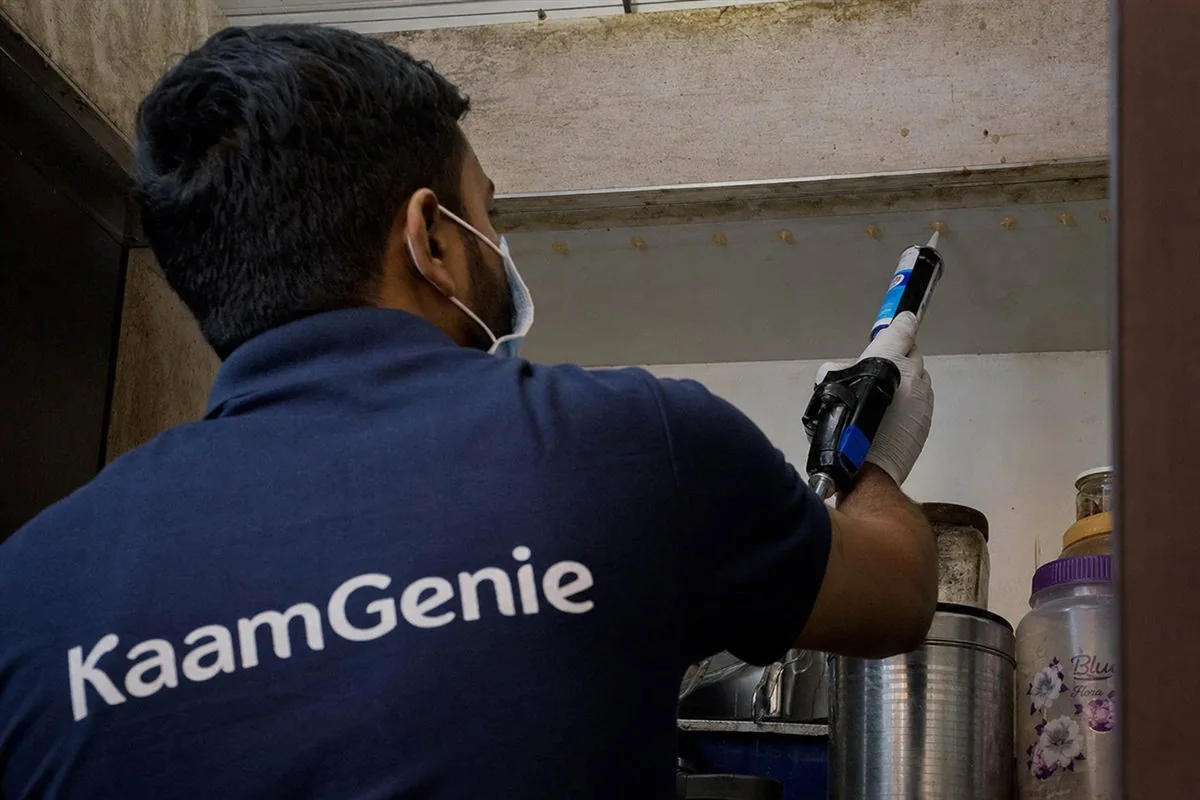
The modern, sensible approach for a kitchen is odourless gel-bait. The technician places tiny dots of an edible gel — about the size of a matchhead — precisely into the cracks, cabinet hinges, the gap behind the fridge, the corners under the sink, exactly where the roaches travel. There’s no spraying, no smell, and no need to empty the house or vacate for hours. You can be cooking again the same evening. The gel itself sits hidden inside cracks, away from food-contact surfaces.
Here’s the clever bit, and why it actually clears a colony instead of just thinning it. The roach eats the gel, goes back to its hiding place, and dies there. Other roaches feed on it, and on its droppings, and pass the active ingredient along — a chain reaction called the cascade effect. So you don’t just kill the ones you can see; you reach the dozens hidden in the wall that you never would have sprayed. Over one to two weeks the population crashes. The same logic works for ants: an ant gel-bait gets carried back into the nest and kills the queen, which is the only way to actually stop the trail rather than wiping it five times a day. The professional products used for this are approved by the Central Insecticides Board & Registration Committee (CIB&RC), and a proper technician uses the right one at the right dose — not a random tube off a shelf.
Cockroaches behind the kitchen slab?
Our technician dots odourless food-safe gel-bait into the cracks, hinges and the gap behind your fridge — no spraying near food. Cockroach gel-bait from ₹599 (GST 18% extra).
What to clear before the technician arrives
Gel-bait is low-fuss compared to spraying, but ten minutes of prep makes it work far better. The golden rule: the gel has to be the most appealing food in the kitchen. If there are crumbs and spills everywhere, the roaches eat those instead and ignore the bait. So:
- Wipe down the counters and stove so there’s no competing food. A clean, slightly hungry kitchen makes the bait irresistible.
- Empty the under-sink cabinet and clear the gap behind and beside the fridge so the technician can reach the real hiding spots. These two spots are where the action is.
- Put open food into sealed containers — the atta, the sugar, the open packets. Standard kitchen hygiene anyway, and it removes the alternatives to the bait.
- Don’t deep-clean with strong cleaner right before — and crucially, don’t scrub the gel dots off afterwards. The single most common reason a treatment “didn’t work” is that someone wiped the gel away the next morning thinking it was dirt. Leave it; it’s doing its job in the crack.
- Flag the sensitive stuff: tell the technician about a baby, the location of pet food and water bowls, and any fish tank, so bait is placed well out of reach.
That’s genuinely all. No emptying the whole flat, no four hours at the neighbour’s. The visit itself usually takes 30–45 minutes for a standard kitchen, longer if we’re also sealing drains or setting rodent stations.
Real cost of kitchen pest control in Delhi (2026)
Let’s talk honest 2026 numbers so you can spot both the lowball and the overcharge. The headline price for getting cockroaches out of a kitchen with gel-bait starts at ₹599. Where you land above that depends on the size of the home, whether it’s the whole house or just the kitchen, and whether ants and rodents are in the mix too. Anything advertised at ₹99 or ₹149 for “cockroach spray” is the pressure-pump theatre I warned about — one pass, no follow-up, gone in a fortnight.
| Service | What you get | Starting price (2026) |
|---|---|---|
| Cockroach gel-bait (kitchen focus) | Odourless gel in kitchen cracks, hinges, drain points | From ₹599 |
| Ant gel-bait add-on | Trail and nest baiting alongside roach treatment | From ₹599 |
| General home treatment (1–2 BHK) | Kitchen + bathrooms + whole flat, cockroach & ant | From ₹999 |
| Rodent control | Bait stations, snap traps, gap sealing | From ₹999 |
| Annual maintenance (AMC) | Scheduled visits across the year, priority callbacks | From ₹2,999/year |
My honest recommendation for most Delhi homes: if it’s a contained kitchen-roach problem, the one-time gel-bait from ₹599 with a free reapplication if it flares up is plenty. If you’ve got recurring issues — an old building with a shared drain stack, or a ground-floor flat that backs onto a garden — an AMC from ₹2,999 a year works out cheaper and saner than paying per panic, because someone comes back on a schedule before the problem rebuilds. Ask for a GST invoice and, if you’re a tenant or run a home kitchen business, keep the before/after photos and audit-ready records the technician provides.
How long it lasts — and keeping the kitchen yours
A good gel-bait round on German cockroaches clears the visible problem within one to two weeks and, in a kitchen you keep reasonably dry and sealed, holds for several months. The gel stays effective in the cracks until it’s eaten or dries out. Most Delhi homes do well on two to three visits across the year — which is exactly what an AMC is built around. American cockroaches and rodents coming up the shared drain are a different rhythm: the treatment kills the ones inside, but as long as the building’s common line is open, new ones can wander in, so sealing and a periodic top-up matter more there.
The chart below is the honest difference I see on the ground between homes that treat once and forget, and homes that pair a treatment with basic kitchen discipline — fixing the drip tap, sealing the food, closing the gaps.
One-off spray vs gel-bait + kitchen hygiene — kitchens still clear at 8 weeks (2026)
Rough share of Delhi kitchens still roach-light two months on, from what we see on callbacks.
The discipline isn’t complicated, and it’s what stops you ever paying for this twice. Fix the dripping tap and the wet trap under the sink — take away the water and a kitchen becomes a much harder place to live. Keep food in sealed containers and wipe up spills the same night. Empty the bin daily and rinse it. Seal the gaps — a simple drain cover or strainer on the sink outlet blocks the night-time roach commute, and steel wool stuffed into the gap where the rat squeezes through closes that door. Pull the fridge out once a month and clean behind it. None of this is glamorous, but a dry, sealed, crumb-free kitchen is the real long-term pest control — the gel-bait just clears what’s already there.
Ants marching across the counter every morning?
We trace the trail to the nest and bait it at source instead of wiping the same line for weeks. Full kitchen-and-home general treatment from ₹999.
When to call a professional vs do it yourself
I’m not going to pretend you need us for every ant. If you spot a single trail to a one-off spill, a shop-bought ant gel and fixing the spill will often sort it. A couple of American cockroaches a month coming up the drain? A drain cover and keeping the trap sealed might be enough. DIY has its place for small, early problems.
Call a professional when: you’re seeing baby cockroaches (that means an established breeding colony inside the cabinets, and DIY rarely reaches it); the problem keeps coming back after you’ve cleaned and shop-baited; you’ve got rats or mice (gnawed wiring is a fire risk and droppings are a health one); you run a home kitchen or tiffin service and need it handled properly with records; or you simply want the cracks and the gap behind the fridge reached by someone who does this every day and carries the CIB&RC-approved products. A good technician will also tell you honestly if your problem is small enough to handle yourself — and if anyone refuses to explain what they’re placing and where, that’s your cue to call someone else.
Get your Delhi kitchen sorted — the food-safe way
A kitchen pest problem isn’t a verdict on your housekeeping — it’s the predictable result of one room offering food, water and warmth in a city built for it. The fix is equally predictable: odourless food-safe gel-bait placed where the pests actually live, a drip tap fixed, the food sealed, and the gaps closed. Do that and your kitchen stays yours. If you’d rather have a trained technician find the cracks, identify which roach you’ve got, and bait it properly — with no spray near your food and no need to vacate — that’s exactly what we do. We serve homes across Delhi, from Dwarka, Janakpuri and Rohini to Saket, Lajpat Nagar and Greater Kailash to Mayur Vihar, Preet Vihar and Laxmi Nagar. Coming soon: Gurgaon, Noida, Faridabad and Ghaziabad. Cockroach gel-bait starts at ₹599. Call 95603 66362 and let’s clear it — same-day where slots allow.
Frequently asked questions
How do I get rid of cockroaches in my kitchen in Delhi in 2026?
Use odourless food-safe gel-bait, not spray. A technician dots tiny amounts of edible gel into the cracks, cabinet hinges, the gap behind the fridge and the corners under the sink. Roaches eat it, carry it back and the colony collapses over one to two weeks. Pair it with fixing the drip tap, sealing food and closing gaps. Kitchen gel-bait starts at ₹599 in 2026, GST 18% extra.
Why is the kitchen the worst room for pests in a Delhi home?
Because it offers all four things a pest needs in one place: food (crumbs, spills, the bin), water (a dripping tap, the wet trap under the sink, fridge condensation), warmth (the fridge motor and stove run warm all day) and shelter (cabinet hinges, the hollow behind the slab, the drain channel). The shared drain line in older Delhi buildings also lets roaches commute in from outside.
Is gel-bait safe to use near food in the kitchen?
Yes, when done properly. The gel is odourless and placed as tiny dots hidden inside cracks, hinges and gaps — never on the surfaces where you prepare food. There’s no spraying and no fumes settling on your counters, and you can cook again the same evening. The products used are CIB&RC-approved and applied at the correct dose, away from food-contact areas, pets and children.
Do I have to empty my kitchen or leave the house for gel-bait treatment?
No. Unlike spraying, gel-bait doesn’t require you to vacate. Just wipe down the counters, empty the under-sink cabinet, clear the gap behind the fridge and put open food in sealed containers so the bait is the most appealing thing in the kitchen. The visit takes about 30–45 minutes and you can use the kitchen straight after.
Why shouldn’t I just spray pesticide in the kitchen?
Two reasons. First, you don’t want chemical spray settling on the surfaces where your family’s food is prepared. Second, it actually fails against German cockroaches — the smell makes them scatter and breed deeper in cracks the spray never reached. Odourless gel-bait is the right tool for a kitchen: targeted, food-safe and far more effective on a resident colony.
How much does kitchen pest control cost in Delhi in 2026?
Cockroach gel-bait focused on the kitchen starts at ₹599. A full general treatment of a 1–2 BHK (kitchen, bathrooms and whole flat) starts from ₹999. Rodent control starts from ₹999, and an annual maintenance plan from ₹2,999 a year. GST 18% is extra. Anything advertised at ₹99–₹149 is a single spray pass with no follow-up — skip it.
How long does kitchen cockroach treatment last?
A good gel-bait round clears the visible problem in one to two weeks and, in a kitchen you keep dry and sealed, holds for several months. Most Delhi homes do well on two to three visits a year, which is what an AMC is built around. If roaches keep coming up a shared building drain, sealing the entry points and periodic top-ups matter more.
What should I clear before the technician comes?
Wipe down the counters and stove, empty the under-sink cabinet, clear the gap beside and behind the fridge, and put open food into sealed containers. Tell the technician about any baby, pet bowls or fish tank so bait is placed out of reach. Don’t deep-clean with strong cleaner right before, and never wipe the gel dots off afterwards — that’s the most common reason a treatment seems to fail.
How do I stop ants coming into my kitchen?
Don’t just wipe the trail — that kills only the visible ants while the nest carries on. Use an ant gel-bait placed on the trail; the ants carry it back and it kills the queen, which actually stops the line. Then remove what drew them: clean up spills the same night, keep sugar and sweets sealed, and fix any moisture. We can bait ants alongside a roach treatment from ₹599.
There’s a rat or mouse in my kitchen — what should I do?
Act fairly quickly, because rodents gnaw wiring (a fire risk) and contaminate food. Professional rodent control uses bait stations and snap traps placed safely, plus sealing the gaps they enter through — under the door, the drain, the utility shaft — often with steel wool. Rodent control starts from ₹999 in 2026. Keep food in metal or hard containers in the meantime.
Why do I have lizards in my kitchen, and should I have them treated?
Lizards (house geckos) follow insects — they’re eating the moths, flies and small roaches in your kitchen. They’re a symptom, not the cause, and no reputable service should be poisoning them. Treat the insects they feed on and reduce the light and moisture that attract those insects, and the lizards move on by themselves.
Should I get a one-time kitchen treatment or an annual plan?
For a contained, one-off roach problem, a single gel-bait from ₹599 (with a free reapplication if it flares) is usually enough. If you’re in an older building with a shared drain stack, a ground-floor flat near a garden, or you run a home kitchen, an AMC from ₹2,999 a year is better value — a technician returns on schedule before the problem rebuilds, and you get GST invoices and audit-ready records.
Clear your kitchen the food-safe way
Let a trained technician identify your roach, find the cracks and bait them with odourless food-safe gel — no spray near food, no need to vacate. We cover all of Delhi.
Sources & references
- Central Insecticides Board & Registration Committee (CIB&RC) — the Indian regulator that approves the gel-baits and other products used in licensed kitchen pest control.
- Food Safety and Standards Authority of India (FSSAI) — sets the food-hygiene and pest-control expectations for kitchens, especially home kitchens and food businesses.
- National Centre for Disease Control (NCDC) — tracks urban pest patterns and the diseases cockroaches and rodents can spread in Indian cities.
- Indian Council of Medical Research (ICMR) — publishes research on cockroach and rodent biology and integrated pest management protocols.
Last verified: 28 June 2026. If you find any of these links broken, please let us know.