
The short version
- The monsoon raises contamination risk through five routes: rooftop runoff, cracked lids and seals, ingress into underground reservoirs, poorer tanker water, and humidity-driven algae.
- Clear water is not clean water — the worst monsoon contaminants (bacteria, fine silt, biofilm) are invisible until they multiply.
- A pre-monsoon clean and seal-check (June) plus a post-monsoon clean (Sept–Oct) is the right cadence for most Gurgaon homes and societies.
- Tanker-fed buildings on Sohna Road, SPR and the Dwarka Expressway belt build sediment fastest during the rains.
- Book a clean any time during the season — no monsoon surcharge, ₹699 onwards for residential.
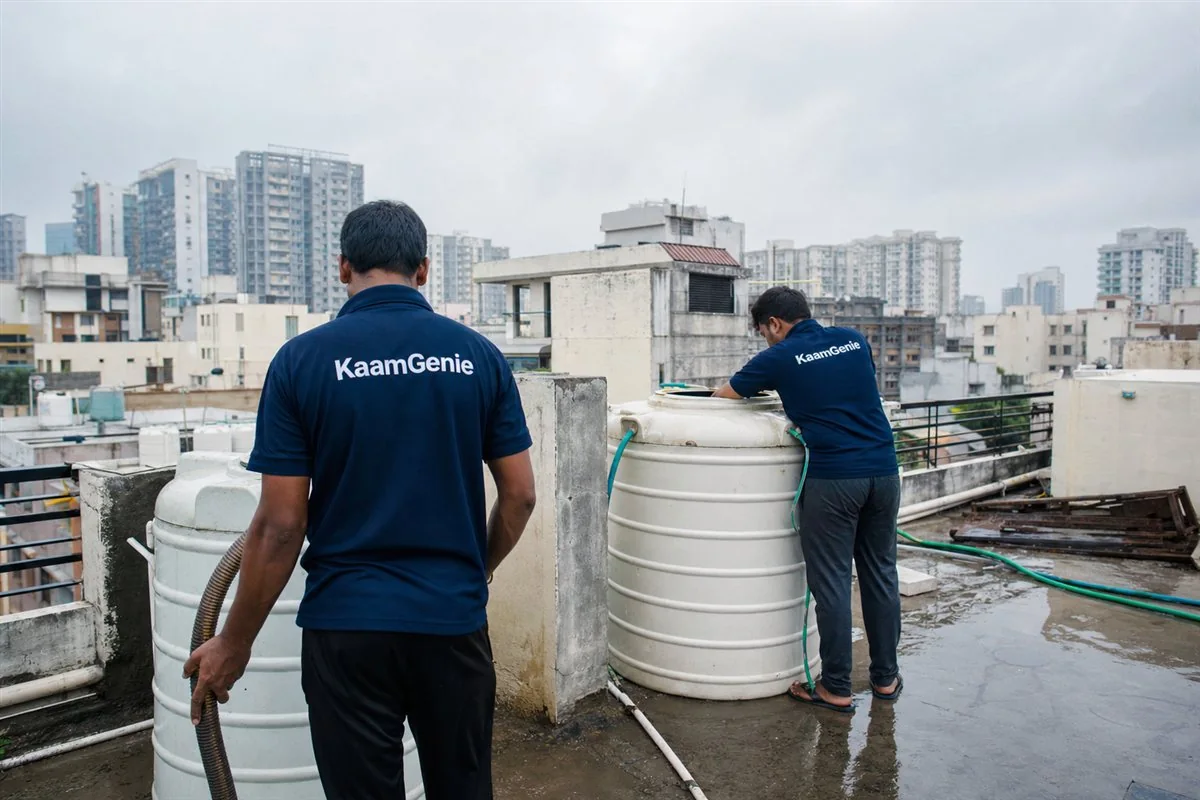
Most people in Gurgaon think about their water tank exactly twice a year: once in peak summer when supply runs short, and once when the water starts smelling odd. The monsoon falls between those moments, so it gets ignored — which is a mistake, because the rains are when the most contamination gets into a tank in the shortest time. This is the season we get the most “the water suddenly tastes earthy” calls from across the Millennium City, from independent builder floors in the older sectors to luxury condominium towers on Golf Course Road.
Gurgaon’s water setup makes it especially exposed. Hard borewell groundwater, heavy reliance on private tankers, and big underground reservoirs feeding rooftop tower tanks — every one of those links is more vulnerable when it’s raining. Below, we walk through what changes during the monsoon, and where the risk actually sits. If you just want it sorted, you can book water tank cleaning in Gurgaon and skip to the bottom.
| Route | What happens in the rains | Most exposed |
|---|---|---|
| Rooftop runoff | Dust on the terrace turns to slurry; leaves, droppings and insects wash toward the tank | Rooftop overhead tanks |
| Cracked lids & seals | Sun-damaged lids, perished gaskets and open vents let rainwater and pests in | Older plastic & Sintex tanks |
| UGR ingress | Waterlogged soil and flooded streets seep through cracks and loose manhole covers | Underground reservoirs / sumps |
| Tanker quality dip | Source runoff + flooded roads + demand spikes lower tanker water quality | Tanker-fed societies & new sectors |
| Humidity algae | Warmth, light and damp drive green/brown biofilm on tank walls | Translucent / loosely-lidded tanks |
Beat the rains — book a monsoon clean
Pre- or post-monsoon, we drain, scrub, disinfect and seal your tank lid properly. Photos before and after, fixed price. ₹699 onwards.
Route 1 — Rooftop runoff and what it carries
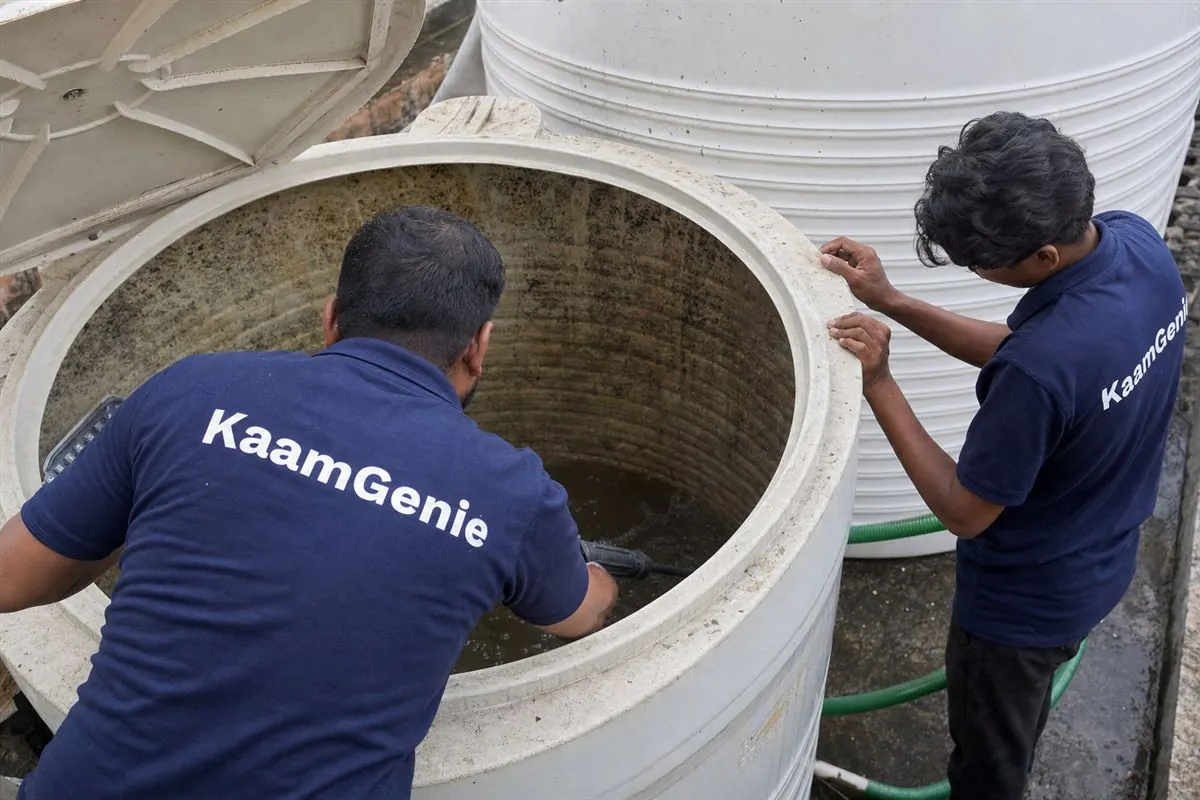
Through the dry months, a Gurgaon terrace collects a remarkable amount of fine dust — construction dust from the never-ending tower-building, road dust, and the usual grime. The first heavy rain turns all of that into a thin slurry that runs across the roof. If your tank lid sits flush with the slab, or there’s any dip around the lid where water pools, that slurry has a path in.
It doesn’t stop at dust. Rooftop runoff during the monsoon carries leaves, bird and pigeon droppings, dead insects, and whatever has been sitting in the roof corners. None of that is something you want seeping past a loose lid into water you’ll later drink. The tank can look perfectly normal from your kitchen tap while a layer of fresh silt settles on the floor with every downpour.
Route 2 — Cracked lids, perished gaskets and open vents
This is the one almost everyone underestimates. A plastic or Sintex tank that has baked in the Gurgaon sun for four or five summers develops a brittle, faded lid. The gasket — if there ever was one — has usually perished. The overflow pipe rarely has a mesh, and the air vent is wide open. Each of those is a doorway.
During the monsoon, wind-driven rain finds every one of these gaps. A hairline crack you can barely see is enough for rainwater carrying surface contaminants to drip in steadily across the whole season. Open overflow and vent pipes are also exactly how mosquitoes and insects get inside — a tank breeding mosquitoes in the monsoon is both a water-quality problem and a dengue problem. Sealing the lid properly and meshing the pipes is half the value of a monsoon clean, and it’s a fix that lasts. If you’re weighing up the season as a whole, our guide on the best time to clean your tank in Gurgaon covers the full-year cadence.
Route 3 — Underground reservoirs and waterlogging
Gurgaon’s underground reservoirs (UGRs) carry the bulk of stored water in most societies and many independent homes, and they’re the most exposed of all during the rains. A UGR sits below ground level, so when a colony waterlogs — and pockets of Sohna Road, the older sectors and parts of Sector 23 see standing water every monsoon — the soil around the reservoir saturates. Any crack in the wall, any loose pipe-entry point, any manhole cover that doesn’t sit flush becomes a route for that water to seep in.
The water doing the seeping is the worst kind: street flood water mixed with silt and, where drains overflow, sewage. It only takes a small breach. This is why we treat UGRs as the priority during monsoon inspections, and why societies in low-lying pockets should have the sump checked and the manhole sealed before the first big rain rather than after. A neglected sump is also where the season’s heaviest sludge collects — if yours hasn’t been opened in a while, our underground sump cleaning guide for Gurgaon walks through what’s involved.
Route 4 — Why tanker water dips in the rains
Large stretches of Gurgaon — the newer sectors on the Southern Peripheral Road, much of Sohna Road, and the fast-growing Dwarka Expressway tower belt — depend heavily on private water tankers. Tanker water is variable at the best of times. In the monsoon, three things stack up against it: the source borewells and ponds take on surface runoff, the tankers themselves crawl through flooded roads, and demand patterns shift, so quality control slips.
The result is that water already carrying more silt and organic load gets pumped straight into your underground reservoir, where the heavier particles settle out as a fresh layer of sediment. Tanker-fed buildings are the ones we see build sludge fastest during the rains. If your society or home runs largely on tankers, the monsoon is precisely when that tanker-water sediment needs clearing — ideally with a post-monsoon clean once the worst of the rains have passed.
Where monsoon risk concentrates — our field severity rating by tank component
A practical, experience-based rating from KaamGenie monsoon callouts across Gurgaon — not a lab statistic
Ratings reflect how often and how severely we see each issue during Gurgaon monsoon visits — underground reservoirs and tanker-fed buildings consistently top the list. Use it to decide where to look first, not as a precise measurement.
Route 5 — Algae loves the Gurgaon monsoon
Algae needs three things to thrive: light, warmth and nutrients. The monsoon delivers all three in abundance. Translucent plastic tanks let light through, loose lids let it in, the air is warm and humid, and the silt washing in brings the nutrients. Within a few weeks you can have a green or brown slime film on the walls and a distinct musty, earthy smell at the tap.
Most common tank algae isn’t directly toxic, but it’s far from harmless: it feeds bacterial growth, clogs outlets and filter cartridges, and makes the water genuinely unpleasant. The cure is twofold — block the light (an opaque, well-fitted lid, ideally a shaded or boxed tank) and physically scrub and disinfect the walls so there’s no biofilm left for it to re-anchor to. A rinse won’t do it; the film has to be broken mechanically and then killed with food-grade disinfectant.
Pre-monsoon vs post-monsoon: when to clean
If you do nothing else, get the timing right. The two windows that matter are:
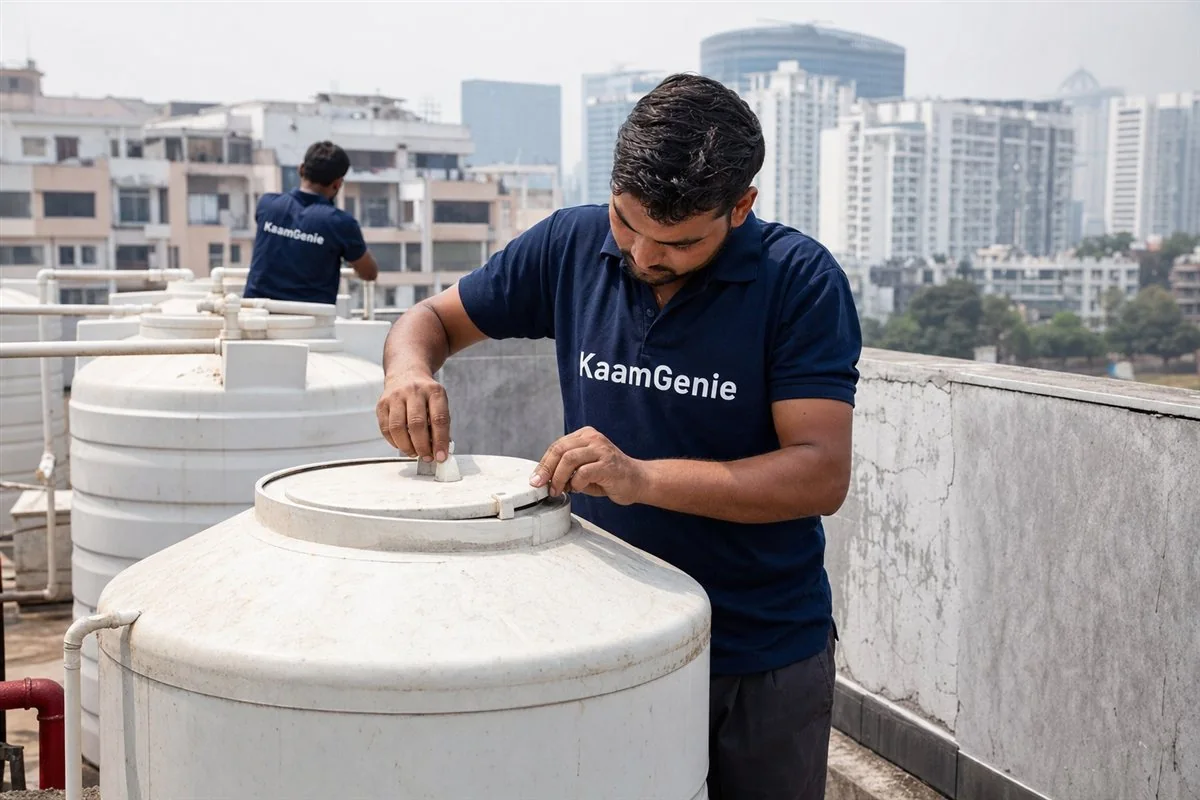
- Pre-monsoon (around June): clean the tank and, just as importantly, replace cracked lids, fit gaskets, and mesh the overflow and vent pipes. You go into the rains with a sealed, sediment-free tank, so there’s far less for any ingress to react with.
- Post-monsoon (September–October): clear out everything the season brought in — silt, runoff residue, algae, and the heavier sediment from poorer tanker water. This is the clean that resets your water for the rest of the year.
For most Gurgaon homes, the post-monsoon clean is the main annual service, with a quick pre-monsoon lid-and-seal check before the first rains. Large AOA/RWA societies with shared reservoirs and tanker dependence do best with both a start-of-season and end-of-season clean — two visits across the monsoon. Many fold this into an annual maintenance contract so the timing is handled automatically and the visits are documented for residents. If you’re a society office-bearer weighing it up, our piece on society water tank cleaning in Gurgaon covers how shared-tank scheduling works.
What a proper monsoon clean actually includes
A monsoon-season clean is the same rigorous job we do year-round, with extra attention to sealing and sediment. In practice that means: draining the tank, hand-removing the silt and sludge the rains have deposited, scrubbing every wall and the floor to break the algae biofilm, a high-pressure jet wash into corners and around fittings, a wet-vacuum of the residual dirty water, and food-grade chlorine disinfection with proper contact time. Then — the monsoon-specific part — we check and seal the lid, fit or replace the gasket, and mesh the overflow and vent so the next downpour stays out.
This applies whether you’re in a high-rise on Sohna Road, an independent builder floor in the older sectors, or one of the newer towers out in Sector 82 and New Gurgaon. The contamination routes are the same; only the tank sizes and access change. You can read more about how we approach the whole city on our water tank cleaning services page, and the hyperlocal detail on the Gurgaon water tank cleaning hub.
Get your tank monsoon-ready
Drain, scrub, disinfect, and seal the lid against the rains. Residential ₹699 onwards; society, UGR and commercial quoted on site.
What to watch for during the rains
Between cleans, a few simple checks will tell you if the monsoon has got into your tank. Treat any of these as a prompt to book a clean:
- An earthy or musty smell at the tap — the classic early sign of silt and algae.
- Cloudy or tinted water, especially first thing in the morning after the tank has sat overnight.
- Sediment in the bucket or a gritty feel when you fill containers.
- Green or brown film visible if you open the lid and look inside.
- Mosquitoes around the tank or larvae in the water — a sign the vents and overflow aren’t meshed.
- Stomach upsets or skin irritation in the household with no other obvious cause.
None of these should be ignored during the monsoon, when they appear faster and worsen quicker than at any other time of year. Book water tank cleaning in Gurgaon the moment you notice two or more — the longer a contaminated tank runs, the more established the biofilm becomes and the harder the eventual clean.
Frequently asked questions
Should I clean my water tank before or after the monsoon in Gurgaon?
Ideally both, but if you can only do one, clean it after the monsoon. A pre-monsoon clean (June) starts the rainy season with a sealed, sediment-free tank so there is less for contaminated ingress to react with. A post-monsoon clean (September–October) clears out everything the rains brought in — silt, runoff, algae and the residue of poorer tanker water. Most Gurgaon homes do well with the post-monsoon clean as their main yearly service and a quick pre-monsoon lid-and-seal check before the first rains.
How does the monsoon actually contaminate a sealed rooftop tank?
Very few rooftop tanks in Gurgaon are truly sealed. Lids crack in the sun, gaskets perish, overflow pipes have no mesh, and air vents are open. During heavy rain, wind-driven water, rooftop dust turned to slurry, leaves, bird droppings and insects all find a way in through these gaps. Even a hairline crack in the lid is enough for rainwater carrying surface contaminants to seep in over a full monsoon. The water inside may look clear but still carry a bacterial load.
My tank looks fine after the rains — why bother cleaning it?
Clear water is not clean water. The contaminants that matter most during the monsoon — bacteria, fine silt, dissolved organic matter and the early stages of algae — are invisible until they multiply. By the time water looks cloudy, smells earthy or tastes off, the biofilm on the walls is already well established. A post-monsoon clean is preventive: it removes the layer before it becomes a problem you can see, smell or fall ill from.
Does the monsoon affect underground reservoirs more than rooftop tanks?
Usually yes. Underground reservoirs (UGRs) in Gurgaon sit below ground level, so when a colony waterlogs, the surrounding soil saturates and water can seep in through cracked walls, loose covers or the pipe-entry points. A flooded street outside a society gate is the classic risk — that water carries silt and sewage overflow and only needs a small breach to enter the UGR. Rooftop tanks face airborne ingress; UGRs face groundwater and surface-flood ingress, which is often dirtier.
Why does tanker water get worse during the Gurgaon monsoon?
Large parts of Gurgaon — newer sectors on SPR, Sohna Road and the Dwarka Expressway belt — rely heavily on private water tankers. During the monsoon, source borewells and ponds get surface runoff, tankers move through flooded roads, and demand spikes, so quality control slips. Water that is already carrying more silt and organic load gets pumped straight into your underground reservoir, where it settles as sediment. That is why monsoon is the season tanker-fed buildings see the fastest sludge build-up.
How do I stop rainwater and insects from getting into the tank?
Four things, all checked during a professional clean: a tight-fitting lid with an intact gasket, a sealed or capped air vent, a mosquito mesh over the overflow and inlet pipes, and no cracks in the tank body or around pipe entries. On a rooftop tank, replacing a sun-damaged lid before the rains is the single highest-value fix. On a UGR, the manhole cover should sit flush and the surrounding apron should drain away from the cover, not toward it.
Is algae growth worse in the monsoon, and is it dangerous?
Yes. Algae needs light, warmth and nutrients, and the humid monsoon provides all three — especially in translucent plastic tanks or tanks with loose lids that let light in. You see it as green or brown slime on the walls and a musty smell. Most common tank algae is not directly toxic, but it feeds bacterial growth, clogs outlets and makes the water unpalatable. The fix is to block light (opaque lid, shaded tank) and to scrub and disinfect the walls so there is no biofilm for it to anchor to.
How often should a Gurgaon society clean its tanks during monsoon season?
For large AOA/RWA societies with shared underground reservoirs and multiple tower tanks, we recommend a clean at the start of the monsoon and again at the end — two services across the season rather than the usual single annual clean. Tanker-dependent societies and those in waterlogging-prone pockets benefit most. Many Gurgaon societies fold this into an annual maintenance contract so the pre- and post-monsoon visits are scheduled automatically and documented for residents.
How much does monsoon tank cleaning cost in Gurgaon?
Residential tank cleaning starts at ₹699 onwards for a standard overhead tank, the same as any other time of year — the monsoon does not carry a surcharge. Underground sumps, society reservoirs and commercial tanks are quoted on capacity and access. If your tank needs extra work because of heavy monsoon silt or algae, the crew assesses and explains it on arrival before any work begins, so there are no surprises.
Sources & references
- Bureau of Indian Standards (BIS) — IS 10500:2012 is the canonical Indian Standard for drinking water specification, defining acceptable limits for physical, chemical, and biological parameters.
- WHO Guidelines for Drinking-water Quality, 4th edition — the global reference for water quality standards, including guidance on storage and disinfection.
- Food Safety and Standards Authority of India (FSSAI) — defines water quality requirements for food businesses, including hygiene standards for stored water and acceptable disinfection chemicals.
- WHO Fact Sheet on Drinking Water — overview of safe drinking water requirements and contamination risks.
- CPHEEO — Manual on Water Supply and Treatment — the Government of India’s engineering manual covering tank design, cleaning protocols, and disinfection practices.
Last verified: 29 June 2026. If you find any of these links broken, please let us know.