
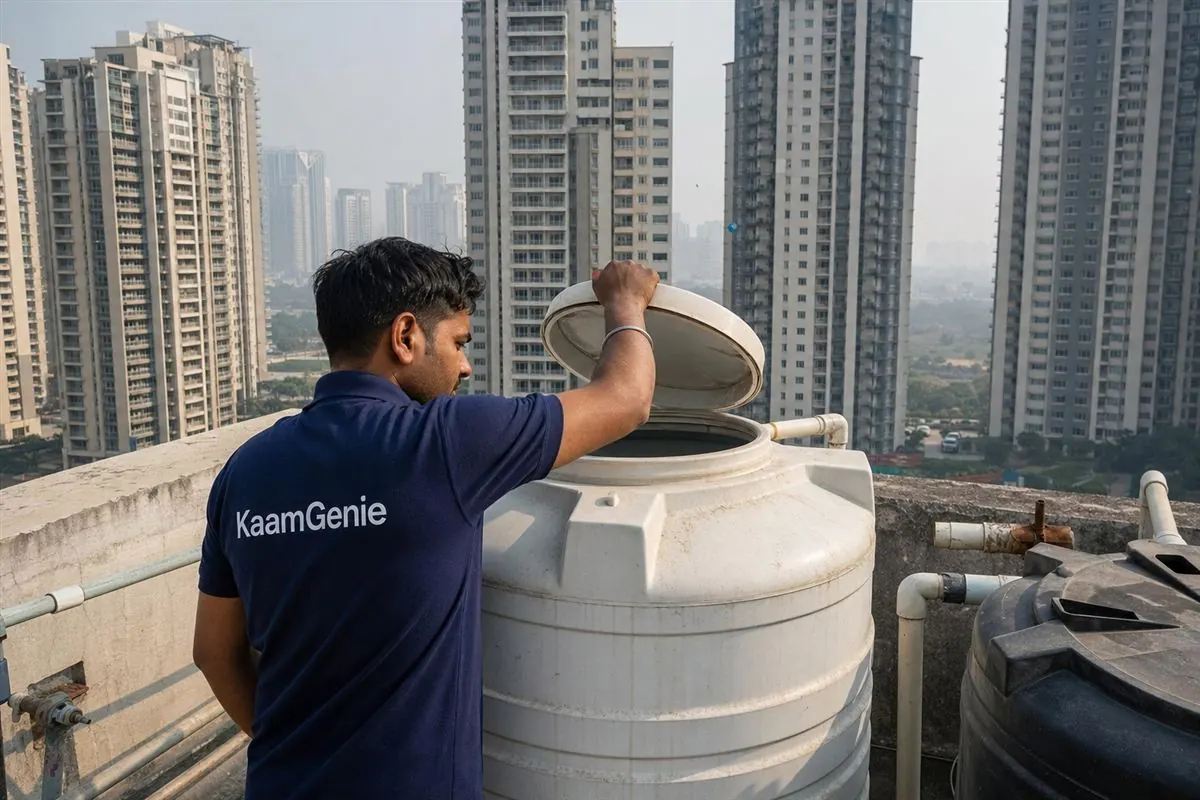
The short answer on timing
- Best single window: late winter into pre-summer — February to April, before the heat and the summer water rush
- Second key clean: straight after the monsoon (September–October), when waterborne contamination peaks
- How often: every six months for most homes; every 3–4 months for hard-water, tanker-fed, or high-occupancy buildings
- Best time of day: morning, so the tank is cleaned and refilled before peak use
- Don’t wait for the calendar if the water smells, looks cloudy, or tastes off — that means clean now
The seasonal calendar is a default schedule, not a ceiling. Gurgaon’s hard borewell groundwater and heavy tanker reliance push many buildings to clean more often than twice a year.
Ask ten people in Gurgaon when they last cleaned their water tank and most will struggle to remember — usually “sometime last year.” That vagueness is the real problem. A water tank is not a once-and-forget job; it is a storage vessel that quietly collects sediment, scale and bio-film between cleanings, and the rate it does that depends heavily on the season and on Gurgaon’s particular water situation. Time the cleaning well and you spend the same money but get far more protection. Time it badly and you are drinking from a tank that turned weeks ago.
Gurgaon (Gurugram) makes timing matter more than most cities. Hard borewell groundwater leaves mineral scale on the walls; a heavy reliance on water tankers drops sand and silt into the tank with every top-up; and the big underground reservoirs feeding rooftop tower tanks across the Golf Course Road and Sohna Road belts hold water long enough for warmth to do its work. Below is the calendar we actually plan crews around, season by season, plus how often different buildings really need attention. For the full method behind a proper clean, our water tank cleaning in Gurgaon hub walks through the process end to end.
| Season | Months | What happens in the tank | Cleaning priority |
|---|---|---|---|
| Late winter / pre-summer | Feb–Apr | Settled winter sediment; growth about to accelerate | Best window — clean now |
| Peak summer | May–Jun | Warmth speeds bacteria & algae; heavy tanker use | Clean if skipped in spring |
| Monsoon | Jul–Aug | Runoff, insects & silt enter via gaps and overflow | Check lid & seals before rains |
| Post-monsoon | Sep–Oct | Contamination from the rains settles in | Second key clean of the year |
| Winter | Nov–Jan | Slow growth; sediment settles quietly | Lowest urgency — catch-up clean |
Two windows stand out: pre-summer and post-monsoon. If you only clean twice a year, those are the two times to do it. Everything else on the calendar is either a catch-up or a response to a warning sign.
Book your pre-summer clean
Get the tank done before the heat and the summer water rush. Full eight-step process, photos and certificate. ₹699 onwards.
Why pre-summer (February to April) is the ideal window
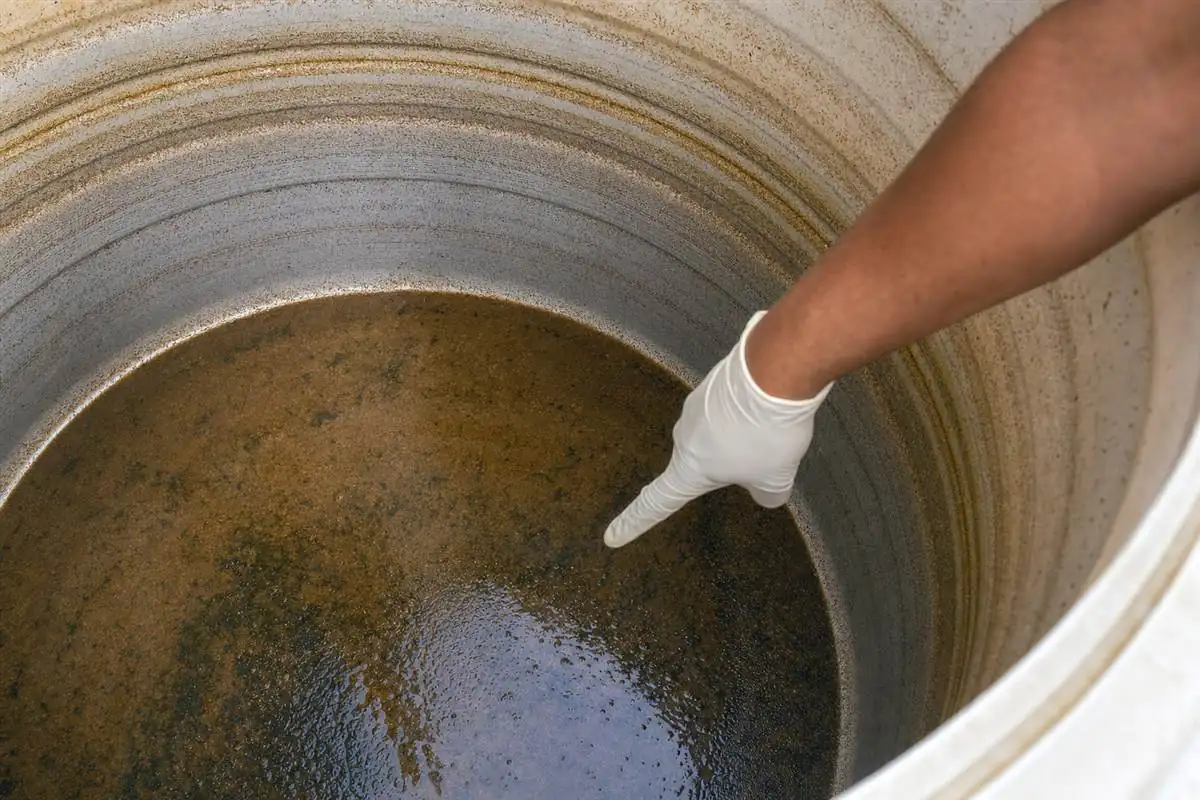
The single best time to clean a tank in Gurgaon is the run-up to summer, roughly February through April. The logic is simple once you see what is happening inside the tank across the year. Through winter, the water is cold and growth is slow, so sediment quietly settles on the floor and a thin film builds on the walls without obviously turning the water. Then the temperature climbs. By April, that dormant layer becomes a warm, nutrient-rich bed where bacteria and algae multiply fast — and you start to notice a smell, a tint, or an upset stomach.
Cleaning in the pre-summer window heads that off. You remove the settled sediment and bio-film before the heat activates it, so you enter the hottest months — the months when you also drink and use the most water — with a tank that is genuinely clean rather than one quietly going bad. It is the difference between prevention and damage control. This is also when Gurgaon’s water demand and tanker dependence climb, so a clean tank at the start of summer means the heavy supply you take on is landing in safe storage rather than mixing with a season of grime.
There is a practical scheduling angle too. Because pre-summer is the smartest time, it is also the busiest, with demand for crews climbing sharply from February. Booking early in the window — rather than waiting until the May rush, when everyone has already noticed their water turning — means you get a morning slot without the wait. If you are weighing how the timing affects what you pay, our Gurgaon AMC guide explains how a scheduled plan locks a lower per-visit rate across the year.
The monsoon catch: clean before and after the rains
The second window most people overlook is the monsoon. Gurgaon’s rains do two things to a water tank, and they call for two different responses. Before the rains arrive, the priority is the tank’s defences: the lid, the gasket, the overflow pipe and any gaps around the inlet. Heavy downpours wash dust, debris, insects and rooftop runoff toward anything they can get into, and a tank with a cracked lid or a missing gasket will quietly take on contaminated water all season. A quick pre-monsoon clean is really an inspection-and-seal job — get the tank clean, confirm everything closes tight, and the rains stay out.
After the monsoon is the more important clean. Whatever did creep in — silt, algae, organic matter, the odd insect — settles over the wet months, and post-monsoon is when waterborne contamination across NCR typically peaks. A clean in September or October clears it before winter sets it in place. If you genuinely can only manage one monsoon-season clean, make it the post-monsoon one. We cover the full reasoning, including what monsoon contamination actually looks like inside a tank, in our dedicated guide to monsoon water tank cleaning in Gurgaon.
Areas with older rooftop tanks and exposed terraces feel this most. Around the high-occupancy builder floors and societies off Sohna Road, where many buildings run on a mix of borewell and tanker supply, the post-monsoon clean is the one residents most often skip — and the one that most often shows a tank full of fine silt when we finally open it.
How often, not just when: the frequency question
Timing and frequency are two sides of the same calendar. The widely accepted baseline for stored drinking water is at least twice a year, which maps neatly onto the two windows above — one pre-summer clean and one post-monsoon clean. For a low-occupancy flat on a relatively clean supply, twice a year is genuinely enough.
But plenty of Gurgaon buildings are not low-occupancy and are not on a clean supply, and they need cleaning every three to four months. The drivers are predictable:
- Heavy tanker reliance — tanker water carries sand and silt that settles thick and fast, so the tank fills with sediment between cleanings.
- Hard borewell water — mineral scale builds on walls and fittings and traps bio-film, shortening the safe gap.
- High occupancy — PGs, co-living blocks and packed builder floors cycle water fast and contaminate the tank faster.
- Large shared reservoirs — society UGRs hold water long enough for problems to develop if the schedule slips.
If you are unsure which bracket you fall into, the honest test is to open the tank and look — or to watch for the warning signs that override any schedule. Our breakdown of the signs a water tank needs cleaning covers exactly what to check, and our guide on how often to clean a water tank in Gurgaon goes deeper on building-by-building frequency.
Hard water and tankers shift the whole calendar
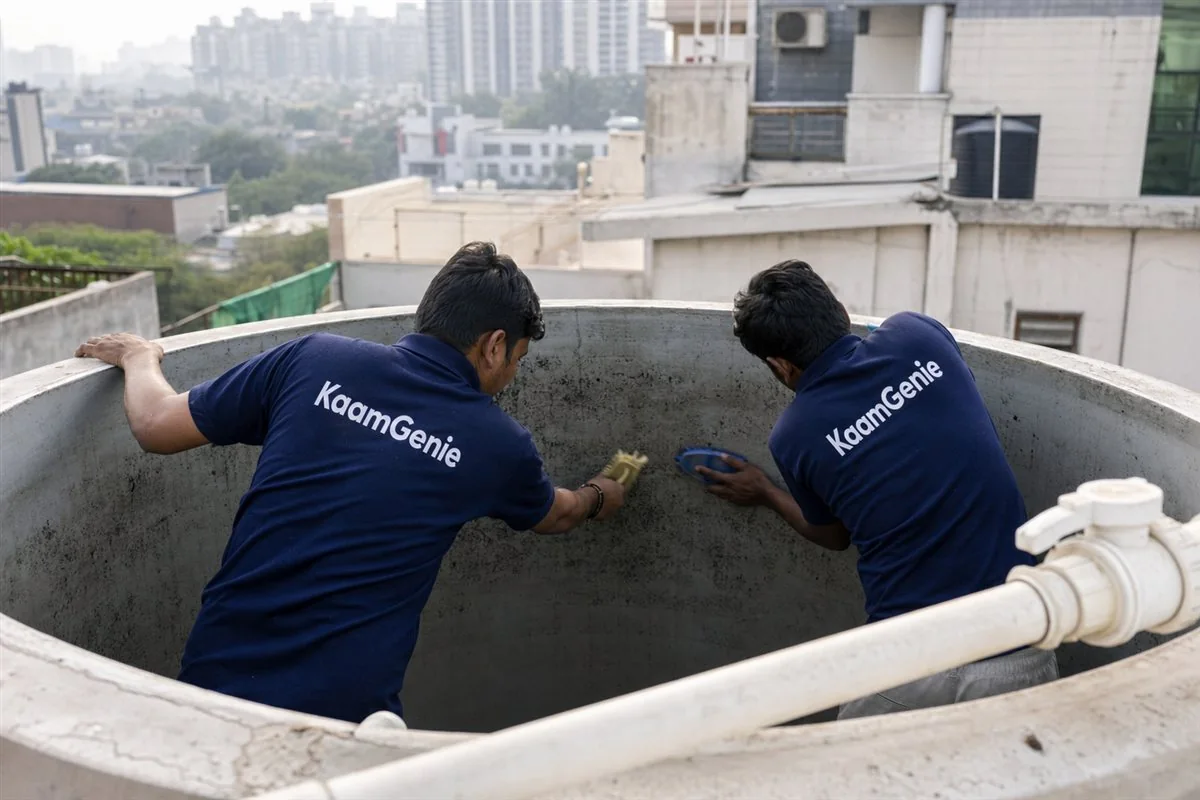
The standard twice-a-year rhythm assumes an average tank on an average supply. Gurgaon is not average. The city’s groundwater is hard, and a large share of homes lean on water tankers to bridge the gap between municipal and borewell supply — especially across the newer towers along the Southern Peripheral Road and Dwarka Expressway belts, and in the older sectors where borewell is still the backbone. Both of those facts pull the cleaning calendar forward.
Hard water leaves calcium and mineral scale that you can feel as a rough, chalky film on the tank wall. That scale is not just cosmetic: its rough surface is exactly where bio-film clings and where ordinary rinsing fails. The harder your supply, the faster that film returns after a clean — which is why borewell-dependent buildings often do better on a three to four month cycle. The detail of how that scale forms, and the food-grade descaling that removes it, sits in our piece on Gurgaon hard water tank cleaning.
Tanker water adds the other half of the problem. Every tanker top-up carries fine sand and silt that drops straight to the bottom of the tank, so a heavily tanker-fed home accumulates a sediment layer far quicker than one on piped supply. In premium pockets like DLF Phase 5 and across the planned high-rises of Sector 82, where large underground reservoirs are refilled by tanker through the dry months, that sediment builds in the UGR as much as in the rooftop tanks — and both need to be on the same seasonal schedule. Whatever your supply mix, the process itself is the same proven sequence described on our water tank cleaning services page.
When Gurgaon books tank cleaning — demand through the year
Pre-summer and post-monsoon are the two natural peaks; winter is the quiet catch-up window
Illustrative booking pattern across Gurgaon. The smart move is to clean in the Feb–Mar window before the Apr–May rush, when slots fill and everyone has already noticed their water turning.
Best time of day, and booking around your water schedule
Once you have picked the season, the time of day matters too. A proper clean takes the tank out of service for one to two hours while it is drained, scrubbed, disinfected and refilled, so a morning slot is almost always best: the work finishes before the day’s heavy water use, and the crew gets the rooftop done before peak summer heat. The only real constraint is your building’s supply timing — if your tanker or borewell fills the tank at a fixed hour, tell us, and we schedule the clean so the tank refills from a fresh supply rather than sitting empty.
For a brand-new flat or a newly handed-over tower, the timing rule is different again. New tanks carry cement slurry, dust and construction debris, and the first weeks of supply flush more of it in — so the right move is a clean before you move in and an early follow-up a few weeks later, after which the tank simply joins the normal seasonal calendar. And whatever the season, never let the calendar override your senses: a smell, a tint, cloudy water or a slimy residue at the taps means the tank needs cleaning now, not at the next scheduled slot.
Not sure when yours is due?
Tell us your area, tank type and last clean — we’ll tell you honestly whether to book now or wait. Residential ₹699 onwards; society & UGR custom.
Get the timing right across Gurgaon
The takeaway is simple. Clean in pre-summer to enter the heavy-use months with safe storage, clean again after the monsoon to clear what the rains brought in, and clean more often than twice a year if you are on hard borewell water, lean on tankers, or run a high-occupancy building. Pick a morning slot, work around your supply timing, and never ignore the water turning just because the calendar says you are not due. Whether you are scheduling a single flat, a builder floor, or a full condominium tower, browse areas and book on our water tank cleaning in Gurgaon hub — and if you want it handled on a fixed seasonal calendar without remembering the dates, an annual contract does exactly that.
Frequently asked questions
When is the best time to clean your water tank in Gurgaon?
Late winter into pre-summer — roughly February to April — is the single best window. You clear out a season of settled sediment before the summer water demand spikes and before warm temperatures let bacteria and algae multiply inside the tank. Cleaning just before peak summer means the water you rely on most is at its safest exactly when you use the most of it.
How often should a water tank be cleaned in Gurgaon?
Every six months is the practical baseline for most Gurgaon homes — broadly aligning with one pre-summer clean and one post-monsoon clean. Tanks fed heavily by water tankers or hard borewell water, high-occupancy builder floors, PGs and societies often need cleaning every three to four months because sediment and scale build up faster. Drinking-water guidance generally recommends at least twice a year for stored water.
Should I clean my tank before or after the monsoon in Gurgaon?
Ideally both, lightly. A clean before the rains makes sure the tank and lid seals are intact so contaminated runoff and insects can’t get in during heavy downpours. A clean after the monsoon clears any silt, algae or contamination that crept in through gaps, overflow pipes or a loose lid. If you only do one, prioritise the post-monsoon clean, because that is when waterborne contamination peaks.
Why is pre-summer the busiest time for tank cleaning in Gurgaon?
Two reasons. First, warm weather accelerates bacterial and algal growth inside a tank, so a layer that sat harmlessly through winter starts turning the water by April. Second, summer is when Gurgaon’s water demand and tanker dependence peak, so residents want clean storage before the heavy-use months. Demand for crews climbs sharply from February, which is why booking early in the window avoids the wait.
Does Gurgaon’s hard borewell water change how often I should clean?
Yes. Gurgaon’s groundwater is hard, so borewell-fed tanks build calcium and mineral scale on the walls and fittings faster than tanks on treated supply. That scale traps bio-film and shortens the gap between cleanings — many borewell-dependent buildings in the older sectors do well on a three to four month cycle rather than six. The harder your water and the more tanker top-ups you take, the more often the tank needs attention.
Is there a best time of day to get the tank cleaned?
Morning is usually ideal. The tank is drained and out of service for one to two hours, so an early start means it is cleaned, disinfected and refilled before the day’s heavy water use. Booking a morning slot also lets the crew finish before peak summer heat on the rooftop. We can work around your building’s water-supply timing — just tell us when your tanker or borewell fills the tank.
How do I know my Gurgaon tank needs cleaning right now, regardless of season?
Don’t wait for the calendar if you notice warning signs: a faint smell or off taste, cloudy or yellowish water, visible sediment in the bottom of a bucket, slimy residue around taps, or stomach upsets in the household with no other cause. Any of these means the tank needs cleaning now. The seasonal calendar is a default schedule, not a reason to ignore the water turning.
When should a new flat or newly built tower clean its tank for the first time?
Before you move in or hand over, and again a few weeks after occupancy begins. New tanks in fresh construction carry cement slurry, dust and debris from the build, and the first few weeks of supply flush more of it into the tank. An initial clean before use plus an early follow-up gets the new system genuinely safe, after which it joins the normal seasonal schedule.
Can societies and builder floors schedule cleaning on a fixed seasonal calendar?
Yes, and they should. An AOA/RWA or builder-floor owner can lock a fixed calendar — typically a pre-summer clean and a post-monsoon clean, sometimes a third in peak summer — through an annual maintenance contract. That keeps every tank on schedule without anyone having to remember, secures a lower per-visit rate, and gives the committee a dated record for each tank. Seasonal scheduling is far easier to manage as a contract than as ad-hoc bookings.
Sources & references
- Bureau of Indian Standards (BIS) — IS 10500:2012 is the canonical Indian Standard for drinking water specification, defining acceptable limits for physical, chemical, and biological parameters.
- WHO Guidelines for Drinking-water Quality, 4th edition — the global reference for water quality standards, including guidance on storage and disinfection.
- Food Safety and Standards Authority of India (FSSAI) — defines water quality requirements for food businesses, including hygiene standards for stored water and acceptable disinfection chemicals.
- WHO Fact Sheet on Drinking Water — overview of safe drinking water requirements and contamination risks.
- CPHEEO — Manual on Water Supply and Treatment — the Government of India’s engineering manual covering tank design, cleaning protocols, and disinfection practices.
Last verified: 29 June 2026. If you find any of these links broken, please let us know.