
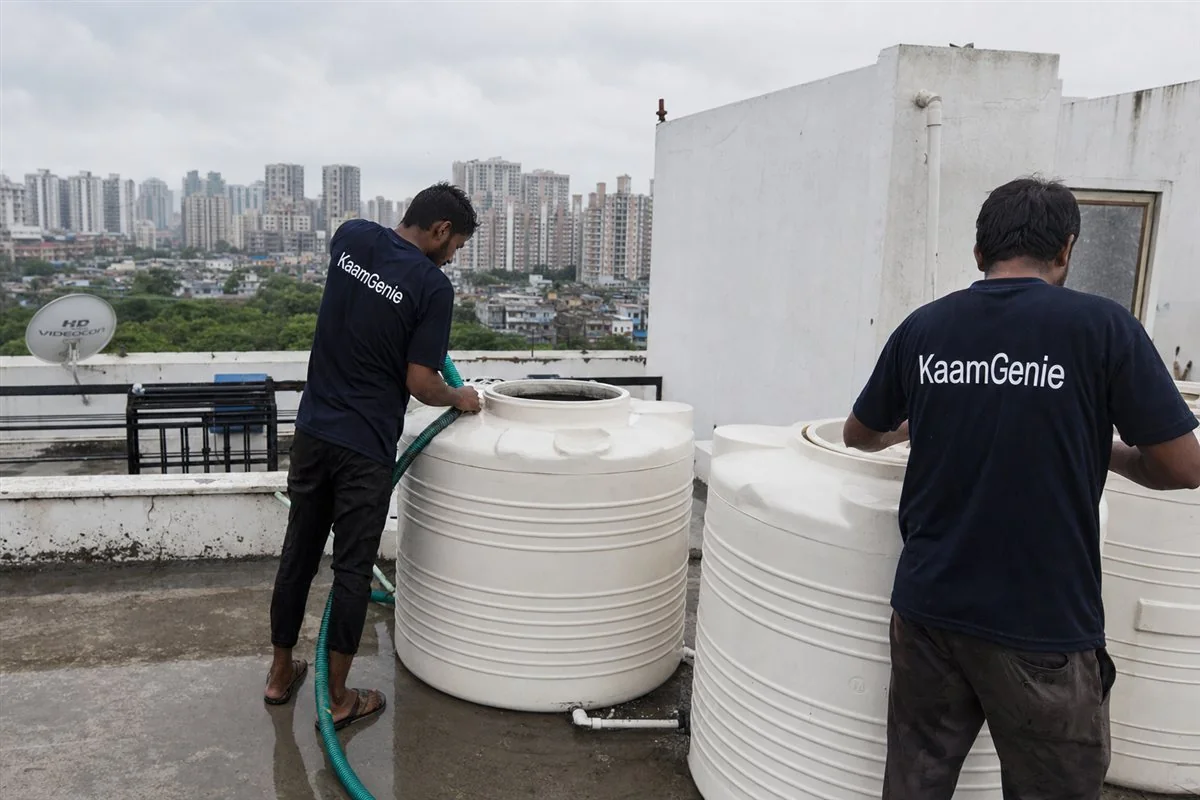
The short version
- The monsoon raises tank-contamination risk in Noida through runoff, lid ingress, UGR seepage, tanker dips and humidity-driven algae — usually several at once.
- A pre-monsoon clean (June) seals you up before the rains; a post-monsoon clean (Sept–Oct) clears whatever got in.
- Most ingress is through a cracked lid, missing gasket or unscreened overflow / vent — not the lid sitting flat.
- Tanker-fed towers in Noida Extension and Greater Noida West collect the heaviest monsoon sludge in their underground reservoirs.
- Sealing the lid plus a timed clean is the combination that actually keeps the rainy season safe.
| Monsoon risk | What happens inside the tank | Who it hits hardest in Noida | The fix |
|---|---|---|---|
| Surface runoff & dust | Rooftop grime, bird mess and leaf litter wash toward lid gaps | Plotted Authority houses, builder floors | Seal lid, pre-monsoon clean |
| Cracked / warped lids | Wind-driven rain carries debris straight in | Older rooftop tanks across all sectors | Re-seat or replace lid + gasket |
| Waterlogging & UGR ingress | Contaminated standing water seeps into underground reservoirs | Low-lying sectors, basement sumps | Post-monsoon sump clean |
| Tanker-quality dip | Disturbed source water leaves more sediment in the UGR | Noida Extension, Greater Noida West towers | Quarterly clean through season |
| Humidity & algae | Warm, damp tank grows bio-film and green/brown algae faster | Any tank with light ingress or a loose lid | Disinfection + sealed lid |
Book a pre-monsoon tank clean in Noida
Sealed lid, food-grade disinfection, before/after photos — start the rains with a clean tank. ₹699 onwards.
What the rains actually do to a Noida tank
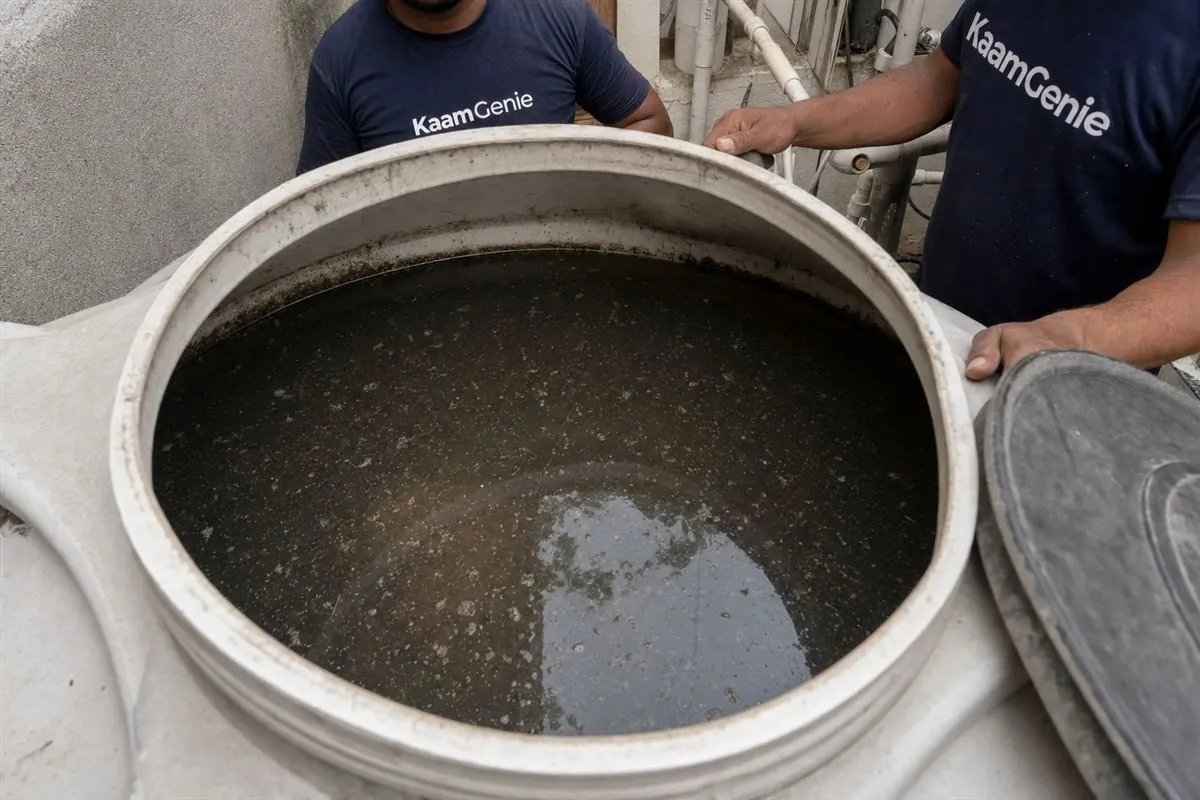
Noida is a planned, Authority-laid-out city, but a planned grid does not make rain behave. When the monsoon arrives over the Noida Expressway high-rise belt and the older plotted sectors alike, three things happen to your storage water at once, and they reinforce each other.
First, runoff. Every rooftop in Noida collects months of dust, soot from the IT-corridor traffic, bird droppings and leaf litter through the dry season. The first showers do not gently wash that away — they sheet it across the terrace toward the lowest points, which is often exactly where your overhead tank’s lid sits. Wind-driven rain then pushes that slurry against any gap.
Second, humidity. A tank in June is warm, and warm plus damp plus a little organic matter is the perfect culture for algae and bio-film. A faint green or brown film that would take months to appear in winter can establish in a couple of weeks of monsoon humidity, especially in tanks that already have a loose lid letting light and air in.
Third, supply-side disturbance. Noida and Greater Noida sit on hard borewell groundwater layered with Ganga Jal piped supply. During the rains the water table rises and gets stirred up, so borewell-fed supplies can carry more silt, iron and turbidity than usual. That sediment does not vanish — it settles at the bottom of your tank and sump.
Cracked lids and the overflow pipe nobody checks
When people picture rain getting into a tank, they imagine the lid lifting off. In practice that is rare. The real entry points are quieter:
- A cracked or warped lid. Years of Noida summer sun make plastic lids brittle, so they no longer seat flush. The monsoon is simply when that finally shows up as dirty water.
- A missing or perished gasket. The rubber seal under the lid hardens and falls away, leaving a rim gap that wicks in rain and dust.
- An unscreened overflow pipe. The overflow outlet is an open invitation for wind-blown debris — and for mosquitoes and lizards — unless it has a fine mesh on the end.
- The air vent. Tanks need to breathe, but an unscreened vent lets in airborne spores and grit during a storm.
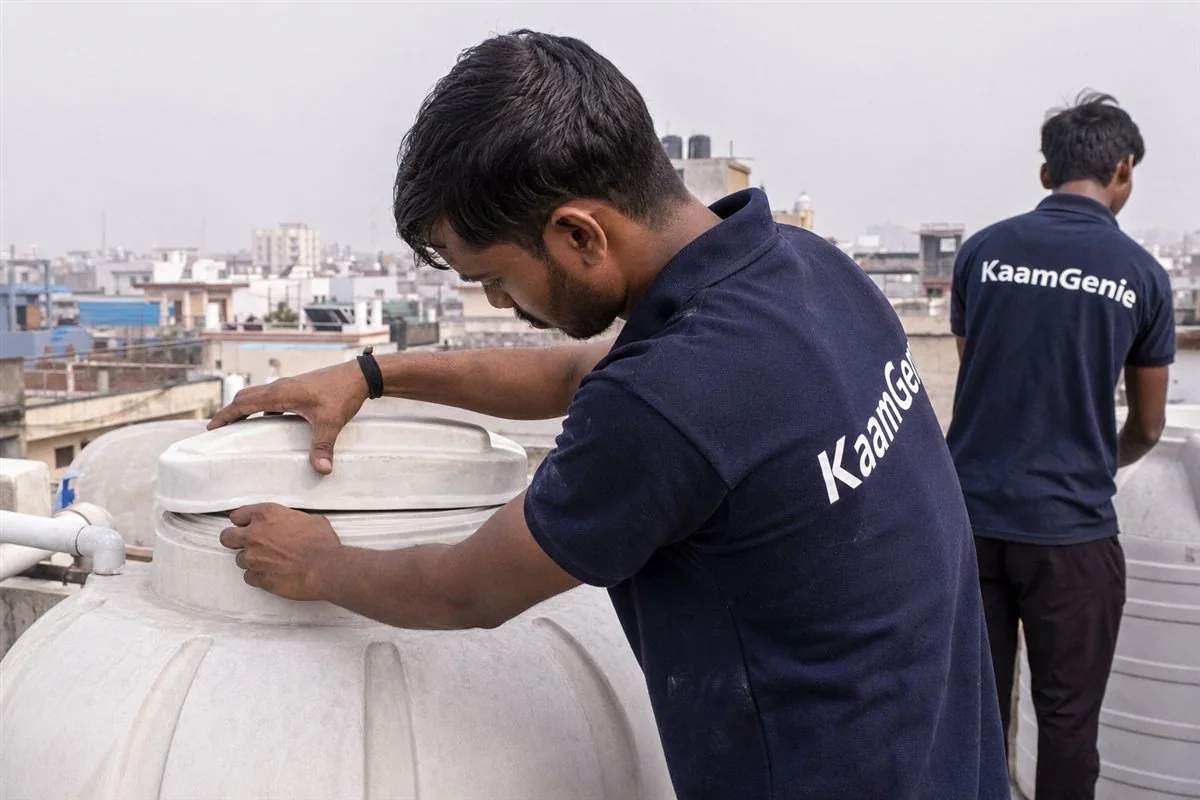
This is why a proper monsoon clean is not just a wash. Our crew re-seats or replaces the lid, checks the gasket, and screens the overflow and vent so the tank is genuinely closed before the heaviest weeks. If you want the wider seasonal logic behind this, our note on the best time for water tank cleaning in Noida walks through the full calendar.
Underground reservoirs and waterlogging
Rooftop tanks get the attention, but the bigger monsoon risk in many Noida buildings sits at the bottom of the building, not the top. Most societies and builder floors fill a large underground reservoir (UGR) or sump first, then pump up to the rooftop tower tanks. That UGR is below grade, and during the rains the ground around it is saturated.
Where a sector waterlogs — and several low-lying pockets across Noida and Greater Noida do — standing water sits against the reservoir walls and around the manhole. A hairline crack, a poorly sealed cover, or a manhole rim below the waterline is all it takes for contaminated surface water to seep in. Because the UGR is out of sight, nobody notices until the water upstairs goes off. A post-monsoon sump clean is the only reliable way to clear what got in and check the cover seal. If your building runs on a basement sump, our guide to signs your water tank needs cleaning in Noida lists the symptoms to watch between services.
We see this pattern most in the high-rise belt and in shared-sump builder floors. Whether it is a tower society in Sector 75 or an independent house in Sector 18, the principle is the same: clean the reservoir after the rains, not just the tank on top.
Tanker-fed towers: Noida Extension and Greater Noida West
The new-tower townships of Greater Noida West and Noida Extension are heavily tanker-fed, and the monsoon is their hardest season. Two things stack up. The borewells and filling points that tankers draw from pull from a higher, more disturbed water table, so the water is cloudier at source. And the tankers themselves park and fill in yards that turn to slush in the rain, so the loading environment is dirtier.
The result is more suspended sediment arriving in every load, which settles into the society’s underground reservoir and then gets pumped up to thousands of flats. These are the reservoirs where we pull out the heaviest monsoon sludge of the year. If your township depends on tankers, treat the monsoon as a quarterly-clean window rather than a twice-a-year one — the detail is in our piece on water tank cleaning in Greater Noida West, and you can book a reservoir clean directly through the Noida Extension tank cleaning page.
Pre-monsoon vs post-monsoon: which clean, and when
When Noida tanks get dirtiest — relative contamination risk through the year
Illustrative seasonal pattern, not measured data — risk peaks during and just after the monsoon
The window that matters runs from the first showers through October — a pre-monsoon clean seals you up, a post-monsoon clean clears what got in.
If you can only do one clean, make it the post-monsoon one, because that is when you remove the season’s accumulated ingress, sediment and algae. But the better answer for most Noida homes is two: a pre-monsoon clean in June to start the season with a sealed lid and a clean tank, and a post-monsoon clean in September or October to reset. Society RWAs almost always run both, and food businesses bound by FSSAI hygiene rules treat the whole window as higher-risk.
None of this changes the underlying disinfection method — food-grade chlorination, manual scrubbing and a wet-vacuum finish are the same year round. What the monsoon changes is the timing and the attention paid to lids, overflows and underground reservoirs. For the full method, see our main water tank cleaning services page rather than repeating it here.
Got cloudy water after the rain?
If your tank water turned murky or musty this monsoon, the tank is the likely source. Book a clean and see the before-photos. ₹699 onwards.
What to watch for this monsoon — and book early
Through the rains, keep an eye on the simple tells: water that looks cloudy or yellowish after a downpour, an earthy or musty smell, a green or brown tint on the tank walls, floating particles in a glass, or an RO filter that clogs faster than it used to. Any of these during or just after the monsoon points at the tank, not the municipal line. More stomach upsets in the family in the same window is another quiet signal.
The practical advice is to book the pre-monsoon clean before June fills up — it is our busiest stretch precisely because every sensible household and RWA wants it done before the heavy weeks. Whether you are arranging it for a flat, a plotted house or a whole society, you can start from the water tank cleaning in Noida hub, which covers every sector and the Greater Noida belt. Seal the lid, time the clean, and the rainy season stops being a gamble with your drinking water.
Frequently asked questions
Why does the monsoon make water tank cleaning more important in Noida?
The rains change three things at once: surface runoff and dust get washed into supply systems, humidity makes algae and bio-film grow faster inside warm tanks, and waterlogging around Noida sectors increases the chance of contaminated water seeping into underground reservoirs. A tank that looked fine in April can turn cloudy or smelly within weeks of the first heavy showers, which is why a clean timed around the monsoon catches the problem early.
Should I clean my tank before the monsoon or after?
Ideally both, but if you only do one, do a post-monsoon clean. A pre-monsoon clean (June) makes sure you start the season with sealed lids and a clean tank. A post-monsoon clean (September–October) removes whatever ingress, algae and sediment built up during the wettest weeks. Most Noida households do a pre-monsoon service and society RWAs schedule both.
How does rainwater actually get into a sealed overhead tank?
Most ingress is not through the lid sitting flat — it is through a cracked or warped lid, a missing gasket, an unscreened overflow pipe, or the air vent. Wind-driven rain carries rooftop dust, bird droppings and leaf litter straight through any of these gaps. On older Noida rooftop tanks the lid has often gone brittle in the sun, so it no longer seals, and the monsoon is when that finally shows up as dirty water.
My building is tanker-fed in Greater Noida West — does monsoon change the risk?
Yes. In the rains, tanker source quality can dip because borewells and filling points draw from a higher, more disturbed water table, and tankers themselves sit in waterlogged yards. That sediment settles in your underground reservoir. Tanker-fed townships in Noida Extension and Greater Noida West are exactly where we see the heaviest monsoon sludge, so these reservoirs benefit most from a post-monsoon clean.
What are the warning signs of monsoon contamination in my tank?
Cloudy or yellowish water after rain, an earthy or musty smell, green or brown tint on the tank walls, floating particles, more frequent stomach upsets in the family, or your RO filter clogging faster than usual. If any of these appear during or just after the monsoon, the tank itself is the likely source, not the municipal supply.
Does a sealed lid alone prevent monsoon contamination?
A properly sealing lid with an intact gasket and a screened overflow and vent prevents most rain ingress, and we re-seat or replace the lid as part of a monsoon clean. But it does not stop contamination that arrives through the supply itself — runoff-affected tanker water or disturbed borewell water still carries sediment into the tank. Sealing the lid plus a timed clean is the combination that actually works.
How often should I clean during the monsoon months?
For a normal Noida household the BIS-aligned every-six-months rhythm still holds — just time one of those cleans for late June and consider an extra clean after a spell of very heavy rain if the water looks off. Tanker-fed societies, PGs and food businesses should treat the monsoon as a higher-risk window and clean more often, often quarterly through the season.
Is borewell water more of a problem during the rains?
It can be. Noida and Greater Noida sit on hard borewell groundwater, and during the monsoon the water table rises and gets disturbed, which can pull more silt, iron and turbidity into the supply. That extra sediment lands at the bottom of your tank and sump. A post-monsoon clean clears it before it cakes into scale that is much harder to remove later.
Can KaamGenie do a same-day pre-monsoon clean in Noida?
In most Noida sectors and Greater Noida West, yes, subject to crew availability — pre-monsoon June is our busiest window so booking a few days ahead is safer. A standard residential clean is ₹699 onwards; society reservoirs, underground sumps and commercial jobs are quoted on site after the crew sees tank size and access.
Sources & references
- Bureau of Indian Standards (BIS) — IS 10500:2012 is the canonical Indian Standard for drinking water specification, defining acceptable limits for physical, chemical, and biological parameters.
- WHO Guidelines for Drinking-water Quality, 4th edition — the global reference for water quality standards, including guidance on storage and disinfection.
- Food Safety and Standards Authority of India (FSSAI) — defines water quality requirements for food businesses, including hygiene standards for stored water and acceptable disinfection chemicals.
- WHO Fact Sheet on Drinking Water — overview of safe drinking water requirements and contamination risks.
- CPHEEO — Manual on Water Supply and Treatment — the Government of India’s engineering manual covering tank design, cleaning protocols, and disinfection practices.
Last verified: 30 June 2026. If you find any of these links broken, please let us know.