
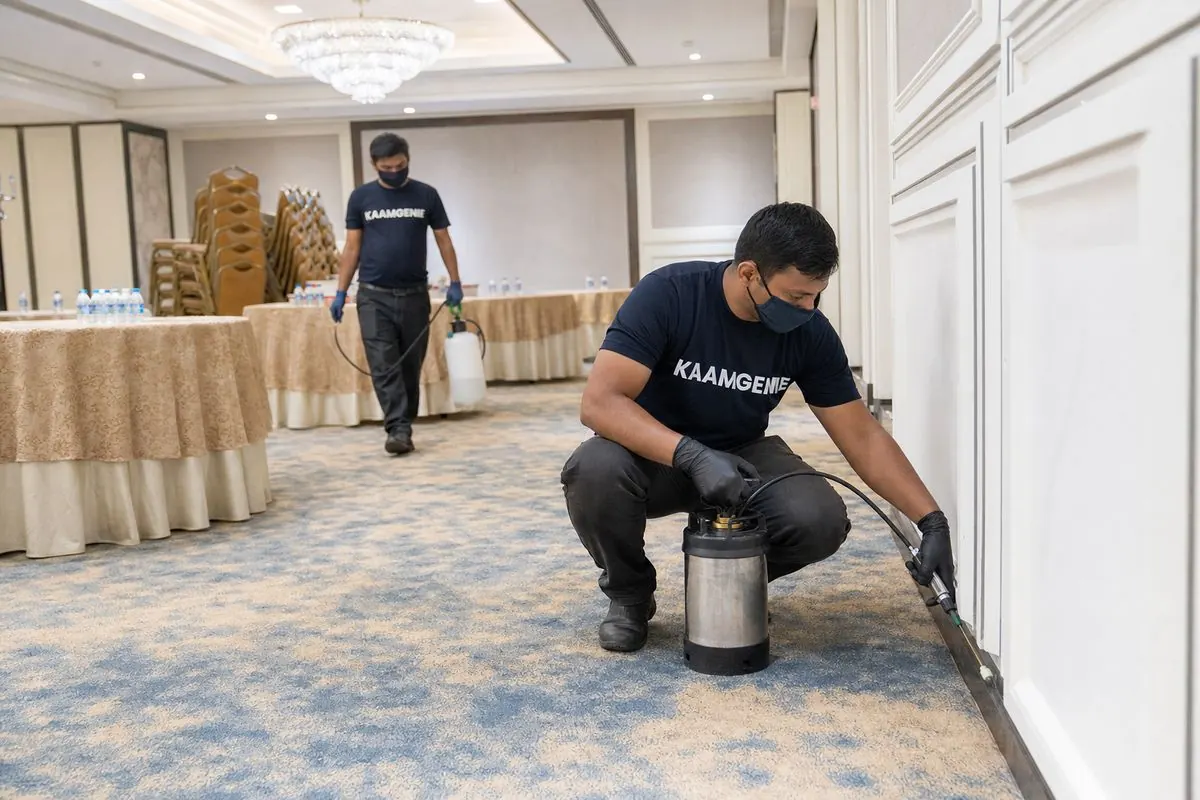
Quick answer — pest control for hotels & banquet halls in Delhi (2026)
- Reputation is the real risk: one bed bug photo in a guest review can drag your rating and bookings for months. Pest control in hospitality protects revenue, not just hygiene.
- FSSAI needs proof, not promises: any hotel kitchen with an FSSAI licence must show a documented pest management programme — treatment records, schedules and audit-ready logs, not a verbal “we get it sprayed.”
- Different zones, different pests: bed bugs in guest rooms, cockroaches and rodents in kitchens and stores, mosquitoes on banquet lawns — each needs its own protocol.
- Discreet, off-peak scheduling: good commercial teams work around check-ins, events and service hours — early morning, between functions, in plain uniforms.
- An AMC is the norm: hotels and banquets run on annual maintenance contracts with scheduled visits and documented pest logs — from around ₹2,999/year for small premises, custom quotes for full properties. GST 18% extra.
- Cost scales with rooms and banquet area — not a flat “one spray” price. We cover hotels, banquets and farmhouses across Delhi.
Why pest control is a business risk in hospitality, not a maintenance chore
Let me start with the part that keeps hotel owners awake. In most businesses, a pest is an embarrassment you handle quietly. In hospitality, it’s public. A guest who wakes up with bites in a Karol Bagh hotel doesn’t call your front desk — they photograph the mattress seam, upload it to Google and the OTA review, and tag it “bed bugs.” That single review sits at the top of your listing for months, and every potential guest reads it before they book. The treatment to fix the room costs a few thousand rupees. The review can cost you lakhs in lost bookings. That asymmetry is the whole reason hotels and banquets treat pest control as a board-level risk, not a housekeeping task.
It runs deeper than reviews. A banquet hall on Chattarpur road hosting a 400-guest wedding cannot have mosquitoes driving guests off the lawn, or a rat darting across the buffet while the baraat is seated. A five-star property near Aerocity lives and dies by its reputation for spotless kitchens. And every one of these places carries a licence — FSSAI for the kitchen, often fire and health clearances too — that assumes you have pest control under genuine, documented control. A pest sighting at the wrong moment isn’t just gross; it’s a compliance failure and a reputation hit landing at the same time. That’s why the right question isn’t “how do I get rid of this cockroach?” but “how do I run a programme that means I never get the call?”
The four pest zones of a hotel — and what each one needs
A hotel or banquet property is really several different pest environments under one roof, and treating them as one blob is how problems slip through. After years of walking Delhi properties — budget hotels in Paharganj, mid-size banquets in Rajouri Garden, farmhouses out on Chattarpur — I’ve learned to split the building into four zones, because the pest, the risk and the method change in each.
- Guest rooms — the bed bug zone. This is where reputation lives or dies. Bed bugs travel in on guest luggage and spread room to room through shared walls and housekeeping carts. They don’t signal dirt — the cleanest five-star can get them — which is exactly why guests are so unforgiving when they appear. Rooms need proactive monthly inspection of mattress seams, headboards and skirting, and fast, discreet treatment of any room flagged.
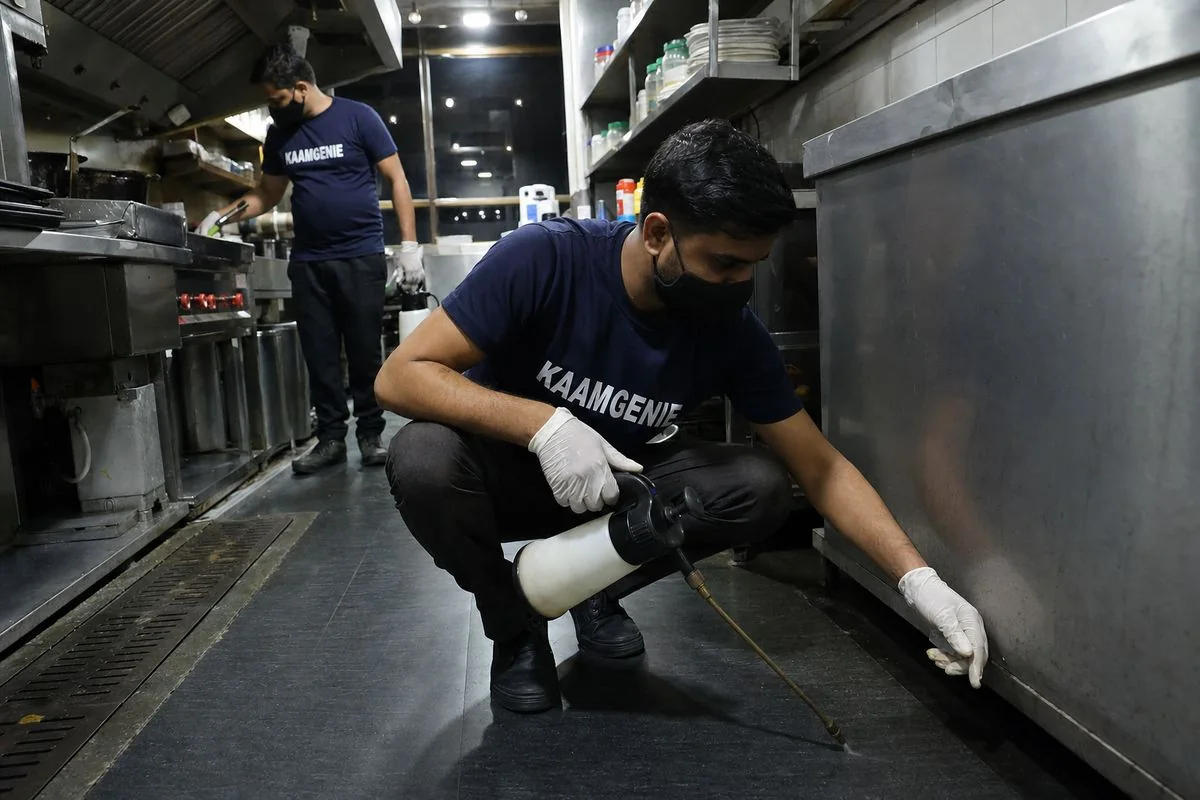
- Kitchen & F&B — the cockroach and FSSAI zone. Warm, moist, food everywhere, hidden gaps behind equipment — a commercial kitchen is paradise for German cockroaches. This is also the zone the FSSAI inspector cares about most. It needs gel-bait and crack-and-crevice treatment, never open spraying over food prep surfaces, plus documented schedules.
- Stores, dry stores & back-of-house — the rodent zone. Rats and mice come for the grain, rice and packaged stock. They contaminate far more than they eat, chew wiring (a real fire risk), and a single rodent in the buffet kills an event. Stores need bait stations, snap traps where bait isn’t safe, and sealed entry points — mapped and logged.
- Banquet lawns, gardens & outdoor areas — the mosquito zone. Delhi’s wedding season runs straight into peak mosquito months. An open lawn with water features, planters and a wet kitchen drain breeds mosquitoes that ruin an evening function. This zone needs anti-larval treatment of standing water plus thermal fogging timed before events.
| Zone | Main pests | Business risk | Treatment approach |
|---|---|---|---|
| Guest rooms | Bed bugs, occasional cockroaches | One-star reviews, refunds, room blocked from sale | Monthly inspection of seams; heat/spot treatment of flagged rooms |
| Kitchen & F&B | Cockroaches, flies, ants | FSSAI non-compliance, contamination, closure risk | Gel-bait, crack-and-crevice, fly units; no open spray near food |
| Stores & back-of-house | Rats, mice | Stock loss, wiring/fire risk, event ruined | Bait stations, traps, proofing entry points, mapped logs |
| Banquet lawn & gardens | Mosquitoes, flies | Guests driven indoors, dengue-season liability | Anti-larval on standing water + fogging timed before events |
FSSAI and the audit reality — what inspectors actually want to see
Here is where a lot of hotels get caught out, and it’s avoidable. The FSSAI’s food safety regulations require any licensed food business — which includes your hotel kitchen and your banquet catering — to keep the premises free of pests and to maintain an effective pest management system. The key word is system. When an inspector or a third-party hygiene auditor (some OTAs and corporate clients now insist on their own audits too) arrives, they are not satisfied by a clean-looking kitchen on the day. They ask for the paperwork. “Show me your pest control records.”
What they expect to find is a file — physical or digital — that proves an ongoing programme: a pest management plan, the schedule of visits, what was treated and where, the products and licences of the operator, a record of every sighting and the action taken, and dated before/after photos. They want to see trend data too — is your cockroach catch in the kitchen going down over the quarter, or creeping up? A property that can hand over a tidy, dated logbook passes that part of the audit in five minutes. One that says “we call someone when we see something” has already failed it. This is the single biggest reason hotels move from ad-hoc spraying to a documented AMC: not the treatment, but the records that come with it.
| Document | Why the auditor wants it |
|---|---|
| Pest management plan / scope | Shows a defined, zone-by-zone programme rather than reactive spraying |
| Visit schedule & service calendar | Proves regular, planned coverage across the year |
| Service report per visit | Records what was treated, where, and any pest activity found |
| Operator licence & product list | Confirms CIB&RC-approved products and a licensed pest operator |
| Sighting / complaint log | Tracks every report and the corrective action taken |
| Before/after photos & GST invoices | Dated visual proof and a clean audit trail of paid, documented service |
| Trend / monitoring data | Shows pest pressure going down, not building up unnoticed |
Worried a bed bug review could sink your rating?
Our commercial team runs a discreet room-by-room inspection and treatment, scheduled around your check-ins. Custom quotes for hotels & banquets (GST 18% extra).
Bed bugs in guest rooms — the reputation killer, handled discreetly
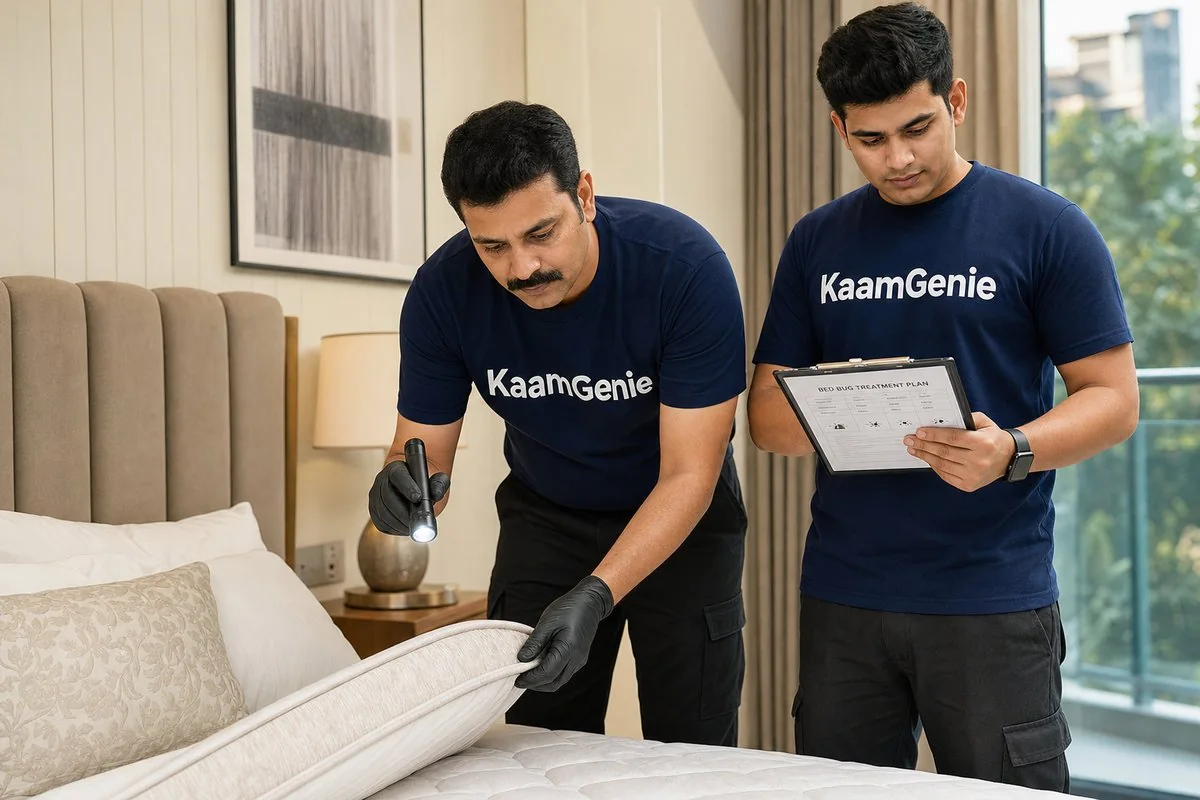
If I had to name the one pest that costs Delhi hotels the most money, it’s bed bugs — not because they’re common, but because of what one infested room does to your reviews. So let’s be precise about how a serious property handles them. First, accept that bed bugs are a guest-traffic problem, not a cleanliness problem. They arrive in a suitcase from someone else’s home or hotel and set up in the mattress seam, the headboard, the bedside cabinet, even behind the skirting. A spotless room can have them by lunchtime if the previous guest brought them.
The professional approach is proactive and quiet. Housekeeping is trained to spot the early signs during turnover — tiny dark spots on the mattress seam, shed skins, the live insect itself — and flag the room immediately so it’s blocked from sale before a guest ever complains. The treated room then gets a focused job: a thorough inspection, targeted treatment of all harbourage points (seams, frames, joints, skirting), and crucially the rooms on either side and above/below, because bed bugs spread through the structure. A single-room reactive spray that ignores the neighbours is why infestations come back. The whole thing is done in plain clothes, logged into the room’s history, and the room is only released after a follow-up confirms it’s clear. Discretion is the entire point — no guest should ever know it happened.
Cockroaches and rodents — the kitchen and store war you must win quietly
The kitchen is where compliance and reputation meet, so it gets the most disciplined treatment of any zone. German cockroaches breed fast in the warm gaps behind the range, the dishwasher, the cold-room motor and the dry-store shelving. The correct method here is targeted gel-bait in cracks and crevices and behind equipment — never an open liquid spray across surfaces where food is prepped, which is both an FSSAI violation and a contamination risk. Good teams also install fly-control units away from food and seal the gaps cockroaches use to move between sections. Because a hotel kitchen runs nearly round the clock, the work is scheduled into the quiet window — often the early hours after the kitchen closes and before the breakfast brigade comes in.
Rodents are the back-of-house battle. A rat in a dry store isn’t just eating your rice — it’s urinating on the rest, chewing through wiring that runs your cold rooms, and waiting for the worst possible moment to appear in a function hall. The control programme is a ring of tamper-proof bait stations around the perimeter and stores, snap traps where bait can’t safely go near food, and proofing — sealing the gaps under doors, around pipe penetrations and service ducts where rodents enter. Every station is numbered and mapped, and each visit checks and records activity. That map and that log are exactly what the auditor flips to, and exactly what tells you whether the pressure is rising before it becomes a buffet-night disaster.
Where hotel guests most often notice pests (2026)
Rough share of guest pest complaints by location, from what we see across Delhi hospitality jobs.
Banquet lawns and the wedding-season mosquito problem
Delhi’s wedding calendar is cruel timing for pest control. The big outdoor season — the long stretch of evening functions on Chattarpur farmhouses, in Rajouri Garden and Pitampura banquets, and across the NCR fringe — overlaps with the months when mosquitoes are at their worst. You can serve the finest food in Delhi, but if 400 guests are slapping their arms through the pheras, that’s the memory they leave with. Mosquito control on a banquet lawn is two jobs. The slow, important one is anti-larval treatment of every spot that holds standing water — decorative water features, planter saucers, the kitchen and washroom drains, low spots that pool after watering. Kill the larvae through the week and you suppress the population the function actually faces.
The fast, visible one is thermal fogging of the lawn and perimeter timed an hour or two before guests arrive, knocking down the adult mosquitoes for the evening. Done together — larval suppression all week, fog on the night — you get a lawn guests can enjoy. Done as fogging alone, you get a brief reprieve and a fresh hatch by the next function. For a venue running back-to-back events through the season, this is exactly what an AMC handles: the team is already on a schedule, the breeding spots are already mapped, and the pre-event fog is just a phone call, not a panicked search at 4pm.
Need audit-ready pest logs for FSSAI?
We set up a documented AMC with scheduled visits, before/after photos and GST invoices — the records an inspector actually wants to see. AMC from ₹2,999/year for smaller premises.
Discreet scheduling — service the guest never sees
This is the difference between a residential pest team and one that’s genuinely fit for hospitality: timing and discretion. You cannot have a technician with a backpack sprayer walking through your lobby at check-in, or fumes in a banquet hall an hour before the mandap is set. A property-grade programme is built around your operations. Guest rooms are treated when blocked and vacant. Kitchens are done in the dead window after close and before the morning shift. Banquet lawns are fogged after setup but before guests. Restaurant areas are treated between the lunch and dinner covers. The team works in plain, clean uniforms, carries its own documentation, and reports to your duty manager — not your guests.
Good scheduling also means flexibility around your calendar. Wedding season, a big corporate conference, a festival rush — these are when you most need cover and least want disruption. A serious commercial partner plans visits around your booking sheet, does the noisy or strong-smelling work in the lull, and keeps an emergency line open for the sighting that can’t wait. Where slots allow, urgent flagged rooms get same-day attention so a single complaint never becomes a review. That responsiveness, quietly delivered, is most of what you’re actually paying a hospitality pest contractor for.
What it costs — AMC vs one-time, priced by rooms and banquet area
Pricing for hotels and banquets isn’t a flat “one spray” number, and you should be wary of anyone who quotes one over the phone without seeing the property. Cost scales with the number of guest rooms, the size and number of kitchens, the banquet and lawn area, and how many visits a year you need. A small budget hotel in Paharganj is a different job from a 200-room property near Aerocity or a sprawling Chattarpur farmhouse with three lawns. That said, here’s an honest 2026 framing so you know roughly where you stand — final figures come from a site survey and quote.
| Property type | One-time treatment | AMC (documented, scheduled) |
|---|---|---|
| Small hotel / guest house (up to ~20 rooms) | From ₹4,999 per visit | From ₹2,999/year base, scaled by visits |
| Mid-size hotel (20–80 rooms + kitchen) | Custom per-visit quote | Custom annual contract, monthly/fortnightly visits |
| Large / premium hotel (80+ rooms, multiple F&B) | Custom per-visit quote | Custom annual contract with full documentation |
| Banquet hall / farmhouse with lawns | From ₹5,999 per event prep (fog + anti-larval) | Seasonal contract through the wedding calendar |
| Bed bug room treatment (per room + neighbours) | From ₹1,299/room | Included in room-inspection AMC scope |
My honest recommendation for any property with an FSSAI licence: don’t buy one-time treatments. Take the AMC. It isn’t only cheaper per visit — it’s the only thing that produces the documented pest logs an audit demands, keeps a technician on a schedule who already knows your building, and means a flagged room or a pre-event fog is handled in hours, not after a frantic search. One-time service has its place: a sudden infestation, a new property being commissioned, or a venue testing a contractor before signing an annual deal. But for ongoing hospitality operations in Delhi, the AMC isn’t the upsell — it’s the actual product. Every figure above is before GST at 18%, and a real quote always follows a walk-through, never a phone guess.
Getting it right — we cover hotels, banquets and farmhouses across Delhi
The hotels and banquets that never make the news for the wrong reason aren’t lucky — they run a quiet, documented pest programme that treats each zone for its real risk and keeps the paperwork an auditor wants. That’s exactly what we set up: a property survey, a zone-by-zone plan, discreet off-peak service around your check-ins and events, and audit-ready records with before/after photos and GST invoices. We work with hotels, guest houses, restaurants, banquet halls and farmhouses across Delhi — Karol Bagh, Paharganj and the Aerocity belt, the banquet clusters of Rajouri Garden, Pitampura and Janakpuri, and the Chattarpur farmhouse stretch. Coming soon: Gurgaon, Noida, Faridabad and Ghaziabad. Call 95603 66362 for a site survey and a quote built on your rooms, your kitchen and your lawn — not a number plucked from the air.
Frequently asked questions
Why is pest control so important for hotels and banquet halls in Delhi?
Because in hospitality a pest problem is public and costly. A guest who finds bed bugs photographs them and posts a one-star review that drags your rating and bookings for months — a loss far bigger than the treatment. Hotels and banquets also carry FSSAI and other licences that assume documented pest control. So it’s a reputation and compliance risk, not just a hygiene chore.
Does FSSAI require pest control for hotel kitchens?
Yes. FSSAI food safety regulations require any licensed food business, including hotel kitchens and banquet catering, to keep premises free of pests and maintain an effective, documented pest management system. During an audit the inspector asks for records — a pest plan, visit schedule, service reports, operator licence, sighting log and dated photos — not just a clean-looking kitchen on the day.
What pest control records does an FSSAI audit want to see?
A documented programme: a pest management plan, the visit schedule, a service report for each visit, the operator’s licence and CIB&RC-approved product list, a sighting and complaint log with corrective actions, before/after photos, GST invoices and trend/monitoring data. A tidy dated logbook passes this part of the audit; “we call someone when we see something” fails it.
How do hotels handle bed bugs without guests noticing?
Proactively and discreetly. Housekeeping is trained to spot early signs during turnover and block the room from sale before a guest complains. The room then gets a focused inspection and targeted treatment of all harbourage points, plus the neighbouring rooms above, below and beside it, since bed bugs spread through the structure. Work is done in plain clothes, logged, and the room is released only after a follow-up confirms it’s clear.
How are kitchen cockroaches treated in a hotel without contaminating food?
With targeted gel-bait and crack-and-crevice treatment in the gaps behind equipment — never an open liquid spray over food-prep surfaces, which is both an FSSAI violation and a contamination risk. Fly-control units are placed away from food and entry gaps are sealed. The work is scheduled into the quiet window after the kitchen closes and before the morning shift.
How is rodent control done in hotel stores and back-of-house?
With a ring of tamper-proof bait stations around the perimeter and dry stores, snap traps where bait can’t safely go near food, and proofing — sealing gaps under doors, around pipes and service ducts where rodents enter. Every station is numbered and mapped, and each visit records activity, so you can see pressure rising before a rat appears at a function.
How do you keep mosquitoes off a banquet lawn during wedding season?
Two jobs together. Anti-larval treatment of every standing-water spot — water features, planter saucers, drains, low pooling areas — suppresses breeding through the week. Then thermal fogging of the lawn and perimeter an hour or two before guests arrive knocks down adult mosquitoes for the evening. Fogging alone only gives brief relief; the anti-larval work is what makes it last.
Can pest control be done without disturbing guests and events?
Yes — that’s the core of hospitality-grade service. Guest rooms are treated when blocked and vacant, kitchens in the dead window after close, restaurants between lunch and dinner covers, and banquet lawns fogged after setup but before guests. Technicians work in plain uniforms, carry their own documentation and report to your duty manager, not your guests.
How much does pest control for a hotel or banquet hall cost in Delhi in 2026?
It scales with rooms, kitchens and banquet area, so a real figure follows a site survey. As a 2026 guide: a small hotel one-time visit from around ₹4,999; an AMC from about ₹2,999/year base scaled by visits for small premises and custom annual contracts for larger ones; banquet event prep (fog plus anti-larval) from around ₹5,999; and bed bug room treatment from ₹1,299/room. GST 18% is extra. Be wary of anyone quoting a flat price without seeing the property.
Should a hotel take an AMC or a one-time pest control treatment?
For any property with an FSSAI licence, an AMC. It’s cheaper per visit, keeps a technician on a schedule who knows your building, handles flagged rooms and pre-event fogging in hours, and — most importantly — produces the documented pest logs an audit demands. One-time service suits a sudden infestation, a new property being commissioned, or testing a contractor before signing.
Is hotel pest control safe to do near a working kitchen?
Yes, when done correctly. Kitchens use gel-bait and crack-and-crevice methods rather than open spraying near food, with CIB&RC-approved products at the right dose, scheduled into the closed window and followed by ventilation before service resumes. Tell the team about any specific areas and timings; a serious contractor plans the work around your food-safety needs.
Do you provide pest control for farmhouses and outdoor wedding venues in Delhi?
Yes. Farmhouses and lawn venues — including the Chattarpur stretch — get anti-larval treatment of standing water, perimeter and lawn fogging timed before functions, and rodent and fly control for the kitchen and back-of-house. For venues running back-to-back events, a seasonal contract through the wedding calendar keeps the team scheduled and the breeding spots mapped.
Protect your property before the next review — or the next audit
Let our commercial team survey your rooms, kitchen, stores and lawn, set up a discreet documented programme, and keep audit-ready records. Hotels, banquets & farmhouses across Delhi.
Sources & references
- Food Safety and Standards Authority of India (FSSAI) — sets the food-safety and hygiene requirements, including pest management, that licensed hotel kitchens must meet.
- Central Insecticides Board & Registration Committee (CIB&RC) — the Indian regulator that approves the pest-control products and concentrations used in licensed commercial work.
- National Centre for Disease Control (NCDC) — tracks urban pest and vector-borne disease patterns relevant to Delhi hospitality premises.
- National Center for Vector Borne Diseases Control (NCVBDC) — India’s nodal body for dengue and mosquito control guidance relevant to banquet lawns and gardens.
Last verified: 13 June 2026. If you find any of these links broken, please let us know.