
Key takeaways
- Overhead tank cleaning starts from ₹699; underground sumps start from ₹1,499 due to extra effort and confined-space work.
- Price rises with capacity — a 500L tank costs far less than a 5000L tank to drain, scrub and disinfect.
- Sumps cost more than overhead tanks of the same size because of harder access and larger sludge volumes.
- Cleaning multiple tanks together usually earns a combined discount versus booking each separately.
- An annual AMC lowers your effective per-clean cost and keeps water safe year-round.
Three factors drive nearly every quote. First is capacity — a bigger tank holds more water and more sludge, so it takes longer to drain, scrub and vacuum. Second is tank type: an overhead plastic or RCC tank is easier to reach than an underground sump, where technicians must work in a confined space and lift out heavier sediment. Third is quantity and access — several tanks on one visit, or tanks on high floors with poor ladder access, change the effort involved. Genuine providers also factor in disinfection, ceiling brushing and a final rinse. When you compare quotes, always confirm these are included, because a low headline price often hides them.
Size-by-size price breakdown (500L to 5000L)
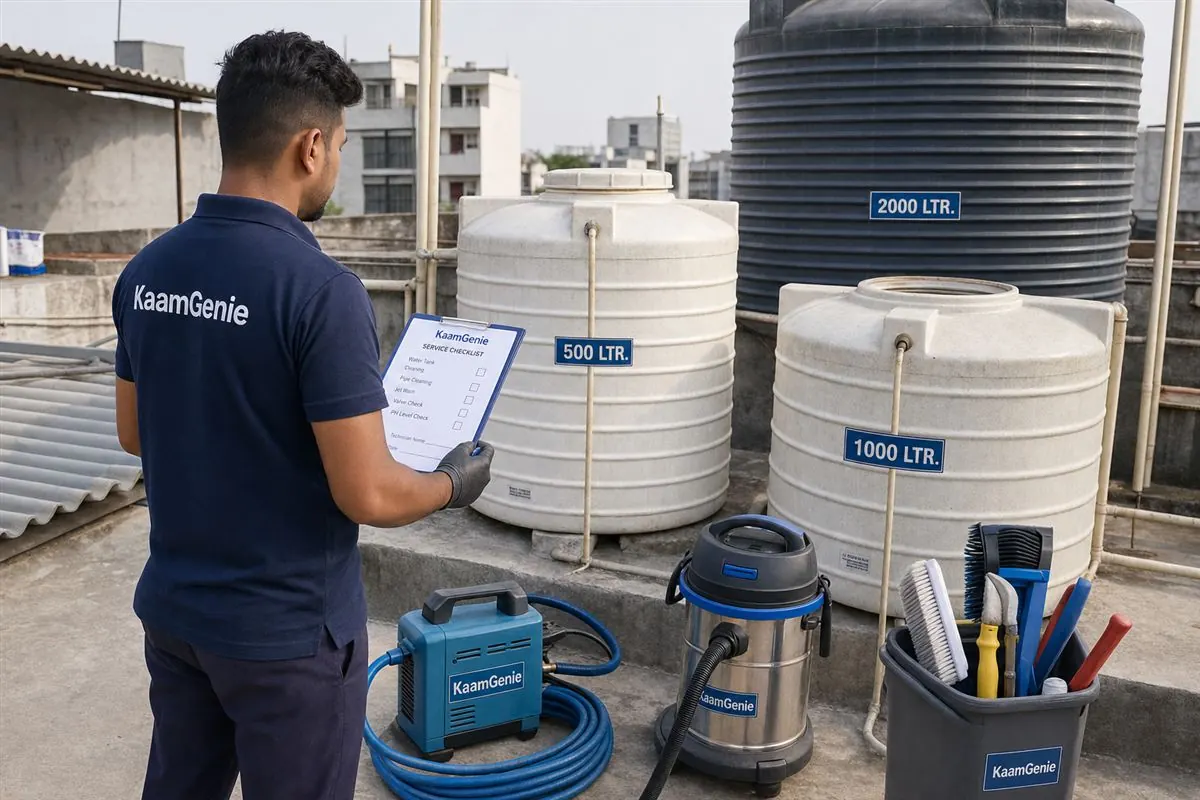
As a working guide for Delhi-NCR overhead tanks: a 500L tank typically costs from ₹699, a 1000L tank from ₹799 to ₹999, a 2000L tank around ₹1,199 to ₹1,499, a 3000L tank roughly ₹1,499 to ₹1,999, and a 5000L tank from ₹1,999 upward. Underground sumps of the same capacity run higher — typically from ₹1,499 for smaller sumps and more for large ones. These ranges assume standard access and a routine sludge level. Very dirty tanks, algae growth or difficult positioning can add to the figure, but a good technician will tell you before starting rather than surprising you at the end.
Overhead tanks vs underground sumps
For the same stated capacity, an underground sump almost always costs more than an overhead tank, and the difference is not padding. Sumps are built into the floor, so technicians enter a confined space, which needs care, ventilation and sometimes two people. Sediment settles heavier at the base and there is usually more of it, so vacuuming and manual scooping take longer. Overhead tanks, by contrast, drain by gravity and are quicker to brush down. This is why overhead cleaning can start from ₹699 while a comparable sump starts nearer ₹1,499. If your quote treats both identically, ask why — it may mean corners are being cut on the sump.
Single tank vs multiple tanks
Booking one tank is straightforward, but many Delhi-NCR homes have both an overhead tank and a sump, and housing societies have several. When technicians clean multiple tanks on a single visit, the travel, setup and equipment cost is shared across the job, so the combined price is usually lower than booking each tank on separate days. It is worth asking for a bundled rate if you have two or more tanks. The same logic helps apartment blocks: cleaning all tanks in one scheduled visit is more economical per tank and ensures the whole supply is disinfected together, rather than clean water mixing with an untreated tank downstream.
Book your water tank cleaning
Trained crew, food-grade process, before/after photos and a service record every job. ₹699 onwards, same-day where possible across Delhi NCR.
One-time cleaning vs annual AMC
A one-time clean suits you if you have just moved in, noticed cloudy water, or missed a season. But water tanks need cleaning every three to six months to stay safe, so paying the full one-off rate each time adds up. An Annual Maintenance Contract (AMC) bundles scheduled cleans across the year at a lower effective per-visit cost, and you never have to remember to rebook. For families, that means consistently safe water; for societies, it means predictable budgeting and documented service. If you plan to clean more than twice a year anyway, an AMC almost always works out cheaper than repeated single bookings.
What a proper cleaning should include
A fair price should cover a complete process, not just a rinse. Expect the tank to be fully drained, then all sludge and sediment vacuumed out. Walls, floor and ceiling are scrubbed to remove biofilm, algae and stains. The tank is then disinfected with a food-grade sanitiser to kill bacteria, followed by a clean-water rinse so no residue remains. Good providers also do a quick check of the lid, inlet and overflow. If a quote is unusually cheap, confirm each of these steps is included — skipping disinfection or vacuuming is the most common way a low price is achieved, and it leaves your water unsafe.
How to avoid overpaying (or underpaying)
Get the price fixed against your actual tank size and type before work begins, and ask whether disinfection and sump entry are included. Be wary of quotes that sound too cheap, as they often skip vacuuming or sanitising, and of vague quotes that balloon at the end. Bundle multiple tanks and consider an AMC if you clean regularly. Ask for the sanitiser used and a simple before-and-after so you can see the result. For a transparent, itemised rate in Delhi-NCR you can call KaamGenie on 95603 66362 — overhead tanks from ₹699 and sumps from ₹1,499, with the full process confirmed upfront.
Frequently asked questions
What are typical water tank cleaning charges in Delhi-NCR?
Overhead tank cleaning starts from ₹699 and rises with capacity, so a 5000L tank costs more than a 500L one. Underground sumps start from ₹1,499. The exact figure depends on size, tank type, access and how dirty the tank is, so ask for a fixed quote against your specific tank before work begins.
Why does a sump cost more than an overhead tank of the same size?
A sump is built into the floor, so technicians must enter a confined space that needs care and often two people. Sediment is heavier and more plentiful at the base, so vacuuming and scooping take longer. Overhead tanks drain by gravity and are quicker to clean, which is why sump charges start higher, from around ₹1,499.
How much does it cost to clean a 1000L tank?
For a standard overhead 1000L tank in Delhi-NCR, expect roughly ₹799 to ₹999 with easy access and a routine sludge level. A 1000L sump would cost more due to confined-space work. Very dirty tanks or difficult positioning can add a little, but a good technician will tell you the price before starting.
Is it cheaper to clean multiple tanks together?
Yes. When technicians clean several tanks on one visit, the travel, setup and equipment cost is shared across the job, so the combined rate is usually lower than booking each tank separately. If you have both an overhead tank and a sump, or a society with many tanks, ask for a bundled price.
Should I choose one-time cleaning or an AMC?
A one-time clean suits a single need, like moving in or noticing cloudy water. But tanks need cleaning every three to six months, so an Annual Maintenance Contract lowers your effective per-visit cost and removes the need to rebook. If you clean more than twice a year, an AMC almost always works out cheaper and keeps water consistently safe.
What should a proper tank cleaning include for the price?
A complete clean covers draining the tank, vacuuming out sludge, scrubbing walls, floor and ceiling, disinfecting with a food-grade sanitiser, and a final clean-water rinse. Good providers also check the lid and inlet. If a quote is very cheap, confirm each step is included, because skipping disinfection or vacuuming is the usual way a low price is achieved.
How can I avoid overpaying for tank cleaning?
Fix the price against your actual tank size and type before work starts, and confirm disinfection and sump entry are included. Avoid quotes that sound too cheap or stay vague and balloon at the end. Bundle multiple tanks, consider an AMC if you clean often, and ask for a before-and-after so you can see the result.
How often should I get my water tank cleaned?
Most households should clean their water tank every three to six months to prevent sludge, algae and bacteria from building up. Homes in dusty areas, buildings with many residents, or tanks that receive tanker water may need it more often. Regular cleaning keeps your water safe and makes each clean quicker, since less sediment accumulates between visits.
Sources & references
- Bureau of Indian Standards (BIS) — IS 10500:2012 is the canonical Indian Standard for drinking water specification, defining acceptable limits for physical, chemical and biological parameters.
- WHO Guidelines for Drinking-water Quality, 4th edition — the global reference for water quality standards, including guidance on safe storage and disinfection.
- Food Safety and Standards Authority of India (FSSAI) — defines water quality requirements for food businesses, including hygiene standards for stored water and acceptable disinfection chemicals.
- WHO Fact Sheet on Drinking Water — overview of safe drinking water requirements and contamination risks.
- CPHEEO — Manual on Water Supply and Treatment — the Government of India’s engineering manual covering tank design, cleaning protocols and disinfection practices.
Last verified: 6 July 2026. If you find any of these links broken, please let us know.