
Key takeaways
- Heat above 30₹C speeds up algae and bacterial growth inside stored water.
- Clean overhead and underground tanks at least once every three months in summer.
- Keep tank lids tightly sealed to block dust, insects and sunlight.
- Higher summer usage means more refills, so check water clarity every week.
- Professional cleaning removes sludge and biofilm that home rinsing cannot.
Heat is the single biggest driver of poor water quality in summer. Once tank water crosses roughly 30 degrees, bacteria such as E. coli and coliform multiply far faster than in cooler months. Algae also thrive when warmth meets even a little sunlight seeping through a cracked or loose lid. In Delhi-NCR, rooftop tanks bake all afternoon, so the water inside can stay lukewarm well into the night. This warm, still environment lets sediment settle, biofilm cling to walls and micro-organisms flourish. The result is often a faint smell, cloudy water or a greenish tint. Understanding this link between temperature and contamination is why summer water tank cleaning deserves closer attention than any other season.
How Higher Summer Usage Affects Water Quality
Summer usage patterns quietly work against clean storage. Households draw more water for bathing, coolers, washing and gardening, so tanks are refilled more often. Each refill stirs up settled sediment and introduces fresh supply that may already carry dust or pipeline impurities. Frequent topping up also means the tank rarely empties fully, so a layer of old water and sludge stays trapped at the bottom for weeks. Desert coolers add another risk, as their tanks sit open and can splash back into shared plumbing if not isolated. More movement, more refills and more warmth together create ideal conditions for bacterial buildup. This is exactly why cleaning schedules that work in winter often fall short during peak summer months.
Signs Your Tank Needs Cleaning Right Now
Your tank usually warns you before problems get serious. Watch for water that looks cloudy, yellowish or greenish, or that carries a musty, earthy or chlorine-heavy smell. A slippery or slimy feel on taps and inside the storage tank points to biofilm growth. Floating particles, sediment at the bottom of a stored bucket, or visible algae on the tank walls are clear red flags. Sudden skin irritation, stomach upsets in the family or repeated blocked aerators can also trace back to a dirty tank. In summer these signs appear faster, so do not wait for all of them. If you notice even one or two, it is time to book a professional tank cleaning without delay.
Ideal Cleaning Frequency During Summer
As a general rule, water tanks should be cleaned at least once every six months, but summer conditions call for a tighter schedule. For most Delhi-NCR homes we recommend a thorough clean once every three months during the hotter half of the year. Households with borewell supply, hard water, large families or rooftop tanks exposed to direct sun may benefit from a clean every two months. Commercial spaces, restaurants and PGs with heavy daily draw should consider monthly checks. The idea is simple: warmth accelerates growth, so shorten the gap between cleanings. Marking a fixed date on your calendar makes summer water tank cleaning a routine habit rather than an emergency response after the water already smells off.
Book your water tank cleaning
Trained crew, food-grade process, before/after photos and a service record every job. ₹699 onwards, same-day where possible across Delhi NCR.
Smart Water Storage Tips for Delhi-NCR Homes
Good storage habits stretch the benefit of every cleaning. Keep tank lids tightly sealed at all times to block dust, insects, lizards and sunlight, which all feed contamination. Choose food-grade, opaque tanks that resist light and heat rather than translucent ones that encourage algae. Insulate or shade rooftop tanks where possible to keep water cooler through the afternoon. Avoid letting a tank sit completely unused for long stretches, as stagnant water turns quickly in the heat. Fit a simple mesh filter at the inlet to catch grit before it settles. Finally, do not store drinking water separately in open vessels for days. Small storage precautions like these dramatically slow how fast summer heat degrades your supply.
Keeping Stored Water Safe to Drink
Clean tanks are the foundation, but a few extra steps keep drinking water genuinely safe. Rotate stored water so it does not sit for more than a couple of days in peak heat. If your supply is untreated, boiling or using a certified RO or UV purifier adds a vital safety layer against summer-borne pathogens. Keep any drinking-water container covered, clean it regularly and never dip dirty hands or mugs inside. For overhead tanks, an occasional light chlorine dose during cleaning helps control lingering bacteria, though it should always be done at safe, measured levels. Combining a hygienic tank with careful handling means the water reaching your glass stays safe and pleasant even on the hottest Delhi days.
When to Schedule a Professional Clean
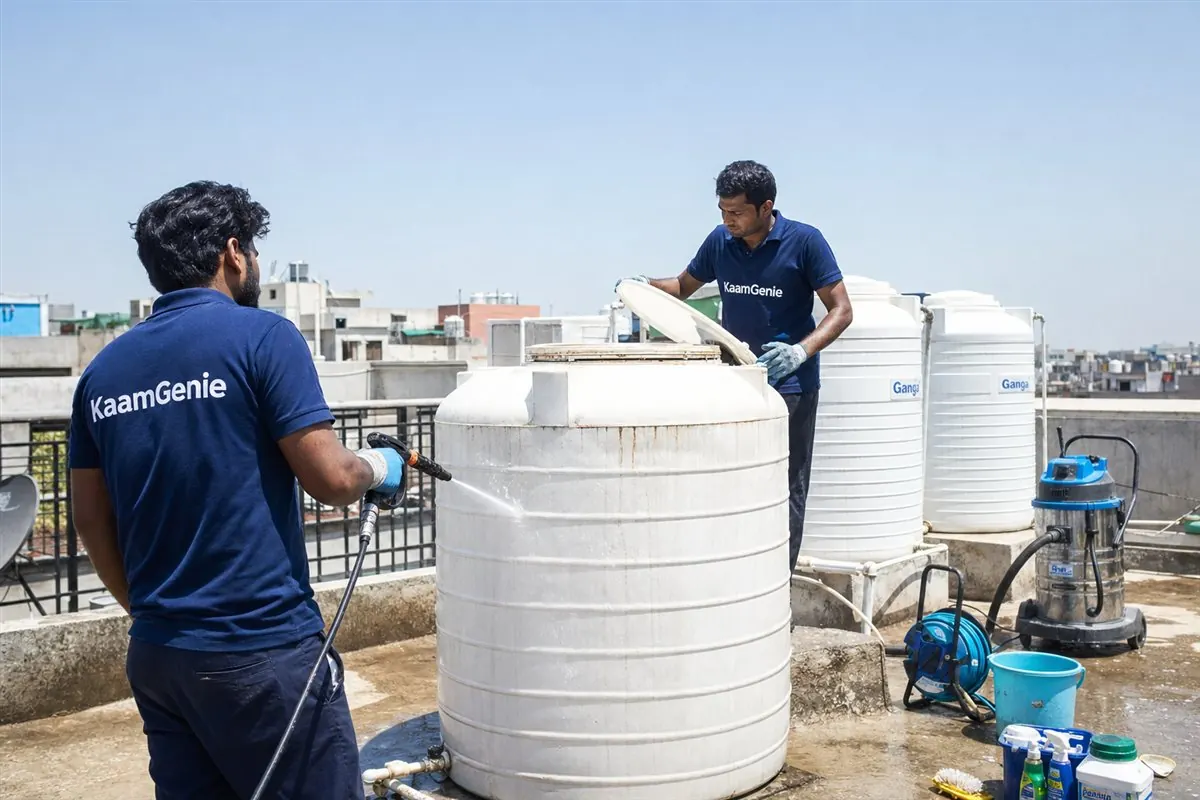
The best time to schedule a professional clean is at the start of summer, before peak heat sets in and demand for services rises. Early cleaning gives you a fresh, sediment-free tank just as usage climbs, so contamination has less foundation to build on. Also book a clean after any long absence, a supply disruption, visible algae, or if the water develops an odd taste or smell. A trained crew drains the tank fully, removes sludge, scrubs the walls, disinfects and vacuums out residue that home rinsing leaves behind. In Delhi-NCR, KaamGenie handles overhead, underground and combined tanks. Call 95603 66362 to fix a slot early and keep your family’s water clean all summer.
Frequently asked questions
How often should I clean my water tank in summer?
In Delhi-NCR summers we recommend cleaning your tank at least once every three months. Homes with borewell supply, hard water, large families or sun-exposed rooftop tanks may need cleaning every two months. Heat speeds up algae and bacteria, so a shorter gap than the usual six-month schedule keeps stored water safe.
Why does water in my tank smell bad during summer?
A musty, earthy or rotten smell usually means bacterial growth, algae or trapped sludge in the tank. Summer warmth accelerates all three. Standing water above 30 degrees lets micro-organisms multiply and biofilm form on the walls. A thorough professional clean and disinfection removes the source and clears the odour.
Can I drink water directly from a cleaned tank in summer?
A freshly cleaned tank greatly improves water quality, but we still advise treating drinking water. Use a certified RO or UV purifier, or boil untreated supply, especially in peak heat when pathogens spread faster. Keep drinking containers covered and rotate stored water every couple of days for full safety.
Does summer heat really make tank water unsafe?
Yes. Once water crosses roughly 30 degrees, bacteria such as E. coli and coliform multiply far faster, and algae thrive with any sunlight leak. Rooftop tanks in Delhi-NCR heat up all afternoon, keeping water warm into the night. This warm, still condition makes contamination noticeably quicker than in cooler months.
How do I keep my rooftop tank cooler in summer?
Shade or insulate the tank where possible, or use an opaque, food-grade tank that resists heat and light. Some homes fit a simple cover or reflective wrap to cut direct sun. A cooler tank slows algae and bacterial growth, though regular cleaning every two to three months is still essential.
What are the signs my tank needs urgent cleaning?
Watch for cloudy, yellow or greenish water, a musty or slimy feel, floating particles, sediment or visible algae on the walls. A bad smell from taps, blocked aerators or family stomach upsets are also warnings. In summer these signs appear faster, so book a clean as soon as you notice even one.
Should I empty my tank fully before cleaning?
Yes, a proper clean requires draining the tank completely so sludge and biofilm at the bottom can be removed. Simply topping up over old water leaves trapped sediment behind, which worsens in summer heat. A professional crew drains, scrubs, disinfects and vacuums out residue that ordinary rinsing cannot reach.
How do I book KaamGenie for summer tank cleaning?
Call KaamGenie at 95603 66362 to book a slot across Delhi-NCR. We service overhead, underground and combined tanks. Booking early in the season is best, before demand peaks, so you start summer with a fresh, sediment-free tank. Our crew drains, scrubs, disinfects and vacuums residue for genuinely clean water.
Sources & references
- Bureau of Indian Standards (BIS) — IS 10500:2012 is the canonical Indian Standard for drinking water specification, defining acceptable limits for physical, chemical and biological parameters.
- WHO Guidelines for Drinking-water Quality, 4th edition — the global reference for water quality standards, including guidance on safe storage and disinfection.
- Food Safety and Standards Authority of India (FSSAI) — defines water quality requirements for food businesses, including hygiene standards for stored water and acceptable disinfection chemicals.
- WHO Fact Sheet on Drinking Water — overview of safe drinking water requirements and contamination risks.
- CPHEEO — Manual on Water Supply and Treatment — the Government of India’s engineering manual covering tank design, cleaning protocols and disinfection practices.
Last verified: 6 July 2026. If you find any of these links broken, please let us know.