
Key takeaways
- Tank type – plastic, RCC, GI or steel – decides the cleaning method and chemicals used.
- Homes and flats manage fine with a clean every 6 months; high-footfall sites need it quarterly.
- Restaurants, hotels and hospitals face FSSAI and health-department scrutiny, so records matter.
- Large societies and RWAs need scheduling that avoids disrupting hundreds of residents.
- A dated cleaning certificate protects you during audits, inspections and tenant disputes.
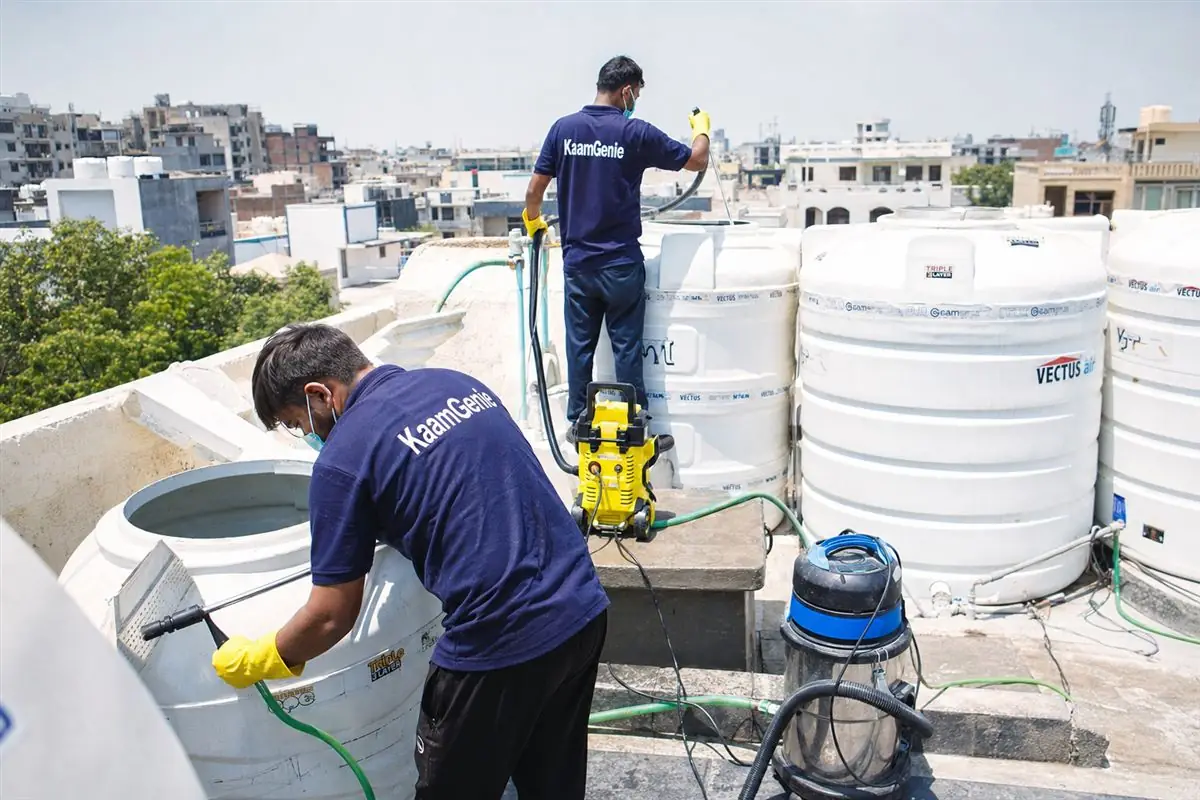
For a typical Delhi flat or independent home, the setup is usually a plastic (Sintex-style) overhead tank of 500–1,000 litres, sometimes paired with a small underground sump. These are the easiest to service — a two-person crew can drain, scrub, vacuum out sludge, disinfect and refill within an hour or two. The main risks are algae from sunlight on rooftop tanks and sediment settling at the base. We recommend a clean every six months for most households, or quarterly if the supply is bore-fed or visibly muddy. Families with infants, elderly members or anyone recently ill should not stretch the interval. Keeping the lid sealed and the overflow meshed between visits cuts down on dust, insects and bird droppings entering the stored water.
Kothis, Villas & Farmhouses
Larger independent properties often run multiple tanks — a big underground RCC sump, one or two overhead tanks, and sometimes a separate line for gardens or a swimming pool. RCC (concrete) sumps behave differently from plastic tanks: they develop scaling, hairline cracks and biofilm on rough inner walls, so they need thorough manual scrubbing and sometimes anti-fungal treatment rather than a quick rinse. Because total storage can cross 10,000 litres, cleaning takes longer and may need a submersible pump to drain fully. We usually coordinate with the household staff or caretaker to schedule around water needs. A twice-yearly cycle works for most kothis, but pool-side and garden sumps that sit stagnant benefit from more frequent attention.
Housing Societies & RWA-Managed Complexes
Apartment societies are the most logistically demanding. A single tower may share large RCC or steel sectional tanks holding tens of thousands of litres, feeding dozens of flats. The challenge is less about the cleaning itself and more about coordination — you cannot leave hundreds of residents without water for hours without notice. We work with the RWA or facility manager to plan tank-by-tank cleaning, post advance notices, and sequence overhead and underground tanks so supply is never fully cut. For societies we strongly advise a documented quarterly schedule with a cleaning certificate after each visit, which the managing committee can show residents and auditors. Annual maintenance contracts make budgeting predictable and ensure tanks are not forgotten between committee handovers.
Restaurants, Cafes & Cloud Kitchens (FSSAI)
Any establishment serving food falls under FSSAI rules, and stored water quality is part of that. Inspectors increasingly ask for proof that water tanks are cleaned and disinfected on a regular schedule, since contaminated water affects everything from washed vegetables to ice and drinking supply. Restaurants typically have moderate storage but very high daily draw, so sediment and biofilm build up faster than in a home. We recommend a quarterly clean at minimum, with a dated certificate kept in the compliance file for audits. Cloud kitchens sharing a building tank should confirm who is responsible for that tank — the landlord or the tenant — because gaps in ownership are where cleaning gets skipped. Food-grade disinfectants and a proper potable-water rinse are non-negotiable here.
Book your water tank cleaning
Trained crew, food-grade process, before/after photos and a service record every job. ₹699 onwards, same-day where possible across Delhi NCR.
Hotels, Banquet Halls & Guesthouses
Hospitality properties combine large storage with fluctuating, peak-driven demand — a banquet or a full house can spike water use dramatically. Hotels usually run substantial underground sumps plus overhead tanks, often with separate soft-water or RO feed lines that also need periodic checks. Guest health and reputation are directly at stake, so cleaning cannot be an afterthought. We suggest a quarterly cycle, scheduled during low-occupancy windows, with clear records for both internal quality systems and any health-department queries. Larger hotels benefit from staggering tanks so guest supply stays uninterrupted. Because these tanks are big and often awkwardly placed in basements or on terraces, an experienced crew with the right pumps and safety gear matters — confined-space cleaning is not a job for untrained hands.
Hospitals, Clinics & Nursing Homes
Healthcare is the highest-stakes category. Water feeds wards, operation theatres, dialysis units, laundry and kitchens, and patients often have weakened immunity, so waterborne contamination can be dangerous. Hospitals typically hold very large volumes across multiple sumps and overhead tanks, sometimes with dedicated lines for critical areas. Cleaning here demands strict discipline — thorough disinfection, verified potable-water refill, and detailed documentation for infection-control committees and NABH-style audits. We advise a quarterly or even more frequent schedule depending on load, always coordinated with facility engineers so no critical service loses supply. Given the volumes and the safety requirements, hospitals should insist on a trained crew, proper chemicals and a signed certificate every single time. This is one property type where cutting corners is simply not an option.
Schools, PGs, Hostels & Industrial Units
This mixed group shares one trait — many people relying on shared storage. Schools and hostels serve children and young residents, so a quarterly clean during holidays or low-activity periods keeps disruption minimal. PGs and hostels in areas like Laxmi Nagar, Mukherjee Nagar and Gurugram often have overworked tanks and neglected maintenance, which is exactly where problems appear. Industrial units vary widely: some need only potable-water tanks cleaned for staff, while others store process water in GI or steel tanks that scale and rust and require specialised handling. For all of these, capacity, tank material and usage pattern decide the right frequency. We assess each site, recommend a realistic schedule, and provide certificates so managers can satisfy licensing, safety and welfare requirements.
Frequently asked questions
How often should I get my water tank cleaned?
For most homes and flats, every six months is sufficient. High-usage or high-risk properties — restaurants, hotels, hospitals, schools, societies and PGs — should aim for quarterly. Bore-fed supply, visibly muddy water, or vulnerable occupants like infants and patients are reasons to clean more often rather than less.
Does the type of tank change how cleaning is done?
Yes. Plastic tanks are quick to drain, scrub and disinfect. RCC concrete sumps develop scaling and biofilm on rough walls and need heavier manual work, sometimes anti-fungal treatment. GI and steel tanks can rust and scale, requiring specialised handling. Tank material and capacity directly decide the method, chemicals and time involved.
Do restaurants really need cleaning records for FSSAI?
Yes. Stored water quality falls under FSSAI food-safety expectations, and inspectors increasingly ask for proof of regular tank cleaning and disinfection. We provide a dated cleaning certificate after each visit that you can keep in your compliance file, which helps during audits and demonstrates due diligence on water safety.
Will my building lose water supply during cleaning?
For a single home, supply is off only for an hour or two while we drain, clean and refill. For societies and large buildings, we sequence tanks and coordinate with your RWA or facility manager so supply is never fully cut. Advance notice to residents lets everyone store water for the short window.
How is cleaning a housing society tank different from a home tank?
The cleaning itself is similar, but coordination is the real challenge. Societies share large tanks feeding dozens of flats, so we plan tank-by-tank, post notices and sequence work to avoid leaving residents without water. Documented quarterly schedules and certificates also matter more for committee accountability and audits.
Are hospital water tanks handled differently?
Considerably. Hospitals feed wards, theatres and dialysis units serving vulnerable patients, so cleaning demands strict disinfection, verified potable-water refill and detailed records for infection-control audits. Work is coordinated with facility engineers so critical areas never lose supply, and a trained crew with proper chemicals and safety gear is essential every time.
Who is responsible for the tank in a rented shop or cloud kitchen?
It depends on your agreement. Shared building tanks are often the landlord’s responsibility, while dedicated tanks usually fall to the tenant. Confirm this in writing, because ambiguity is exactly where cleaning gets skipped. If you serve food, treat clean water as your obligation regardless and keep your own certificate.
Do you serve all of Delhi-NCR for every property type?
Yes. KaamGenie handles homes, kothis, societies, restaurants, hotels, hospitals, schools, PGs and industrial units across Delhi, Gurugram, Noida, Faridabad and Ghaziabad. We assess your tank type, capacity and usage, then recommend a suitable schedule. Call us on 95603 66362 to arrange a visit or set up an annual maintenance plan.
Sources & references
- Bureau of Indian Standards (BIS) — IS 10500:2012 is the canonical Indian Standard for drinking water specification, defining acceptable limits for physical, chemical and biological parameters.
- WHO Guidelines for Drinking-water Quality, 4th edition — the global reference for water quality standards, including guidance on safe storage and disinfection.
- Food Safety and Standards Authority of India (FSSAI) — defines water quality requirements for food businesses, including hygiene standards for stored water and acceptable disinfection chemicals.
- WHO Fact Sheet on Drinking Water — overview of safe drinking water requirements and contamination risks.
- CPHEEO — Manual on Water Supply and Treatment — the Government of India’s engineering manual covering tank design, cleaning protocols and disinfection practices.
Last verified: 6 July 2026. If you find any of these links broken, please let us know.