
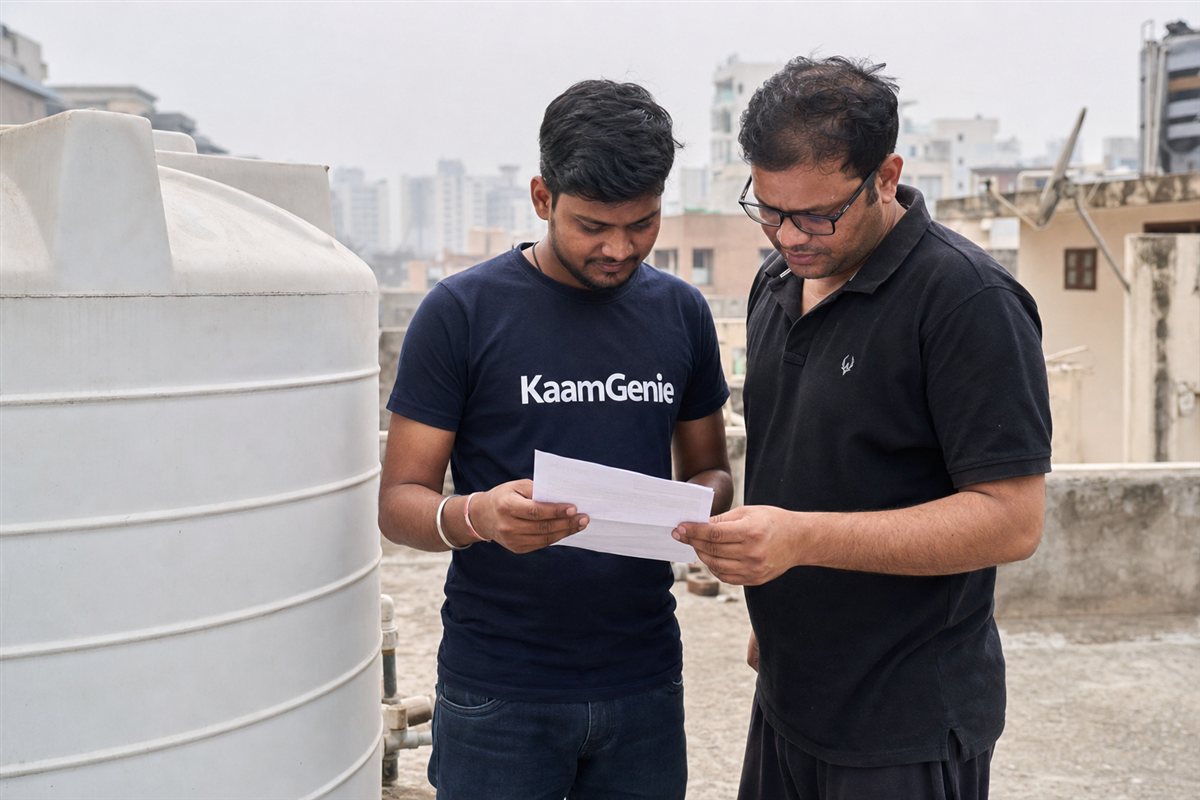
The short answer on Gurgaon pricing
- Single overhead flat/villa tank (up to 1,000L): from ₹699
- Larger overhead tank (1,500–2,000L): roughly ₹899–1,200
- Underground sump / reservoir (UGR): ₹1,800–3,500 by capacity
- Builder floors & condos: quoted per tank — the rate drops as tank count rises
- What pushes the price up: hard-water descaling, thick tanker sediment, extra tanks, height/access
If someone quotes ₹250 for a “full cleaning,” you’re paying for a rinse — not sludge removal, scrubbing, jet wash and food-grade disinfection.
Gurgaon (Gurugram) is a city of extremes when it comes to water. Glass towers on Golf Course Road sit next to independent builder floors in the old sectors; luxury DLF condominiums run enormous underground reservoirs feeding rooftop tower tanks; and across all of it, hard borewell groundwater and a heavy reliance on water tankers leave their mark inside every tank. That variety is exactly why a single “price for tank cleaning” doesn’t exist here — and why so many quotes feel like guesswork.
This guide breaks the cost down honestly. Below is the price table we actually work from, followed by the five things that genuinely move a Gurgaon quote, and how condo, UGR and builder-floor jobs are priced differently from a standalone flat. For the full how-and-why of the service itself, our water tank cleaning in Gurgaon hub and the Gurgaon tank cleaning guide cover the process end to end.
| Tank type / situation | Typical capacity | 2026 price (Gurgaon) | Time on site |
|---|---|---|---|
| Single overhead tank (flat/villa) | Up to 1,000L | From ₹699 | 75–90 min |
| Larger overhead tank | 1,500–2,000L | ₹899–1,200 | 90–120 min |
| Each additional tank (same visit) | Per tank | ₹400–600 each | +30–45 min each |
| Underground sump / UGR (residential) | Up to 5,000L | ₹1,800–3,000 | 2–2.5 hrs |
| Hard-water descaling add-on | Heavy scale | +₹300–700 | +20–40 min |
| Builder floor (multi-tank bundle) | 3–4 tanks + sump | Custom (per-tank rate) | Half-day |
| Condominium / society tower | UGR + rooftop tanks | Per-tank survey quote | Scheduled |
These are realistic 2026 figures, not teaser rates. The number we confirm before the crew starts is the number you pay — add-ons like descaling or extra tanks are always shown to you upfront, never tacked on at the end.
Get a fixed Gurgaon quote
Tell us your tank type and area — we confirm a fixed price before anyone starts. Full process, photos, certificate. ₹699 onwards.
Why the flat rate starts at ₹699 (and not ₹250)
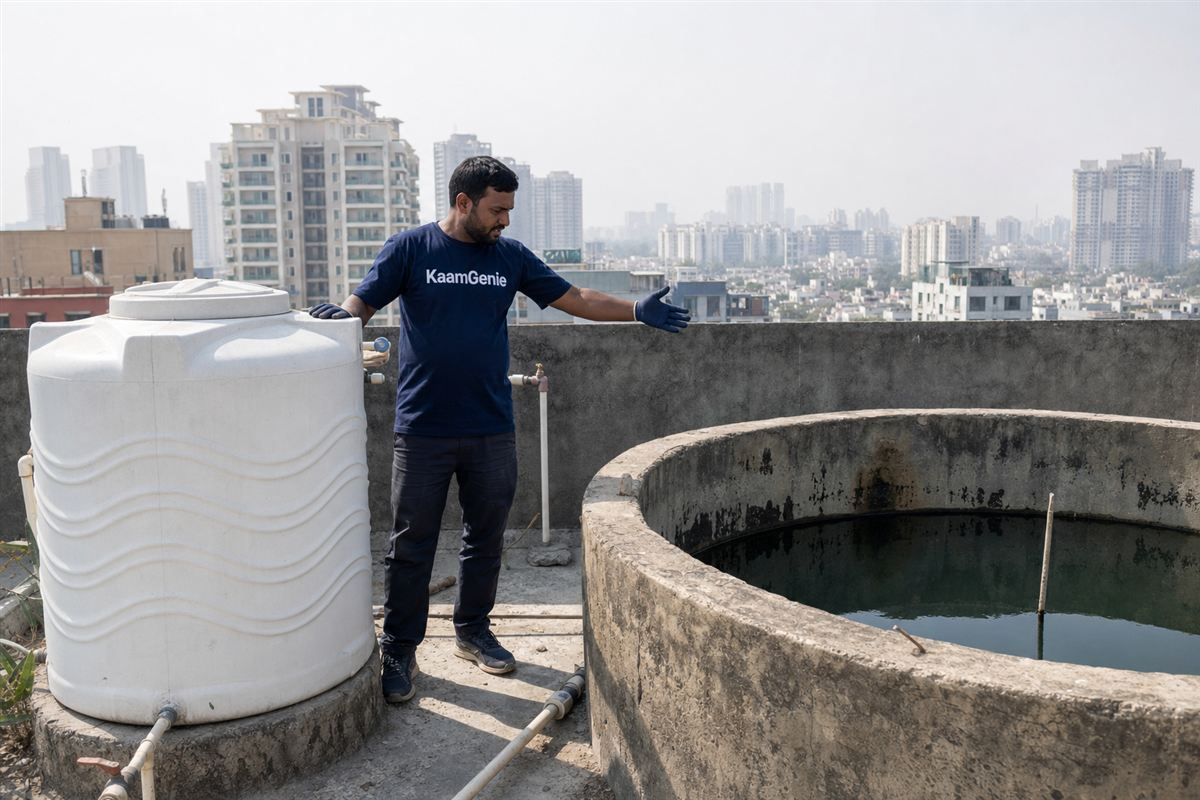
The cheapest quotes floating around Gurgaon — ₹200 to ₹300 — almost always buy you a rinse: drain the tank, splash some water around, refill, leave. No sludge removal, no manual scrubbing, no jet wash, no food-grade disinfection, no photos. The contamination that matters most, the sediment and bio-film stuck to the bottom and walls, stays exactly where it was.
A real cleaning is a 75–90 minute, eight-step job: inspect, drain, hand-scoop the sludge, scrub every wall with food-grade brushes, high-pressure jet wash the corners and fittings, wet-vacuum the residue, disinfect with food-grade sodium hypochlorite at a proper contact time, then refill and certify. That needs a trained two-person crew, a pressure washer, a wet vacuum, and FSSAI-acceptable chemical — none of which a ₹250 operator is carrying. ₹699 is simply the honest floor for doing it properly. You can read the full method on our water tank cleaning services page.
The five things that move a Gurgaon quote
Above the flat ₹699 floor, five factors decide where your price lands. None of them are mysterious, and a good cleaner will name them on the phone or after a 60-second inspection — not after the work is done.
1. Tank size and number of tanks. A 500L Sintex tank and a 2,000L overhead tank are not the same job. More litres mean more scrubbing, more chemical and more time. And many Gurgaon homes — especially independent builder floors — have more than one tank: an overhead tank per floor plus a shared ground sump. Each extra tank cleaned in the same visit is charged at a reduced rate because the crew and gear are already on site.
2. Hard-water scale. Gurgaon’s borewell groundwater is hard, so tanks build up calcium and mineral scale on the walls, around the inlet/outlet and on the float valve. Light scale is part of the standard clean; heavy crusted scale needs food-grade descaling, which adds time and chemical. If your building runs largely on borewell supply — common across the older sectors and along Sohna Road — expect descaling to come up. Our dedicated society cleaning guide covers how this scales across a whole tower.
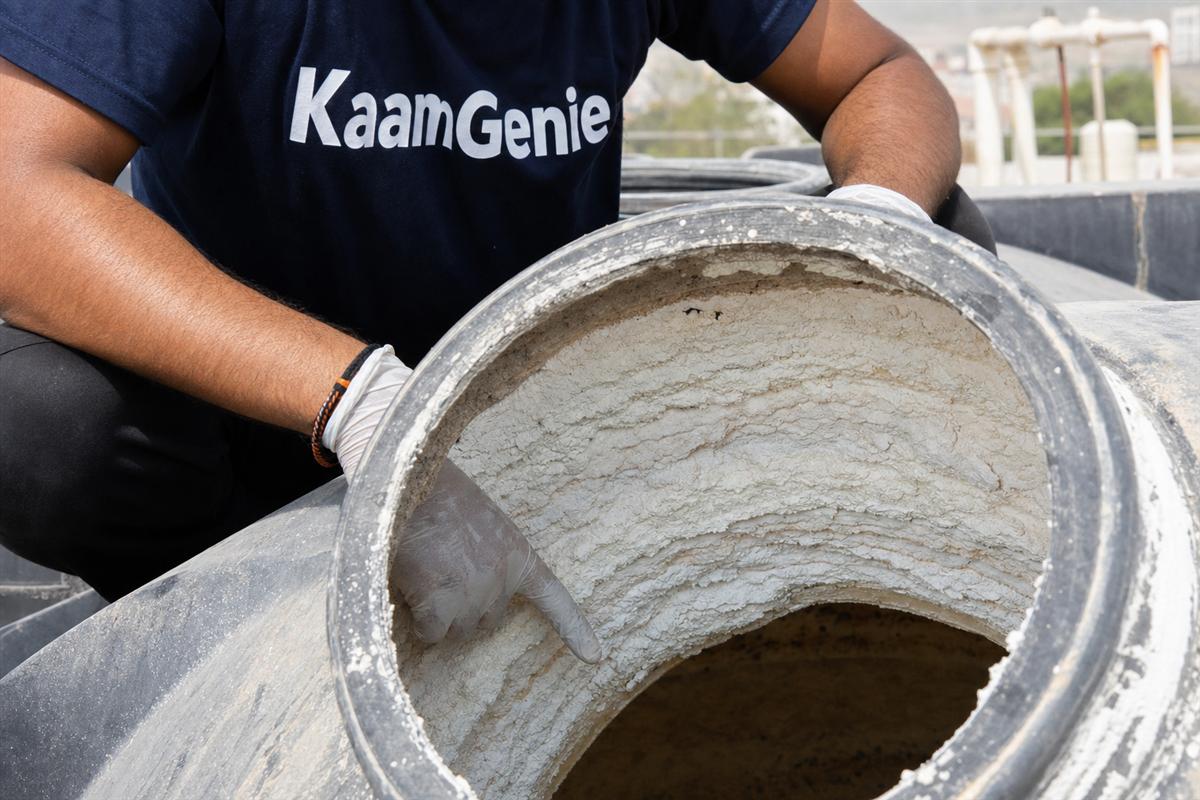
3. Tanker sediment. Large parts of Gurgaon lean heavily on water tankers, and tanker water carries sand and silt that settles thick at the bottom of the tank. A tank that hasn’t been opened in two or three years can hold a sediment layer half an inch deep — far slower to scoop and vacuum than a tank cleaned yearly. That extreme-neglect case can carry a small surcharge, always quoted after the crew sees inside.
4. Underground reservoirs (UGR). Sumps and society reservoirs hold many times the water of a rooftop tank, need confined-space safety gear, and take far longer to pump out and scrub. They’re priced by capacity, not the flat rate — more on that below.
5. Height and access. The flat price assumes normal rooftop access. Very tall towers, awkward terraces, or sectional tanks that need long hose runs and harnessed work can carry a small access charge for the extra time and safety setup. On the new-tower belt along Dwarka Expressway and the higher floors off Golf Course Road, this occasionally applies — and it’s always confirmed before we start.
Condo, UGR and builder-floor pricing
This is where Gurgaon pricing genuinely differs from a standalone flat, and where the most confusion creeps in.
Condominiums and AOA/RWA societies are quoted per tank, not as one flat figure. A typical DLF or Golf Course Extension tower has a large underground reservoir at the base plus multiple rooftop sectional tanks feeding the flats. We survey the UGR capacity, count the rooftop tanks, and give the committee a per-tank rate that falls as the tank count rises — so the effective cost per tank in a 12-tank tower is well below a single home’s ₹699. The society also gets a proper GST invoice and a per-tank record for its files.
Underground reservoirs on their own — a residential sump, or a UGR without the tower work — are priced by capacity, usually ₹1,800–3,000 for up to ~5,000L, with larger reservoirs quoted after a look. Counter-intuitively, the cost per litre drops as the reservoir gets bigger, because setup and travel are fixed.
Independent builder floors sit in the middle. A four-storey builder floor in a sector like Sector 82 often has one overhead tank per floor plus a ground sump — five tanks in total. Booked together, the first tank is at the standard rate and every tank after it at the reduced per-tank rate, so the whole building costs far less than five separate ₹699 visits. Ask for the multi-tank bundle when you book.
What you pay per tank as the count rises — illustrative Gurgaon rates
Fixed crew, travel and setup spread across more tanks = lower cost per tank
Illustrative per-tank rates for overhead tanks of similar size. A UGR is priced separately by capacity. Actual society quotes follow a site survey.
How to read a Gurgaon quote without getting burned
When you collect quotes, compare like for like. A ₹300 number and a ₹699 number are usually pricing two completely different jobs. Before you pick, confirm:
- Is sludge removal and manual scrubbing included? If not, it’s a rinse.
- Do they carry a pressure washer and wet vacuum? Cheap operators don’t.
- Is the disinfectant food-grade? FSSAI-acceptable sodium hypochlorite, not hardware-shop bleach.
- Are descaling, extra tanks and access charges quoted upfront? They should be named before work starts.
- Do you get before/after photos and a record? Essential for society and AMC documentation.
If a quote is vague on any of these, the low headline number will usually grow — or the job simply won’t be done properly. For a recurring schedule that locks a lower per-visit rate, an annual contract is the cheapest route over a year; our Gurgaon AMC guide explains how those plans are structured.
Not sure which bracket you’re in?
Send us your tank type, count and area — we’ll give you a clear fixed price, no upsell. Residential ₹699 onwards; society & UGR custom.
Book water tank cleaning in Gurgaon
Whether it’s a single flat in the old sectors, a builder floor on the Southern Peripheral Road, or a full condominium tower on Golf Course Extension, the pricing logic is the same: a fixed, honest rate confirmed before anyone starts, the full eight-step process, and photos plus a record at the end. Browse areas and book on our water tank cleaning in Gurgaon hub, or call us and we’ll quote your exact situation in a couple of minutes.
Frequently asked questions
How much does water tank cleaning cost in Gurgaon in 2026?
A standard single residential overhead tank up to about 1,000 litres starts at ₹699. Larger overhead tanks (1,500–2,000L) run roughly ₹899–1,200. Underground sumps and reservoirs are priced by capacity, typically ₹1,800–3,500. Builder floors and condominium societies with multiple tanks are quoted per tank or as a bundle after a quick survey.
Why is the starting price ₹699 and not the ₹200-300 I see advertised?
A ₹200–300 job is almost always a rinse — drain the tank, splash some water around, refill. A real cleaning is sludge removal, manual scrubbing, jet wash, wet-vacuum, and food-grade disinfection with contact time, plus before/after photos and a record. The equipment, food-grade chemical and 75–90 minutes of crew time cost more than ₹300. ₹699 is the honest floor for the full process, not a teaser.
How is condominium and society tank cleaning priced in Gurgaon?
Condo and society work is quoted per tank rather than as a single flat price, because a tower has a large underground reservoir (UGR) plus rooftop sectional tanks. We survey the UGR capacity, count the rooftop tanks, and give the AOA/RWA a per-tank rate that drops as the tank count rises. A typical Golf Course Road or Sohna Road tower is far cheaper per tank than a single standalone flat.
Does hard borewell water in Gurgaon make cleaning more expensive?
It can. Gurgaon’s groundwater is hard, so tanks fed by borewell develop calcium and mineral scale on the walls and around fittings. Light scale is included in the standard clean. Heavy, crusted scale needs food-grade descaling, which adds a modest charge because it takes extra time and chemical. The crew tells you on arrival whether descaling is needed — it is never added silently.
How much extra does underground reservoir (UGR) cleaning cost?
A UGR holds far more water than a rooftop tank and needs confined-space safety gear, longer pump-out and more scrubbing, so it is priced by capacity rather than the flat ₹699. A residential sump up to ~5,000L is usually ₹1,800–3,000; large society reservoirs are quoted after a survey. The per-litre cost actually drops as the reservoir gets bigger.
Do builder floors with multiple tanks get a discount?
Yes. Independent builder floors in Gurgaon often have a separate overhead tank per floor plus a shared ground sump. When we clean several tanks in one visit at the same address, every tank after the first is charged at a reduced rate because the crew, equipment and travel are already on site. Ask for the multi-tank bundle when you book.
Is there an extra charge for tanker-fed sediment or heavy sludge?
Standard cleaning includes normal sludge. But many Gurgaon homes rely heavily on water tankers, and tanker water carries sand and silt that settles thick at the bottom. A tank that has not been cleaned in 2–3 years can hold a heavy sediment layer that takes much longer to scoop and vacuum. That extreme-neglect case may carry a small surcharge, quoted upfront after inspection.
Does high-rise height or difficult rooftop access affect the price?
The flat ₹699 assumes normal access. For very high towers, tanks on tricky terraces, or sectional tanks that need extra hose runs and harnessed work, there can be a small access charge to cover the time and safety setup. We confirm this before starting — never as a surprise at the end.
Are there any hidden charges or GST on top of the quote?
No hidden charges. The price we confirm before the crew starts is the price you pay. For residential jobs the quoted figure is what you settle; for societies and commercial work we raise a proper GST invoice so the AOA/RWA or business has documentation. Any add-on like descaling or extra tanks is shown to you before the work, not after.
Can I get an AMC to reduce the per-clean cost in Gurgaon?
Yes. An annual maintenance contract schedules two to four cleans a year at a locked per-visit rate that is lower than booking each clean separately, and it keeps your tank consistently safe rather than waiting until the water turns. Societies and builder floors benefit most. See our Gurgaon AMC guide for how the plans are structured.
Sources & references
- Bureau of Indian Standards (BIS) — IS 10500:2012 is the canonical Indian Standard for drinking water specification, defining acceptable limits for physical, chemical, and biological parameters.
- WHO Guidelines for Drinking-water Quality, 4th edition — the global reference for water quality standards, including guidance on storage and disinfection.
- Food Safety and Standards Authority of India (FSSAI) — defines water quality requirements for food businesses, including hygiene standards for stored water and acceptable disinfection chemicals.
- WHO Fact Sheet on Drinking Water — overview of safe drinking water requirements and contamination risks.
- CPHEEO — Manual on Water Supply and Treatment — the Government of India’s engineering manual covering tank design, cleaning protocols, and disinfection practices.
Last verified: 29 June 2026. If you find any of these links broken, please let us know.