
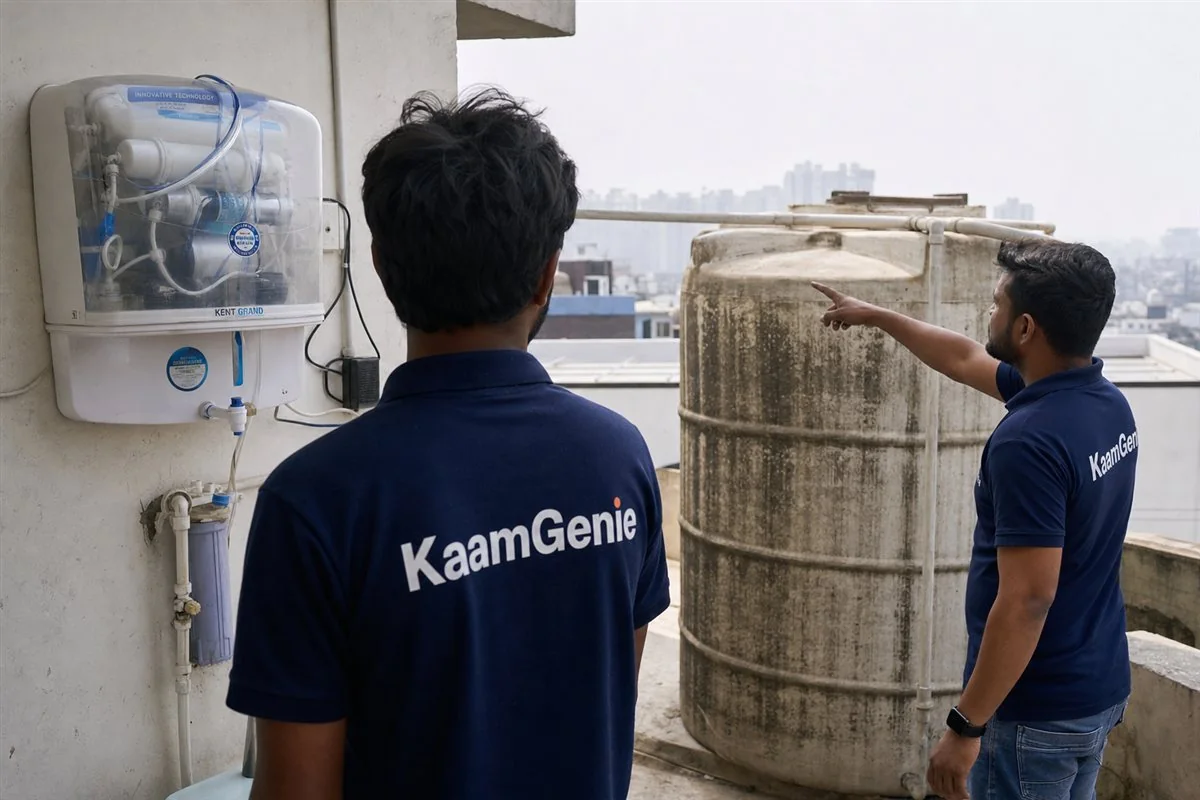
The short version
- A purifier treats only the water that passes through it — usually one kitchen tap. Everything else in your home draws straight from the tank.
- If the storage tank is dirty, your bathing, cooking-prep, brushing and washing water is dirty — purifier or not.
- A dirty tank recontaminates the supply and clogs your purifier filters faster, so you pay more in service and membrane changes.
- On Noida’s hard borewell and tanker-fed water, tanks fill with sediment and biofilm quicker — so this matters more here, not less.
- You need both: a clean tank removes the source, the purifier polishes the last glass. They solve different problems.
Buying a ₹15,000 RO and skipping the ₹699 tank clean is fixing the smallest pipe in the house and ignoring the reservoir feeding all of them.
We hear it on almost every visit across Noida: “We have an RO, so the tank doesn’t really need cleaning, na?” It’s an easy assumption to make — the purifier is the visible, modern, expensive thing on the kitchen wall, and the tank is out of sight on the roof or under the building. But the assumption is backwards. The purifier is the last and smallest point in your water’s journey. The tank is where almost all of the water you actually use sits and waits. Let’s walk through what each one really does.
What a water purifier actually cleans (and what it doesn’t)
An RO or UV purifier sits at one outlet — almost always the kitchen drinking tap. It treats the few litres a day that pass through it: removing dissolved hardness, killing or blocking microbes, fixing taste and smell. For drinking water, it does an excellent job, and we always recommend keeping one.
But look at where the rest of your water goes. In a typical Noida flat, the storage tank feeds:
- Every bathroom tap and shower — the water on your skin, hair and eyes
- The geyser and washing machine
- The kitchen tap before the RO — what you wash vegetables, dal and utensils with
- Often a separate utility tap for mopping and cleaning
The purifier touches none of that. Roughly speaking, the RO cleans a small share of your household water; the storage tank supplies the rest. So if you’re judging your water’s safety by how the RO tap tastes, you’re judging the smallest stream and ignoring the river. That’s the whole myth in one sentence.
| Question | Water purifier (RO/UV) | Tank cleaning |
|---|---|---|
| What it treats | Water at one tap (drinking) | The stored water that feeds every tap |
| Bathing & shower water | Not covered | Covered |
| Veg/utensil wash water | Not covered | Covered |
| Removes tank sludge & biofilm | No — sits downstream of it | Yes — that’s the whole job |
| Stops recontamination at source | No | Yes |
| Typical cost | ₹12,000–20,000 + filter changes | ₹699 onwards, 2–3x a year |
Get the tank cleaned that feeds your whole home
Full drain, scrub, jet-wash and food-grade disinfection — before/after photos every job. ₹699 onwards for a standard residential tank in Noida.
A dirty tank recontaminates everything — including your purifier
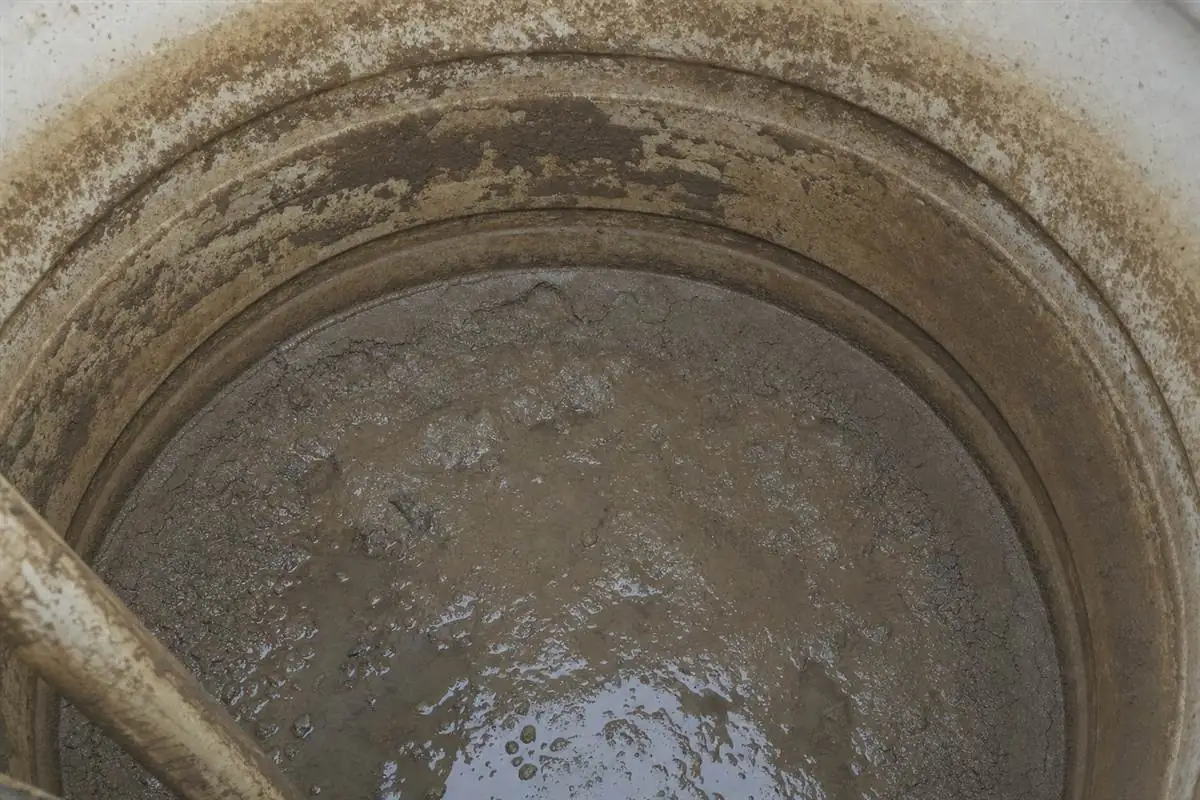
Here’s the part most people miss. A neglected tank doesn’t just sit there being dirty — it actively feeds that dirt forward. Sediment settles into a sludge layer on the floor; algae and biofilm coat the walls, especially where light leaks through a cracked or ill-fitting lid. Every time fresh water enters and the level moves, some of that material lifts off and travels down the outlet pipe to your taps.
That means two things for a household with an RO:
- Your purifier works harder and dies sooner. Sediment and hardness from a dirty tank hit the pre-filter and RO membrane first. In hard-water Noida the membrane is already under strain; feeding it from a sludgy tank clogs the pre-filters in weeks instead of months, raises your service-call frequency, and shortens membrane life. People assume their RO “brand is bad.” Often the tank upstream is the real culprit. If you want to protect the purifier you paid for, clean the tank that feeds it.
- The drinking water is the only thing that gets fixed. Even if the RO keeps up, every non-drinking outlet still delivers contaminated water. That brings us to the part of this myth with real health stakes.
The water you never filter: skin, hair, eyes and food prep
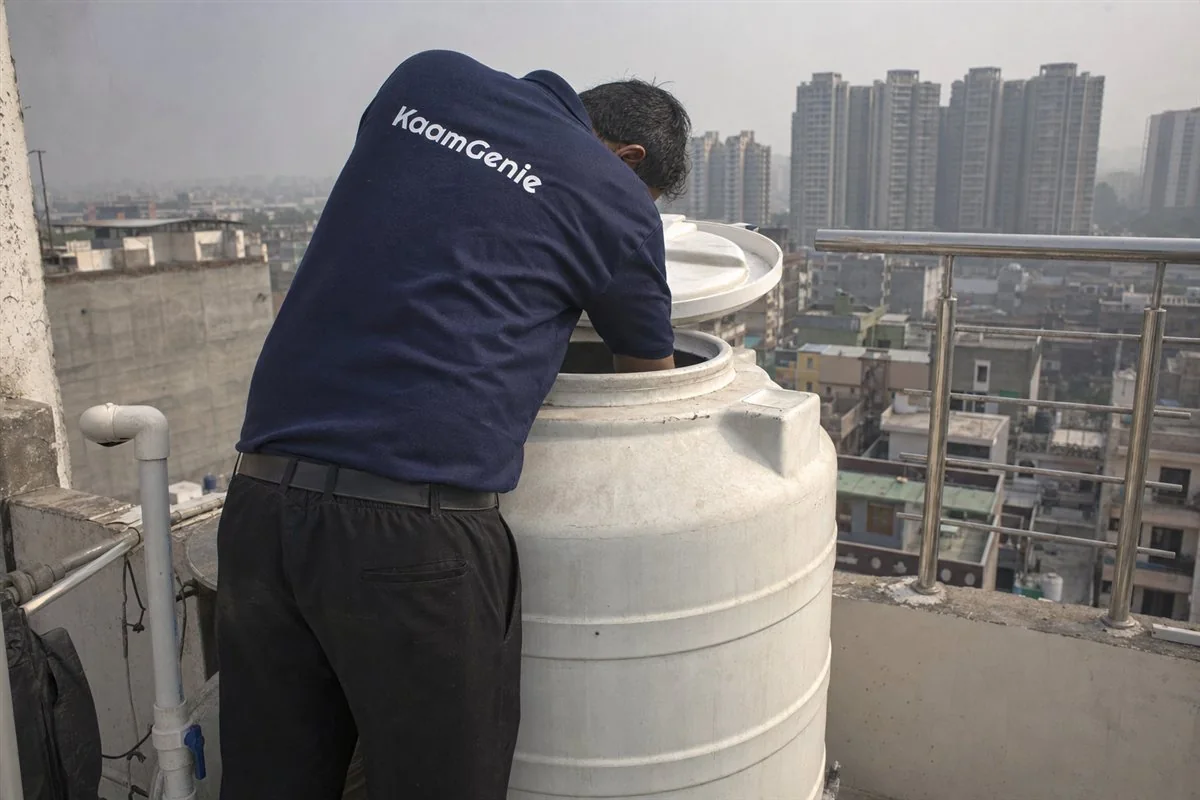
Think about your actual morning. You shower in tank water. You brush your teeth in tank water. You wash the vegetables, soak the dal and rinse the utensils in tank water (the line before the RO). Children splash it on their faces. None of that passes through the purifier.
If the tank carries biofilm, algae or tanker-borne sediment, that water is in direct contact with your skin, scalp and eyes every single day, and on the food you’re about to cook. A lot of the recurring complaints we hear in Noida high-rises — itchy skin after bathing, dull or falling hair, mild eye irritation, an off smell in the bathroom but not at the RO tap — trace back to the storage tank, not the drinking water. The RO can’t help here because the problem is happening at outlets it doesn’t serve. If you’re seeing any of these, our guide to the signs your water tank needs cleaning in Noida is a useful next read.
Why this is sharper in Noida and Greater Noida West
This myth is more expensive in Noida than in many other cities, for two specific local reasons.
1. The water here is harder and carries more sediment. Large parts of Noida, and almost all of Greater Noida West / Noida Extension, run on hard borewell groundwater, often topped up by private tankers. Compared with treated, piped Ganga Jal supply, this water carries more dissolved minerals and suspended particles. That hardness scales onto tank walls and pipe fittings, and the sediment settles fast at the bottom of the tank. We cover the mineral side in detail in our piece on hard-water tank cleaning in Noida.
2. The storage architecture gives dirt time to grow. The Noida Expressway high-rise belt — Sectors 137, 150, 168, 75, 76, 78, 100 — and the new Greater Noida West townships store water in big underground reservoirs (UGRs), which then pump up to rooftop tower tanks. Water can sit in that two-stage system for a long time. The longer it sits, the more sediment settles and the more biofilm establishes itself before a drop ever reaches your flat. Builder floors with shared sumps and plotted Authority houses in older sectors face the same issue at smaller scale. Tanker-fed buildings are the worst case, because each tanker delivery drops a fresh load of sediment into the reservoir.
So the city that most relies on purifiers for drinking water is also the city where the storage tank gets dirty fastest. If you live here, the “I have an RO” logic is exactly the wrong way round.
How clean is your tank really? The honest test
You can’t judge the tank from the RO tap. Try these instead:
Where your household water goes — and what the RO covers
Illustrative split of daily use in a typical Noida flat. The purifier touches only the drinking slice.
The RO improves the smallest slice of your daily water. The tank decides the quality of all the rest — which is why both jobs are needed, not one.
- Open the tank lid and look. Sludge on the floor, slimy walls, a green tinge or a smell = overdue for cleaning.
- Taste and smell a bathroom tap (the unfiltered line). If it’s off but the RO is fine, the difference is the tank.
- Check your RO filter-change frequency. If filters clog far quicker than rated, dirty feed water from the tank is a likely cause.
- Note the last cleaning date. If you can’t remember it, it’s been too long — especially on tanker-fed supply.
Both jobs done right — clean tank, protected purifier
We clean and disinfect the storage tank that feeds your whole home, so your RO only has to polish already-clean water. Book a Noida slot today.
The right setup: clean tank first, then let the purifier polish
The two are not competitors — they’re a sequence. Clean and disinfect the storage tank so the whole house gets clean water, then keep the RO for the final drinking-water polish. Done in that order, the purifier’s filters last longer because they’re no longer fighting tank sludge, and every outlet in the home — not just one tap — delivers water you’re happy to put on your skin and in your food.
For a typical Noida home, clean the tank every 4–6 months, and closer to every 3 months if your building is tanker-fed in Greater Noida West. Whether you’re in a plotted house in Sector 44, the IT-corporate belt around Sector 62, or an Expressway high-rise in Sector 137, the principle is the same. You can book a slot directly through our water tank cleaning in Noida hub, and societies with shared UGRs and tower tanks should read our note on society and RWA tank cleaning in Noida — because your in-flat RO does nothing for a shared building reservoir. Looking across the wider NCR, our water tank cleaning services follow the same documented process. Keep both halves of the system honest, and the “tank vs purifier” debate disappears — you simply have clean water, everywhere.
Frequently asked questions
If I have an RO purifier, do I still need to clean my water tank?
Yes. An RO/UV purifier only treats the small amount of water that passes through it at the kitchen tap. Every other outlet in your Noida home — bathroom taps, showers, the geyser, the washing machine, the kitchen tap before the RO — draws straight from the storage tank. If the tank is dirty, all of that water is dirty. The purifier and the tank cleaning solve two different problems, so you need both.
Does a dirty water tank affect my RO purifier?
Heavily. A dirty, sediment-filled tank pushes silt, hardness and biofilm into the purifier, so the pre-filters and the RO membrane clog far faster than they should. In hard-water Noida sectors people already replace filters often; feeding the unit from a dirty tank makes it worse, raises your service bills, and shortens membrane life. Cleaning the tank protects the investment you made in the purifier.
Is the water I bathe and cook with safe if only my RO water is clean?
Not necessarily. You bathe, brush, wash vegetables and rinse utensils with unfiltered tank water, not RO water. If the tank has algae, biofilm or tanker sediment, that water touches your skin, eyes and the food you wash every day. Many skin irritation, hair and eye complaints in Noida high-rises trace back to the storage tank, not the drinking water.
Why is this a bigger problem in Noida and Greater Noida West?
Two reasons. First, much of Noida and almost all of Greater Noida West / Noida Extension runs on hard borewell groundwater and tanker top-ups, both of which carry more dissolved minerals and sediment than treated piped supply. Second, the high-rise belt stores that water in big underground reservoirs and rooftop tower tanks for long periods, which gives sediment and biofilm time to settle and grow before it ever reaches your tap.
How often should I clean the tank if I rely on a purifier for drinking water?
Having a purifier does not extend the tank-cleaning interval. For most Noida homes the right interval is every 4 to 6 months, and roughly every 3 months for tanker-fed buildings in Greater Noida West because tanker water drops more sediment. The purifier protects the last glass; it does nothing for the tank, so the tank still needs its own schedule.
My RO water tastes fine — doesn’t that mean my tank is clean?
No. The RO membrane removes taste, smell and dissolved solids after the fact, so clean-tasting RO water can still come from a filthy tank. Taste at the RO tap tells you the membrane is working, not that the tank is clean. The honest test is to open the tank lid and look at the walls and floor, or to taste and smell the bathroom tap water, which is unfiltered.
Can a purifier remove bacteria from a contaminated tank instead of cleaning it?
A UV or RO stage can kill or block bacteria in the water it treats, but it cannot disinfect the tank itself, and it does nothing for the water going to your other taps and shower. A tank with biofilm keeps re-seeding the supply continuously. The correct fix is to remove the source by cleaning and disinfecting the tank, then let the purifier polish the drinking water.
What does it cost to clean a tank in Noida, and is it worth it alongside an RO?
Standard residential tank cleaning starts at ₹699 onwards, with society reservoirs and underground sumps quoted to size. Compared with repeated RO filter changes, membrane replacements and the health cost of dirty bathing water, a twice-a-year clean is the cheaper half of the equation. The purifier and the cleaning together cost far less than treating the problems a neglected tank creates.
We have a society UGR and tower tanks — does the purifier in my flat cover that?
No. Your in-flat purifier only treats your kitchen tap. The shared underground reservoir and rooftop tower tanks that feed the whole building are the RWA’s responsibility, and they are exactly where sediment and biofilm accumulate in Noida high-rises. Both the shared tanks and your individual outlets need clean water; the purifier cannot reach upstream into the building’s storage.
Should I clean the tank or change my purifier filters first?
Clean the tank first, then service the purifier. If you change the filters while the tank is still dirty, the fresh filters start clogging again immediately from the same sediment. Cleaning and disinfecting the storage tank first means the new filters work on already-cleaner water and last their full rated life.
Sources & references
- Bureau of Indian Standards (BIS) — IS 10500:2012 is the canonical Indian Standard for drinking water specification, defining acceptable limits for physical, chemical, and biological parameters.
- WHO Guidelines for Drinking-water Quality, 4th edition — the global reference for water quality standards, including guidance on storage and disinfection.
- Food Safety and Standards Authority of India (FSSAI) — defines water quality requirements for food businesses, including hygiene standards for stored water and acceptable disinfection chemicals.
- WHO Fact Sheet on Drinking Water — overview of safe drinking water requirements and contamination risks.
- CPHEEO — Manual on Water Supply and Treatment — the Government of India’s engineering manual covering tank design, cleaning protocols, and disinfection practices.
Last verified: 30 June 2026. If you find any of these links broken, please let us know.