 KaamGenie
Select location▾
KaamGenie
Delhi’s water problems are not random: they repeat on a schedule set by the seasons. Scarcity peaks in early summer, contamination peaks after the monsoon, and supply cuts cluster in winter’s ammonia episodes. This calendar maps the whole year, month by month, from KaamGenie’s field data across 250+ localities and the public record. Free to cite with attribution.
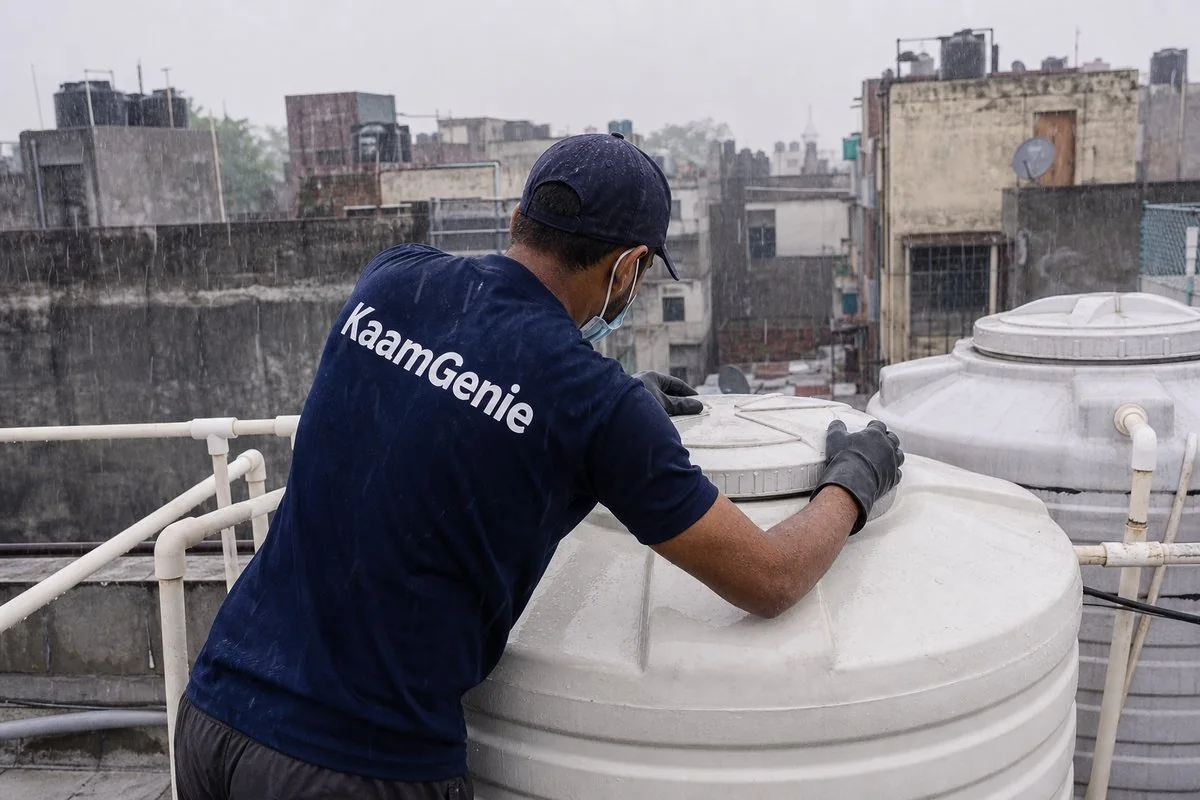
Three seasons drive everything. Summer (April to June) is the scarcity season: the supply gap widens, tankers fill the difference, and storage works hardest. Monsoon and after (July to September) is the contamination season, when our urgent-callout mix peaks and waterborne illness rises citywide. Winter (December to February) is the disruption season, when Yamuna ammonia spikes can cut piped supply for days. The details, month by month:
What happens: Peak ammonia season on the Yamuna; supply cuts most likely. Cold slows algae, but disruptions mean days lived off stored water.
What to do: Keep tanks topped up and lids sealed; know how long your storage lasts.
What happens: Ammonia risk continues as river flow stays low. Piped quality is otherwise at its yearly best in unaffected weeks.
What to do: A good month for a scheduled clean before the year’s demand rises.
What happens: Temperatures climb; borewell use quietly rises as demand grows. Early algae appears in sun-exposed plastic tanks.
What to do: Check float valves and lids before summer.
What happens: Demand accelerates; tanker dependence begins in outer colonies. Storage starts cycling harder, stirring settled sediment.
What to do: Book pre-summer cleaning; tanks now run near-continuously.
What happens: Peak scarcity begins. The supply gap widens, tanker silt enters storage in dependent belts, and algae growth accelerates in the heat.
What to do: Store more, but store clean: this is when drum-plus-tank storage doubles the surfaces that need hygiene.
What happens: Scarcity peaks before the monsoon arrives. Many tanks have been drawing continuously since March without a break.
What to do: The single best month to have already cleaned your tank, ahead of the monsoon.
What happens: Monsoon arrives. Runoff and sewer overflow begin reaching shallow groundwater and open storage; humidity feeds biofilm.
What to do: Seal lids properly; first contamination complaints of the season appear.
What happens: Contamination risk climbs toward its yearly peak as recharge carries pollutants into shallow borewells.
What to do: Watch for smell, colour or taste changes in stored water; act on them quickly.
What happens: The post-monsoon peak: our urgent-callout mix is highest now. Waterborne-disease season is at its height citywide.
What to do: If water smells or discolours, stop drinking from storage and get the tank cleaned.
What happens: Conditions ease as rains end. Residual monsoon sediment sits in tanks that were not cleaned.
What to do: Post-monsoon cleaning clears the season’s accumulated silt.
What happens: A quiet month: moderate temperatures, stable supply, low algae.
What to do: Good month for society-scale and RWA cleaning programmes.
What happens: River flow falls; the first ammonia advisories of winter often appear late in the month.
What to do: Prepare storage for possible supply cuts; enter winter with a clean tank.
Seasonal characterisations combine KaamGenie service-callout patterns (2025–26) with public reporting on Delhi’s supply. See the seasonal risk curve in The Delhi Water Index and the winter mechanism in the Yamuna ammonia explainer.
Source: The Delhi Water Quality Calendar (2026), KaamGenie, KaamGenie — https://kaamgenie.com/delhi-water-quality-calendarOverhead tanks from ₹699, underground sumps ₹1,499, same-day across Delhi if you call before 10 AM.
Call +91 95603 66362