 KaamGenie
Select location▾
KaamGenie
Almost every winter the same headline returns: ammonia levels rise in the Yamuna, treatment plants cut output, and large parts of Delhi lose piped water for a day or more. This page explains the mechanism once, properly: where the ammonia comes from, why plants cannot simply treat through it, which areas feel it first, and what households can do before the next spike. Free to cite with attribution.
Delhi draws a large share of its raw water from the Yamuna at Wazirabad. Upstream of that point, industrial effluent and untreated drain discharge enter the river, much of it from across the Haryana border. In winter the problem concentrates: river flow falls sharply, so the same pollution load meets far less dilution, and ammonia readings that stay manageable in monsoon months can multiply within days.
Water treatment plants disinfect with chlorine, and chlorine reacts with ammonia before it disinfects anything else. Up to roughly 1 ppm of ammonia, plants can dose extra chlorine and stay ahead. Beyond that, the chemistry turns against them: the chlorine demand becomes enormous, and the reaction products themselves (chloramines) create taste, odour and safety problems in the treated water. At that point the safe engineering choice is to reduce intake or shut down units at plants like Wazirabad, Chandrawal and Okhla until the raw water improves, either by dilution releases from upstream or by the spike passing.
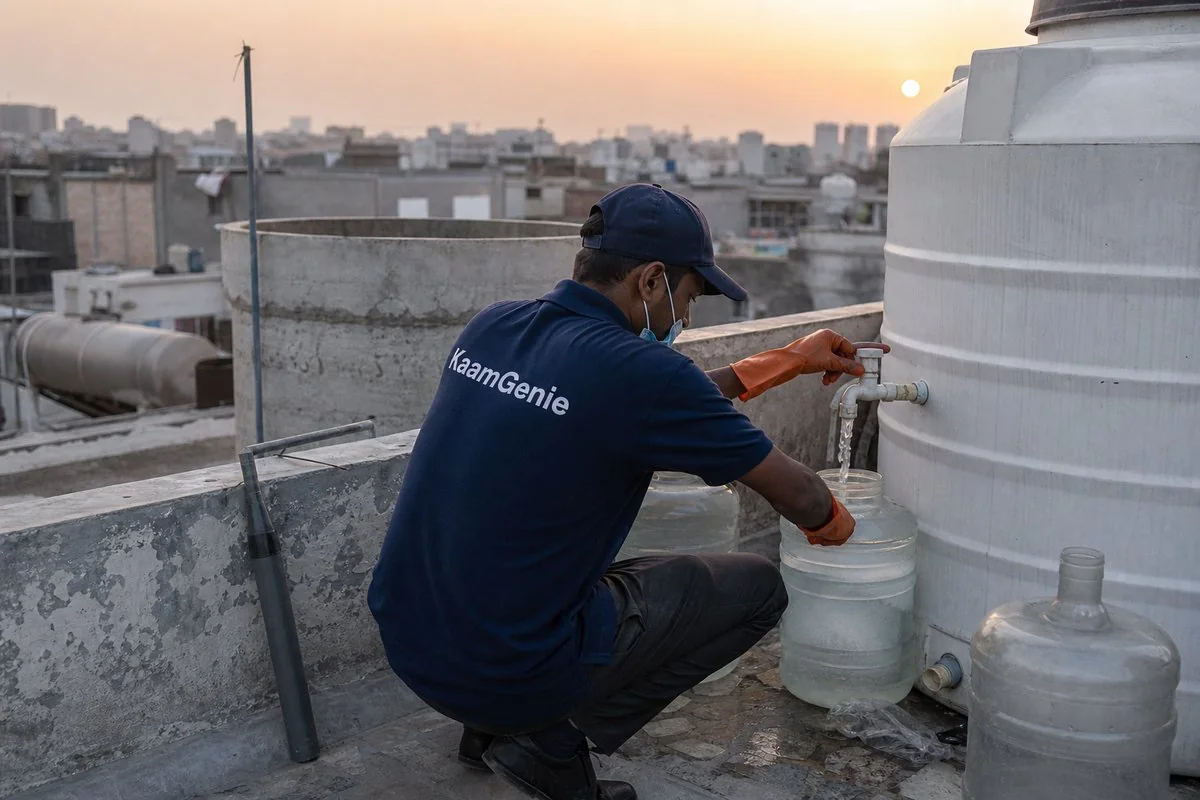
The affected plants serve large belts of North, Central, West and South Delhi, so a serious spike can touch water supply for millions at once. Disruptions typically run one to three days: long enough that most households end up living entirely off whatever is in their rooftop tank. That is the quiet lesson of every ammonia episode. For two or three days, the tank on the roof is the family’s entire water system, and whatever is sitting inside it is what everyone drinks and cooks with.
Three practical preparations, all cheap: know your storage (how many hours your tank actually covers at normal usage), keep the tank clean going into winter so stored water stays usable for days rather than hours, and make sure the lid seals properly, because a disruption is the worst possible time to discover contamination. Our crews see the difference every winter between households that prepared and those that did not. Check your area’s water profile in the free Delhi Water Lookup, and see the seasonal pattern in the Delhi water quality calendar.
Source: Yamuna Ammonia and Delhi's Water Supply, KaamGenie, KaamGenie — https://kaamgenie.com/yamuna-ammonia-delhi-waterOverhead tanks from ₹699, underground sumps ₹1,499, same-day across Delhi if you call before 10 AM.
Call +91 95603 66362