
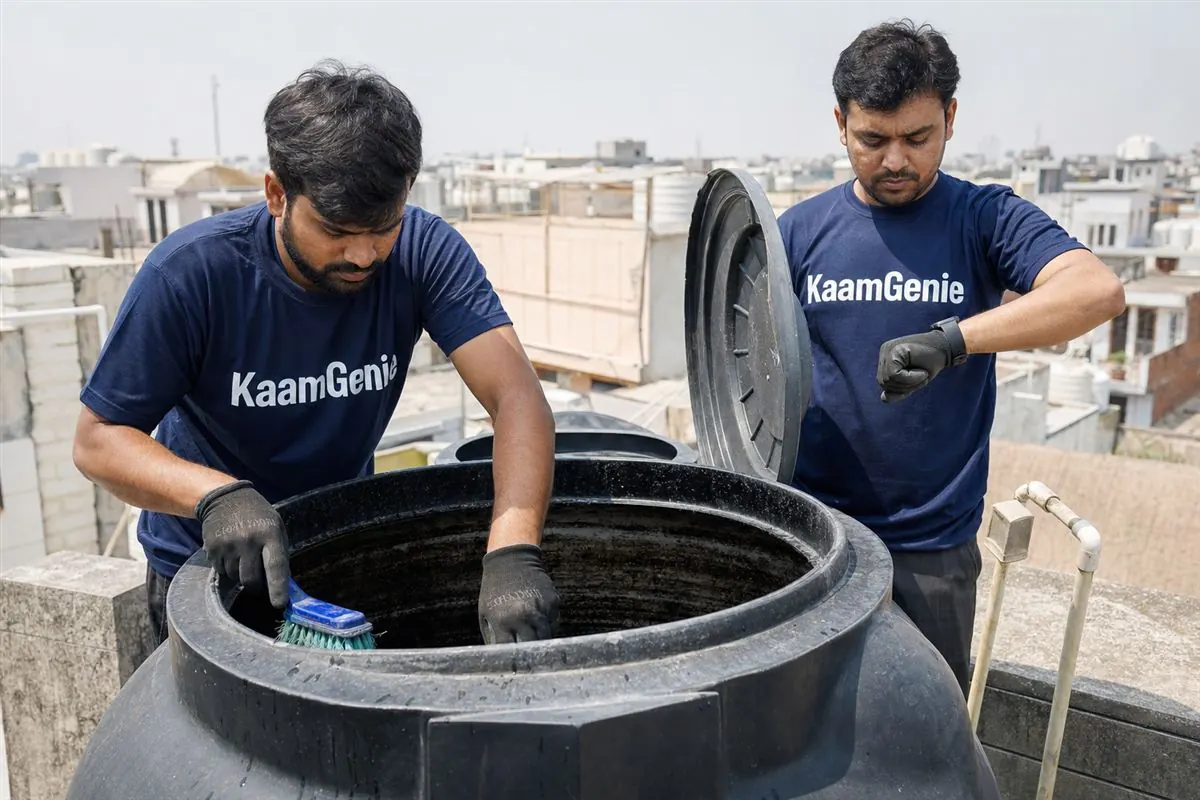
Quick answer — cleaning time by tank type
- Home overhead tank (up to 1,000L): 75-90 minutes
- Larger overhead tank (1,500-2,000L): about 2 hours
- Underground sump (up to 5,000L): 2-2.5 hours
- Society shared rooftop tank: 90-120 minutes
- Society reservoir (10,000L+): 2.5-3.5 hours
- Industrial tank (20,000L+): 3-5 hours, sometimes a half-day
Your stored water is offline only while the cleaning runs. For non-drinking use it’s usable the moment the tank refills; give it 2-3 hours before drinking.
| Tank type / size | Typical cleaning time | Water supply downtime |
|---|---|---|
| Residential overhead (up to 1,000L) | 75-90 min | ~75-90 min |
| Larger overhead (1,500-2,000L) | ~2 hrs | ~2 hrs |
| Underground sump (up to 5,000L) | 2-2.5 hrs | 2-2.5 hrs |
| Society shared rooftop tank | 90-120 min | 90-120 min |
| Society reservoir (10,000L+) | 2.5-3.5 hrs | Staggered, coordinated |
| Industrial tank (20,000L+) | 3-5 hrs / half-day | Scheduled after-hours |
Book a proper cleaning — on the clock, by the book
Full process, before/after photos, fixed price. A home tank done right in about 90 minutes. ₹699 onwards.
The honest answer for a typical home tank
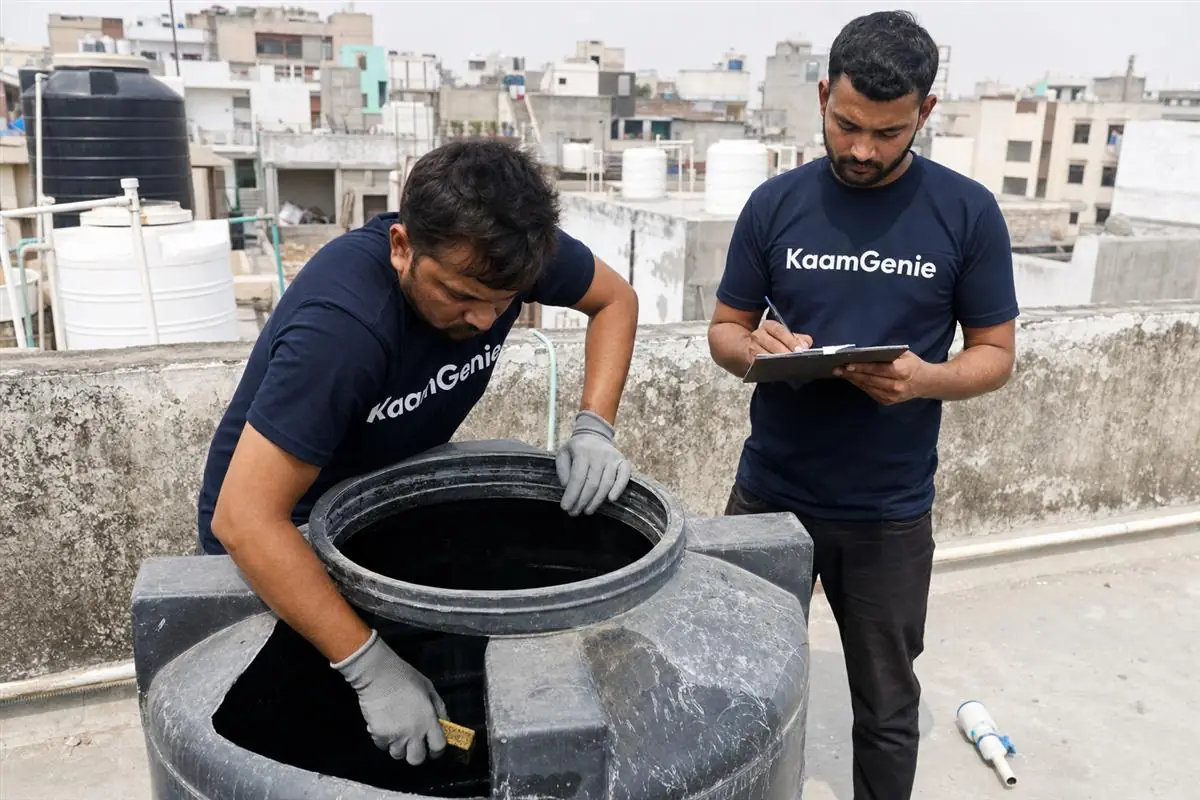
For the most common case in Delhi — a single overhead plastic tank of around 500 to 1,000 litres on the rooftop — the honest, end-to-end answer is 75 to 90 minutes. That window covers everything: opening and inspecting the tank, draining the old water, scooping out the bottom sludge, scrubbing the walls and floor, a high-pressure jet wash, vacuuming out the dirty rinse water, disinfecting, and refilling.
Why not faster? Because the cleaning isn’t one continuous action — there are unavoidable waiting phases. Draining takes time. Disinfection needs a 15-30 minute contact period where the chemical actually sits and kills bacteria; you can’t rush chemistry. And the manual scrubbing of every wall, corner and the floor is slow, physical work. Add the crew arriving, setting up, and packing away, and 90 minutes is realistic for a job done properly.
If you want the blow-by-blow of what happens in each of those phases, we cover it in the full 8-step process guide. This article stays focused on the timing.
Cleaning time by tank size & type
The single biggest factor in how long a cleaning takes is simply how much tank there is to clean. Here’s the realistic breakdown:
- Residential overhead, up to 1,000L — 75-90 minutes. The standard Delhi home tank. One crew, one visit, in and out in about an hour and a half.
- Larger overhead, 1,500-2,000L — about 2 hours. More wall area to scrub and more water to drain and refill, so add roughly 30 minutes over a small tank.
- Underground sump, up to 5,000L — 2-2.5 hours. Sumps are slower for three reasons: they hold a lot more water (slow to pump out), the crew works in a confined space with safety gear, and the floor area is large. This is usually the longest job at a single home.
- Society shared rooftop tank — 90-120 minutes. Shared tanks serving 4-8 flats are bigger than a single-home tank but still rooftop-accessible, so they sit between a home tank and a sump.
- Society reservoir, 10,000L+ — 2.5-3.5 hours. The big underground or ground-level reservoirs that feed an entire building. Often need two crew members and staggered scheduling so the building isn’t fully without water.
- Industrial tank, 20,000L+ — 3-5 hours, sometimes a half-day. Factories, malls, IT parks. Frequently done after hours with two crews and confined-space protocols.
One thing worth noting: the time does not scale perfectly with litres. A tank twice the size doesn’t take twice as long, because setup, inspection and disinfection contact time are roughly fixed. It’s the scrubbing and the drain/refill that stretch with size.
What makes a cleaning take longer
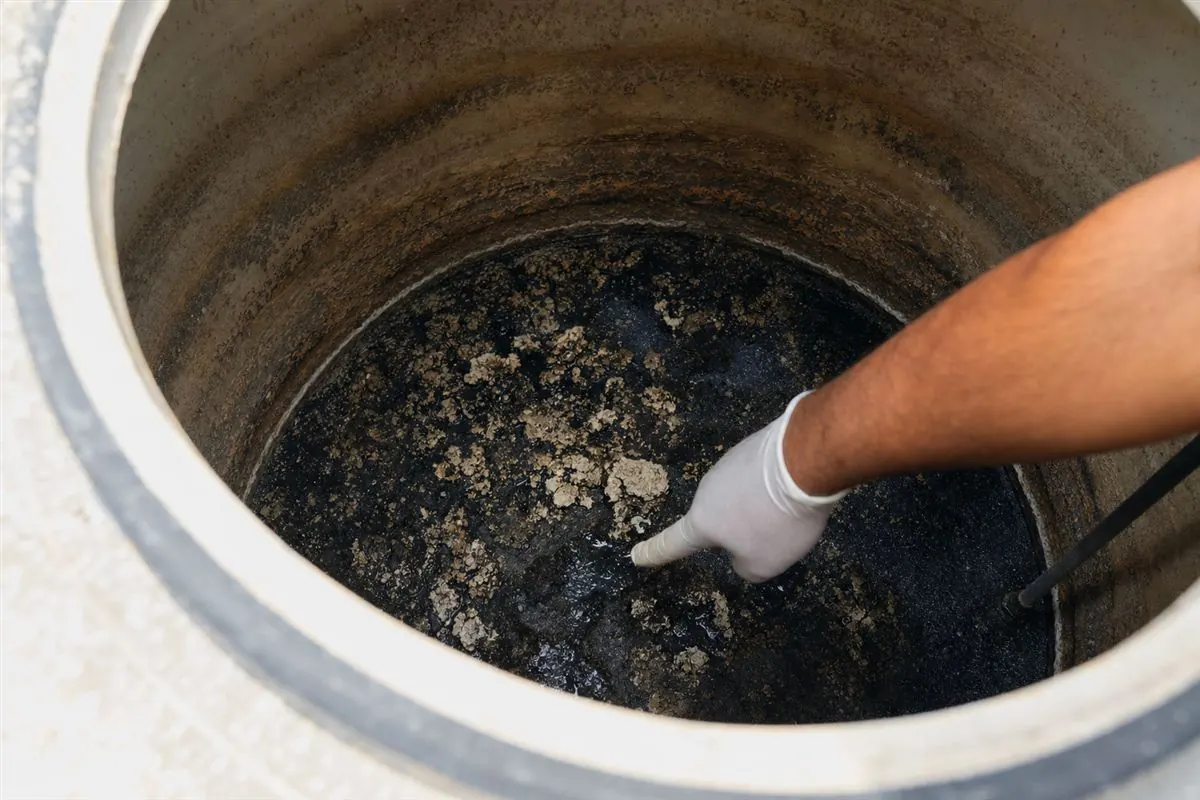
Two tanks of the same size can take quite different amounts of time. The things that stretch the clock:
- Years of neglect / thick sludge. A tank not cleaned in 2-3 years can have half an inch of black sludge across the floor. Scooping and scrubbing that out adds 20-40 minutes versus a tank on a yearly schedule.
- Rooftop access & stairs. If the crew has to carry the pump, jet washer and wet vacuum up four flights to a terrace with no lift, setup and pack-up alone eat extra time.
- Tank shape & narrow openings. A small manhole on a large tank, or an awkward shape with deep recesses, slows down the person working inside.
- Number of tanks. Many Delhi homes have two or three tanks (overhead plus a sump). Each is a separate cleaning — budget the time per tank, not per visit.
- Hard-water scale. Delhi’s hard water leaves stubborn calcium scale that needs more scrubbing and jet-wash time to lift.
- Concrete vs plastic. RCC (concrete) tanks have a porous, textured surface where bio-film clings into the pores. They take longer to jet-wash thoroughly than smooth plastic.
How long is my water off? When can I use water again?
This is the question most people actually care about. The practical answer:
- During the cleaning: your stored tank water is offline for the duration of the job — about 75-90 minutes for a home tank, 2-2.5 hours for a sump. In practice most homes barely notice, because there’s residual water in the pipes, a second tank, or the municipal supply timing works around it.
- Right after refill: for non-drinking use — bathing, washing clothes and dishes, mopping — the water is fine to use the moment the tank refills.
- For drinking: give it 2-3 hours after refill so any residual food-grade disinfectant dissipates to safe levels, then run it through your RO/UV purifier as you always would. (Around 30 minutes after refill the residual is already within safe limits, but 2-3 hours is the comfortable margin for drinking.)
If your supply timing is tight, tell us when you book and we’ll schedule the cleaning to land in your low-usage window. For society buildings, we stagger the reservoir and rooftop tanks so the whole building is never dry at once.
Why a 20-minute “cleaning” is a red flag
If a cleaner shows up, sprays some water around, and is gone in 20 minutes, you didn’t get a cleaning — you got a rinse. The maths simply doesn’t work: a real job includes a 15-30 minute disinfection contact time on its own, before you count draining, sludge removal, scrubbing and the jet wash.
A 20-minute job almost always means these steps were skipped: hand-scooping the bottom sludge (the dirtiest, most important part), manual scrubbing of the walls, the high-pressure jet wash, and the disinfection dwell time. Those are exactly the steps that make a cleaning effective — we explain each one and what skipping it costs you in the full 8-step process. If you’re comparing quotes, a suspiciously fast job usually pairs with a suspiciously cheap price; our guide to what it costs breaks down why ₹200 and ₹699 jobs are not the same service.
Can it be done same-day? How to schedule
For a standard residential overhead tank in Delhi NCR, same-day is often possible if you call in the morning and a crew is free in your area. Because the job itself is only about 90 minutes, we can usually fit a home tank into the day’s route.
Larger jobs — sumps, society reservoirs, industrial tanks — usually need a day or two’s notice so we can assign the right crew size, equipment and a time slot that suits the building (often after hours for commercial sites). Booking ahead also lets you lock in your preferred date and a low-usage window so the water downtime is barely felt. You can compare your options on our water tank cleaning service in Delhi page, and if you’re weighing how the job is actually done, our cleaning methods guide and the buyer’s guide to choosing a service are worth a read.
Cleaning time by tank type
End-to-end time, smallest tank to largest — bigger tank, longer job
Indicative end-to-end times including setup and pack-up. Heavily neglected tanks, hard rooftop access, and concrete construction all push these figures higher.
Know exactly when you’ll get your water back
Tell us your tank size and supply timing — we’ll book a slot that fits and confirm the downtime up front. ₹699 onwards.
Ready to book? Here’s what to do next
If your tank hasn’t been cleaned in a while, you now know roughly how long it’ll take and how brief the water downtime really is. The next step is to pick a slot that fits your day. Pricing and the full service details are on our water tank cleaning service in Delhi page.
To book, call +91 95603 66362 or use the booking form on this site — tell us your tank size and we’ll confirm the time and downtime to expect.
Frequently asked questions
How long does it take to clean a 1000 litre tank?
A 1,000-litre residential overhead tank takes about 75-90 minutes from the crew’s arrival to the moment they pack up — including draining, sludge removal, scrubbing, jet wash, disinfection contact time, and refill. Anything finished in under 30 minutes is a rinse, not a real cleaning.
How long does it take to clean an underground sump?
An underground sump (up to 5,000 litres) takes 2 to 2.5 hours. Sumps take longer than overhead tanks because they hold more water, draining is slower, and the crew has to work in a confined space with safety precautions. Larger sumps push closer to 3 hours.
Do I need to be home the whole time?
No. Someone needs to give the crew rooftop or sump access at the start, but you don’t have to watch the whole 90 minutes. Many customers let us in, go about their day, and review the before/after photos and certificate on WhatsApp afterwards. A family member, household help, or building caretaker can hand over access.
How long will my water supply be off?
Your stored water is unavailable for the duration of the cleaning — roughly 75-90 minutes for a home tank, 2-2.5 hours for a sump. Most homes don’t notice because they have residual water in pipes or a second tank. We can schedule around your supply timing, and for society buildings we coordinate so not every tank is offline at once.
When can I drink the water after cleaning?
For non-drinking uses (bathing, washing, cleaning) the water is safe to use as soon as the tank refills. For drinking, give it 2-3 hours after refill so any residual food-grade disinfectant dissipates to safe levels, and run it through your RO/UV purifier as usual. About 30 minutes after refill the disinfectant residual is already within safe limits.
Why did a cleaner finish my tank in 20 minutes?
Because they skipped the time-consuming steps. A proper cleaning includes hand-scooping sludge, manual scrubbing, a jet wash, and a 15-30 minute disinfection contact time — none of which fit into 20 minutes. A 20-minute job is a top-down rinse that leaves the bottom sludge and bio-film in place. It’s a rinse, not a cleaning.
How long does a society or society reservoir tank take?
A shared society rooftop tank takes about 90-120 minutes. A larger underground society reservoir (10,000 litres or more) takes 2.5-3.5 hours, and a very large reservoir may need two crews. Industrial tanks of 20,000 litres and up run 3-5 hours, sometimes a half-day.
Can you clean my tank the same day I call?
Often yes, for residential overhead tanks in Delhi NCR if you call in the morning, subject to crew availability in your area. Larger sumps, society reservoirs, and industrial tanks usually need a day or two to schedule the right crew and equipment. Booking ahead guarantees your preferred slot.
Does a dirtier tank take much longer?
Somewhat. A tank neglected for 2-3 years has thick sludge and heavy bio-film that add 20-40 minutes to the scrubbing and sludge-removal steps. Very neglected tanks may need a longer extended visit or, occasionally, a two-visit job. A tank cleaned on a regular schedule is faster every time.
Sources & references
- Bureau of Indian Standards (BIS) — IS 10500:2012 is the canonical Indian Standard for drinking water specification, defining acceptable limits for physical, chemical, and biological parameters.
- WHO Guidelines for Drinking-water Quality, 4th edition — the global reference for water quality standards, including guidance on storage and disinfection.
- Food Safety and Standards Authority of India (FSSAI) — defines water quality requirements for food businesses, including hygiene standards for stored water and acceptable disinfection chemicals.
- WHO Fact Sheet on Drinking Water — overview of safe drinking water requirements and contamination risks.
- CPHEEO — Manual on Water Supply and Treatment — the Government of India’s engineering manual covering tank design, cleaning protocols, and disinfection practices.
Last verified: 23 June 2026. If you find any of these links broken, please let us know.