
Key takeaways
- Plastic tanks grow algae faster because sunlight passes through the walls.
- Use soft sponges or non-abrasive pads, never wire brushes or metal scrapers.
- Choose a food-grade disinfectant and rinse thoroughly before refilling.
- Keep water pressure low to moderate to protect the tank surface.
- Clean every 3 to 4 months in Delhi-NCR, or sooner in summer.
Concrete and metal tanks block light completely, but plastic and Sintex walls let a small amount of sunlight pass through, especially lighter-coloured ones installed on open rooftops. That filtered light, combined with Delhi-NCR’s long summer heat, gives algae and bacteria the energy they need to multiply. The result is a slippery green or brown film called biofilm that clings to the inner walls and base. Biofilm traps sediment, dulls the water’s taste and can harbour harmful microbes. This is why plastic tanks often need more frequent attention than underground concrete ones. Choosing a darker tank or an opaque outer layer slows growth, but no plastic tank stays fully algae-free without regular cleaning. Understanding this is the first step in knowing how to clean sintex tank surfaces properly.
Tools and supplies you will need
Keeping the right supplies ready makes the job faster and safer. You will need a soft sponge or a non-abrasive nylon pad, a plastic bucket, a mug for scooping out residual water, and a garden hose for rinsing. For disinfection, use a food-grade chlorine solution or a proprietary tank-cleaning liquid rated safe for drinking water, plus clean rubber gloves and a face mask. Avoid metal tools of any kind. A small plastic scraper can help lift stubborn deposits without gouging the surface. Keep a torch handy to inspect corners and the tank base, since Sintex tanks are often dim inside. Finally, arrange a second person to stay outside the tank for safety, as fumes and slippery surfaces make solo cleaning risky.
Step-by-step cleaning process
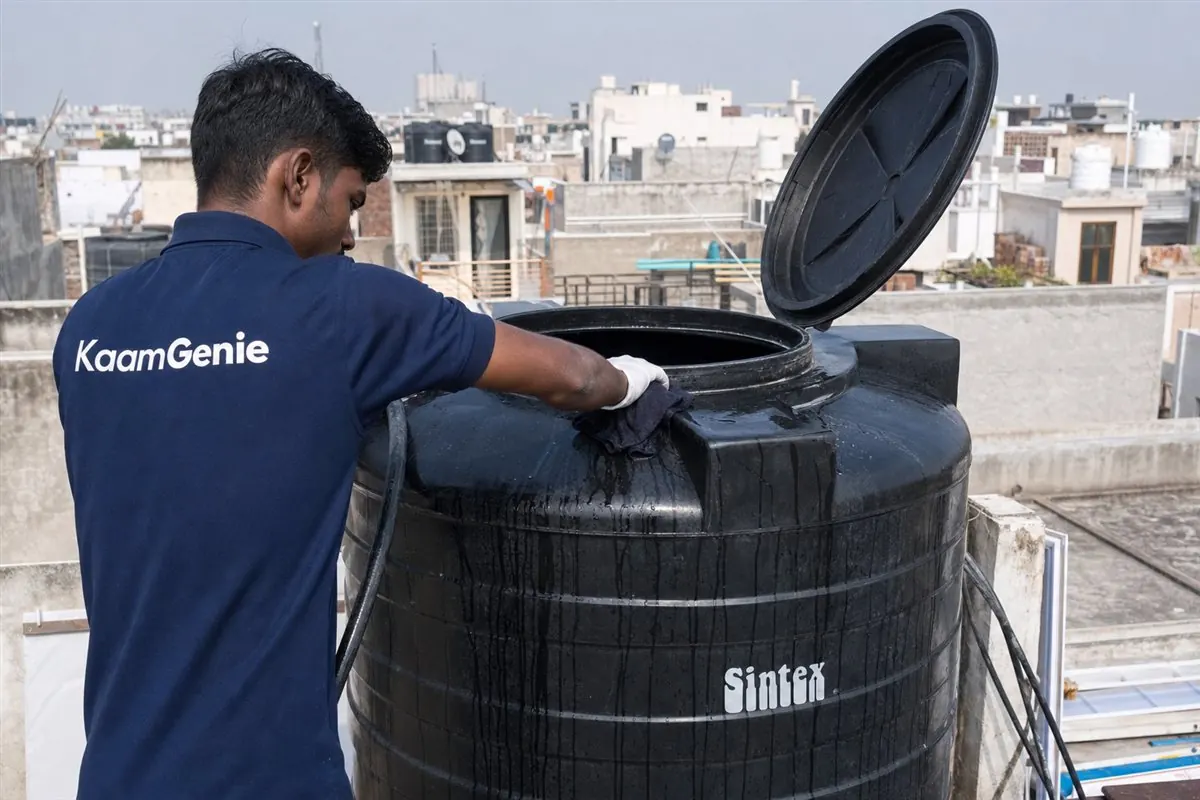
Start by shutting off the inlet and draining the tank almost completely, saving the last few litres to loosen sediment. Scoop out the remaining sludge with a mug and bucket. Wet the inner walls, then gently scrub every surface with a soft pad using circular motions, paying attention to the base and corners where biofilm collects. Rinse away the loosened dirt with low-pressure water. Next, apply your food-grade disinfectant diluted as per the label, coating all inner surfaces, and let it sit for the recommended contact time, usually fifteen to twenty minutes. Scrub lightly once more, then rinse thoroughly two or three times until no smell or residue remains. Wipe the lid and inlet, refit the cover securely, and refill. Discard the first tankful if any chlorine taste lingers.
Why you must never use wire brushes on plastic
It is tempting to attack tough algae with a wire brush or steel scrubber, but on plastic and Sintex this does real harm. Metal bristles cut fine scratches into the smooth inner surface, and those tiny grooves become perfect hiding spots for bacteria and biofilm that no rinse can reach. Over time the wall turns rough and cloudy, algae returns faster after every clean, and the scratched plastic can even start shedding particles into your water. Hard scraping also weakens the tank material and can cause premature cracking. Always stick to soft sponges or non-abrasive nylon pads. If a deposit refuses to budge, let the disinfectant soak longer rather than scrubbing harder. Patience protects the surface and keeps your water genuinely clean in the long run.
Book your water tank cleaning
Trained crew, food-grade process, before/after photos and a service record every job. ₹699 onwards, same-day where possible across Delhi NCR.
Choosing a safe, food-grade disinfectant
The disinfectant you use goes straight into your drinking supply, so it must be safe for potable water. A common choice is liquid chlorine bleach that is free of added fragrances, colourants or thickeners, diluted to a mild solution. Ready-made tank-cleaning products certified for drinking-water use are a convenient alternative and clearly state the correct dose. Avoid household cleaners, dish soaps, acids or industrial chemicals, as their residue is hard to rinse out and can be harmful. Always follow the label for dilution and contact time, wear gloves and a mask, and ensure good ventilation. After disinfection, rinse until the chlorine smell is faint and run a full tankful through your taps before drinking. When in doubt, a professional service uses tested, approved solutions and correct dosing.
Getting the water pressure right
Water pressure matters more on plastic tanks than people realise. A very high-pressure jet can drive water and dirt into micro-cracks, dislodge fittings, or stress the outlet joints of a lightweight Sintex tank. At the same time, you want enough force to flush loosened algae and sediment away cleanly. The sweet spot is low to moderate pressure from a normal garden hose, directed steadily along the walls and base. Let the water do the rinsing while your soft pad does the loosening. For the final rinses, a gentle flow is enough since the surfaces are already clean. Never point a pressure washer directly at the inlet, outlet or lid seals. Controlled, patient rinsing removes contamination without ever risking damage to the tank.
How often to clean your tank in Delhi-NCR
In Delhi-NCR’s climate, most households should clean a plastic or Sintex tank every three to four months. The region’s hot summers speed up algae growth, dust storms carry grit onto rooftop tanks, and monsoon humidity encourages bacteria, so summer may call for a slightly shorter gap. Homes with borewell or tanker-supplied water often see more sediment and may need cleaning sooner. A quick visual check every month helps: if you spot a green tinge, floating particles, a musty smell or a slimy inner wall, clean it without waiting. Keeping the lid tightly sealed between cleanings slows contamination and dust ingress. Regular, scheduled cleaning is far easier than tackling a heavily fouled tank, and it keeps your family’s water safe year-round.
Frequently asked questions
How do I clean a Sintex tank without a wire brush?
Use a soft sponge or a non-abrasive nylon pad instead. Wet the walls, scrub gently in circles to lift the biofilm, then rinse. For stubborn algae, let a food-grade disinfectant soak longer rather than scrubbing harder. This removes dirt effectively while keeping the smooth plastic surface intact.
Why does my plastic water tank grow algae so quickly?
Plastic and Sintex walls allow a little sunlight to pass through, especially lighter-coloured tanks on open rooftops. That light, combined with Delhi-NCR’s heat, fuels algae and bacteria growth. Concrete tanks block light entirely, so they foul more slowly. A darker or opaque tank and regular cleaning keep algae under control.
What disinfectant is safe for a drinking-water tank?
Use a food-grade chlorine solution or a tank-cleaning product certified for potable water, diluted as the label states. Avoid household cleaners, soaps, acids or industrial chemicals, as their residue is unsafe and hard to rinse out. Always rinse thoroughly afterwards until the chlorine smell is very faint.
How often should I clean my water tank in Delhi-NCR?
Clean a plastic or Sintex tank every three to four months in Delhi-NCR. Hot summers, dust storms and monsoon humidity speed up contamination, so summer may need a shorter gap. Homes on borewell or tanker water often accumulate more sediment and may need cleaning sooner. Inspect visually each month.
Can I clean my Sintex tank myself?
Yes, small tanks can be cleaned at home with soft pads, a bucket, a food-grade disinfectant, gloves and a mask. Always keep a second person outside for safety, as fumes and slippery surfaces are risky. For large, rooftop or hard-to-reach tanks, a professional service is safer and more thorough.
What water pressure should I use to rinse a plastic tank?
Use low to moderate pressure from a normal garden hose. High-pressure jets can force dirt into micro-cracks, loosen fittings or stress the joints of a lightweight Sintex tank. Steady, gentle flow along the walls and base flushes away loosened algae without any risk of damaging the tank surface or seals.
Is it safe to use bleach in my water tank?
Plain chlorine bleach without added fragrance, colour or thickeners can be used in a mild, diluted solution as a disinfectant. Follow the correct dose and contact time, wear gloves and a mask, and ensure ventilation. Rinse thoroughly and run a full tankful through your taps before drinking to remove any residue.
How do I book a professional tank cleaning with KaamGenie?
Call KaamGenie on 95603 66362 to book a water tank cleaning anywhere in Delhi-NCR. The team uses food-grade disinfectants, safe methods suited to plastic and Sintex tanks, and proper equipment. It is ideal for large rooftop or underground tanks where DIY cleaning is difficult or unsafe to attempt alone.
Sources & references
- Bureau of Indian Standards (BIS) — IS 10500:2012 is the canonical Indian Standard for drinking water specification, defining acceptable limits for physical, chemical and biological parameters.
- WHO Guidelines for Drinking-water Quality, 4th edition — the global reference for water quality standards, including guidance on safe storage and disinfection.
- Food Safety and Standards Authority of India (FSSAI) — defines water quality requirements for food businesses, including hygiene standards for stored water and acceptable disinfection chemicals.
- WHO Fact Sheet on Drinking Water — overview of safe drinking water requirements and contamination risks.
- CPHEEO — Manual on Water Supply and Treatment — the Government of India’s engineering manual covering tank design, cleaning protocols and disinfection practices.
Last verified: 6 July 2026. If you find any of these links broken, please let us know.