
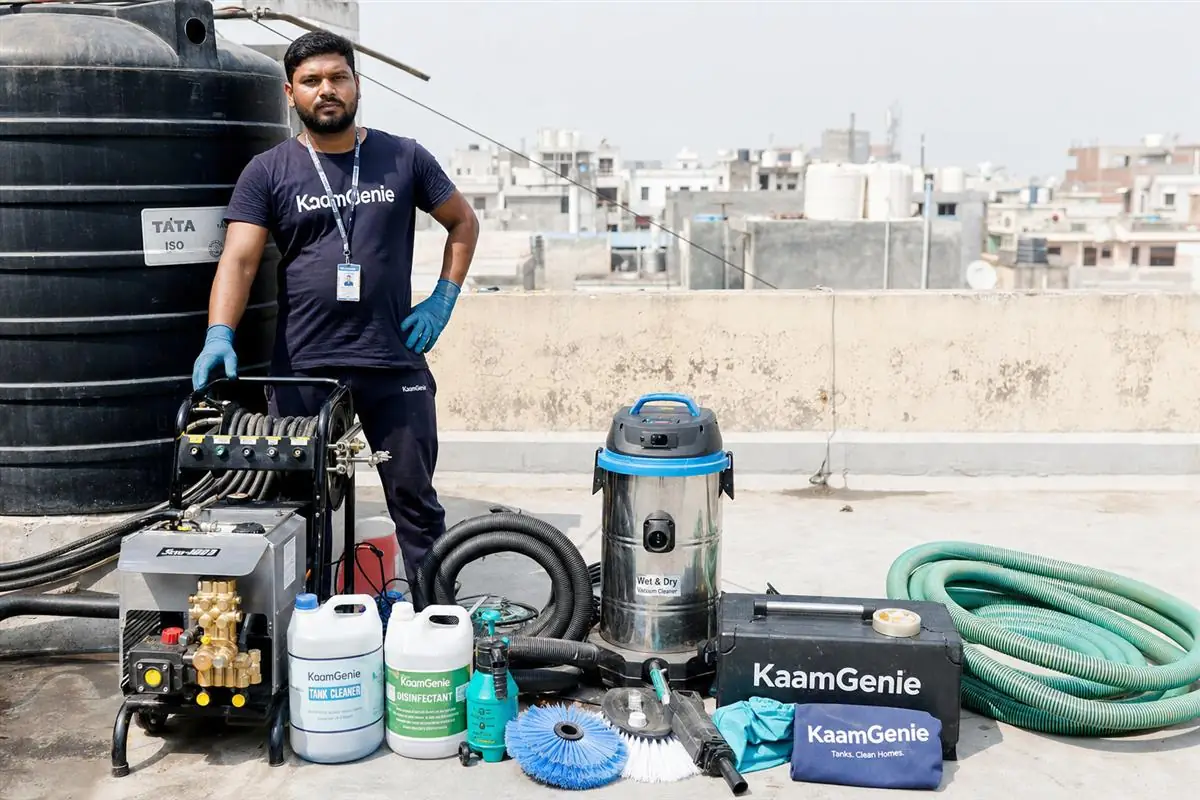
Key takeaways
- High-pressure jet-wash pumps blast off biofilm and stubborn sediment that hand-scrubbing leaves behind.
- Wet-vacuums and sludge pumps remove muck and dirty water without draining it back into your supply.
- Soft and stiff brushes are matched to the tank surface to clean thoroughly without scratching.
- Food-grade disinfectants sanitise the tank while keeping the stored water safe to drink.
- PPE and confined-space gear protect the crew and are the clearest sign of a proper professional job.
The high-pressure jet-wash pump is the workhorse of professional tank cleaning. It fires water at high pressure to strip away biofilm — the slimy bacterial layer that clings to walls and floors — along with algae, mineral scale and settled sediment. A hand brush and a bucket cannot generate anything close to this force, which is why DIY cleaning often leaves a thin invisible layer behind that quickly regrows. The jet reaches corners, joints and the underside of baffles where dirt collects. Trained operators adjust the pressure to suit the tank material, so plastic, cement and stainless steel are all cleaned effectively without damage. This single step accounts for much of the difference between a surface wipe-down and a genuinely deep clean.
Wet-vacuum and sludge pump
Once dirt is loosened, it has to be removed — not stirred around and left to resettle. A wet-vacuum or sludge pump sucks up the dirty water, loose sediment and thick sludge from the tank floor, pulling it out completely rather than draining it back through your taps and pipes. This matters because the bottom of a tank is where the heaviest muck, rust flakes and organic matter accumulate. DIY methods usually rely on scooping by hand or bailing with a mug, which is slow, incomplete and unhygienic. The pump also lets the crew empty the tank efficiently and extract residual water after rinsing, so the tank is left almost dry and ready for disinfection. Clean removal is just as important as loosening the dirt.
Soft and stiff cleaning brushes
Even with a jet-wash, brushes still do essential work. Professionals carry a range of soft and stiff brushes and match them to the surface and the type of grime. Stiff-bristle brushes tackle heavy scale, hardened deposits and stubborn stains, while softer brushes clean delicate or smooth surfaces without leaving scratches that would give bacteria new places to grip. Long-handled brushes reach deep tanks and awkward corners safely. Using the wrong brush — or a single worn one for everything — is a common DIY mistake that either fails to clean or damages the tank lining. The right brush combined with high pressure and the correct disinfectant is what lifts and clears every trace of buildup from walls, floor and inlet points.
Food-grade disinfectants and sanitisers
Scrubbing removes visible dirt, but disinfection kills the bacteria, viruses and microbes you cannot see. Professionals use food-grade disinfectants and approved sanitisers dosed at the correct concentration for the tank’s volume. This is a careful balance — too little does not sanitise, while too much or the wrong chemical can leave residue, odour or taste and make the water unsafe. Household bleach used carelessly in DIY cleaning risks exactly these problems. After the disinfectant has had its required contact time, the tank is thoroughly rinsed so no harmful residue remains. This step turns a clean-looking tank into a genuinely safe one, which is the whole point of the exercise — water that is fit to drink, cook and bathe with confidence.
Book your water tank cleaning
Trained crew, food-grade process, before/after photos and a service record every job. ₹699 onwards, same-day where possible across Delhi NCR.
PPE: protecting the cleaning crew
Professional crews wear proper personal protective equipment — gloves, rubber boots, waterproof overalls, eye protection and sometimes masks. This is not just about comfort. Tanks contain stagnant water, sludge and disinfecting chemicals, all of which can irritate skin, eyes and airways. PPE keeps the workers safe and, just as importantly, keeps contaminants off the crew and out of your freshly cleaned tank. When you hire a service, visible, well-maintained PPE is one of the clearest signs you are dealing with a trained, responsible team rather than casual labour. A DIY attempt with bare hands and no protection is both unsafe and more likely to reintroduce dirt into the tank you are trying to clean.
Confined-space and safety gear
An underground or large overhead tank is a confined space, and entering one carries real risks — low oxygen, trapped gases, slippery surfaces and the danger of a fall. Professional teams carry safety gear for this: ladders, harnesses, ropes, torches and, where needed, ventilation and gas checks before anyone goes in. There is usually a second person stationed outside to assist in an emergency. These precautions are a legal and safety necessity, not an optional extra. Most homeowners are simply not equipped to enter a tank safely, which is one of the strongest reasons to leave the job to trained crews. Good equipment protects lives first, and only then delivers a clean tank — the order matters.
DIY tools vs professional equipment
The gap between DIY and professional cleaning comes down to equipment. A DIY effort typically means a bucket, a mug, a household brush and maybe some bleach — tools that can wipe surfaces but cannot strip biofilm, extract sludge or safely sanitise and verify the result. A professional crew brings jet-wash pumps, sludge vacuums, matched brushes, food-grade disinfectants, PPE and confined-space gear, plus the training to use them correctly. The outcome is a deeper, more hygienic clean that lasts longer, done safely and usually far quicker. For a small recurring cost you avoid the health risks, wasted water and half-finished results that DIY often produces. When water quality and family health are at stake, the right equipment is well worth it.
Frequently asked questions
What is the most important piece of water tank cleaning equipment?
The high-pressure jet-wash pump is arguably the most important tool. It strips off biofilm, algae and sediment that hand-scrubbing cannot remove. However, no single tool works alone — the jet-wash, sludge vacuum, brushes and disinfectant together deliver a complete, genuinely hygienic clean that DIY methods rarely achieve.
Can I clean my water tank properly with DIY tools?
You can remove visible dirt with a brush and bucket, but you cannot strip invisible biofilm, extract sludge fully or disinfect safely without professional equipment. DIY cleaning also carries confined-space risks. For a deep, safe and lasting clean, professional equipment and trained crews make a real difference.
Why do professionals use food-grade disinfectants?
Food-grade disinfectants kill bacteria and microbes while keeping the stored water safe to drink. They are dosed to the tank’s volume and rinsed out afterwards, so no harmful residue, odour or taste remains. Household bleach used carelessly can leave the water unsafe, which is why correct disinfectant and dosing matter.
What is biofilm and why does equipment matter for it?
Biofilm is a slimy layer of bacteria that clings to tank walls and floors. It is difficult to see and regrows quickly if not fully removed. A high-pressure jet-wash combined with the right brushes and disinfectant is needed to strip it away — ordinary hand-cleaning simply cannot shift it.
Is a wet-vacuum really necessary for tank cleaning?
Yes. A wet-vacuum or sludge pump removes dirty water and loosened sludge completely, instead of letting it drain back through your pipes and taps. The tank floor holds the heaviest muck and sediment, so proper extraction is essential for a clean that actually leaves the water safe.
What PPE do tank cleaners wear?
Professional crews wear gloves, rubber boots, waterproof overalls, eye protection and often masks. This protects them from stagnant water, sludge and disinfecting chemicals, and keeps contaminants out of your freshly cleaned tank. Visible, well-maintained PPE is a good sign of a trained, responsible cleaning team.
Why is confined-space gear important for tank cleaning?
Underground and large overhead tanks are confined spaces with risks like low oxygen, trapped gases and falls. Professionals use harnesses, ladders, torches, ventilation and a standby person outside. This gear protects lives and is a key reason most homeowners should not enter a tank themselves — safety comes first.
Does better equipment mean a longer-lasting clean?
Yes. Because professional equipment strips biofilm, extracts sludge and disinfects properly, less contamination is left behind to regrow. The result is a deeper clean that stays hygienic for longer than a DIY surface wipe. To book a professional clean in Delhi-NCR, call KaamGenie on 95603 66362.
Sources & references
- Bureau of Indian Standards (BIS) — IS 10500:2012 is the canonical Indian Standard for drinking water specification, defining acceptable limits for physical, chemical and biological parameters.
- WHO Guidelines for Drinking-water Quality, 4th edition — the global reference for water quality standards, including guidance on safe storage and disinfection.
- Food Safety and Standards Authority of India (FSSAI) — defines water quality requirements for food businesses, including hygiene standards for stored water and acceptable disinfection chemicals.
- WHO Fact Sheet on Drinking Water — overview of safe drinking water requirements and contamination risks.
- CPHEEO — Manual on Water Supply and Treatment — the Government of India’s engineering manual covering tank design, cleaning protocols and disinfection practices.
Last verified: 6 July 2026. If you find any of these links broken, please let us know.