
Quick answer
- Clubhouse pools go green from heavy bather load, strong sun, weak or irregular chlorination and monsoon debris.
- An RWA should set a clear cleaning schedule: daily skim and checks, weekly brush and vacuum, and a periodic deep clean.
- Maintain safety and hygiene: chlorine and pH logs, clear signage, depth markers, first aid and adequate filtration.
- Keep documentation: water-quality logs, filter and backwash records, and dates and scope of every clean.
- Choose a professional vendor with the right equipment, trained crew and clear service records.
- Society pool cleaning is quoted on a visit; there is no fixed price sight unseen.
This guide is written for RWAs, managing committees and facility managers who are responsible for a shared swimming pool. It covers why apartment and clubhouse pools go green so quickly in Delhi NCR, a practical cleaning schedule you can adopt straight away, the safety and hygiene standards residents expect, the records the committee should keep, how to choose a reliable pool cleaning vendor, and how a professional deep clean fixes a pool that has already been neglected. Throughout, the aim is a pool that stays clear, safe and easy to account for, without surprises at the next committee meeting.
Why clubhouse and society pools go green so easily
A society pool works far harder than a private one. On a weekend, dozens of residents and their guests may use it, and every swimmer brings in sweat, sunscreen, body oils and organic matter that feed algae and bacteria. Delhi NCR sun keeps the water warm for months, and warm water plus organic load is exactly what algae needs to bloom. The most common trigger, though, is chlorination that is too weak or too irregular. When the disinfectant level drops, even for a day or two of heavy use, algae and bacteria get ahead of it and the water turns cloudy, then visibly green. The monsoon makes it worse: rain dilutes the chlorine, wind blows in leaves and dust, and run-off can carry nutrients straight into an open pool. Put together, a busy clubhouse pool that is not on a steady routine can go from sparkling to swampy in under a week, and once it is green it needs a proper clean rather than a quick top-up of chemicals.
A practical cleaning schedule for an apartment pool
The single best thing an RWA can do is adopt a written routine and stick to it, because a pool that is maintained a little every day rarely needs rescuing. Break the work into daily, weekly and periodic tasks so nothing is left to memory.
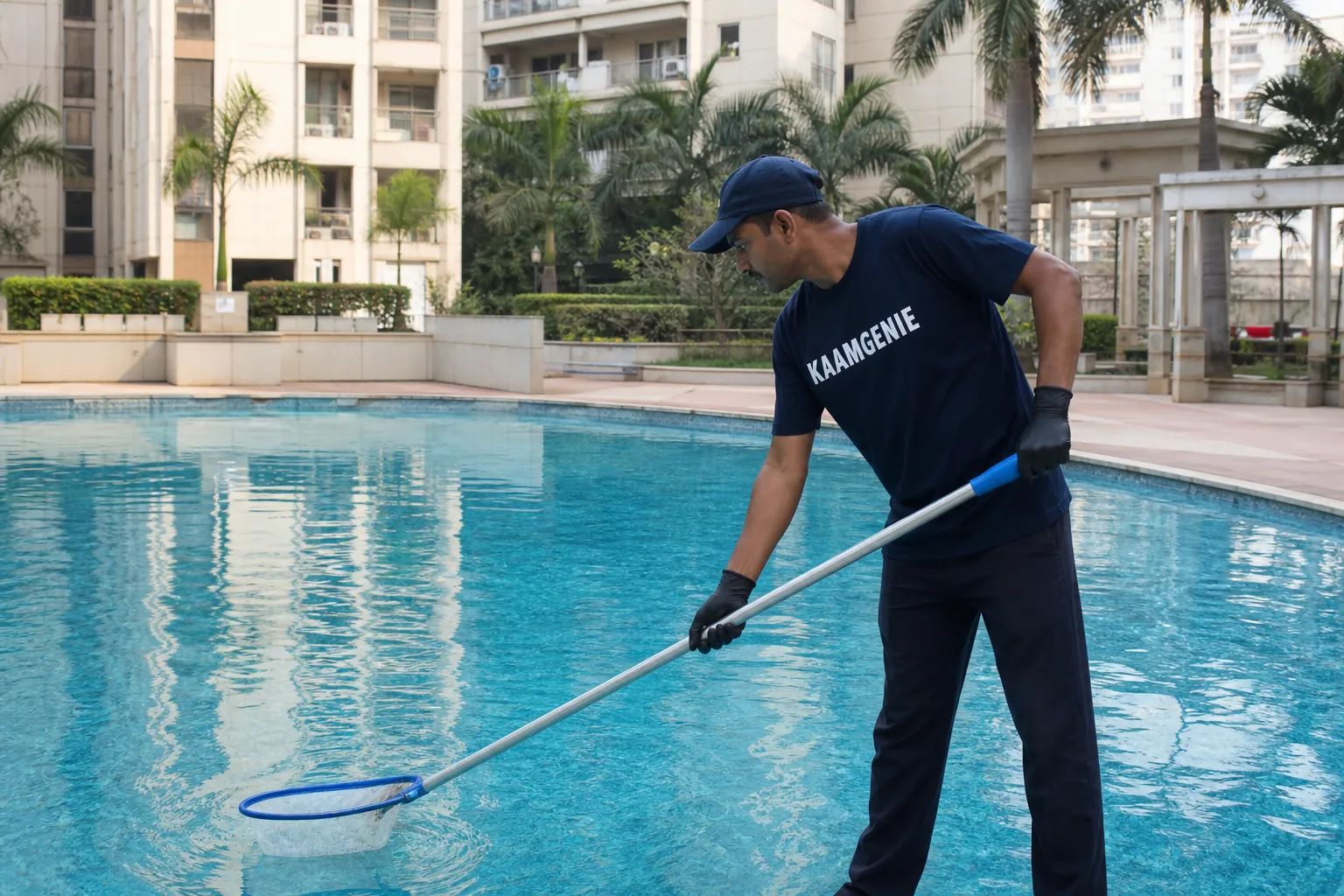
Daily, on any day the pool is in use: skim the surface to lift floating leaves and insects, empty the skimmer and pump baskets, check and correct the chlorine and pH, and give the water a quick visual check for clarity. Hose down the deck and keep the surrounds clear. These small jobs take minutes but stop problems before they start.
Weekly: brush the walls, steps and waterline where algae and grime cling, then vacuum the floor to remove settled dirt the skimmer misses. Backwash or clean the filter as the equipment requires, and check that the circulation is running the right number of hours a day. Top up chemicals and test again after brushing, since disturbed debris changes the readings.
Periodically: plan a professional deep clean at the points where a pool is most at risk, typically before the main swimming season, after heavy monsoon fouling, and any time the water quality slips despite good routine care. A deep clean drains or part-drains the pool, scrubs every surface, clears the tile line, services the filtration and rebalances the water from scratch. For the routine side of this work, our swimming pool cleaning service can carry out the brushing, vacuuming and water balancing your committee schedules, and KaamGenie quotes a society schedule after a site visit rather than over the phone.
Book a society pool clean
Trained crew, proper equipment, before and after photos and a service record every visit. Society and clubhouse pools quoted after a site survey, across Delhi NCR.
Safety and hygiene standards residents expect
Residents judge a society pool first on how the water looks and feels, and behind that impression sit a few standards the committee should hold. The core of it is water quality: chlorine and pH kept within the recommended range and tested at least daily, so the water stays disinfected without stinging eyes or smelling harshly of chemicals. Clear water is not the same as safe water, so testing matters even when the pool looks fine. Filtration is the other half of the job. The circulation pump and filter should run enough hours each day to turn the whole volume of water over, and the filter needs regular cleaning or backwashing, because a clogged filter quietly lets quality slide. On the physical side, residents expect visible depth markers at the shallow and deep ends, clear signage on pool rules, opening hours and supervision of children, and a stocked first-aid kit with rescue equipment, a reaching pole and a ring buoy kept within reach. Where the society requires it, trained supervision or a lifeguard should be on duty during busy hours. Simple hygiene habits help too: ask swimmers to shower before entering, keep the deck clean, and remove visible debris promptly rather than letting it sink and rot. None of this is exotic, but a pool that quietly meets these standards is a pool that generates far fewer complaints.
Documentation and records the managing committee should keep
Good record-keeping protects both the residents and the committee, and it makes the annual handover between committees far smoother. At a minimum, keep a daily log of chlorine and pH readings, with the time and the name of whoever tested, so there is a clear trail that the water was being checked. Record every backwash and filter service, and note when chemicals were bought and how much was dosed, which also helps the committee spot if consumption suddenly jumps. Keep the dates and scope of each professional clean, along with the vendor invoices and service records, and file before and after photographs of any deep clean so the improvement is documented. If there is ever an incident at the pool, however minor, write it up with the date, what happened and what was done. These records do more than satisfy an auditor. They reassure residents that the amenity they pay for is genuinely being looked after, they help the committee budget realistically for the year, and they give any new vendor an accurate picture of how the pool has been running rather than guesswork.
How to choose a reliable pool cleaning vendor
A society pool is a different job from a private one, so the committee should look for a vendor who is clearly set up for it. Start with experience: ask how many large clubhouse or apartment pools they handle and whether their crew is trained specifically for pool work rather than general cleaning. Check that they own the right equipment, including proper brushes, an efficient pool vacuum, water-testing kits and the means to service filtration, because the correct tools are what separate a real clean from a cosmetic one. Ask direct questions before you sign anything. How do they manage chlorine and pH day to day. What is their process for a pool that has already gone green or been neglected. What safety checks do they run on each visit, and what do they do if they spot a problem with the equipment. How do they document their work, and will you get before and after photos and a written service record. Finally, ask how they quote. A trustworthy vendor for a shared pool surveys it in person, looks at the volume, the condition, the filtration and the usage, and quotes a schedule accordingly. If a badly neglected clubhouse pool needs bringing back from scratch, our swimming pool deep cleaning service is built for exactly that, while ongoing upkeep can run on the routine schedule your committee agrees. For a dedicated shared-pool offering, see our society swimming pool cleaning service. KaamGenie prices this after a site visit, never with a fixed figure sight unseen. We clean society and apartment pools across Delhi NCR, from South Delhi, Dwarka and Gurgaon to Noida and Ghaziabad.
Typical problems and how a deep clean fixes them
Most society pools that call for help share the same handful of problems, and each has a clear route back. A green or cloudy pool is the classic one: chlorination has slipped and algae has taken hold, so a top-up of chemicals alone will not clear it. A deep clean drains or part-drains the water, scrubs every wall, step and floor to lift the algae that chemicals cannot reach, vacuums out the debris, services the filter and then rebalances the water from a clean base, so it holds clear afterwards instead of clouding again in days. A grimy waterline and stained tiles come from oils and organic film building up where the water meets the wall, and these need physical scrubbing and tile-line cleaning rather than dosing. Poor circulation, where the water in one corner never seems to clear, usually points to a filter or pump that is overdue for service, which a deep clean addresses as part of the job. Persistent debris on the floor after every weekend is a sign the routine vacuuming is not keeping up, and once the pool is reset a realistic weekly schedule keeps it that way. The pattern is consistent: routine care prevents these problems, and when routine care has lapsed a proper deep clean is what resets the pool so routine care can work again. You will find honest guidance on what a clean costs, and why a shared pool is always quoted after inspection, on our swimming pool cleaning cost page.
Frequently asked questions
Why do society and clubhouse pools turn green so often?
Clubhouse pools carry a heavy bather load, sit under strong Delhi sun and often run on weak or irregular chlorination, which is exactly what algae needs to bloom. Add monsoon debris, leaves and dust blowing in, and a busy society pool can go from clear to green in a few days. The fix is a steady chlorine and pH routine, regular skimming and brushing, and a proper deep clean when growth takes hold.
How often should a society swimming pool be cleaned?
A busy apartment pool needs daily attention during use: skim the surface, empty baskets, check chlorine and pH. Brush the walls and vacuum the floor at least weekly, and more often in summer or through the monsoon. Schedule a professional deep clean periodically, typically before the swimming season, after heavy monsoon fouling, and whenever water quality slips despite routine care. KaamGenie quotes a society schedule after a site visit.
What safety and hygiene rules apply to apartment pools?
Residents expect clear, disinfected water with chlorine and pH kept in range and logged, plus clean filtration running enough hours each day. The pool should have visible depth markers, clear signage on rules and supervision, a first-aid kit and rescue equipment on hand, and trained supervision or a lifeguard where the society requires it. Good hygiene also means showers before swimming and prompt removal of debris.
What records should an RWA keep for pool cleaning?
Keep a daily log of chlorine and pH readings, a record of backwash and filter maintenance, dates and scope of each professional clean, chemical purchase and dosing records, and any incident reports. Photographs before and after a deep clean, and copies of the vendor's service records, protect the managing committee and make handovers between committees simple. Good documentation also reassures residents that the pool is being looked after.
How should an RWA choose a pool cleaning vendor?
Look for a vendor with real experience on large clubhouse pools, trained staff, the right equipment for brushing, vacuuming and filtration, and clear service records with before and after photos. Ask how they handle chlorine and pH, how they manage a green or neglected pool, what safety checks they run, and how they quote a society schedule. KaamGenie surveys the pool on a visit and quotes accordingly, rather than giving a fixed price sight unseen.
Sources & references
- Bureau of Indian Standards (BIS): IS 3328 covers swimming pool water quality, and IS 10500:2012 is the canonical Indian Standard for drinking-water specification, defining acceptable physical, chemical and biological limits.
- WHO Guidelines for Safe Recreational Water Environments, Volume 2: the global reference for swimming pool and spa water safety, disinfection and management.
- WHO Guidelines for Drinking-water Quality, 4th edition: the global reference for water quality standards, including guidance on safe storage and disinfection.
- WHO Fact Sheet on Drinking Water: overview of safe water requirements and contamination risks.
- CPHEEO Manual on Water Supply and Treatment: the Government of India engineering manual covering water storage, cleaning protocols and disinfection practices.
Last verified: 20 August 2026. If you find any of these links broken, please let us know.