
Key takeaways
- Clean your overhead tank every 6 months to keep water safe and odour-free.
- Never enter a tank alone — use a spotter and ventilate before going in.
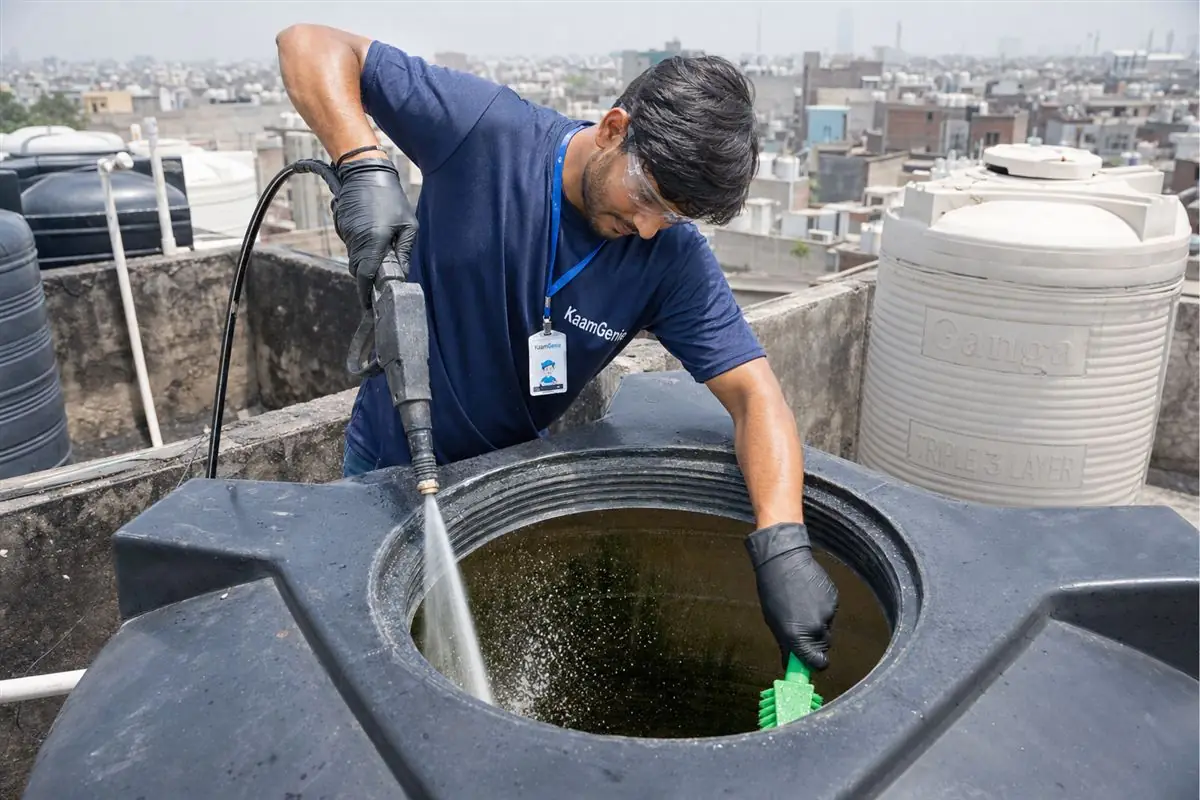
- Drain fully, scoop the sludge, then jet-wash and hand-scrub every wall.
- Disinfect only with food-grade chlorine, then rinse before refilling.
- Deep-cleaning or large tanks are safer and faster done by professionals.
Every time your tank refills, it carries in fine sediment, dust and dissolved minerals from the supply line. This settles at the bottom as a slippery layer of sludge, while sunlight warming the tank walls encourages algae and bacterial growth. In Delhi-NCR, dusty summers and monsoon humidity speed this up considerably. Over months the build-up can host E. coli, breed mosquito larvae if the lid is loose, and give water a musty smell or yellow tint. Even a good RO filter downstream cannot fully compensate for a dirty source tank. Regular cleaning protects your family from waterborne illness, keeps taps and geysers free of scale, and extends the life of the tank itself. Think of it as basic maintenance, not an emergency response only after the water already looks bad.
How Often Should You Clean It
For most homes in Delhi-NCR, cleaning an overhead water tank once every six months is the sensible standard. Areas with hard or muddy municipal supply, borewell water high in sediment, or heavy construction dust nearby may need it every three to four months. Restaurants, PGs, schools and clinics that consume large volumes should clean quarterly to stay compliant and safe. You should also clean immediately if you notice a change in taste, colour or smell, after any plumbing repair that could introduce dirt, or when returning to a home that stayed locked for weeks. Mark the date on the tank or in your phone. A predictable schedule prevents sludge from hardening into a stubborn layer that is far harder and costlier to remove later.
Safety First: Preparing to Clean
Tank cleaning carries real risks, so prepare properly before starting. If you must enter a large tank, treat it as a confined space: open the lid and let it ventilate for at least fifteen minutes, because stale air and cleaning fumes can cause dizziness. Never work alone — keep a spotter outside who can help if you slip or feel faint. Wear rubber gloves, non-slip footwear and eye protection, and switch off the motor and inlet valve so the tank does not refill mid-clean. Keep a bucket, mug, ladder and torch within reach, and never use harsh acids, detergents or bleach meant for floors. Wet tank walls are extremely slippery. If the tank is deep, small-mouthed, or on a high rooftop with awkward access, do not force it — that is exactly when a trained crew is the safer choice.
Step-by-Step: Cleaning the Tank
Work through these steps in order. 1. Drain: shut the inlet and empty the tank through the outlet or a hose; save the last dirty water for scooping. 2. Remove sludge: scoop the settled muck at the bottom with a mug and bucket until the base is bare. 3. Jet-wash: spray the walls, corners and roof with a high-pressure jet to dislodge grime and algae. 4. Hand-scrub: scrub every surface with a soft brush or sponge — no soap — paying attention to corners and the inlet-outlet mouths. 5. Disinfect: apply a food-grade chlorine solution and let it sit twenty to thirty minutes. 6. Rinse: flush thoroughly until no chlorine smell remains. 7. Refill: restore the supply, let the first fill settle, and drain once more before regular use.
Book your water tank cleaning
Trained crew, food-grade process, before/after photos and a service record every job. ₹699 onwards, same-day where possible across Delhi NCR.
Disinfecting the Right Way
Disinfection is the step that actually makes water safe, so use the correct agent and dose. Choose a food-grade chlorine product — liquid sodium hypochlorite or bleaching-powder solution rated for drinking water — never floor cleaner, phenyl or scented bleach, which leave toxic residues. Mix roughly according to tank size following the product label, then coat every internal wall, the lid underside and the fittings. Let it act for twenty to thirty minutes so it can kill bacteria and break down the bio-film that scrubbing alone misses. Ventilate while it works and avoid breathing the fumes directly. Afterwards, rinse until the chlorine odour is gone; a faint trace is normal and disappears after the first refill. Getting this step right is the difference between a tank that merely looks clean and one that is genuinely hygienic.
Rinsing, Refilling and Final Checks
Once disinfection is done, rinse the interior with clean water several times, draining each rinse fully so no chlorine or loosened debris remains. Wipe down the outlet mesh and check that the inlet ball-valve seats properly. Inspect the lid: it should sit flush and lock, because a gapping lid lets in dust, lizards and mosquitoes that undo your work within weeks. Look for hairline cracks or leaks while the tank is empty — this is the best moment to spot them. Then reopen the inlet and let the tank fill. Drain this first fill once before drinking, especially if any chlorine smell lingers. Finally, note the cleaning date and set a reminder for six months on. A quick monthly glance at the water clarity thereafter tells you whether the schedule is holding up.
DIY vs Professional Cleaning
A small residential tank with easy rooftop access can be cleaned DIY if you follow the safety rules and have the time, gloves and a pressure source. That said, DIY has limits. Professional crews bring high-pressure jets, wet-vacuum sludge removal, anti-bacterial food-grade disinfectants and, increasingly, UV or ozone treatment that leaves no aftertaste. They handle deep, large or awkwardly placed tanks safely, finish in under an hour, and often provide a cleanliness report — useful for RWAs, offices and rentals. Given the confined-space risk and the health stakes, many Delhi-NCR households simply book a professional every six months for peace of mind. KaamGenie offers trained, uniformed crews across Delhi-NCR at 95603 66362. Whichever route you choose, the goal is the same: consistently clean, safe water from a well-maintained tank.
Frequently asked questions
How do I clean an overhead water tank at home?
Shut the inlet and drain the tank fully, scoop out the bottom sludge, then jet-wash and hand-scrub every wall with a soft brush and no soap. Apply a food-grade chlorine solution for twenty to thirty minutes, rinse until the smell clears, then refill and drain the first fill before regular use.
How often should an overhead water tank be cleaned?
Every six months is the standard for most Delhi-NCR homes. Clean every three to four months if your supply is muddy, high in sediment, or near heavy construction dust. Commercial premises like restaurants and PGs should clean quarterly. Also clean immediately if the water changes taste, colour or smell.
What disinfectant is safe for a drinking-water tank?
Use only food-grade chlorine — liquid sodium hypochlorite or a bleaching-powder solution rated for drinking water. Never use floor cleaner, phenyl or scented household bleach, as these leave toxic residues. Coat all internal surfaces, let it act twenty to thirty minutes, then rinse thoroughly before refilling the tank.
Is it safe to clean the tank myself?
For a small, easily accessible rooftop tank, yes, if you follow safety rules: ventilate first, never work alone, wear gloves and non-slip footwear, and switch off the motor. Deep, large or awkwardly placed tanks are confined spaces with real risk — those are safer left to a trained professional crew.
Do I need to empty the tank completely to clean it?
Yes. Full draining is essential so you can reach and scoop the settled sludge at the bottom, jet-wash and scrub every wall, and let the disinfectant contact all surfaces. Cleaning a partly full tank simply stirs the sludge around and leaves bacteria and bio-film behind, so the effort achieves very little.
Why does my tank water smell bad?
A musty or foul smell usually means algae, bacterial growth or a build-up of decomposing sludge at the tank bottom, often worsened by a loose lid letting in dust and insects. A yellow tint or slimy walls point the same way. A full drain, scrub and food-grade chlorine disinfection normally clears it completely.
How long does professional tank cleaning take?
A trained crew typically cleans a standard residential overhead tank in under an hour, including draining, sludge removal, jet-washing, disinfection and rinsing. Larger tanks or heavily neglected ones take longer. Professionals use pressure jets and wet-vacuums that speed the job well beyond what most DIY cleaning can manage.
Can I drink the water immediately after cleaning?
Not right away. After refilling, let the first fill settle and drain it once, especially if any chlorine smell lingers. The faint trace of disinfectant disappears after that first flush. From the next fill the water is safe to use. A quick clarity check confirms the tank is ready.
Sources & references
- Bureau of Indian Standards (BIS) — IS 10500:2012 is the canonical Indian Standard for drinking water specification, defining acceptable limits for physical, chemical and biological parameters.
- WHO Guidelines for Drinking-water Quality, 4th edition — the global reference for water quality standards, including guidance on safe storage and disinfection.
- Food Safety and Standards Authority of India (FSSAI) — defines water quality requirements for food businesses, including hygiene standards for stored water and acceptable disinfection chemicals.
- WHO Fact Sheet on Drinking Water — overview of safe drinking water requirements and contamination risks.
- CPHEEO — Manual on Water Supply and Treatment — the Government of India’s engineering manual covering tank design, cleaning protocols and disinfection practices.
Last verified: 6 July 2026. If you find any of these links broken, please let us know.