
Key takeaways
- An underground sump is a confined space — never enter it alone or without ventilation.
- Always test for low oxygen and toxic gas before anyone climbs inside.
- Pump the tank fully dry, then remove settled sludge and silt by hand.
- High-pressure jet-wash walls and floor, then disinfect before refilling.
- For deep or large sumps, a trained professional crew is the safer choice.
An underground sump sits below ground level and receives water directly from the municipal or tanker supply before it is pumped to overhead tanks. Because it is the first storage point, all incoming silt, sand and sediment settles here first. In Delhi-NCR, where supply quality varies and interruptions are common, this build-up happens faster than most residents expect. Over time a slimy biofilm forms on the walls, algae grows where light enters, and organic sludge collects on the floor. This contaminates the entire downstream system, causing bad odour, cloudy water and health risks. Experts recommend cleaning an underground sump at least twice a year, and more often if you notice sediment, smell or discolouration at your taps. Regular cleaning also protects your pump and pipes from premature wear.
Confined-Space Safety: The Rules You Must Not Break
This is the most important section. An underground sump is a legally recognised confined space, and every year people die inside them from lack of oxygen or toxic gas — not from the water. First rule: never enter alone. A second person must stay outside at all times to watch and pull you out in an emergency. Second: ventilate the tank for at least 20–30 minutes before entry, using a blower to push fresh air in. Third: decomposing sludge releases hydrogen sulphide and methane, and displaces oxygen, so test the air with a gas detector before anyone climbs down. Never use petrol or diesel pumps inside, as exhaust fumes are deadly. Wear a harness, keep a rope tied, and have a clear rescue plan ready before starting.
Tools and Protective Gear You Will Need
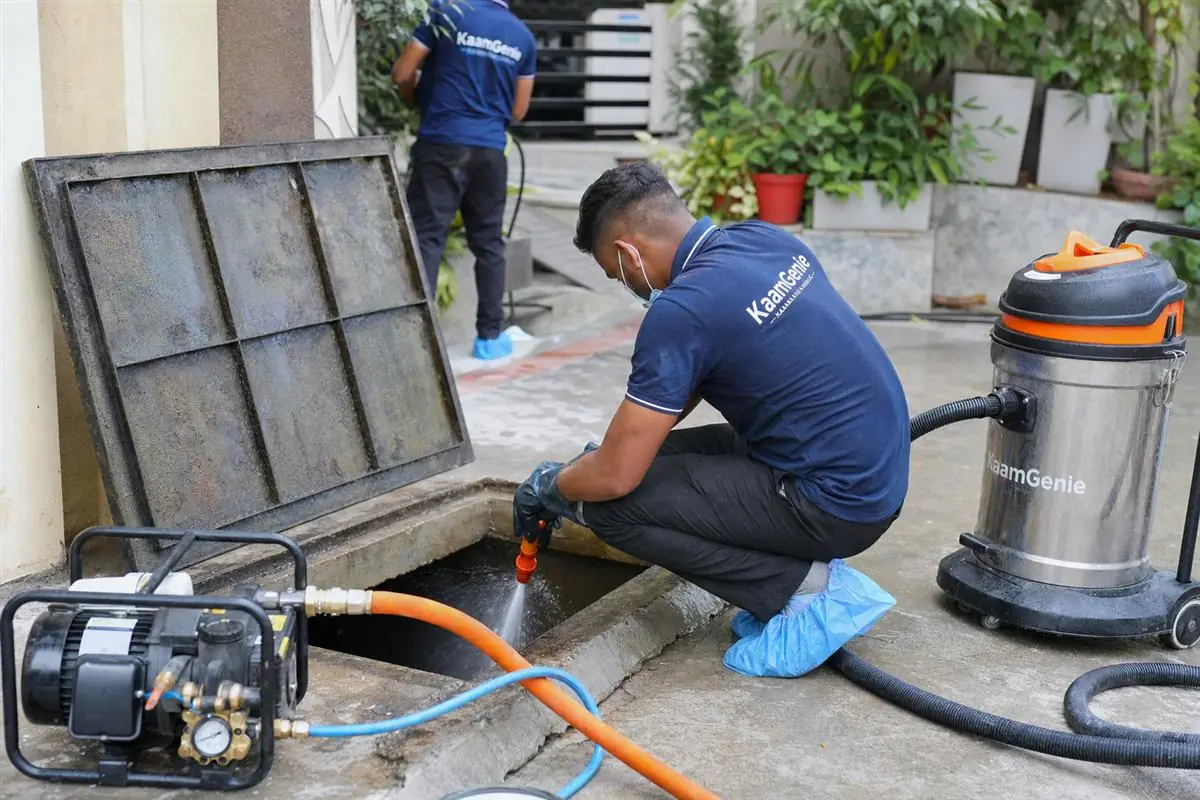
Gather everything before you begin so no one has to climb in and out repeatedly. You will need a submersible pump to drain the sump, an air blower for ventilation, and ideally a gas detector to confirm the air is safe. For cleaning, keep stiff brushes, a plastic scraper, buckets, a mud pump or scoop for sludge, and a high-pressure jet-wash machine. Protective gear is not optional: gum boots, waterproof gloves, safety goggles, and a proper safety harness with rope. Carry a strong torch or waterproof LED lamp, since sumps are dark. Finally, keep food-grade disinfectant such as chlorine solution ready for the final step. Using the correct equipment is exactly why a professional crew cleans faster and far more safely than an untrained person.
Step-by-Step: Draining and Pumping Out the Sump
Follow these steps in order. Step 1: Switch off the inlet valve and the main pump so no fresh water enters during cleaning. Step 2: Lower a submersible pump and drain the sump until only a few inches of water and sludge remain. Step 3: Ventilate the empty tank with a blower for 20–30 minutes to clear stale, oxygen-poor air. Step 4: Test the internal air with a gas detector for oxygen level and toxic gases. Step 5: Only when the air is confirmed safe, and with a person watching from outside, does the cleaner enter wearing a harness. Draining fully is essential — you cannot properly scrub or inspect walls while water is still pooling around the floor and hiding cracks.
Book your water tank cleaning
Trained crew, food-grade process, before/after photos and a service record every job. ₹699 onwards, same-day where possible across Delhi NCR.
Removing Sludge and Silt from the Floor
Once inside safely, the next task is clearing the settled muck. The floor of a neglected sump often holds a thick layer of black sludge, sand and grit. Scoop this out by hand or with a mud pump into buckets, which are then lifted out by the person stationed above. Do not wash sludge down any drain, as it will simply clog the outlet. Use a plastic scraper to lift stubborn deposits from corners and around the pump foot-valve, where silt collects most. Work methodically from the far end towards the exit ladder so you never stand in the dirty residue you have already cleared. This is heavy, dirty work in a cramped space, and rotating the person inside every few minutes reduces fatigue and keeps the safety watch alert.
Jet-Washing, Scrubbing and Disinfecting
With the loose sludge removed, it is time to clean the surfaces. Use a high-pressure jet-wash on all four walls, the floor and the ceiling to blast off biofilm, algae and stuck-on grime. Follow with stiff brushes on any patches the jet misses, especially the waterline where scale forms. Pump out the resulting dirty water. Next comes disinfection: apply a food-grade chlorine solution across every surface and let it sit for the recommended contact time to kill bacteria and viruses. Rinse thoroughly so no chemical taste remains, and pump the rinse water out. Inspect walls for cracks or seepage while surfaces are clean and visible. Only after the sump is fully dry, disinfected and inspected should you reopen the inlet and refill with fresh water.
Why a Professional Service Is Strongly Recommended
Given the confined-space hazards, most Delhi-NCR households and societies are far better off hiring professionals rather than attempting a DIY clean. A trained crew arrives with blowers, gas detectors, submersible pumps, jet-wash machines and safety harnesses — equipment few homes own. They understand ventilation, gas testing and rescue procedures, which turns a genuinely dangerous job into a routine one. They also finish in a few hours without draining your day or risking a family member’s life. KaamGenie provides trained underground sump cleaning across Delhi-NCR with proper safety gear and food-grade disinfection. To book a professional, safe and thorough clean, call 95603 66362. The modest cost is small insurance against contaminated water and, more importantly, against a serious accident inside the tank.
Frequently asked questions
How often should an underground sump be cleaned?
At least twice a year for most Delhi-NCR homes and societies. If your supply carries visible silt, or you notice odour, cloudy water or sediment at the taps, clean it more frequently. Buildings with high occupancy or older municipal lines may need cleaning every three to four months to keep stored water safe.
Is it safe to clean an underground sump myself?
It carries real risk. An underground sump is a confined space where low oxygen and gases like hydrogen sulphide and methane can cause unconsciousness within minutes. If you attempt it, never enter alone, ventilate first, test the air, and keep a person watching outside. For deep or large sumps, a trained professional crew is strongly recommended.
What gases can collect inside a sump tank?
Decomposing sludge and stagnant water can release hydrogen sulphide, which smells of rotten eggs, and methane, which is odourless and flammable. These gases also displace oxygen, creating a low-oxygen atmosphere. This is why ventilation and gas testing before entry are essential, and why petrol or diesel pumps must never be run inside the tank.
How long does it take to clean an underground sump?
A typical residential underground sump takes around two to four hours, depending on its size, the amount of sludge and how long ventilation and disinfection require. Larger society sumps can take longer. A professional crew with proper pumps and jet-wash equipment usually completes the job faster than a DIY attempt while maintaining safety.
Do I need to empty the sump completely before cleaning?
Yes. The sump must be pumped almost fully dry so the floor sludge can be scooped out and the walls scrubbed and inspected properly. Cleaning while water still pools inside makes it impossible to remove settled silt or spot cracks. A submersible pump handles this quickly before anyone enters the tank.
What disinfectant is used for a water sump?
A food-grade chlorine solution is the standard choice. It is applied to all surfaces after scrubbing and left for the recommended contact time to kill bacteria and viruses, then rinsed off thoroughly so no chemical taste remains. Using the correct dose matters, which is another reason professional cleaning is preferable to guesswork.
Why does my sump water smell bad?
A foul smell usually means organic sludge and biofilm have built up on the floor and walls, and bacteria are active. Hydrogen sulphide from decomposition produces that rotten-egg odour. It is a clear sign the sump needs cleaning and disinfection. Ignoring it lets the contamination spread to your overhead tank and every tap.
Does KaamGenie clean underground sumps in Delhi-NCR?
Yes. KaamGenie provides trained underground sump cleaning across Delhi-NCR, using blowers, gas testing, submersible pumps, high-pressure jet-wash and food-grade disinfection, with proper confined-space safety gear. This turns a hazardous job into a safe, thorough one. To book a cleaning, call 95603 66362 and the team will schedule a visit.
Sources & references
- Bureau of Indian Standards (BIS) — IS 10500:2012 is the canonical Indian Standard for drinking water specification, defining acceptable limits for physical, chemical and biological parameters.
- WHO Guidelines for Drinking-water Quality, 4th edition — the global reference for water quality standards, including guidance on safe storage and disinfection.
- Food Safety and Standards Authority of India (FSSAI) — defines water quality requirements for food businesses, including hygiene standards for stored water and acceptable disinfection chemicals.
- WHO Fact Sheet on Drinking Water — overview of safe drinking water requirements and contamination risks.
- CPHEEO — Manual on Water Supply and Treatment — the Government of India’s engineering manual covering tank design, cleaning protocols and disinfection practices.
Last verified: 6 July 2026. If you find any of these links broken, please let us know.