
Key takeaways
- New-build tanks often hold cement dust, plaster and builders’ slurry — clean before drinking.
- Resale homes come with unknown history; treat the tank as due for cleaning on day one.
- Inspect for a sealing lid, floor sediment, wall scale, smell and tinted water.
- Don’t forget the underground sump — builders routinely skip it.
- A move-in clean drains, scrubs, vacuums, disinfects and gives you before/after photos.
- Cleaning starts from ₹699; sumps ₹1,500–2,500 — call 95603 66362 to book.
This guide explains why a tank clean should be one of your very first move-in jobs, what typically hides inside new and resale tanks in Delhi, how to inspect what you have been given, and what a professional clean covers and costs. We also flag the checks worth doing at handover — the tank lid, overflow, and whether the plumber ever actually cleaned the sump. A couple of hours now saves you weeks of stomach upsets, foul smells and finger-pointing later.
What’s really inside a new tank
A brand-new tank is rarely a clean tank. During construction, tanks are frequently left open and become catch-alls for cement dust, plaster, paint, wood shavings and grit that wash straight in the first time the tank is filled. Some builders run water through the plumbing to flush lines and never drain the tank afterwards, leaving a fine cement slurry at the bottom. When you move in and turn on the tap, that debris comes with your water — cloudy, gritty, sometimes with a chemical edge. Even a tank that looks fine from the manhole can hide a layer of settled construction silt you only discover when it clogs a filter or an aerator weeks later.
Resale homes: an unknown history
If you have bought a resale flat or kothi, the problem is different but just as real: you have no idea when the tank was last cleaned. Many Delhi homes go years between cleans, and an unused or under-used tank during a vacant sale period grows biofilm on the walls and settles a thick silt layer on the floor. Previous owners rarely leave records. Signs to watch for after moving in include a musty or earthy smell, water that looks tinted in a white bucket, particles in your filter, or a slick feel to the tank walls. Don’t wait for these — treat a resale tank as due for cleaning on day one until proven otherwise.
Inspect before you drink
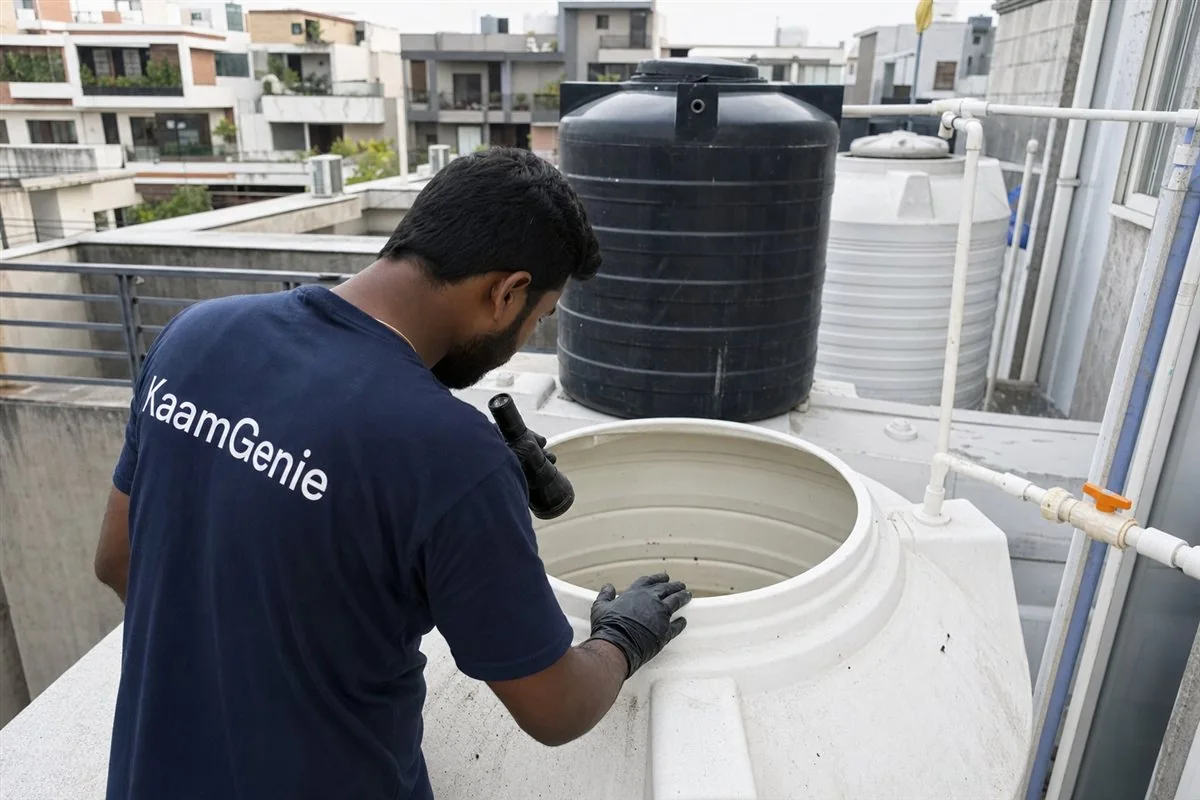
Before you rely on the supply, do a quick inspection. Open the tank manhole in daylight and look for a proper, sealing lid — a missing or broken cover is the top reason Delhi tanks get dirty, letting in dust, leaves, lizards and birds. Check for:
- Sediment or slurry on the tank floor.
- Slimy or scaled walls (biofilm and hard-water scale).
- Any smell — musty, earthy or chemical.
- Cloudy or tinted water in a clear glass or white bucket.
Book your water tank cleaning
Trained crew, food-grade process, before/after photos and a service record every job. ₹699 onwards, same-day where possible across Delhi NCR.
What a move-in clean covers
A professional move-in clean resets the tank to a known-good state. The crew drains it completely, removes construction debris and settled sludge, then scrubs every wall, floor and corner to lift plaster, cement film, biofilm and scale. Loosened material is vacuumed out, the tank is high-pressure washed, and a food-grade disinfectant is applied and rinsed so nothing reaches your taps. For a new-build, the sump gets the same treatment — it is usually where the worst construction slurry collects. You finish with before-and-after photos so you can see exactly what was inside, and clean, clear water you can trust from the first day. See how our tank cleaning works.
Cost and how to book in Delhi
A move-in clean is an inexpensive insurance policy. KaamGenie cleaning starts from ₹699 for a standard overhead tank, while underground sumps — which new homes and kothis almost always have — run ₹1,500–2,500 depending on size and access. Most flats and builder-floors are a single-visit, few-hours job. Book an early slot so the tank is clean and refilled the same day. If you have taken possession of a home in a society, ask whether the building arranges common-tank cleaning or whether your flat tank is separate. To get your new home’s water sorted, call KaamGenie on 95603 66362 or visit our Delhi tank-cleaning page.
Frequently asked questions
Do I really need to clean the tank in a brand-new home?
Yes. New construction leaves cement dust, plaster, paint flecks and grit inside tanks, and builders often flush plumbing without draining the tank, leaving cement slurry at the bottom. That debris comes out of your taps as cloudy, gritty water. A single clean before you start drinking and cooking resets the tank to a known-safe state.
I bought a resale flat — is cleaning necessary?
Almost always. You have no record of when the tank was last cleaned, and vacant or under-used tanks grow biofilm on the walls and settle silt on the floor. Watch for musty smells, tinted water in a white bucket, or particles in your filter. Rather than wait for problems, treat a resale tank as due for cleaning on move-in day.
What should I check before drinking the water?
Open the manhole in daylight and confirm there is a proper sealing lid — a missing cover is the top cause of dirty Delhi tanks. Look for floor sediment, slimy or scaled walls, and any musty, earthy or chemical smell. Fill a clear glass or white bucket and check for cloudiness or tint. Also inspect the underground sump.
What does a move-in tank clean cost in Delhi?
KaamGenie cleaning starts from ₹699 for a standard overhead tank. Underground sumps, which new homes and kothis almost always have, run ₹1,500–2,500 depending on size and access. Most flats and builder-floors are a single visit taking a few hours, and the tank is cleaned and refilled the same day. Call 95603 66362 to book.
How long does the cleaning take, and will I have water the same day?
For a typical flat or builder-floor, a single overhead tank is drained, scrubbed, disinfected and refilled within a few hours, so you have clean water the same day. Homes with a sump plus overhead tank take a little longer. Book an early-morning slot and the whole job is usually finished well before evening use.
The builder says the tank is brand new — can I skip cleaning?
We would not. New tanks carry manufacturing dust, plastic residue, insects and construction debris that settle during fitting, and the water sitting in them since the pressure test is stale. A first clean from ₹699 flushes all of that out so your family starts with genuinely fresh storage, not factory grime.
How soon before I move in should I book the cleaning?
Ideally a day or two before you shift, once the plumbing is fully connected but before you fill the house with daily use. That way the first water you cook and drink with is clean. We often manage same-day slots, so even a last-minute booking before move-in usually works.
Is the cleaning safe around fresh paint and new fittings?
Yes. Our crew works only at the tank and its lines, uses tidy equipment and does not splash walls or damage new fixtures. The food-grade chlorine is contained inside the tank and flushed out fully, so nothing affects your fresh paint, tiles or newly installed taps.
Do you also clean the underground sump in a new house, not just the roof tank?
We recommend cleaning both. In a new home the sump often collects the most construction silt because it fills first. We clean the sump, the transfer line and the overhead tank together so the whole path is fresh — cleaning only the top tank leaves dirty water feeding into it.
Can I get photos to confirm the tank was actually cleaned?
Yes. We share before-and-after photos and a signed service record every time, which is especially reassuring in a new home where you cannot easily climb up to check yourself. It is also useful proof of upkeep if you are documenting the condition of a fresh purchase.
Sources & references
- Bureau of Indian Standards (BIS) — IS 10500:2012 is the canonical Indian Standard for drinking water specification, defining acceptable limits for physical, chemical and biological parameters.
- WHO Guidelines for Drinking-water Quality, 4th edition — the global reference for water quality standards, including guidance on safe storage and disinfection.
- Food Safety and Standards Authority of India (FSSAI) — defines water quality requirements for food businesses, including hygiene standards for stored water and acceptable disinfection chemicals.
- WHO Fact Sheet on Drinking Water — overview of safe drinking water requirements and contamination risks.
- CPHEEO — Manual on Water Supply and Treatment — the Government of India’s engineering manual covering tank design, cleaning protocols and disinfection practices.
Last verified: 6 July 2026. If you find any of these links broken, please let us know.