
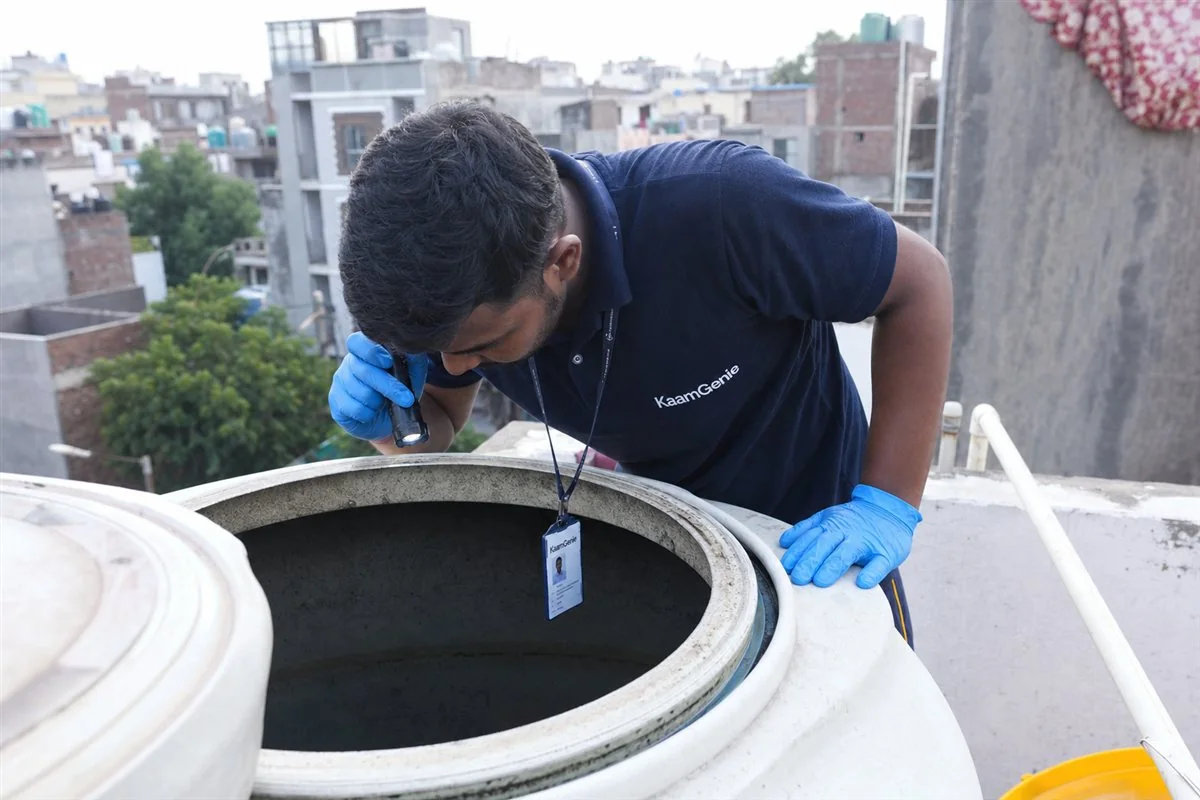
Key takeaways
- The smell identifies the cause: rotten-egg = sulphur bacteria, musty = algae, sewage = contamination, bleach = chlorine.
- A sewage or drain smell means possible contamination — stop drinking and get the sump inspected.
- Sulphur and algae smells come from stagnant, light-exposed or dirty tanks — scrub and disinfect.
- A mild chlorine smell after a DJB refill is usually harmless and fades on standing.
- Lasting fix = disinfecting clean + opaque sealed lid + good water turnover.
- Overhead cleaning from ₹699; recurring smells are best managed with a discounted AMC.
This guide decodes the four smells Delhi households report most — rotten egg, earthy-musty, sewage-like and heavy chlorine — and explains why each one develops in overhead tanks and underground sumps. We cover the fixes that actually last, from a proper disinfecting clean to sealing gaps and improving turnover, plus when a bad smell means you should stop drinking the water entirely and book help.
Rotten-egg smell: sulphur bacteria
A sharp rotten-egg or sulphur smell is the most common complaint and points to hydrogen sulphide gas produced by bacteria in oxygen-starved water. It thrives in tanks and sumps that sit undisturbed — a big overhead tank on a low-occupancy floor, or a sump that only fills occasionally. Borewell water in outer Delhi already carries some sulphur, which feeds the problem. You’ll often notice it more from hot water because heat releases the gas. The fix is a full drain, scrub and chlorine disinfection to kill the bacterial biofilm, followed by better turnover so water doesn’t stagnate. If it’s only hot water, flush or service the geyser separately.
Musty, earthy or muddy smell
An earthy, musty or “pond” smell usually means algae or organic growth inside the tank. Delhi’s summer heat plus any sunlight leaking through a translucent or cracked tank lid creates ideal conditions for algae on the walls and water surface. Monsoon adds dust, leaves and insects through poorly sealed inlets, all of which rot and smell. You may also see greenish or brownish streaks on the tank walls. The answer is a thorough tank cleaning that scrubs off the biofilm, plus blocking light and sealing the lid so algae can’t return. An opaque, well-fitted lid makes the biggest difference in Delhi’s climate.
Sewage or drain-like smell
A smell like drains or sewage is the most serious and should stop you drinking the water immediately. It usually means cross-contamination — a cracked underground sump letting in soil water, a drain or septic line seeping nearby, or a vent pipe placed too close to a soil stack. In dense Delhi colonies and basements, sump-to-drain contamination is a real risk. Don’t just clean and move on: the leak must be traced and sealed, or the contamination returns. Get an underground sump inspection that checks for cracks and ingress. Until it’s confirmed clean, use bottled or boiled water for drinking and cooking.
Book your water tank cleaning
Trained crew, food-grade process, before/after photos and a service record every job. ₹699 onwards, same-day where possible across Delhi NCR.
Strong chlorine smell
Sometimes water smells strongly of bleach or chlorine, especially just after a DJB supply cut ends and fresh water arrives. Municipal water carries chlorine as a disinfectant, and a burst of freshly treated supply can be heavy on it. This is usually harmless and fades if you let water stand in an open jug for 20–30 minutes. But if the smell is persistent and strong, it can mean chlorine is reacting with organic gunk inside a dirty tank, forming compounds that irritate skin and eyes. If a chlorine smell lingers with any cloudiness, the tank still needs cleaning — the disinfectant is fighting a load of biofilm it can’t win against alone.
The lasting fix: clean, seal, circulate
Whatever the smell, three things fix it for good:
- A full disinfecting clean — drain, scrub walls and floor, vacuum sludge, chlorine-treat and refill.
- Seal the tank — an opaque, tight lid and screened overflow keep out light, dust, insects and contamination.
- Improve turnover — avoid oversized tanks that let water stagnate for days.
When to stop drinking and call
Treat these as reasons to stop drinking the water and book help now:
- Any sewage or drain-like smell — possible contamination.
- Smell plus visible particles, slime or discolouration.
- Odour that stomach upsets in the household seem to track.
Frequently asked questions
Why does my tank water smell like rotten eggs?
That sulphur smell is hydrogen sulphide gas made by bacteria in oxygen-poor, stagnant water — common in large or rarely-used tanks and sumps, and worse with borewell supply. A full drain, scrub and chlorine disinfection kills the bacterial biofilm, and better water turnover stops it returning. If only hot water smells, the geyser is the culprit.
Is smelly tank water dangerous to use?
It depends on the smell. A sewage or drain-like odour signals possible contamination — stop drinking immediately and get the sump inspected. Sulphur and musty smells are unpleasant and mean a dirty tank, but are rarely an acute danger. A mild chlorine smell is usually harmless. When in doubt, don’t drink it until the tank is cleaned and checked.
Will cleaning the tank remove the smell permanently?
A disinfecting clean removes the biofilm and sludge causing most smells, but it only lasts if you also seal the tank against light and dust and keep water circulating. If the cause is contamination from a cracked sump or nearby drain, cleaning alone won’t hold — the leak must be traced and sealed first.
Why does my water smell of chlorine after the supply comes?
DJB adds chlorine to disinfect municipal water, and a fresh burst of supply after a cut can smell strongly of it. This is usually harmless and fades if you let water stand in an open container for 20–30 minutes. If the chlorine smell is persistent with cloudiness, the tank likely still needs cleaning.
How much does it cost to fix a smelly tank in Delhi?
A full disinfecting overhead tank clean with KaamGenie starts from ₹699 and underground sumps run ₹1,500–2,500. If contamination or plumbing is involved, that’s quoted separately after inspection. For recurring smells, an AMC with scheduled cleans gives 15–25% off. Call 95603 66362 for an inspection first.
Will a smelly tank make my whole house smell when I run the taps?
It can. A strong rotten-egg or drain smell from the tank carries through every tap, shower and flush, and lingers in bathrooms and the kitchen. It is not just unpleasant — it signals bacteria or contamination in the water. Airing the rooms will not fix it; the source is the tank, and a proper clean and disinfection removes the smell at its origin.
My tank smells only in summer — why does the heat make it worse?
Delhi’s summer warms the water and the tank walls, and warm water lets sulphur bacteria and biofilm multiply far faster, so smells that were mild in winter become obvious. Rooftop tanks in direct sun are worst. This is exactly why we suggest cleaning before peak summer — a disinfected, sealed tank resists the heat-driven smell far longer.
Is it safe to give smelly tank water to my dog or use it for plants?
For plants, mildly smelly water is usually fine. For pets, avoid it if the smell is sewage-like or rotten-egg strong, as the same bacteria that affect people can upset animals — give them clean stored water until the tank is done. A musty smell is lower risk, but the safest step is simply booking a clean rather than guessing.
Can you clean and deodorise my tank the same day I call?
In most Delhi areas, yes — same-day slots are usually available for a smelly tank because people understandably want it sorted fast. Our crew drains, scrubs with food-grade cleaner, disinfects and reseals, which removes the smell rather than masking it. Call 95603 66362 early in the day and we will try to fit you in before evening.
Do I need to empty or stop using the tank before your crew arrives for a smell fix?
No preparation is needed on your side. Our crew handles draining the smelly water, scrubbing, disinfecting and refilling. It helps if we can reach the tank and the inlet valve, so just clear any heavy items blocking the terrace or sump lid. Everything else, including the leftover foul water, is our job to manage cleanly.
Sources & references
- Bureau of Indian Standards (BIS) — IS 10500:2012 is the canonical Indian Standard for drinking water specification, defining acceptable limits for physical, chemical and biological parameters.
- WHO Guidelines for Drinking-water Quality, 4th edition — the global reference for water quality standards, including guidance on safe storage and disinfection.
- Food Safety and Standards Authority of India (FSSAI) — defines water quality requirements for food businesses, including hygiene standards for stored water and acceptable disinfection chemicals.
- WHO Fact Sheet on Drinking Water — overview of safe drinking water requirements and contamination risks.
- CPHEEO — Manual on Water Supply and Treatment — the Government of India’s engineering manual covering tank design, cleaning protocols and disinfection practices.
Last verified: 6 July 2026. If you find any of these links broken, please let us know.