
Key takeaways
- The “worms” are almost always insect larvae — mosquito wrigglers or red bloodworms — not parasites.
- They get in through a gap: a loose lid, unscreened overflow, vent or inlet.
- Mosquito larvae mean your tank is a dengue breeding site — a real Delhi risk.
- Skimming visible worms fails; you must drain, scrub and vacuum the sludge that feeds them.
- Seal the lid and screen every opening with fine mesh to keep them out for good.
- Clean every 3–6 months; an AMC schedules it at 15–25% off.
This guide explains exactly what those worms are, how they get into overhead tanks and underground sumps in Delhi homes, and why some tanks attract them more than others. We cover how to clear an infested tank properly, the mistakes that let them come straight back, and the sealing and maintenance steps that keep your tank worm-free through Delhi’s worst mosquito months.
What those worms actually are
Nearly all “worms” in a Delhi water tank are insect larvae, not true worms:
- Mosquito larvae — small, comma-shaped wrigglers that hang near the surface and dart down when disturbed.
- Bloodworms — bright red, thin larvae of midge flies that live in the sludge at the tank floor.
- Drain-fly or moth-fly larvae — pale and slow, usually in slimy build-up.
How they get into Delhi tanks
Larvae don’t appear from nowhere — an adult insect got in and laid eggs on the water surface. The entry points are almost always: a missing, cracked or loose tank lid; an unscreened overflow or vent pipe; or gaps around the inlet where the pipe enters. Delhi’s open overhead tanks on hot terraces are ideal — warm, still water with a film of dust and organic matter is exactly what mosquitoes and midges seek out to breed. Underground sumps with broken covers are just as vulnerable. Intermittent DJB supply makes it worse: water sits undisturbed for hours or days between fills, giving eggs time to hatch and larvae time to grow before the next flush.
Why some tanks keep getting them
If worms return again and again, two things are usually true: the tank isn’t sealed, and there’s sludge feeding them. Bloodworms in particular live in the settled organic layer at the tank floor — scrub that away and you remove their food and habitat. A tank that’s only ever rinsed, never fully drained and vacuumed, keeps that layer intact. Oversized tanks that stay half-full for days give larvae the still water they need. And a lid that looks closed but has a finger-wide gap at one edge is all an adult mosquito needs. Solving repeat infestations means fixing both the gap and the gunk — not just fishing out the worms you can see.
Book your water tank cleaning
Trained crew, food-grade process, before/after photos and a service record every job. ₹699 onwards, same-day where possible across Delhi NCR.
How to clear an infested tank
Skimming out visible larvae does nothing — eggs and sludge remain and they’re back in days. Proper clearance means a full clean:
- Drain the tank completely, including the sludge at the bottom.
- Scrub walls, floor and corners to remove biofilm and the organic layer larvae feed on.
- Vacuum out all sediment, then disinfect and refill.
Keeping worms out for good
Cleaning clears today’s infestation; sealing and upkeep stop the next one. After a clean:
- Fit a tight, opaque lid with no gaps — the single most important step.
- Screen every opening — overflow, vent and inlet — with fine mesh mosquitoes can’t pass.
- Keep water turning over; avoid an oversized tank that stays part-full for days.
- Clean every 3–6 months so sludge never builds up to feed larvae.
When to call and what to check
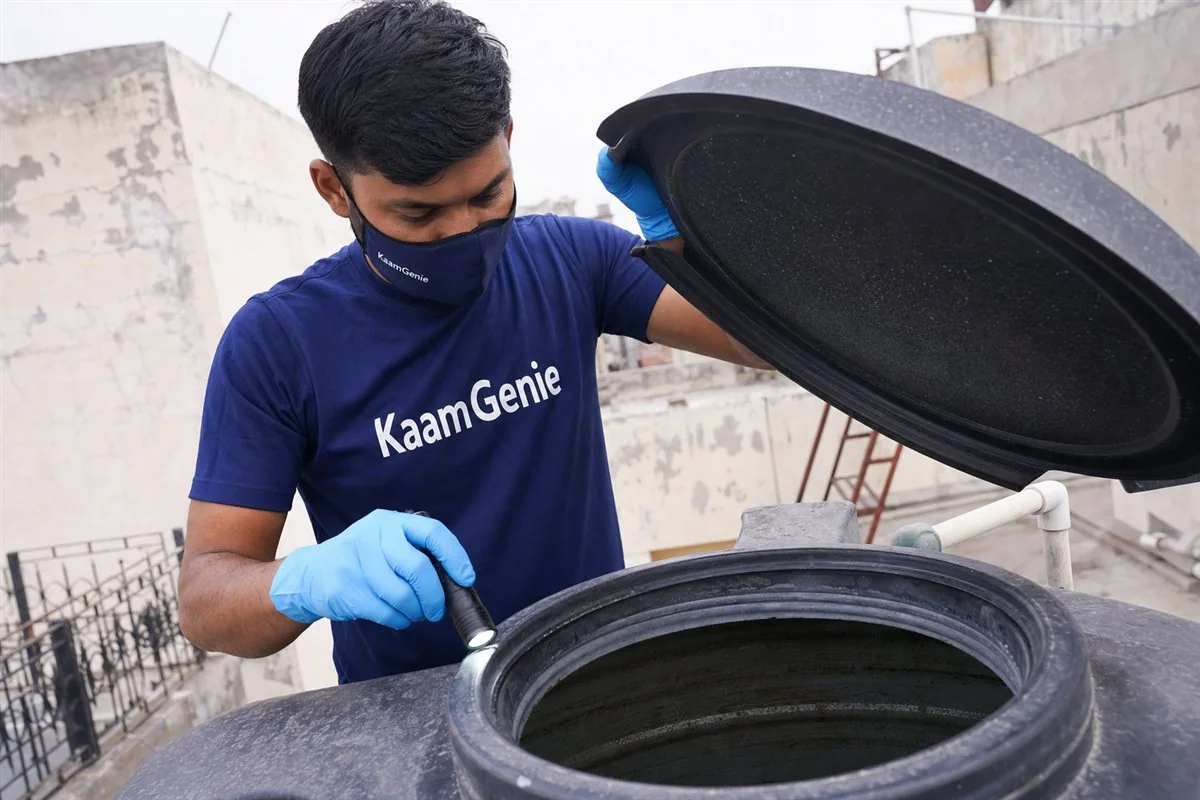
Call for help right away if you see live larvae in your drinking water, red bloodworms in the sludge, or worms returning within weeks of a clean — the last means a gap somewhere is still letting insects in. Before or during a visit, check whether the lid seals fully, whether the overflow and vent are screened, and whether the sump cover is intact. If you can’t find the entry point yourself, KaamGenie will inspect both tanks, clear the infestation and seal the gaps in one visit. Call 95603 66362 — and until the tank is confirmed clean, don’t use that water for drinking or cooking.
Frequently asked questions
Are the red worms in my water tank dangerous?
The bright red worms are usually bloodworms — midge-fly larvae that feed on sludge. They don’t bite or infect you directly, but their presence means your tank is open and dirty, and any mosquito larvae alongside them make it a dengue and malaria breeding site. Don’t drink the water until the tank is fully cleaned and sealed.
How did worms get into a closed tank?
The tank isn’t as closed as it looks. An adult mosquito or midge got in through a loose or cracked lid, an unscreened overflow or vent pipe, or a gap around the inlet, and laid eggs on the still water surface. In Delhi’s heat those eggs hatch fast. Sealing every opening with tight lids and fine mesh is the cure.
Can I just remove the worms and use the water?
No. Skimming out the larvae you can see leaves the eggs and the organic sludge they feed on, so they return within days. The only reliable fix is a full clean — drain completely, scrub the walls and floor, vacuum the sludge, disinfect and refill — followed by sealing the tank so insects can’t get back in.
Why do worms keep coming back after cleaning?
Repeat infestations mean one of two things: the tank still has a gap letting insects in, or the last clean was only a rinse that left the sludge layer bloodworms live in. Fix both — seal the lid and screen every opening, and insist on a full drain-scrub-vacuum clean, including the underground sump so it can’t reinfest the overhead tank.
How much does it cost to clear worms from a Delhi tank?
A full overhead tank clean with KaamGenie starts from ₹699 and underground sumps run ₹1,500–2,500; clearing both together is wise so one doesn’t reinfest the other. Sealing gaps is usually a small add-on. For ongoing prevention an AMC schedules cleans at 15–25% off. Call 95603 66362 to book an inspection.
If I saw worms once, is all my stored water now unsafe to drink?
Treat it as unsafe until the tank is cleaned. Even if you only spotted a few worms, their presence means the tank is open to insects and the water is contaminated. Stop drinking and cooking with it, switch to bottled or boiled water, and book a full clean and disinfection. Straining the water does not make it safe to drink.
Are worms in the tank a sign that mosquitoes are breeding there too?
Very likely. The red worms and wriggling larvae people find are often linked to the same open, standing water that mosquitoes breed in, which matters in Delhi’s dengue season. A properly sealed, lid-fitted tank stops both. When we clean, we also check the lid and any gaps so insects cannot get back in and lay eggs.
How quickly can you come out if I’ve just found worms in my tank?
This is one of the jobs we prioritise, and same-day service is usually possible across Delhi NCR. Nobody should live with worms in their water. Call 95603 66362, describe what you have seen, and we will send a crew to drain, scrub, disinfect and reseal the tank so it is safe to use again the same day where we can.
Do you seal the tank lid and outlets so the worms cannot return?
Yes. Clearing the worms is only half the job; keeping them out is the rest. After cleaning we check that the lid seats tightly, and we point out any cracked lids, missing mesh on the overflow or open vents that let insects in. Fixing those gaps is what stops the problem coming back a few weeks later.
I live in a society — who should I report worms in the common tank to?
Report it to your RWA or building manager immediately, because a shared tank affects every flat and is their responsibility to clean. Ask them to book a professional disinfection rather than a quick manual rinse. If you want, share our number, 95603 66362 — we handle society tanks and give the RWA before and after photos plus a service record.
Sources & references
- Bureau of Indian Standards (BIS) — IS 10500:2012 is the canonical Indian Standard for drinking water specification, defining acceptable limits for physical, chemical and biological parameters.
- WHO Guidelines for Drinking-water Quality, 4th edition — the global reference for water quality standards, including guidance on safe storage and disinfection.
- Food Safety and Standards Authority of India (FSSAI) — defines water quality requirements for food businesses, including hygiene standards for stored water and acceptable disinfection chemicals.
- WHO Fact Sheet on Drinking Water — overview of safe drinking water requirements and contamination risks.
- CPHEEO — Manual on Water Supply and Treatment — the Government of India’s engineering manual covering tank design, cleaning protocols and disinfection practices.
Last verified: 6 July 2026. If you find any of these links broken, please let us know.