
Key takeaways
- An oily film is usually bacterial biofilm, plasticiser leaching, or settled Delhi pollution—rarely real oil.
- Use the 2-minute bottle test: smell and texture reveal the cause.
- Any diesel or kerosene smell means the water is unsafe—stop using it immediately.
- Skimming does not work; only a full drain, hand-scrub and disinfect removes it for good.
- A chalky or fast-returning film means the tank is degrading and needs replacing.
- A sealed lid and six-monthly cleaning stop the film from coming back.
We cover bacterial films from stagnant DJB water, plasticiser leaching from cheap or ageing tanks, airborne pollution settling on the surface, and genuine contamination from a shared terrace. You will learn how to tell these apart with a simple bottle test, what is safe to drink and what is not, and when a proper mechanical scrub-and-disinfect is the only real fix. We also share honest KaamGenie pricing so you know what a clean should cost.
What that oily film usually is
Nine times out of ten the shimmering layer is one of three things. First, a biofilm—a slick, slightly rainbow sheen produced by iron or sulphur bacteria thriving in warm, stagnant water, common in tanks that sit half-used through a Delhi summer. Second, plasticiser leaching, where a low-grade or sun-baked plastic tank sheds a thin waxy residue that pools on the surface. Third, settled air pollution: Delhi’s dust and hydrocarbon haze, worst in winter smog and near arterial roads, drifts onto open or poorly-sealed tanks and forms a greasy skin. Actual petroleum oil is rare and usually points to a shared overhead line, a rooftop generator, or diesel handling nearby. Each of these has a different fix—a biofilm needs disinfection, a leaching tank needs replacing, and pollution needs a sealed lid—so identifying which one you have matters. Never just skim and forget it; the source stays behind.
The 2-minute bottle test to identify it
Before you panic, run this test. Fill a clear glass bottle from the tap, hold it to the light and watch the surface.
- Rainbow sheen that breaks into patches when disturbed — likely bacterial biofilm.
- Even, waxy film that clings and re-forms — plasticiser or airborne grease.
- Distinct diesel or kerosene smell — genuine hydrocarbon contamination; stop drinking it immediately.
Is water with an oily film safe to use?
It depends entirely on the cause. A bacterial biofilm means the tank is a breeding ground—water may look fine lower down but can trigger stomach upsets, skin irritation and that faint musty taste many Delhi families complain about after the monsoon. The film itself may be harmless, but it signals bacterial load throughout the tank. Plasticiser residue is low-risk in tiny amounts but signals your tank is degrading and needs replacing soon. Any hydrocarbon smell—diesel, petrol, kerosene—is unsafe for drinking, cooking or bathing; switch to stored bottled water and get the tank inspected the same day, as even small amounts are toxic and cling to pipes. Households with children, elderly members or anyone recovering from illness should be especially cautious. When in doubt, do not drink it. Read our guide on tank water and health for warning signs.
Book your water tank cleaning
Trained crew, food-grade process, before/after photos and a service record every job. ₹699 onwards, same-day where possible across Delhi NCR.
How professional cleaning removes it for good
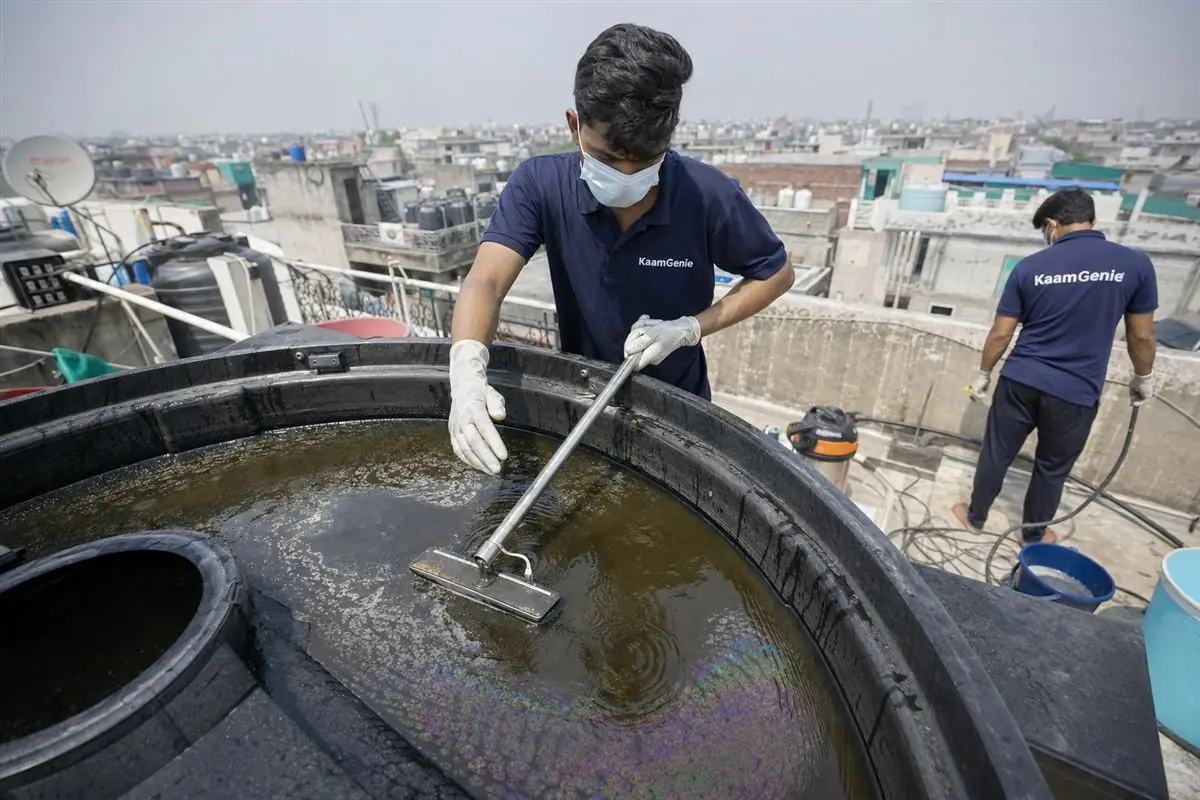
Skimming the surface with a mug does nothing—the film re-forms within days because the source is the biofilm coating the walls and floor. A proper clean is mechanical, not chemical-only, and this is the single most important thing to understand. At KaamGenie we drain the tank fully, hand-scrub every internal surface with food-safe brushes to lift the sticky bacterial layer, vacuum out the settled sludge, high-pressure rinse, then disinfect and let it cure before refilling. Because we physically remove the biofilm rather than just chlorinating over it, the sheen does not return next week the way it does after a DIY bleach. We also check the lid and inlet, since a re-exposed clean tank picks the film back up fast. For a standard overhead tank this starts from ₹699; an underground sump runs ₹1,500–2,500 depending on size and access.
Stopping the film from coming back
Prevention is cheaper than repeat cleans. Keep the lid tightly sealed—an open or cracked lid lets Delhi’s dust, pollution and insects settle straight onto the water, and is the most common cause we see. Fit a fine mesh over the inlet and overflow to block airborne grease and debris. Do not let water sit unused for weeks; stagnation feeds biofilm, especially in summer when rooftop tanks hit 40°C plus and bacteria multiply fastest. If you travel or a flat sits empty, drain and refill on return. Replace tanks older than 8–10 years or any that feel chalky inside, as these shed plasticiser no matter how often you clean. Finally, book a clean every six months—our water tank cleaning AMC gives 15–25% off and keeps films from ever taking hold in the first place.
When to replace the tank instead of cleaning it
Sometimes a clean only buys time. If the inside walls feel powdery or chalky, if the plastic has gone brittle and pale from years of Delhi sun, or if a waxy film returns within days of a thorough clean, the tank material itself is breaking down and leaching. No amount of scrubbing fixes a degrading tank—the residue comes from the walls, not the water. In that case budget for a food-grade, UV-stabilised, ideally triple-layer replacement and a shaded or insulated position on the terrace to slow future ageing. A quality tank lasts far longer than a cheap single-layer one baked by the sun. We will tell you honestly during the visit whether your tank has years left or should be swapped—we would rather keep you as a long-term customer than sell you repeat cleans of a dying tank that will only disappoint you.
Films in society and shared tanks
If you live in a DDA flat, an apartment block or a society with a large shared overhead tank, an oily film is everyone’s problem and no single flat’s responsibility—which is exactly why it lingers. Shared tanks are often bigger, harder to inspect, and cleaned rarely, so biofilm and pollution build up unnoticed until several homes report a sheen or odd taste at once. Because one tank feeds many families, the health stakes are higher too. The practical fix is a coordinated society-level clean rather than individual complaints: raise it with the RWA or facility manager and book a single professional service for the whole tank. We quote societies and commercial buildings after a quick site visit, and an AMC keeps large shared tanks on a reliable schedule so films never reach residents’ taps.
Frequently asked questions
Why does my Delhi water tank keep getting an oily rainbow film?
The rainbow sheen is almost always a bacterial biofilm feeding on warm, stagnant water inside the tank walls. Delhi’s summer heat pushes rooftop tank temperatures high, which speeds bacterial growth. Skimming the surface only removes the visible layer; the film re-forms until the walls are mechanically scrubbed and the tank is disinfected.
Is an oily film in my water tank dangerous?
It depends on the source. A bacterial biofilm can cause stomach upsets and skin irritation. Plasticiser residue from an ageing tank is low-risk but a warning sign. A diesel, petrol or kerosene smell is genuinely unsafe—do not drink, cook or bathe with it and get the tank inspected the same day.
Can I remove the oily film myself?
You can skim the surface, but it will return within days because the cause is the biofilm coating the tank walls, not just the top layer. A lasting fix needs a full drain, hand-scrubbing of every surface, sludge removal and disinfection. Most Delhi households find a professional clean from ₹699 more effective and safer than DIY.
How much does it cost to clean a Delhi tank with an oily film?
A standard overhead residential tank starts from ₹699. An underground sump ranges ₹1,500–2,500 depending on size and access. Societies and commercial buildings are quoted after a quick inspection. An AMC gives 15–25% off repeat visits. Call KaamGenie on 95603 66362 for a firm quote.
How do I stop the oily film returning after cleaning?
Seal the lid tightly, fit mesh over the inlet and overflow, and avoid letting water sit unused for weeks in summer. Replace any tank older than 8–10 years that feels chalky inside. Booking a clean every six months, ideally on an AMC, keeps biofilm from re-establishing and the film from ever returning.
Could the oily film be leaking in from my rooftop or nearby machinery?
It can. Rooftop tanks near motors, generators or exhaust vents sometimes pick up airborne oil, and a poorly sealed lid lets it settle on the water surface. During cleaning we check the tank’s surroundings and lid seal, because if an outside source keeps depositing oil, sealing the tank properly matters as much as removing the film already inside.
Is it safe to use oily-film water for washing clothes and utensils meanwhile?
Avoid it for utensils and drinking, as the film can leave a residue on plates and glasses. For flushing it is fine. For laundry it is risky — oily water can leave faint marks on clothes. Until the tank is cleaned, use stored clear water for kitchen and washing, and keep the oily supply for the toilet only.
How can I be sure the oily film is really gone after you clean the tank?
We show you before and after photos of the tank interior and the refilled clear water, and you can repeat the simple bottle test yourself — a clean tank leaves no rainbow sheen on top. Because we drain fully, scrub the walls and disinfect rather than skim the surface, the film does not simply float back a day later.
Does an oily film mean my drinking water was contaminated for days already?
Possibly, so it is worth acting quickly rather than watching it. A thin film often builds gradually, meaning the water has been affected for a while before you noticed the sheen. Switch to bottled or boiled water for drinking now, book a clean, and once the tank is disinfected and refilled the supply is safe to drink again.
How soon can you come if the oily film keeps returning every few days?
Fast recurrence usually means the previous clean only skimmed the surface or an outside source is feeding it, so it is worth a proper visit. Same-day slots are often available across Delhi. Call 95603 66362 and describe how quickly it returns; our crew will do a full drain, scrub and disinfection and check for the underlying source.
Sources & references
- Bureau of Indian Standards (BIS) — IS 10500:2012 is the canonical Indian Standard for drinking water specification, defining acceptable limits for physical, chemical and biological parameters.
- WHO Guidelines for Drinking-water Quality, 4th edition — the global reference for water quality standards, including guidance on safe storage and disinfection.
- Food Safety and Standards Authority of India (FSSAI) — defines water quality requirements for food businesses, including hygiene standards for stored water and acceptable disinfection chemicals.
- WHO Fact Sheet on Drinking Water — overview of safe drinking water requirements and contamination risks.
- CPHEEO — Manual on Water Supply and Treatment — the Government of India’s engineering manual covering tank design, cleaning protocols and disinfection practices.
Last verified: 6 July 2026. If you find any of these links broken, please let us know.