
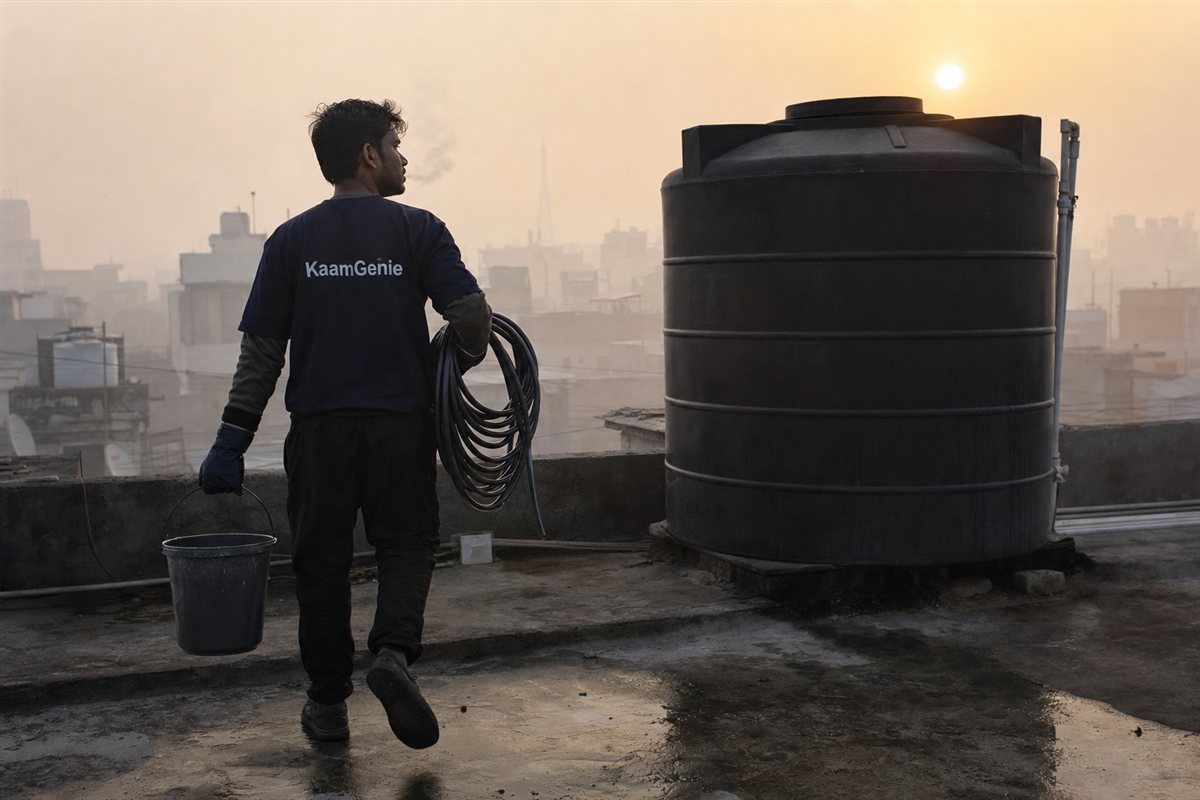
Quick answer — water tank cleaning in winter (Delhi NCR)
- Does a tank need cleaning in winter? Yes. In winter you use less water, so it sits still for longer, and sludge, slimy biofilm and bacteria build up faster, not slower.
- Why it matters more now: winter is cold and flu season, when immunity is already low. Children and elderly family members are the most affected by unclean water.
- How often: clean your overhead and underground tanks at least twice a year. If your last clean was in summer, winter is exactly when the next one is due.
- What a real clean includes: drain, de-sludge, scrub, high-pressure jet and vacuum, food-safe disinfection, plus a TDS and pH water report with before and after photos.
- The easy way: a SureWater membership gives you 4 cleanings a year on Delhi NCR’s water seasons, so you never have to remember or wonder.
The winter myth that costs Delhi families
Ask ten Delhi homeowners when they last cleaned their water tank, and most will say “sometime in summer.” Ask them if they plan to clean it in winter, and almost all will say no. The reasoning is always the same: it is cold, there is no algae, the water looks fine, so why spend money now. It sounds sensible, and it is completely wrong. The cold weather does slow down green algae on the surface, but algae was never the main problem. The real contamination lives at the bottom and on the walls of the tank, and winter actually makes that worse.
Why water sits still and turns bad in winter
In winter, households in Delhi use far less water. Showers are shorter, outdoor use almost stops, gardens need little watering, and tanks are refilled less often. That sounds harmless, but still water is exactly what sludge, slime and bacteria love. When water sits for days without moving, three things happen. Fine sediment such as sand, silt and rust settles into a thick layer on the floor of the tank. A slimy film called biofilm builds up on the walls, which is where bacteria anchor themselves and multiply. And the quiet, undisturbed layers of water give germs the perfect conditions to grow. Lower temperature slows some algae, but it does nothing to stop the sediment and biofilm that cause most real contamination.
Put simply, a tank that is used heavily in summer is at least being flushed and refilled constantly. The same tank in winter becomes a still pond on your roof, and still water is never clean water.
Winter is flu season, and your immunity is already low
There is a second reason winter is the worst time to ignore your tank. Winter in Delhi is peak cold, cough and flu season. Our bodies are already busy fighting more infections, and the air quality in the city makes it harder. Children and elderly family members are especially vulnerable. Drinking or cooking with water drawn from a tank full of settled sludge and bacteria adds an avoidable load on an immune system that is already stretched. Many stomach infections that families blame on “the weather” or “something they ate” actually begin in an unclean storage tank at home.
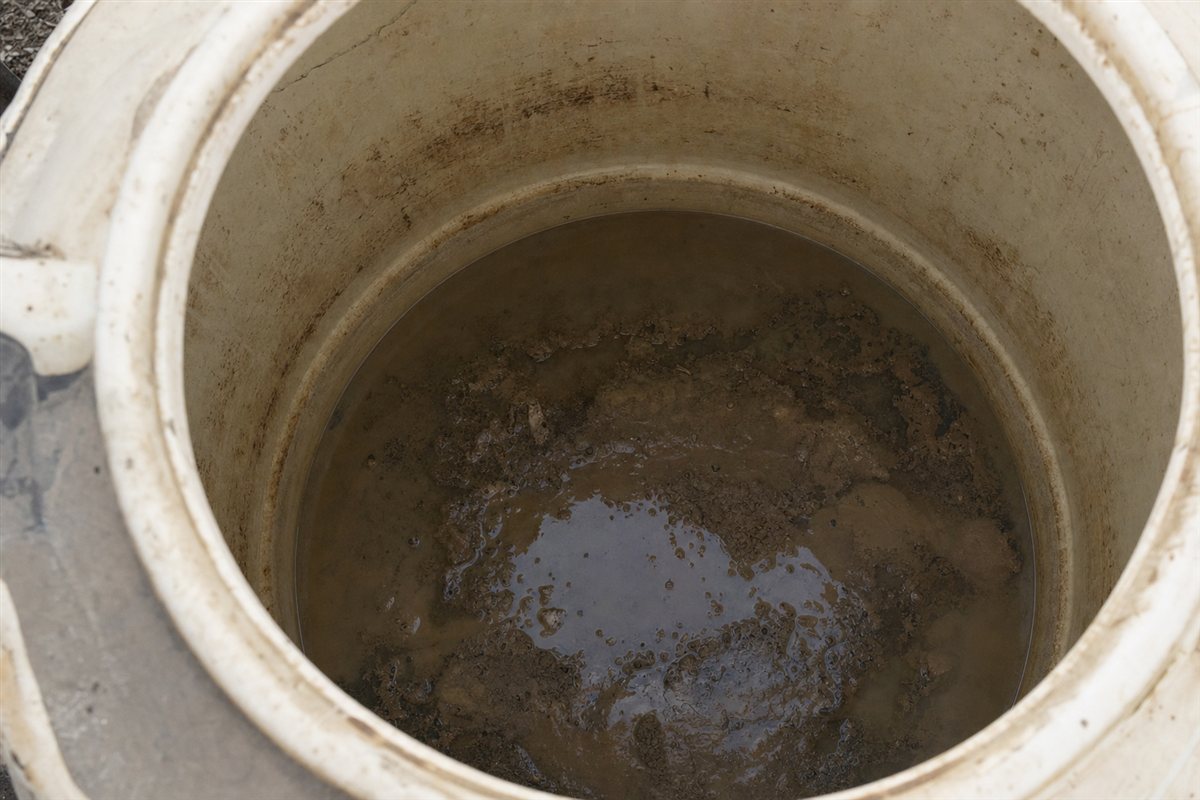
The dirt you cannot see
This is the part most people miss. A water tank can look perfectly fine when you lift the lid and glance inside. The surface looks clear, so the assumption is that the water is clean. But the contamination is not on top, it is at the bottom and along the walls. Sand, rust, mud, dead insects and settled minerals collect as a layer you never notice until it starts to cause trouble. You see it only when it clogs your taps, stains your clothes in the wash, leaves a film on your utensils, or turns your RO filter black and forces an early cartridge change. By then the tank has been feeding dirty water to your home for months. Winter simply gives that hidden layer more undisturbed time to grow.
Book a winter tank cleaning
Trained, uniformed crew. Full de-sludging, scrubbing and food-safe disinfection, with before and after photos and a TDS and pH water report. Same-week slots across Delhi NCR.
How often should a water tank really be cleaned?
Health guidance and plain common sense agree on one simple rule: clean your overhead and underground tanks at least twice a year, roughly once every six months. The Bureau of Indian Standards drinking-water norms are built around keeping stored water within safe limits, and a tank that has not been cleaned for close to a year rarely stays within them. If your last cleaning was in the summer, then winter is exactly when the next one is due. Waiting until next summer means your family drinks, cooks and brushes with the same stored water for almost a year, which no one would accept if they could actually see inside the tank.
There are a few homes that should clean even more often: houses on borewell or tanker supply where the incoming water carries more sediment, homes near construction dust, and buildings where water is stored for long periods. For most Delhi families, a clean every six months is the baseline, not a luxury.
What a professional winter clean actually includes
A proper cleaning is far more than draining and rinsing the tank with a hose. When KaamGenie cleans a tank, a trained crew drains the existing water, removes all the settled sludge and debris by hand, scrubs the walls and the floor, runs a high-pressure jet and vacuum to lift stubborn deposits, and then applies a food-safe anti-bacterial disinfection with the correct contact time. The tank is then refilled and left ready to use.
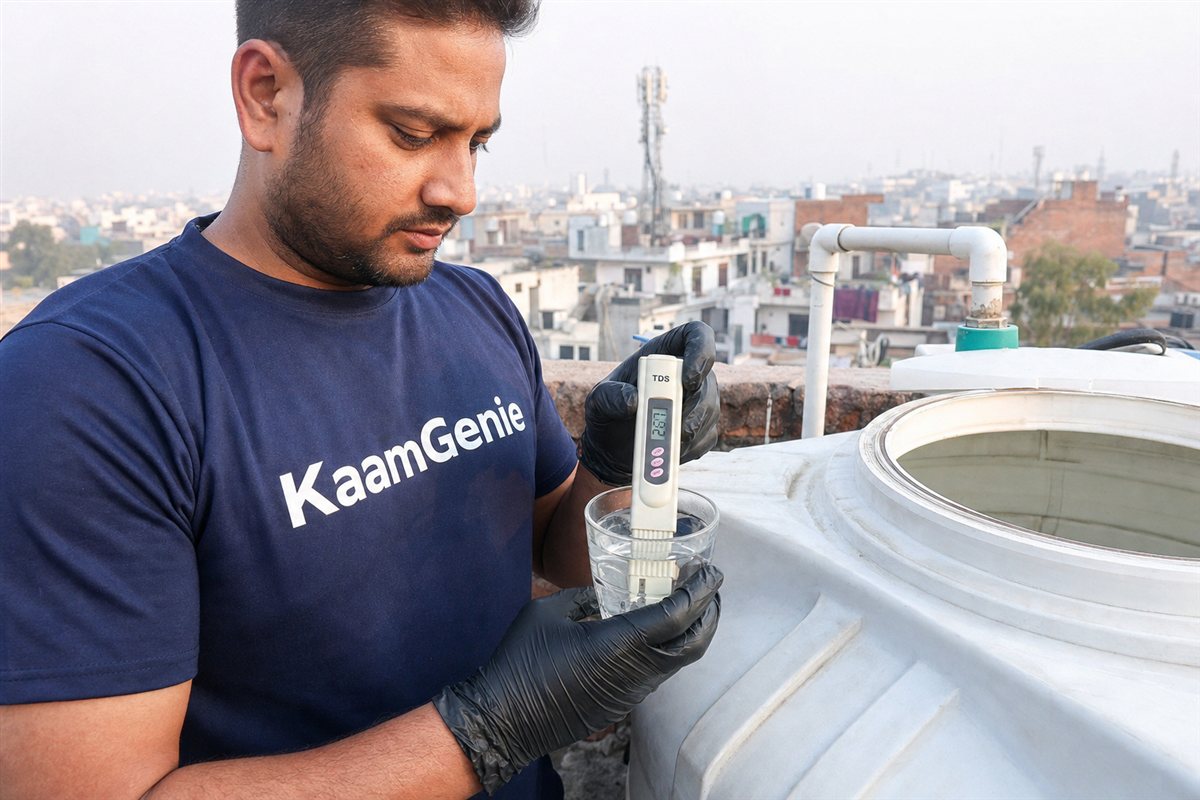
What makes a visit genuinely worth it is the proof. Every SureWater visit includes a Water Health Report: our technician tests your water for TDS and pH on the spot, before and after the clean, and sends you before and after photos on WhatsApp. You see the difference with your own eyes instead of taking it on trust. You also get a GST invoice and, for members, a Tank Passport QR sticker on the tank that shows when it was last cleaned and when it is next due.
The smart way to stop worrying about it
The families who stay safe are the ones who stop treating tank cleaning as an occasional chore they have to remember. With a SureWater membership you get four cleanings a year, timed to Delhi NCR’s water seasons, a water health report every visit, a clean-tank guarantee, and a Tank Passport QR on your tank that shows its cleaning history at a glance. You never have to remember the date, chase a cleaner, or wonder whether the job was done properly. Members also get priority booking and 15% off pest control, sofa and pool cleaning. For most homes it works out to a few rupees a day for water you never have to second-guess.
Areas we serve for water tank cleaning across Delhi NCR
KaamGenie cleans water tanks for homes, kothis, builder floors and societies across the whole region: South Delhi, West Delhi, North Delhi, East Delhi and Central Delhi, including Saket, Dwarka, Rohini, Vasant Kunj, Greater Kailash, Defence Colony, Janakpuri, Pitampura and Mayur Vihar; Gurgaon including DLF phases, Sohna Road, Sector 14 to 57 and New Gurgaon; Noida and Greater Noida across the sectors; plus Faridabad and Ghaziabad. This winter, do not let still water put your family at risk. Book a water tank cleaning, or join SureWater and make clean water a habit instead of an afterthought.
Frequently asked questions
Should I clean my water tank in winter, or wait till summer?
Clean it in winter. The common belief that cold weather keeps a tank clean is wrong. In winter you use less water, so it sits still for longer, and sludge, biofilm and bacteria build up faster. Cold weather only slows surface algae, which was never the main problem. If your last clean was in summer, winter is exactly when the next one is due.
Does a water tank really get dirty in winter even with less use?
Yes, and often more so. Still water is what sludge and bacteria love. When water sits without moving, sediment settles into a thick layer on the floor, a slimy biofilm grows on the walls, and bacteria multiply in the undisturbed layers. A heavily used summer tank is at least being flushed constantly, while a lightly used winter tank becomes a still pond on your roof.
How often should a water tank be cleaned?
At least twice a year, roughly once every six months, for both overhead and underground tanks. Homes on borewell or tanker supply, homes near construction dust, or homes that store water for long periods should clean more often. If you cleaned in summer, the next clean is due in winter.
Is dirty tank water more dangerous in winter?
The water is not more dangerous by temperature, but the timing is worse. Winter is cold and flu season, when immunity is already low, and children and elderly family members are more vulnerable. Many stomach infections that families blame on the weather actually begin in an unclean home storage tank.
What does a professional winter water tank cleaning include?
Draining the existing water, manual removal of all sludge and debris, scrubbing the walls and floor, a high-pressure jet and vacuum, and food-safe anti-bacterial disinfection with the correct contact time, then refilling. KaamGenie visits also include a Water Health Report with TDS and pH tested before and after, before and after photos on WhatsApp, and a GST invoice.
How much does water tank cleaning cost in Delhi in winter?
Pricing depends on tank size and type. For a typical home tank up to 1,000 litres the one-time price starts around ₹899, with larger tanks and societies quoted on request. A SureWater annual membership covers four cleanings a year and works out cheaper per clean, since you effectively pay for three and get the fourth free, plus the water report and priority booking.
How long does a water tank cleaning take?
A standard home tank usually takes about 45 to 90 minutes, depending on size, how much sludge has built up, and how long since the last clean. First-time cleans after a long gap take longer because the sediment layer is deeper. The crew confirms the time on arrival after inspecting the tank.
What is SureWater and how does it help in winter?
SureWater is KaamGenie’s annual water-tank care membership. It gives you four cleanings a year timed to Delhi NCR’s water seasons, a water health report every visit, a clean-tank guarantee, a Tank Passport QR on your tank, priority booking, and 15% off pest, sofa and pool cleaning. It means you never have to remember to book a winter clean, because it is already scheduled.
Do you provide before and after photos and a water test report?
Yes. Every SureWater visit includes before and after photos sent on WhatsApp, and a Water Health Report where our technician tests your water for TDS and pH on the spot, before and after the clean. You also get a GST invoice, and members get a Tank Passport QR sticker showing the cleaning history.
How do I book a water tank cleaning in Delhi NCR?
Call or WhatsApp 95603 66362, or book online at kaamgenie.com. Tell us your area and tank size and we will confirm a same-week slot. We serve homes, kothis, builder floors and societies across Delhi, Gurgaon, Noida, Greater Noida, Faridabad and Ghaziabad.
Sources & references
- Bureau of Indian Standards (BIS) — IS 10500:2012 — the Indian drinking-water quality standard, which defines safe limits for TDS, pH and bacterial count in stored drinking water.
- WHO Drinking Water Guidelines — global reference on drinking-water safety and on chlorine contact times for disinfection, which our food-safe cleaning protocol follows.
Last verified: 6 October 2026. If you find any of these links broken, please let us know.