
The short version
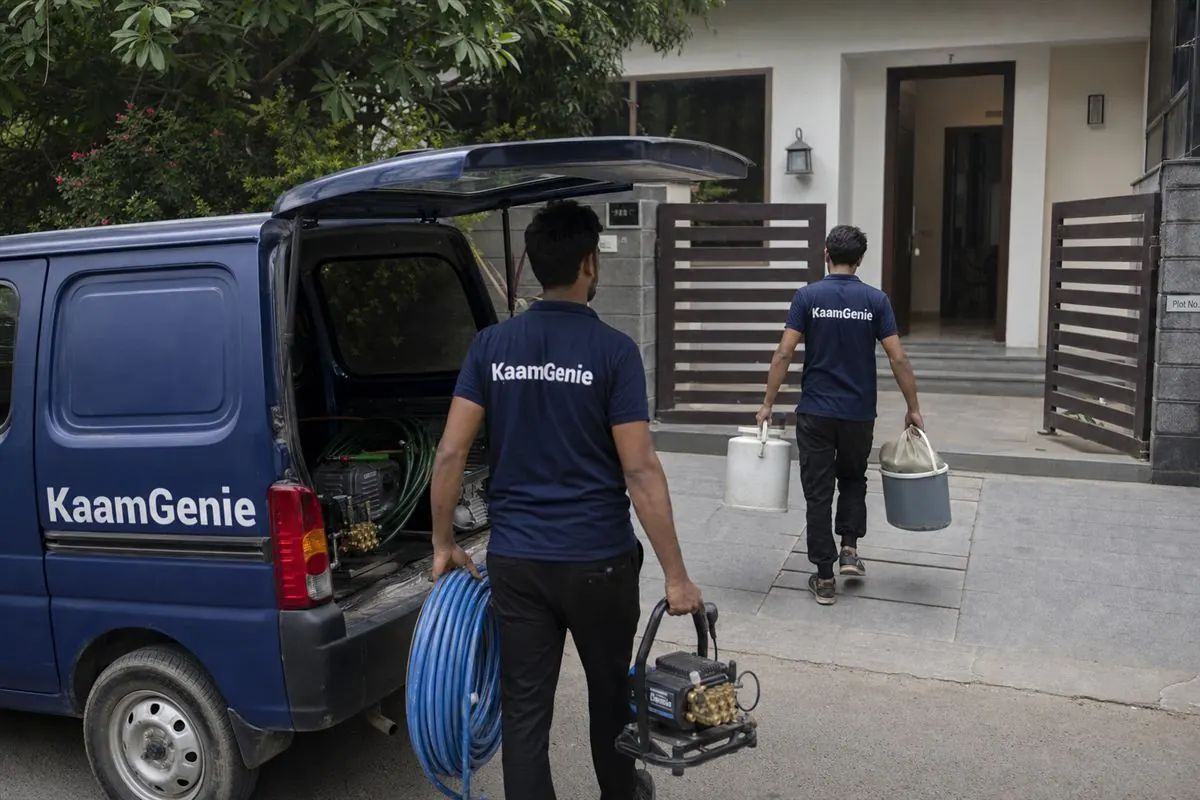
- “Near me” should mean a crew that genuinely covers your Gurgaon sector — not someone two hours away who shows up late and rushed.
- Before booking, verify five things: trained uniformed crew, food-grade chemicals, before/after photos, a GST invoice, and a dated cleaning certificate.
- Red flags: a price that’s too cheap, a 20-minute “cleaning,” top-rinsing from above, no photos, no certificate, vague chemical answers.
- Same-day residential cleaning is usually possible across Gurgaon if you book in the morning. Societies and commercial jobs need a scheduled slot.
- Standard home tank cleaning is ₹699 onwards; sumps, condo reservoirs and society jobs are quoted on size.
Gurgaon — Gurugram, the Millennium City — is a place built almost entirely on stored water. Very little of the supply arrives by gravity from a clean municipal main. Instead, hard borewell groundwater and a constant stream of water tankers fill big underground reservoirs (UGRs) at the base of every tower and colony, and pumps lift that water up to the rooftop tanks that feed your taps. Every drop you drink has sat in at least one tank, often two. That makes the cleanliness of those tanks more important here than almost anywhere else in NCR — and it makes choosing the right local cleaner a decision worth getting right.
The problem is that searching for water tank cleaning services online throws up a confusing mix: legitimate crews, one-man cash operators, and listings that haven’t answered a call in months. This guide is about filtering that list down to someone you can actually trust with your family’s drinking water.
| # | What to verify | Why it matters | How to check |
|---|---|---|---|
| 1 | Trained, uniformed crew | Day labour with a bucket can’t do a real job | Ask if they wear a uniform and carry equipment |
| 2 | Food-grade chemicals | Hardware bleach leaves residue in drinking water | Ask the exact disinfectant name |
| 3 | Before/after photos | Your only proof the inside was actually cleaned | Confirm they’ll WhatsApp photos |
| 4 | GST invoice | Means a registered business, not a cash ghost | Ask for a proper bill, not a slip |
| 5 | Cleaning certificate | Record for RWA / AOA / FSSAI and your own files | Confirm it lists date, tank, chemicals, crew |
Want a crew that already covers your sector?
Trained team, food-grade chemicals, photos and a certificate every job. Same-day where possible across Gurgaon. ₹699 onwards.
What “near me” should actually mean in Gurgaon
“Near me” isn’t about the cleaner’s registered office address — it’s about whether they have a crew that already works in your part of the city. Gurgaon is huge and spread out, and travel time changes everything about service quality. A crew based near Cyber City that agrees to come to a Sector 92 high-rise on the Dwarka Expressway belt is going to arrive late, rushed, and keen to finish quickly. A local crew that does three tanks a day in your sector is relaxed, on time, and does the job properly.
So the first filter is simple: does the service genuinely cover your area? A good operator will name your sector or colony back to you without hesitation. We run crews across the whole city — the established DLF belt like DLF Phase 4, the premium Golf Course Road condominiums, the dense builder-floor pockets of Sohna Road and South City, the old sectors around Sector 56, and the New Gurgaon towers from Sector 76 to 95. If we say we cover your sector, it’s because a crew is already there.
The five things to verify before you book
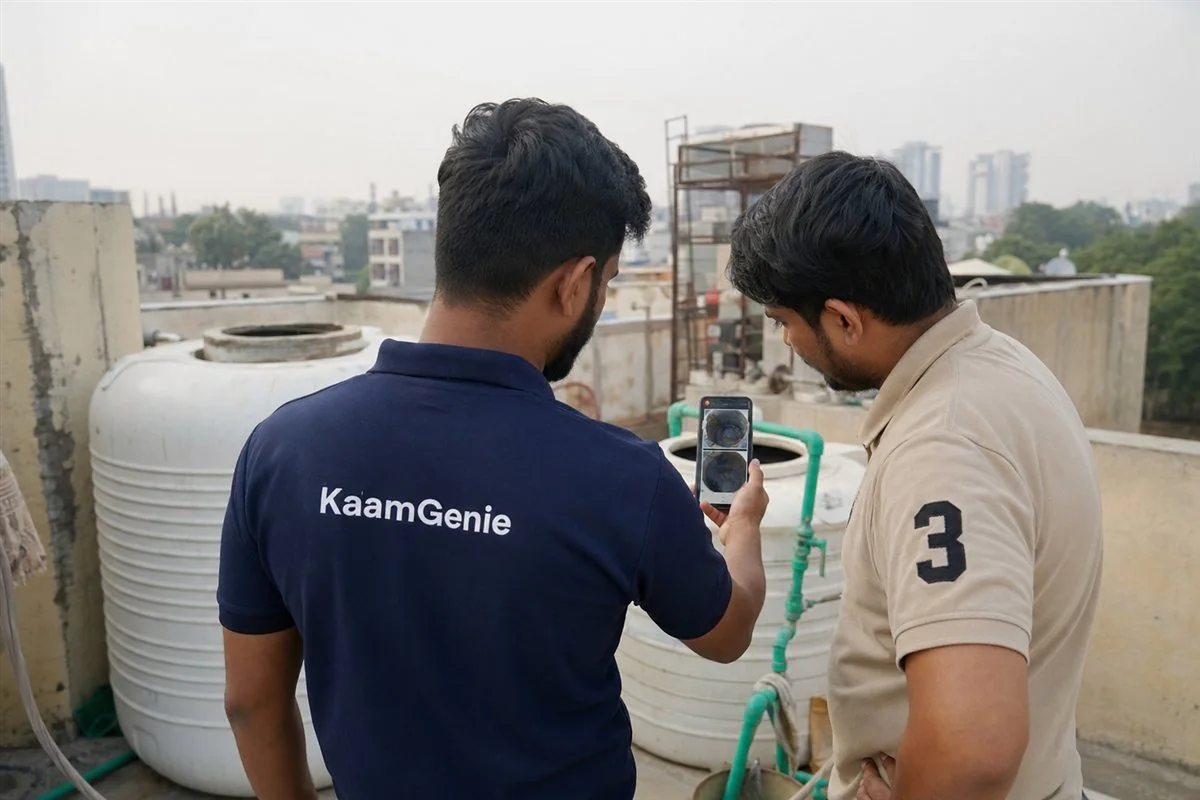
It’s tempting to just pick the cheapest result and move on. Don’t. The difference between a real cleaning and a fake one is invisible from your kitchen tap — until someone in the house gets a stomach upset. Here’s what separates the two.
1. A trained, uniformed crew. Tank cleaning is confined-space work with chemicals at height. A proper crew arrives in uniform, with a jet washer, a wet vacuum, food-grade brushes, and safety gear. A man on a scooter with a bucket and a bottle of bleach is not equipped to clean the inside of a tank — he can only rinse the top.
2. Food-grade, FSSAI-acceptable chemicals. Ask the exact name of the disinfectant. The right answer is food-grade sodium hypochlorite (or hydrogen peroxide for premium jobs), used at a controlled concentration. The wrong answer is “phenyl,” “acid,” or hardware-shop bleach — all of which leave residue you don’t want in drinking water. Gurgaon’s hard borewell water makes the scrubbing and chemistry matter even more.
3. Before and after photos. Because you can’t see inside the tank while it’s being cleaned, photos are your only evidence. A trustworthy crew opens the tank, photographs the dirty interior, and sends you the “after” shots at the same angles. No photos means no proof.
4. A GST invoice. A registered business gives you a proper tax invoice. A cash-only ghost gives you a scribbled slip — or nothing. The invoice is what lets you follow up if something is wrong, and it’s what a society or company finance desk will need.
5. A dated cleaning certificate. This lists the date, tank type and capacity, chemicals used, and the crew. It’s the document your RWA or condo AOA asks for, the one a restaurant shows at an FSSAI inspection, and your own record of when the tank was last done.
The red flags of a corner-cutter
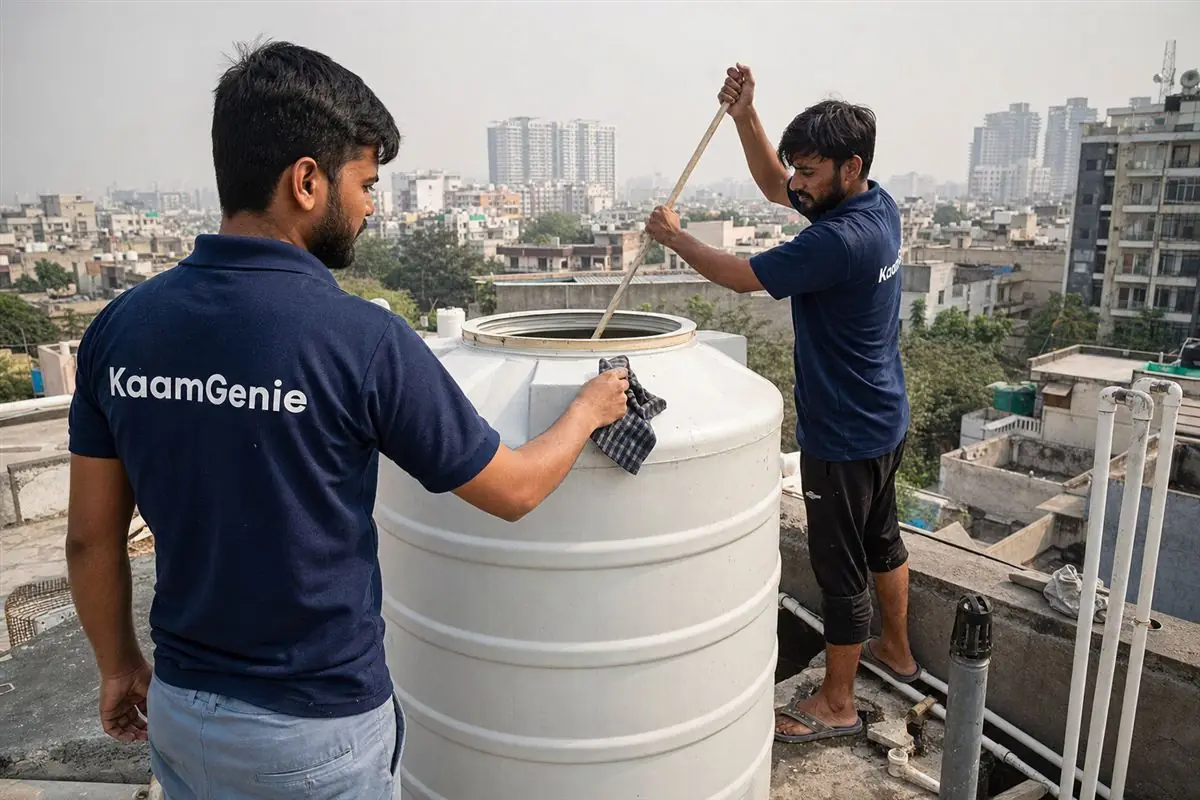
You can spot most bad operators before they even arrive. Watch for these:
- A price that’s too good to be true. A ₹199 or ₹299 “cleaning” doesn’t cover the labour, chemical, and equipment of a real job. Something is being skipped — usually everything that matters.
- A 20-minute job. A genuine residential cleaning takes 75–90 minutes. If a crew is in and out in half an hour, they didn’t drain, scrub, and disinfect.
- Top-rinse only. The classic shortcut: point a hose into the tank from the lid, swirl the water, drain it, done. This leaves the sludge layer — the worst contamination — sitting on the floor. In Gurgaon’s hard-water tanks, that layer is thick and stubborn.
- No photos, no certificate, no invoice. Each missing document is a missing guarantee.
- Vague chemical answers. If they can’t name what they disinfect with, assume it’s the cheapest thing on the shelf.
- Pressure and upselling on the phone. A good crew quotes a fixed price and lets you decide. A bad one invents “extra charges” once they’re on your roof.
If you want to go deeper on comparing quotes, our guide to the best water tank cleaning service in Gurgaon walks through the trade-offs in detail, and the Gurgaon cost guide shows what honest pricing looks like by tank type.
How same-day service works across Gurgaon
One of the real advantages of a genuinely local crew is speed. Because we have teams working across the city every day — on Golf Course Road one morning, in Cyber City and Udyog Vihar offices another, and through the New Gurgaon high-rises in between — we can usually slot a residential tank into the same day if you book in the morning, and next-day at the latest.
A few realities worth knowing:
- Residential overhead tanks are the easiest to fit in same-day. A single home tank is a 75–90 minute job.
- Underground sumps and condo reservoirs take longer (2–3 hours) and often need a scheduled slot, especially in larger buildings where the caretaker has to coordinate access and pump shut-off.
- Society and commercial jobs — multiple towers, big reservoirs, restaurant tanks — are planned in advance so the right crew size turns up.
If you’ve had no water pressure, a strange taste, or you just moved into a new flat and don’t know when the tank was last done, same-day is exactly what you want. You can read more about how fast turnaround works in our same-day water tank cleaning in Gurgaon guide.
Where Gurgaon’s stored water sits before it reaches your tap
Why “near me” cleaning matters: most homes store water at least twice
A typical Gurgaon home stores its water at least twice — once in the underground reservoir and again in the rooftop tank. Both need cleaning, which is why a local crew that handles UGRs and overhead tanks together is worth finding.
New flats, builder floors, and high-rise tanks
A lot of “near me” searches in Gurgaon come from two specific moments. The first is moving into a new flat — whether a fresh tower on the Dwarka Expressway or a resale in an older DLF colony — where you have no idea when, or whether, the tank was ever cleaned. New-construction tanks in particular often hold cement slurry and building debris; we cover that in our new-flat tank cleaning guide. The second is the realisation that an independent builder floor or a high-rise has its own storage that nobody has taken responsibility for.
In condo societies and AOA-managed buildings, the shared underground reservoir and the tower tanks are usually the management’s job — but the small overhead tank feeding your individual flat may not be. It’s worth asking your RWA or AOA what’s on a cleaning schedule and what isn’t, then arranging the rest yourself. A local crew can do your flat’s tank the same day they’re already in the building for someone else.
Not sure when your tank was last cleaned?
That’s the most common reason people search “near me.” Book a cleaning — you’ll get before-photos that often surprise people. ₹699 onwards residential.
The simplest way to find “water tank cleaning near me” in Gurgaon
You can keep scrolling through search results and cross-checking reviews — or you can start with a crew that already covers your sector and ticks all five boxes. Our water tank cleaning in Gurgaon page lets you pick your exact area, see what’s included, and book a slot with a trained team that brings food-grade chemicals, sends before/after photos, and hands you a GST invoice and certificate at the end. No ₹199 bait, no top-rinse, no vanishing act.
Tell us your sector and tank type, and we’ll confirm a same-day or next-day slot. That’s what “near me” is supposed to mean.
Frequently asked questions
How do I find a trustworthy “water tank cleaning near me” service in Gurgaon?
Start with crews that genuinely serve your sector, then verify five things before booking: a trained, uniformed team (not day labour), food-grade chemicals, before/after photos shared with you, a GST invoice, and a cleaning certificate. A real local service will name your area, quote a fixed price upfront, and explain their process without dodging questions. If someone only quotes a suspiciously low number and refuses to commit to photos or a certificate, keep looking.
Do you offer same-day water tank cleaning in Gurgaon?
Yes, in most cases. Because our crews are spread across Gurgaon — from DLF and Golf Course Road to Sohna Road, Sector 56, and New Gurgaon — we can usually reach a residential tank the same day if you book in the morning, and next-day at the latest. Society reservoirs and larger commercial jobs need a scheduled slot because they take longer and may need more crew.
What should I verify before booking a local tank cleaner?
Verify five things: (1) a trained, uniformed crew with proper equipment; (2) food-grade, FSSAI-acceptable disinfectant, not hardware-shop bleach; (3) before and after photos sent to you on WhatsApp; (4) a proper GST invoice; and (5) a dated cleaning certificate listing tank type, chemicals used, and the crew. If any of these is missing, you have no proof the job was done and no recourse if it wasn’t.
How much does water tank cleaning cost near me in Gurgaon?
Standard residential overhead tank cleaning starts at ₹699 onwards. Underground sumps, condo reservoirs, and society or commercial jobs are quoted on size and access because they take longer and use more chemical. Be cautious of ₹200–300 quotes — at that price the crew is skipping sludge removal, manual scrubbing, or proper disinfection. For a full breakdown, see our Gurgaon cost guide.
What are the red flags of a corner-cutting tank cleaner?
The big ones: a price that’s too good to be true; a job finished in 20–30 minutes (a real cleaning takes 75–90 minutes for a home tank); top-rinsing from above instead of going inside to scrub and remove sludge; no before/after photos; no GST invoice; vague answers about what chemical they use; and no certificate. Top-rinse-only cleaning leaves the worst contamination sitting at the bottom of your tank.
Which areas of Gurgaon do you cover?
We cover Gurgaon end to end: the DLF phases, Golf Course Road and Golf Course Extension, Sohna Road and the Southern Peripheral Road belt, Sushant Lok, South City, Sector 56 and the old sectors, Cyber City and Udyog Vihar, and the New Gurgaon high-rise belt from Sector 76 to 95 plus the Dwarka Expressway towers. If you’re unsure whether we reach your sector, message us your location and we’ll confirm a slot.
Why do a GST invoice and a cleaning certificate matter?
A GST invoice proves you dealt with a registered business, not an untraceable cash operator, which matters if anything goes wrong. The cleaning certificate is your record: it lists the date, tank type and capacity, the chemicals used, and the crew. RWAs and condo AOAs often ask for it as proof of maintenance, and food businesses need it for FSSAI inspections. Without these documents you have no evidence the tank was ever cleaned properly.
Is a cheap top-rinse cleaning good enough for Gurgaon’s hard water?
No. Gurgaon runs on hard borewell groundwater and heavy tanker supply, both of which leave mineral scale and sediment at the bottom of tanks. A top-rinse from above doesn’t touch that layer. You need someone to drain the tank, hand-scoop the sludge, scrub the walls, and disinfect with a food-grade chemical. On hard-water tanks especially, skipping the scrub means the scale and biofilm stay exactly where they are.
How long does a local water tank cleaning take?
A standard residential overhead tank takes 75–90 minutes done properly. An underground sump takes 2–2.5 hours. Society shared tanks and large condo reservoirs run 2.5–3.5 hours and sometimes need two crew. If a cleaner is in and out in under half an hour for a home tank, they skipped the scrubbing and disinfection — that’s a rinse, not a cleaning.
Sources & references
- Bureau of Indian Standards (BIS) — IS 10500:2012 is the canonical Indian Standard for drinking water specification, defining acceptable limits for physical, chemical, and biological parameters.
- WHO Guidelines for Drinking-water Quality, 4th edition — the global reference for water quality standards, including guidance on storage and disinfection.
- Food Safety and Standards Authority of India (FSSAI) — defines water quality requirements for food businesses, including hygiene standards for stored water and acceptable disinfection chemicals.
- WHO Fact Sheet on Drinking Water — overview of safe drinking water requirements and contamination risks.
- CPHEEO — Manual on Water Supply and Treatment — the Government of India’s engineering manual covering tank design, cleaning protocols, and disinfection practices.
Last verified: 29 June 2026. If you find any of these links broken, please let us know.