
The short version
- An AMC = a yearly plan: fixed price, set number of scheduled cleanings, reminders, priority booking, records on file.
- Most DJB-supplied Delhi homes need 2 cleanings a year; 3–4 for borewell / hard water, large families, rented-out flats, or small commercial premises.
- On a per-visit basis an AMC is usually 10–20% cheaper than booking one-time cleans — but the bigger win is that you actually get cleaned on schedule.
- Best for: busy households, landlords, clinics, PGs, salons, small restaurants. Skip it if: you genuinely only need one clean a year and never forget to book.
- This guide is for households & small commercial. For whole-society plans, see our RWA annual contracts guide.
| Plan / tier | Visits per year | Best for | Indicative ₹/year |
|---|---|---|---|
| Essential | 2 (every 6 months) | Small DJB-supplied homes, 1–2 person flats, single overhead tank | ₹1,200–1,600 |
| Family | 3 (every 4 months) | Larger families, hard-water areas, overhead + small sump | ₹1,900–2,600 |
| Borewell / Heavy-use | 4 (quarterly) | Borewell supply, joint families, rented-out flats, heavy daily draw | ₹2,800–3,800 |
| Small Commercial | 4–6 (quarterly to bi-monthly) | Clinics, PGs, salons, small cafes/restaurants needing records | ₹4,500–9,000 |
Indicative figures for a standard single overhead tank up to ~1,000L; sumps, extra tanks, and larger capacities push the price up. Always get your exact tanks and capacities quoted in writing.
Put your tank on a plan
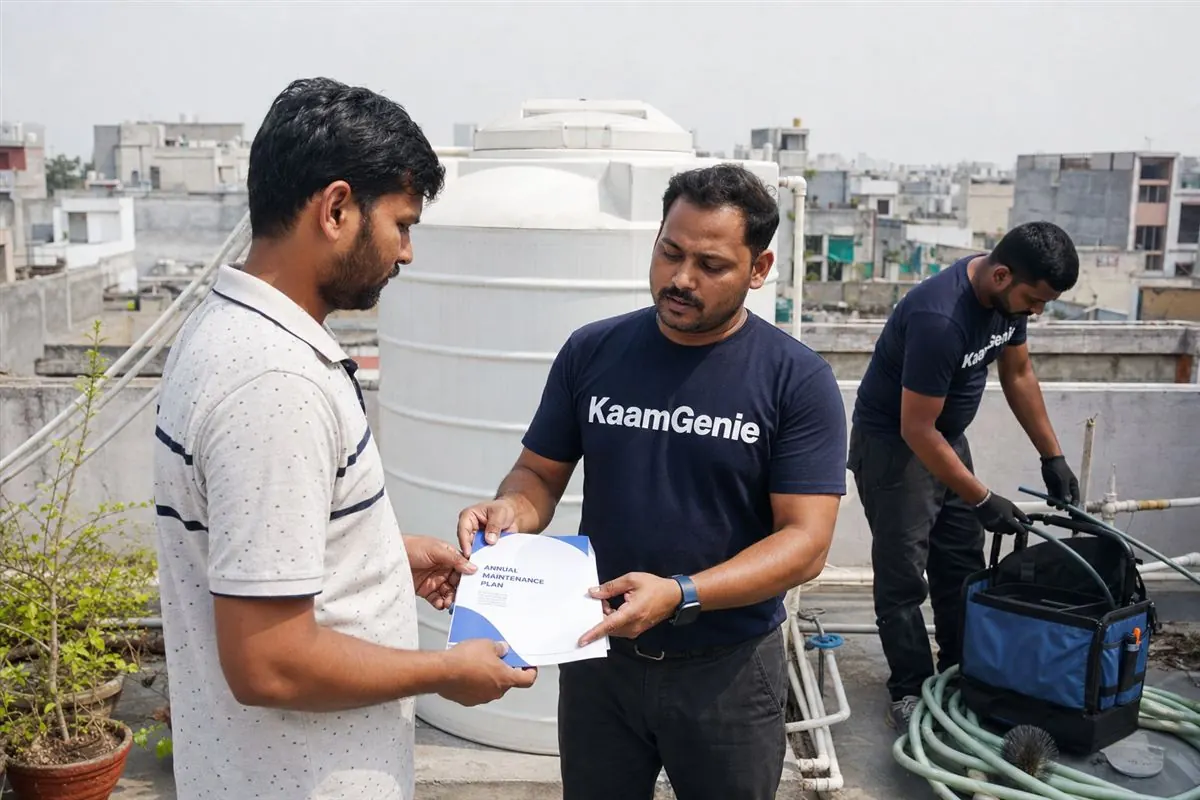
Scheduled visits, reminders, fixed price, photos and a record every time. Standard residential cleaning ₹699 onwards — ask us about bundling it into an AMC.
What an AMC actually is — and what’s in it
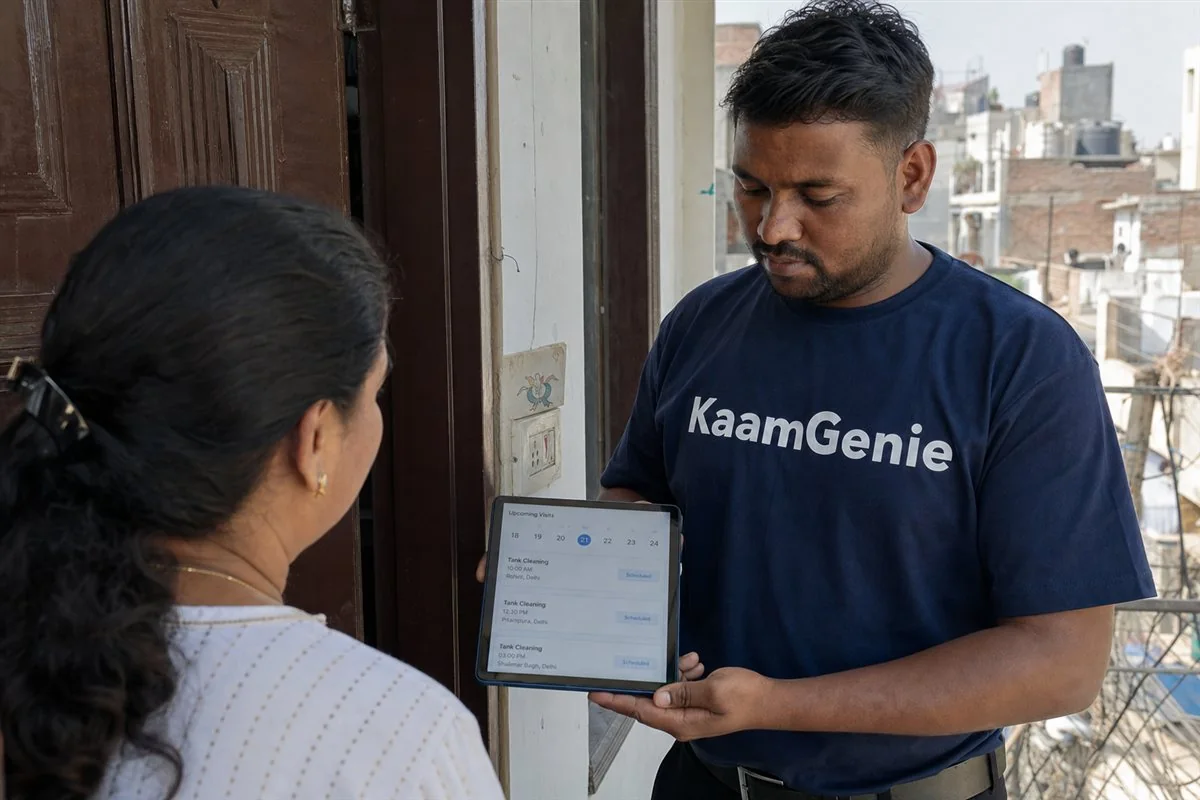
AMC stands for Annual Maintenance Contract. Strip away the jargon and it’s simple: you pay one fixed amount for the year, and in return you get a committed number of cleanings on a schedule, instead of booking each one ad-hoc and being re-quoted every time.
A proper household AMC includes:
- Scheduled visits — a fixed number of cleanings per year (2, 3 or 4), each one a full clean, not a quick rinse.
- A locked price — the per-year amount is fixed when you sign, so you’re protected from mid-year price changes and re-negotiation.
- Reminders — we message you before each due visit so the cleaning actually happens. This is the single biggest reason tanks stay clean.
- Priority booking — AMC customers get first pick of slots, which matters in peak summer when everyone suddenly remembers their tank.
- Records on file — before/after photos and a dated cleaning record for every visit, kept on file. Useful for landlords, and essential for any business facing an inspection.
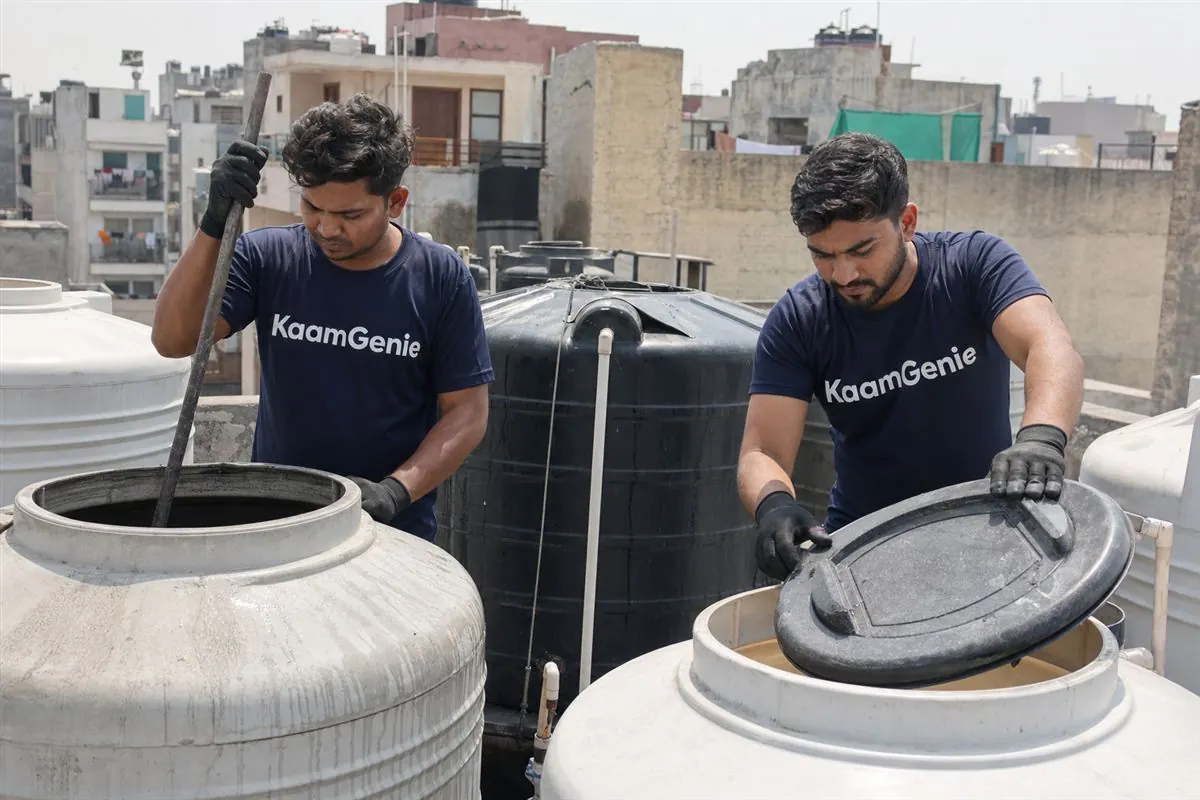
Every individual visit is the same job we’d do as a one-off — the full multi-step clean with food-grade disinfectant. If you want the step-by-step of what happens at each visit, that’s in our water tank cleaning process guide. An AMC just wraps several of those jobs into one predictable yearly arrangement.
How many cleanings a year do you actually need?
This is the question that decides which tier (if any) makes sense. The honest answer depends on two things: your source water and how hard your tank works. We cover this in depth in how often to clean your water tank, but here’s the short version for AMC planning:
- 2 a year (every 6 months) — the baseline for most Delhi homes on reasonably clean DJB municipal supply, with a covered overhead tank and normal family usage.
- 3 a year (every 4 months) — larger families drawing more water, hard-water pockets where calcium scale builds faster, or homes with both an overhead tank and a small sump.
- 4 a year (quarterly) — borewell supply (more sediment and minerals), joint families, rented-out flats with heavy and uncontrolled usage, or any tank that visibly silts up fast.
- 4–6 a year — small commercial premises: clinics, PGs, salons, and small restaurants where both hygiene risk and inspection exposure are higher.
If you’re on borewell or your area has notoriously hard water, lean toward more frequent visits. Borewell water carries more dissolved minerals and fine sediment than treated DJB supply, and that settles in your tank between cleans — we go into the difference in borewell vs DJB water. The whole point of matching visit count to your situation is that an over-specified plan wastes money and an under-specified one leaves your tank dirty.
AMC vs one-time cleaning — the simple math
Let’s use round, indicative numbers for a standard single overhead tank. A one-time residential clean runs from ₹699 onwards; for this example assume a realistic ₹800 per ad-hoc visit once you factor in that one-offs are priced as standalone jobs. Full pricing detail is in our water tank cleaning cost guide.
For a home that needs 2 cleanings a year:
- Ad-hoc: 2 × ₹800 = ₹1,600/year — if you actually remember to book both times.
- Essential AMC: roughly ₹1,400/year for the same 2 visits, price locked, with reminders.
For a home that needs 4 cleanings a year (borewell / heavy use):
- Ad-hoc: 4 × ₹800 = ₹3,200/year.
- Quarterly AMC: roughly ₹2,800/year — a clear ₹400 saving plus the scheduling handled for you.
So the direct rupee saving is real but modest — usually 10–20% per visit. The bigger, harder-to-price benefit is what we see constantly in the field: people mean to book ad-hoc cleanings and then don’t. A tank that should have been cleaned every six months gets done once every eighteen, and by then it’s a much dirtier, harder job — sometimes needing a two-visit recovery. An AMC’s reminders quietly prevent that drift. You’re partly paying for the discipline of never forgetting.
AMC vs ad-hoc — indicative annual spend by usage level
Same number of full cleanings either way — the AMC bar is the lower per-visit rate
Indicative figures for a single overhead tank up to ~1,000L at an assumed ₹800 ad-hoc rate. Your quote depends on tank type, capacity, and whether a sump is included. The AMC bars also include reminders and priority booking, not just the lower rate.
Who benefits most from an AMC — and who doesn’t
An AMC isn’t universally the right call. Here’s the honest split.
An AMC is genuinely worth it for:
- Busy households — if booking tank cleaning is the kind of chore that slips for months, the reminders alone justify the plan.
- Rented-out flats — landlords who can’t easily coordinate cleanings or rely on tenants. The AMC runs in the background and you get records as proof of upkeep.
- Clinics and small healthcare premises — higher hygiene stakes and documentation that matters.
- PGs and hostels — high occupancy, heavy water draw, fast-dirtying tanks, and a duty of care to residents.
- Salons, small restaurants and cafes — water touches customers or food, and a dated cleaning record helps at inspection time. If you run a food business, also read FSSAI water tank requirements for Delhi restaurants.
An AMC is probably overkill if:
- You live alone or as a couple on clean DJB supply and your tank genuinely stays fine for a full year on a single clean.
- You’re disciplined about booking and never let it slide — in which case a one-time clean each year is simpler and the saving is marginal.
- You’re booking for a whole apartment society — that’s a different product with committee approvals and per-flat records. Read our RWA annual contracts guide instead.
What a good AMC contract should include — questions to ask
Before you sign anything, get these in writing. A reputable provider answers all of them without flinching:
- How many visits, and is each a full clean? Confirm it’s the complete multi-step process every time, not a token rinse on visits 2–4.
- Which tanks are covered, with capacities listed? Overhead only, or overhead + sump? Get the exact tanks named so there’s no surprise charge.
- Is the price locked for the full year? No mid-term increases, no per-visit surcharges.
- What documentation comes with each visit? Before/after photos and a dated cleaning record should be standard.
- Do I get the same crew, and what disinfectant is used? Food-grade only — the same standard as a one-time job.
- What if I need an extra unscheduled clean? Ask the AMC-member rate for additional visits.
- Can I pause or cancel? A fair contract offers a pro-rata refund or carry-forward for unused visits. No exit clause is a red flag.
- Are reminders included, and how are they sent? WhatsApp or call before each due visit.
If a provider can’t answer these clearly, that tells you how the actual cleanings will go. The same instincts that help you pick a one-off cleaner apply here — our guide to the best water tank cleaning service in Delhi covers the red flags worth watching for.
Not sure which tier fits your home?
Tell us your tank type, water source, and household size — we’ll recommend an honest visit count, no upsell. Cleaning ₹699 onwards.
Ready to set up a plan?
If you’d rather never think about tank cleaning again — just have it happen on schedule with proof on file — an AMC is the easiest way to do it. Tell us your tank type and water source and we’ll suggest the right number of visits without overselling. Pricing and booking on our water tank cleaning service page.
To set it up, call +91 95603 66362 or use the booking form on this site — we’ll confirm shortly.
Frequently asked questions
What is a water tank cleaning AMC?
An AMC (Annual Maintenance Contract) is a yearly plan where you pay a fixed amount and the cleaner commits to a set number of scheduled visits — typically 2 to 4 per year — at a locked price. It includes booking reminders, priority slots, and a running record of each clean. You stop having to remember to book, and you stop re-negotiating price every time.
How many cleanings per year do I actually need?
Most Delhi homes on DJB supply are fine with 2 cleanings a year. Switch to 3–4 if you’re on borewell or hard water, have a large family or a rented-out flat with heavy usage, or run a clinic, PG, salon, or small restaurant. The dirtier the source water and the more people drawing from the tank, the faster sediment and bio-film build up.
Is an AMC cheaper than paying per one-time clean?
Usually yes, on a per-visit basis. A standalone one-time clean is priced as a single job (₹699 onwards residential). An AMC bundles 2–4 visits at a per-visit rate roughly 10–20% lower, plus it locks the price for the year and removes the booking hassle. The bigger saving is reliability — you actually get cleaned on schedule instead of forgetting for 18 months.
What’s included in a good AMC?
A fixed number of full cleanings per year (not rinses — the same multi-step process as a one-time job), a locked per-year price, scheduled visits with reminders, priority booking, before/after photos and a cleaning record for every visit, and the same trained crew where possible. A good contract also states exactly which tanks are covered and what happens if you need an extra unscheduled clean.
Does an AMC cover both my overhead tank and underground sump?
It depends how the plan is written — always confirm in writing. Some AMCs price per tank, others bundle overhead plus sump as one property. Underground sumps take longer and cost more per visit, so a plan covering both will be priced higher than overhead-only. Get the covered tanks and their capacities listed explicitly in the contract.
Who benefits most from an AMC?
Busy households that forget to book, owners of rented-out flats who can’t easily coordinate cleanings, and small businesses with a compliance angle — clinics, PGs, salons, small restaurants and cafes that need a documented cleaning record. Anyone who values not thinking about it and having proof on file benefits most.
Who doesn’t really need an AMC?
A single-occupant flat on clean DJB supply that genuinely only needs one clean a year gets little extra from a multi-visit plan. If you’re disciplined about booking and your tank stays clean for 12 months, a one-time clean each year may be simpler. AMCs pay off when you need 2+ visits a year or value the reminders and records.
Can I pause or cancel an AMC?
A fair AMC lets you cancel with a pro-rata refund for unused visits, or pause if you’re travelling or the property is vacant. Ask about this before signing — a contract that locks your money with no exit is a red flag. We keep it simple: unused scheduled visits are refundable or carried forward.
How is a household AMC different from an RWA / society contract?
An RWA or society contract covers large shared reservoirs and multiple blocks, is priced per society, and usually involves a committee, tender, and per-flat documentation. A household AMC is for your own overhead tank and sump (or a single small-commercial premises). If you’re booking for a whole society, see our separate guide on RWA annual contracts.
Does an AMC lock the price for the full year?
Yes — that’s a core benefit. The per-year amount is fixed when you sign, so you’re protected from mid-year price changes and from being re-quoted at a higher rate each booking. Confirm the price is locked for the full contract term and that there are no hidden per-visit surcharges.
Sources & references
- Bureau of Indian Standards (BIS) — IS 10500:2012 is the canonical Indian Standard for drinking water specification, defining acceptable limits for physical, chemical, and biological parameters.
- WHO Guidelines for Drinking-water Quality, 4th edition — the global reference for water quality standards, including guidance on storage and disinfection.
- Food Safety and Standards Authority of India (FSSAI) — defines water quality requirements for food businesses, including hygiene standards for stored water and acceptable disinfection chemicals.
- WHO Fact Sheet on Drinking Water — overview of safe drinking water requirements and contamination risks.
- CPHEEO — Manual on Water Supply and Treatment — the Government of India’s engineering manual covering tank design, cleaning protocols, and disinfection practices.
Last verified: 24 June 2026. If you find any of these links broken, please let us know.